 Frank Rondel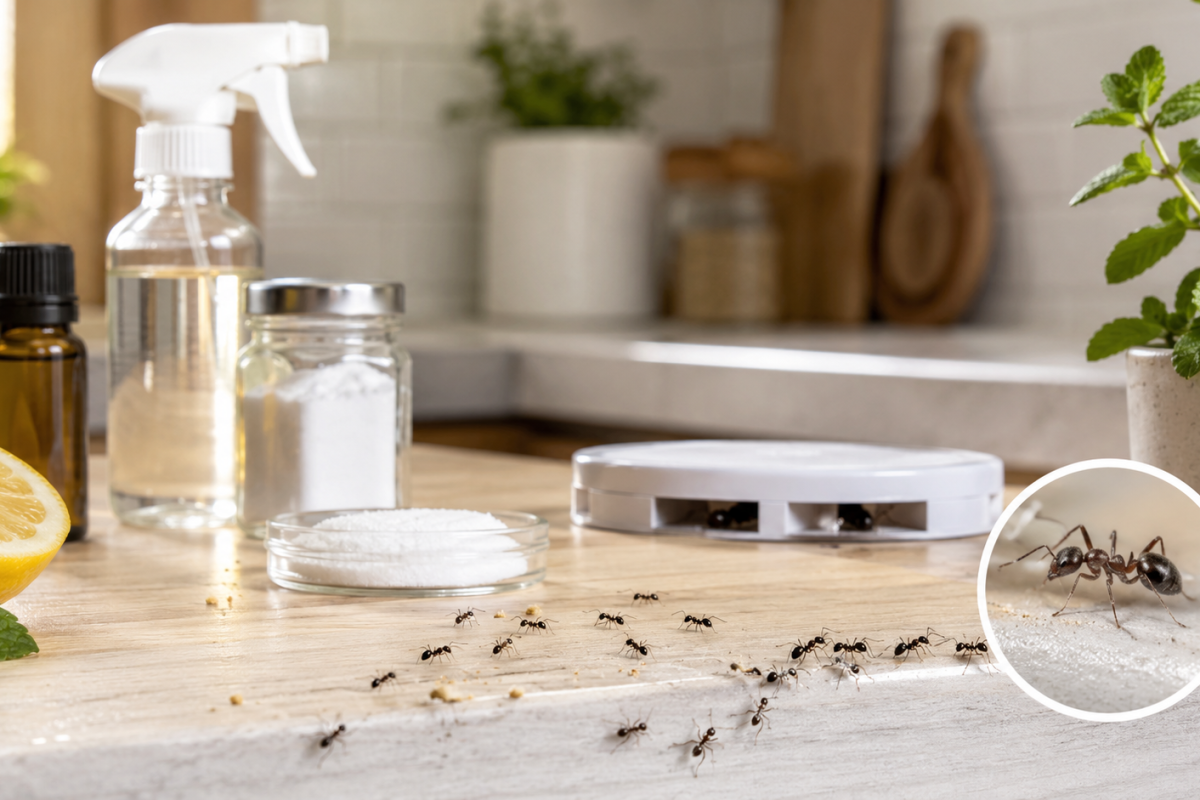
Ants rarely invade a home without a reason. Food crumbs under appliances, moisture near sinks, pet bowls left overnight, and tiny wall cracks all create perfect conditions for colonies to move indoors. Most infestations begin with only a few worker ants, but those scouts usually signal a much larger nest nearby, as reported by the customreceipt.com.
Learning how to get rid of ants in house situations starts with understanding why ants appear in the first place.
Some species simply search for sugar and water, while others establish long-term colonies inside walls, under flooring, or around foundations. The right treatment depends on both the size of the infestation and the type of ant involved.
Visible ants are rarely the full problem. The colony behind them determines how quickly the infestation grows.
Natural remedies, chemical treatments, and long-term prevention methods all play different roles in successful ant removal. Using only one approach often leads to temporary results instead of complete elimination.
Why Ants Enter Your Home
Ants enter homes searching for three things:
- Food
- Water
- Shelter
Kitchens are one of the biggest hotspots because even tiny sugar spills or grease residue provide enough food for dozens of ants. Once worker ants locate a reliable source, they leave pheromone trails that guide the rest of the colony directly toward it.
Moisture is another major trigger. Damp cabinets, leaking pipes, humid basements, and standing water around sinks attract multiple household ant species. Moisture issues can also lead to mold growth and other indoor problems. Related cleanup methods are covered in How to Remove Mold from Bathroom: Safe Cleaning Guide. Several common species regularly invade homes:
| Ant Type | Main Attraction | Risk Level |
|---|---|---|
| Sugar ants | Sweet foods | Low |
| Carpenter ants | Damp wood | High |
| Pavement ants | Crumbs and grease | Medium |
| Odorous house ants | Indoor food access | Medium |
Seasonal weather changes also affect infestations.
Spring and summer bring increased ant activity because colonies expand aggressively during warmer months.
Many homeowners searching for how to get rid of ants in house problems focus only on killing visible ants. That usually fails because the nest itself remains untouched.
Natural Ant Remedies
Natural remedies work best for light infestations and households trying to reduce chemical exposure indoors.
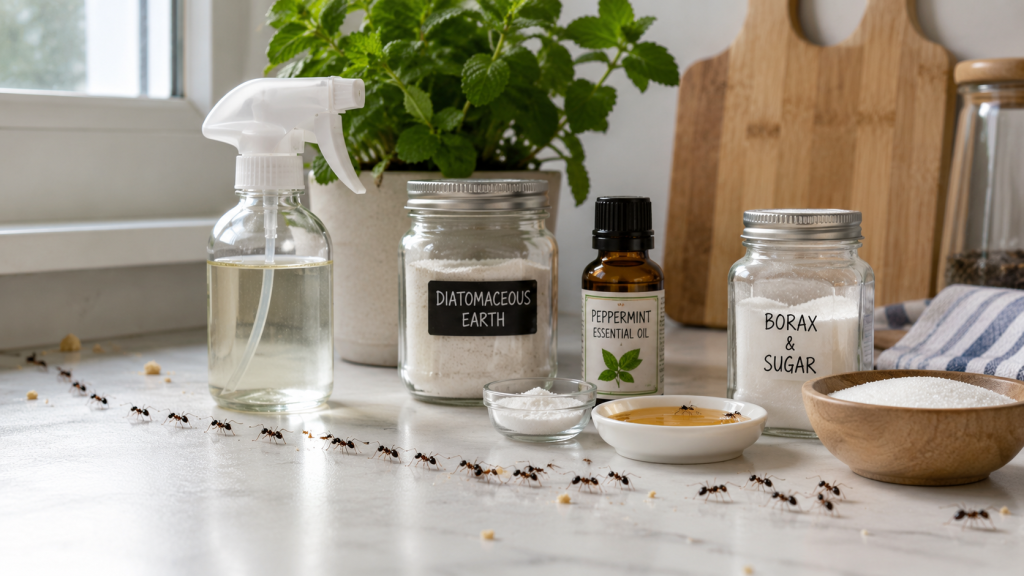
Vinegar and Water Spray
A 50/50 mixture of white vinegar and water destroys ant scent trails almost immediately. Spray it directly on countertops, windowsills, floors, and visible trails. The acidic smell interferes with pheromone communication, making it harder for worker ants to guide others toward food sources.
For best results:
- Spray active trails immediately
- Wipe surfaces completely dry
- Repeat daily during infestations
This method works especially well for ants in kitchen areas where food residue constantly attracts scouts.
Vinegar-based cleaning methods are also commonly used for appliance maintenance and odor removal. Similar approaches appear in How to Clean a Washing Machine: Step-by-Step Deep Clean.
Borax and Sugar Bait
Borax bait remains one of the most effective ways to kill ants naturally because it targets the colony instead of individual ants.
Mix:
- 1 part borax
- 3 parts sugar
- Small amount of warm water
The sugar attracts worker ants while the borax slowly poisons them after ingestion. Slow action matters because ants carry the bait back to the nest before dying.
Place small amounts near:
- Baseboards
- Pantry corners
- Refrigerator edges
- Sink cabinets
Sweet food residue is one of the biggest reasons infestations return repeatedly. Better storage and organization habits help reduce recurring activity. Related storage ideas are covered in How to Organize a Closet: Step-by-Step Decluttering Guide.
Diatomaceous Earth
Food-grade diatomaceous earth kills ants by damaging their exoskeletons and dehydrating them. The powder feels harmless to humans but acts like microscopic glass against insects. Apply thin layers around windows, entry points, and foundation edges. Thick piles usually become ineffective because ants avoid them completely.
Dry conditions matter. Moisture reduces the effectiveness of diatomaceous earth significantly.
Essential Oils
Peppermint and tea tree oils work as natural deterrents rather than colony killers.
Mix 10–15 drops with water in a spray bottle and apply around:
- Door frames
- Pantry shelves
- Counter edges
- Trash bins
Peppermint oil is especially useful because the scent lingers longer than vinegar while supporting broader ant removal efforts. Essential oils rarely solve severe infestations alone, but they help reduce scouting activity when combined with bait systems and cleaning.
Cinnamon and Coffee Grounds
Ground cinnamon and used coffee grounds create scent barriers that many ants avoid crossing.
These materials work best around:
| Location | Barrier Type |
|---|---|
| Windowsills | Cinnamon |
| Garden edges | Coffee grounds |
| Door thresholds | Cinnamon |
| Outdoor foundations | Coffee grounds |
Both options require regular replacement, especially outdoors after rain or cleaning.
Chemical Ant Solutions
Chemical treatments usually become necessary for larger or recurring infestations.
Ant bait stations remain one of the most effective solutions because worker ants transport poison directly into the colony. Slow-acting bait works better than instant-kill sprays since it spreads throughout the nest before ants die.
Common chemical options include:
- Gel bait
- Enclosed bait stations
- Outdoor granules
- Perimeter sprays
Perimeter sprays create a protective barrier around foundations, windows, and doors. They help stop ants before they enter the home.
Safety matters during treatment.
Keep chemical products away from children and pets. Avoid spraying directly near food preparation areas, and always follow manufacturer instructions carefully. Many homeowners trying how to get rid of ants in house infestations make the mistake of spraying visible ants repeatedly. Surface sprays often kill workers while leaving the queen and colony untouched.
Prevention: Keep Ants Out for Good
Long-term ant prevention depends on removing everything ants need to survive indoors.
Follow these eight prevention steps consistently:
- Seal cracks around doors, windows, pipes, and foundations.
- Clean crumbs and spills immediately after meals.
- Store dry foods in airtight containers.
- Repair leaking faucets and pipes quickly.
- Trim vegetation touching exterior walls.
- Empty garbage regularly using sealed bins.
- Wash pet bowls after feeding.
- Caulk gaps near tile edges and floorboards.
Small food particles also attract pests besides ants. Fast cleanup techniques for fruit flies are explained in How to Get Rid of Fruit Flies: Fast and Effective Methods.
Outdoor maintenance matters just as much as indoor cleaning. Firewood piles, wet mulch, clogged gutters, and overgrown landscaping all create favorable nesting conditions near foundations. Nighttime cleaning routines often make the biggest difference in kitchens. Ant activity usually increases after dark when crumbs and moisture remain accessible. Households dealing with recurring ants in kitchen infestations should focus heavily on food storage and sink maintenance.
When to Call an Exterminator
Some infestations require professional treatment regardless of DIY methods.
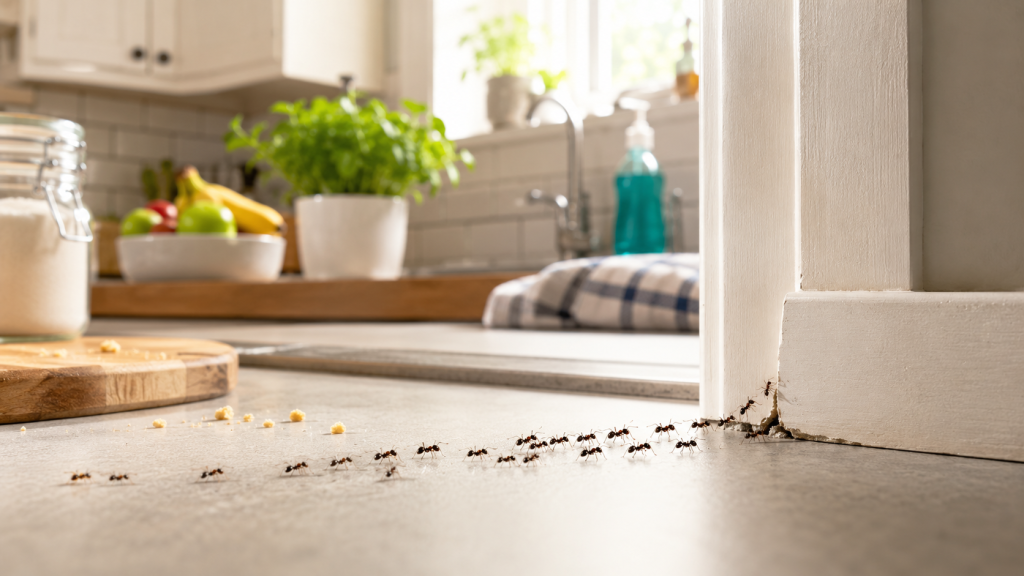
Carpenter ants are one of the biggest warning signs because they tunnel through damp wood and may weaken structural materials over time.
Professional extermination becomes necessary when:
- Colonies return after multiple treatments
- Ants appear inside ceilings or walls
- Winged ants emerge indoors
- Fire ants build outdoor mounds
- Several rooms show heavy activity
Professionals use specialized bait systems and inspection tools capable of locating hidden nests behind walls or beneath flooring. Persistent infestations often indicate multiple satellite colonies rather than a single nest. Surface treatments alone rarely solve those situations completely.
FAQ
What is the fastest way to eliminate ants?
Bait stations combined with sanitation usually provide the fastest long-term results because they target the colony directly.
Does vinegar permanently stop ants?
No. Vinegar destroys scent trails temporarily but does not eliminate nests.
Is borax safe around pets?
Borax should always remain out of reach of pets and children because ingestion may cause irritation or illness.
Why do ants return after spraying?
Most sprays kill visible ants without affecting the queen or deeper colony structure.
Can ants damage a house?
Most household ants are nuisance pests, but carpenter ants can damage damp wood structures over time.
Understanding how to get rid of ants in house infestations requires more than simply killing visible insects. Successful control depends on removing attractants, disrupting scent trails, targeting the colony itself, and preventing future access points. Natural methods like vinegar spray, borax bait, peppermint oil, and diatomaceous earth work well for smaller infestations. Larger or persistent colonies may require chemical bait stations or professional extermination.
Consistent cleaning, moisture control, and proper food storage remain the most effective long-term defenses against recurring ant problems.
Earlier we wrote about How to Start Meditating: A Beginner Guide to Daily Practice