 Frank Rondel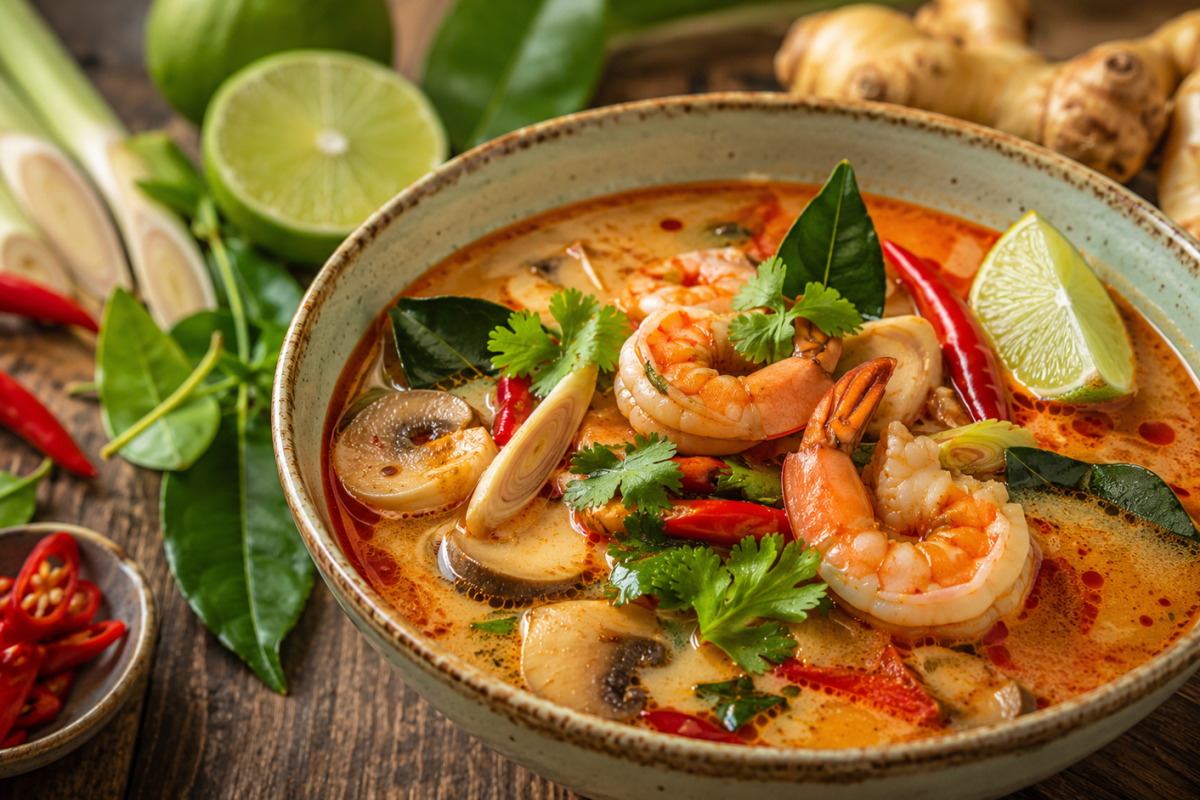
Tom yum recipe remains one of the most recognizable Thai dishes because the soup combines sourness, chili heat, seafood depth, and herbal aroma in a single broth without becoming heavy. Authentic versions taste sharp and layered rather than creamy or overly salty. Many restaurant adaptations soften these contrasts with sugar, excess chili paste, or thickened broth, аs noted by customreceipt.com.
Cooking authentic tom yum soup at home changes the texture and flavor noticeably. Fresh herbs stay aromatic instead of dull. Shrimp remains tender because it cooks directly before serving. Lime juice tastes brighter because it enters the broth at the final stage rather than boiling for long periods.
Traditional Thai Tom Yum usually appears in two main forms. One uses a clear broth with aggressive citrus and herbal notes. The second adds evaporated milk or chili jam for richer texture and softer spice edges.
The two classic styles include:
- Tom Yum Nam Sai — clear broth with stronger herbal sharpness
- Tom Yum Nam Khon — creamy broth with chili paste and fuller texture
Both versions rely on the same aromatic foundation built from lemongrass, galangal, kaffir lime leaves, fish sauce, and Thai chilies.
Home cooks experimenting with Southeast Asian dishes often discover that ingredient timing matters more than complicated technique. Many broader cooking ideas and recipe collections also appear in the Food category on CustomReceipt, including restaurant-style meals and ingredient guides.
What Tom Yum Actually Tastes Like
Authentic thai tom yum is designed around contrast rather than comfort. Sourness arrives first through lime juice and lemongrass. Chili heat follows immediately. Fish sauce adds savory depth while mushrooms absorb citrus oils and chili flavor from the broth.
The soup should never taste flat or overly smooth. Every spoonful changes slightly depending on how much broth, herbs, seafood, or chili oil reaches the palate.
A balanced bowl usually contains several distinct characteristics:
- sour but not aggressively acidic
- spicy without overwhelming the tongue
- salty without becoming briny
- aromatic without bitterness
Texture matters as much as seasoning. Shrimp should remain tender. Mushrooms should absorb broth while keeping structure. The liquid itself should stay relatively light unless preparing the creamy Nam Khon version.
Tom Yum differs from many Western soups because the broth itself carries the structure of the dish. Ingredients support the liquid instead of dominating it.
“Tom Yum should never taste flat. Sourness, saltiness, and spice should arrive separately before blending together.” — Thai culinary guidance from the Tourism Authority of Thailand
Official Thai food information:
Tourism Authority of Thailand
Essential Tom Yum Ingredients
The foundation of tom yum ingredients comes from fresh aromatics rather than powdered spices. Fresh herbs create the sharp citrus aroma and peppery depth associated with authentic Thai soup. Pre-made soup bases simplify cooking, but they rarely recreate the brightness produced by fresh ingredients simmered directly in stock.
Each ingredient contributes a specific function to the broth. Removing one element noticeably changes the balance.
Lemongrass
Lemongrass creates the soup’s citrus structure. The lower stalk contains the strongest flavor and should be crushed before simmering to release aromatic oils.
Useful substitutions include:
- frozen lemongrass paste
- lemon zest
- citronella leaves
Fresh stalks still produce the cleanest herbal aroma.
Kaffir Lime Leaves
Kaffir lime leaves add bitterness and floral fragrance simultaneously. They should be torn by hand rather than chopped because fine cuts release excess bitterness into the broth.
Possible alternatives include:
- lime zest strips
- bay leaf plus lime peel
- dried kaffir lime leaves
Fresh leaves remain noticeably more aromatic after simmering.
Galangal
Galangal resembles ginger visually but tastes much sharper once heated. Ginger creates warmth and sweetness while galangal contributes peppery citrus notes.
The closest substitutes include:
- ginger mixed with black pepper
- frozen galangal
- galangal paste
Replacing galangal completely changes the character of the soup.
Fish Sauce
Fish sauce provides both salt and umami depth. Authentic Tom Yum rarely depends on plain salt because fish sauce contributes fermented complexity at the same time.
Thai Chili Peppers
Bird’s eye chilies create fast, direct heat. Crushing the chilies increases spice intensity because more oils enter the broth.
Different quantities create dramatically different results:
- 2 chilies — mild heat
- 4 chilies — medium heat
- 6 or more — traditional Thai spice level
The broth also grows hotter while resting.
Shrimp Paste
Shrimp paste deepens seafood flavor and reinforces umami. Small amounts matter more than large spoonfuls because the ingredient becomes overpowering quickly.
Useful alternatives include:
- anchovy paste
- fermented soybean paste
- miso mixed with fish sauce
Mushrooms
Straw mushrooms remain traditional, though several mushroom varieties work well in home kitchens.
Reliable choices include:
- oyster mushrooms
- shiitake
- enoki
- button mushrooms
Different mushrooms noticeably change broth texture and flavor depth.
Lime Juice
Fresh lime juice should always enter the soup after cooking ends. Boiling weakens citrus aroma and dulls acidity.
Fresh herbs, seafood, mushrooms, and citrus can significantly affect grocery costs when preparing Thai food regularly at home. Several budgeting strategies in How to Save Money on Groceries: 15 Practical Tips help reduce ingredient expenses without sacrificing quality.
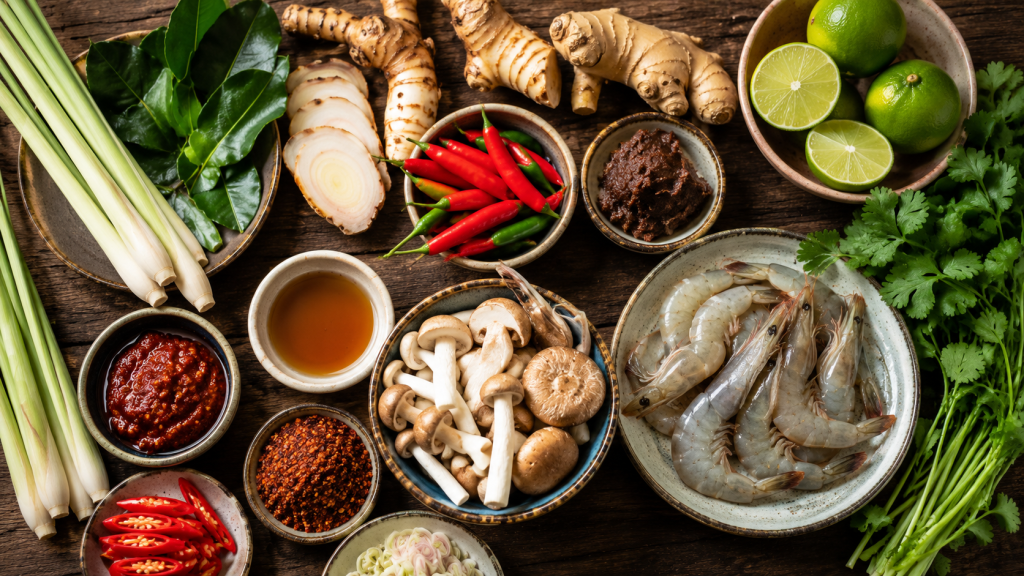
Ingredients Table
Ingredient quality affects Tom Yum more than advanced cooking technique. Fresh herbs and balanced stock create most of the final flavor profile.
The table below explains how each ingredient contributes to the soup and which substitutions work best when traditional products become difficult to find.
| Ingredient | Function in Soup | Traditional Option | Substitute |
|---|---|---|---|
| Lemongrass | Citrus aroma | Fresh stalks | Lemongrass paste |
| Galangal | Peppery sharpness | Fresh galangal | Ginger + pepper |
| Kaffir lime leaves | Herbal bitterness | Fresh leaves | Lime zest |
| Fish sauce | Salt + umami | Thai fish sauce | Soy sauce + anchovy |
| Thai chilies | Heat | Bird’s eye chilies | Serrano peppers |
| Shrimp paste | Fermented depth | Thai shrimp paste | Miso |
| Mushrooms | Texture | Straw mushrooms | Oyster mushrooms |
| Lime juice | Sourness | Fresh lime | Bottled lime juice |
Frozen herbs generally perform better than powdered versions because essential oils stay more concentrated. Dried substitutes still work, though the broth loses part of its sharp aromatic profile.
Best Protein Options
Shrimp remains the traditional protein for homemade tom yum because shells naturally enrich the broth with sweetness and seafood depth. Using shell-on shrimp improves the final soup even when the meat itself gets peeled before serving.
Different proteins also affect texture, cooking time, and broth intensity.
Shrimp
Shrimp produces the most traditional result. Simmering shells separately before adding cleaned shrimp meat creates deeper broth without making the soup cloudy.
The best preparation process includes several stages:
- simmer shrimp shells for 10 minutes
- strain the broth carefully
- add cleaned shrimp near the end
This method keeps shrimp tender while maximizing seafood flavor.
Chicken
Chicken creates heavier broth with softer seafood notes. Thigh meat performs better than breast meat because it stays juicy during simmering.
Seafood Mix
Squid, mussels, and shrimp create layered seafood flavor but require careful timing to avoid rubbery texture.
The safest cooking order includes:
- mussels first
- squid second
- shrimp last
Each ingredient cooks at a different speed.
Tofu
Firm tofu works best in vegetarian versions because softer tofu breaks apart in hot broth. Mushroom stock helps compensate for missing seafood depth.
Many people pair Tom Yum with neutral drinks or cold coffee to soften chili heat. Several refreshing beverage ideas appear in How to Make Iced Coffee at Home: 5 Easy Methods, especially for spicy meals served during warmer months.
Step-by-Step Tom Yum Recipe
This easy tom yum recipe produces four servings with balanced sourness, medium spice, and clear aromatic broth. The cooking process moves quickly once ingredients are prepared in advance.
Ingredients
Fresh ingredients matter more than oversized quantities. Smaller amounts of strong herbs usually outperform large portions of weak substitutes.
Required ingredients:
- 1 liter shrimp or chicken stock
- 250 g shrimp
- 2 lemongrass stalks
- 5 kaffir lime leaves
- 5 slices galangal
- 200 g mushrooms
- 3 tbsp fish sauce
- 2 tbsp lime juice
- 4 Thai chilies
- 1 tsp shrimp paste
- 1 tbsp Thai chili paste
- cilantro for garnish
Optional additions include:
- evaporated milk for creamy texture
- roasted chili oil for smokier heat
- extra lime wedges for serving
Cooking Time
Tom Yum cooks quickly once the broth starts simmering. Most cooking time focuses on extracting aroma from herbs rather than aggressive boiling.
| Step | Time |
|---|---|
| Ingredient prep | 15 minutes |
| Herb simmering | 15 minutes |
| Final cooking | 10 minutes |
| Total | 40 minutes |
Gentle simmering keeps the broth cleaner and prevents bitterness from developing.
Instructions
Ingredient timing affects the final result significantly. Herbs require enough time to release oils while seafood should enter near the end.
- Bring stock to low boil.
- Add crushed lemongrass, galangal, kaffir lime leaves, and chilies.
- Simmer gently for 10–12 minutes.
- Stir in shrimp paste and mushrooms.
- Add fish sauce and chili paste.
- Cook mushrooms for 3 minutes.
- Add shrimp and simmer until pink.
- Turn off heat completely.
- Add fresh lime juice.
- Taste and adjust balance before serving.
The broth should remain relatively clear even when chili oil floats on the surface.
Heat Level Guidance
Small chili adjustments change the soup dramatically.
For milder flavor:
- remove chili seeds
- reduce chili quantity
- add evaporated milk
For stronger heat:
- crush chilies completely
- increase chili oil
- add additional fresh chilies before serving
Official Thai culinary guidance:
Thai SELECT Program
Common Mistakes When Cooking Tom Yum
Most failed Tom Yum soups come from incorrect timing rather than poor ingredients. Overcooked herbs, excessive paste, or aggressive boiling flatten the broth quickly.
Several mistakes appear repeatedly in home kitchens.
Overcooking Herbs
Long simmering weakens citrus aroma and creates bitterness.
Boiling Shrimp Too Long
Shrimp toughens rapidly after several minutes in boiling liquid.
Adding Lime Juice Too Early
Boiling destroys fresh citrus flavor and reduces acidity.
Using Too Much Paste
Pre-made paste can overpower fresh herbs within minutes.
Oversalting Early
Fish sauce becomes more concentrated as liquid reduces.
Several flavor problems usually point toward specific cooking mistakes:
- flat broth = insufficient lime juice
- bitterness = herbs cooked too long
- harsh heat = too many crushed chilies
- weak aroma = not enough galangal
Recognizing these patterns makes balancing easier during cooking.
How to Adjust Spice and Sourness
Tom Yum depends on balance more than extreme intensity. Small adjustments often change the broth more than large ingredient additions.
Different ingredients influence different flavor directions.
To Increase Sourness
Several ingredients sharpen acidity naturally:
- fresh lime juice
- tamarind water
- kaffir lime zest
Fresh lime juice remains the cleanest and brightest option.
To Reduce Heat
Rich ingredients soften chili intensity without destroying flavor.
Useful additions include:
- evaporated milk
- coconut milk
- additional stock
Coconut milk changes the soup style noticeably and creates heavier texture.
To Increase Umami
Several ingredients deepen savory flavor:
- fish sauce
- shrimp shells
- dried shrimp
- mushroom stock
Additional umami prevents the broth from tasting watery.
Professional Thai kitchens usually balance broth in this order: salty first, sour second, spicy third. Chili heat changes salt perception, so seasoning too early often creates imbalance later.
The Culinary Institute of America explains broth layering techniques in professional soup preparation:
The Culinary Institute of America
Tom Yum Paste vs Homemade Broth
Pre-made paste saves time but changes flavor structure and texture noticeably. Homemade broth tastes sharper and fresher because herbs release oils directly into stock instead of relying on concentrated seasoning blends.
The differences become obvious when comparing flavor depth side by side.
| Version | Flavor | Spice Level | Ingredient Quality | Cooking Time |
|---|---|---|---|---|
| Authentic homemade | Bright and layered | Adjustable | Fresh herbs | 40 min |
| Restaurant-style | Rich and salty | Medium | Mixed | 20–30 min |
| Instant packets | Flat and processed | High sodium heat | Processed | 5–10 min |
Instant soup packets often contain additional ingredients that standardize flavor and texture.
Common additives include:
- sugar
- stabilizers
- artificial shrimp flavor
- concentrated oil
Sweet-and-sour flavor balancing appears in many fast-food sauces and Asian dishes. The ingredient breakdown in Where to get Wendy’s Sweet and Sour sauce: local availability and limited time rules explains how acidity and sweetness interact in prepared sauces.
What to Serve With Tom Yum
Tom Yum usually works best as one part of a larger meal. Neutral side dishes help balance acidity and chili heat while allowing the broth to remain intense.
Several classic pairings complement the soup naturally:
- jasmine rice
- grilled seafood
- Thai omelet
- papaya salad
- rice noodles
Simple rice often works better than heavily seasoned side dishes because it absorbs broth without competing against herbs.
Rice vs Noodles
Different starches create noticeably different eating experiences.
| Side | Best For |
|---|---|
| Jasmine rice | Balancing spice |
| Rice noodles | Heavier meal |
| Sticky rice | Northern Thai combinations |
Cold drinks also matter because chili heat builds gradually during the meal.
Popular beverage pairings include:
- Thai iced tea
- sparkling water
- coconut water
- light lager
Cleaner drinks help preserve the herbal aroma of the soup between bites.
How to Store and Reheat It
Tom Yum stores surprisingly well when seafood and herbs are handled correctly. The broth often tastes deeper after resting overnight, though fresh citrus aroma weakens slightly.
Improper reheating usually damages texture before affecting flavor.
Refrigeration
Separating broth from seafood helps maintain texture during storage.
Recommended storage times include:
- broth only: up to 3 days
- seafood soup: up to 2 days
Seafood loses texture faster than the broth loses flavor.
Freezing
Broth freezes well without lime juice. Adding fresh citrus after reheating creates better balance.
Reheating
Rapid boiling weakens aroma and toughens shrimp.
The safest reheating method includes:
- warm slowly over medium-low heat
- avoid aggressive boiling
- add fresh lime juice afterward
- refresh herbs before serving if necessary
Mushrooms soften considerably after refrigeration, especially oyster mushrooms.
Additional cooking and lifestyle content appears directly on customreceipt.com, including recipe trends, ingredient guides, and restaurant-inspired meal ideas.
FAQ
Can Tom Yum be vegetarian?
Yes. Replace fish sauce with soy sauce or mushroom seasoning and use vegetable stock instead of seafood broth.
What mushrooms work best?
Straw mushrooms remain traditional, but oyster mushrooms absorb broth especially well and stay tender after simmering.
Is coconut milk authentic in Tom Yum?
Traditional clear Tom Yum does not contain coconut milk, though some modern restaurant versions add it for softer heat and richer texture.
How spicy should Tom Yum be?
Authentic versions should taste noticeably spicy while still allowing sourness and herbs to remain clear.
Can Tom Yum be frozen?
Yes. Freezing broth separately from seafood produces better texture after reheating.
What protein is most traditional?
Shrimp remains the standard protein because shells naturally enrich the broth with sweetness and seafood depth.
Earlier we wrote about What Is Inside the Pentagon UFO Files? Declassified UAP Documents and Roswell Records Go Public