 Frank Rondel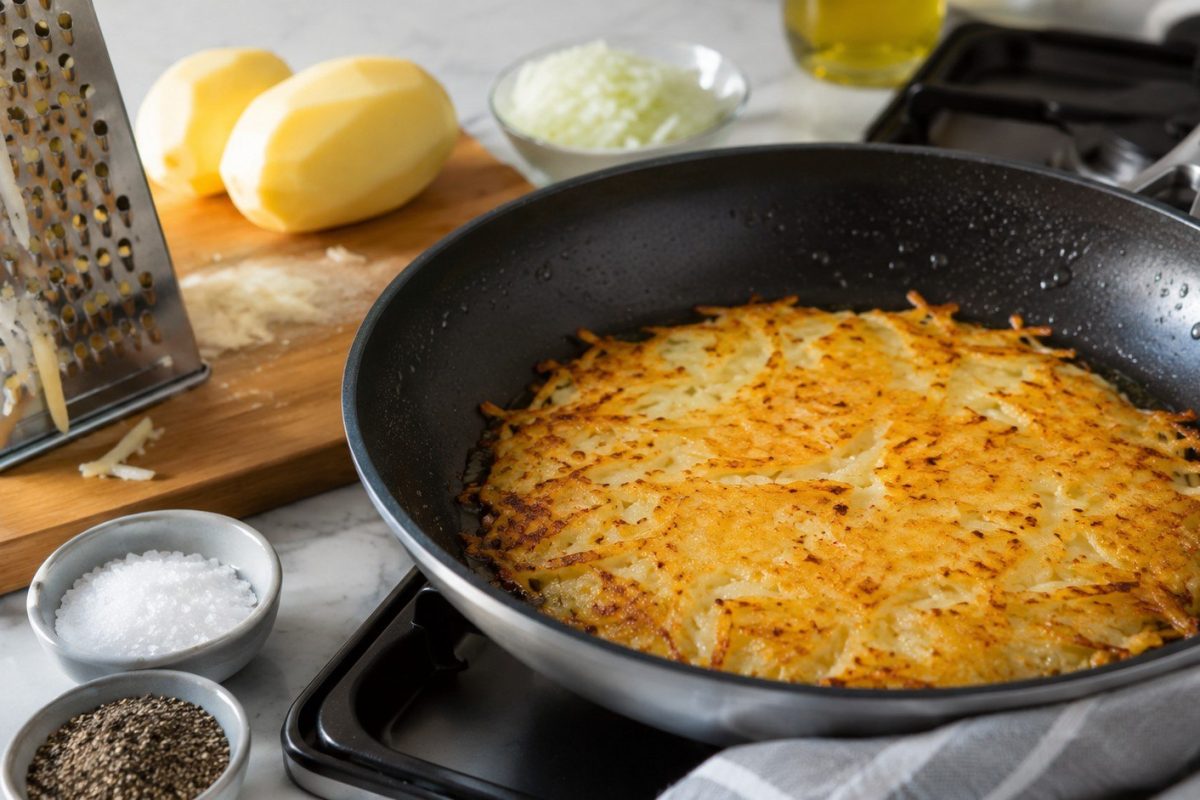
How to make hash browns that stay crisp outside and tender inside depends less on exotic ingredients than careful moisture control. Russet potatoes, a hot skillet, enough fat, and patience create the familiar golden crust. The method takes about 30 minutes and requires no commercial equipment, as the customreceipt.com editorial team notes.
Hash browns often fail for predictable reasons. Wet potatoes steam instead of frying. A cold skillet absorbs oil without creating color. Constant stirring breaks the crust before it can develop.
This recipe addresses each problem directly. It produces 4 portions with crisp edges, a soft center, and enough structure for clean flipping.
What Are Hash Browns?
American-style hash browns are grated or finely chopped potatoes cooked on a hot griddle or skillet. They differ from home fries, which usually contain cubes or slices of par-cooked potato.
Shredded hash browns offer more surface area. Each strand touches hot fat, creating numerous browned edges. The result resembles a thin potato cake, though individual pieces should remain visible.
The dish appears on diner menus beside eggs, bacon, sausage, or toast. At home, it also works as a base for smoked salmon, avocado, sautéed mushrooms, or melted cheese.
For another crisp homemade meal, the site’s chicken nugget recipe explains how temperature and moisture shape a fried crust.
The central rule is simple: remove water before the potatoes enter the skillet. Moisture delays browning and turns the lower layer soft.
Ingredients for Crispy Homemade Hash Browns
The following quantities make 4 moderate servings. Use firm potatoes without green areas, deep cuts, or soft patches.
- 900 g russet potatoes, about 4 medium potatoes
- 3 tablespoons canola, sunflower, or vegetable oil
- 1 tablespoon unsalted butter
- 1 teaspoon fine salt
- ½ teaspoon black pepper
- ½ teaspoon onion powder, optional
- ¼ teaspoon smoked paprika, optional
- 2 tablespoons finely chopped onion, optional
Russet potatoes contain enough starch to form a connected crust. Their relatively dry flesh also browns more readily than waxy red potatoes.
Butter adds flavor, but butter alone can burn during prolonged frying. Combining it with neutral oil provides better temperature control. Clarified butter is another suitable option.
After preparing the ingredients, keep the grated potatoes away from salt until frying begins. Salt draws moisture from raw potato tissue. Early seasoning can therefore undo careful drying.
Which Potatoes Work Best?
Potato type changes both structure and flavor. The wrong choice does not ruin the dish, but it affects crispness and handling.
| Potato type | Final texture | Ease of flipping | Best use |
|---|---|---|---|
| Russet | Very crisp, light center | Easy | Classic shredded hash browns |
| Yukon Gold | Crisp with a creamy center | Moderate | Richer breakfast hash |
| Red potato | Firm and slightly waxy | Moderate | Chunky hash or home fries |
| Sweet potato | Softer and sweeter | Difficult | Small patties or mixed hash |
| Frozen shredded potato | Consistent but less fresh | Easy | Fast weekday breakfast |
Russets remain the safest choice for beginners. They form a sturdy golden layer without requiring eggs or flour.
Yukon Gold potatoes bring a buttery flavor. However, they hold more moisture and need especially thorough squeezing. Mixing russets with Yukon Golds creates a balanced texture.
Sweet potatoes contain different sugars and soften quickly. They brown faster, so medium heat works better than medium-high heat. Combining them with russets improves stability.
Frozen potatoes save preparation time. Thaw them completely and squeeze away condensation before cooking. Adding icy shreds directly to a skillet lowers its temperature.
Equipment You Need
No specialized appliance is required. A wide cooking surface matters more than an expensive pan.
- Large box grater or food processor with a shredding disc
- Clean cotton kitchen towel or cheesecloth
- Large mixing bowl
- 28–30 cm nonstick or seasoned cast-iron skillet
- Wide flexible spatula
- Microwave-safe plate, optional
A box grater creates slightly irregular strands. Those differences produce a rustic texture with thin, crisp edges.
A food processor works faster and gives uniform shreds. It is useful when preparing several batches. Avoid the fine grating blade because finely grated potato releases too much liquid.
The skillet must provide enough room for a thin layer. Crowded potatoes trap steam and cook unevenly. Prepare 2 batches when using a smaller pan.
How to Make Hash Browns Step by Step
This method uses raw grated potatoes. A brief microwave stage is optional, but it speeds cooking and softens the center.
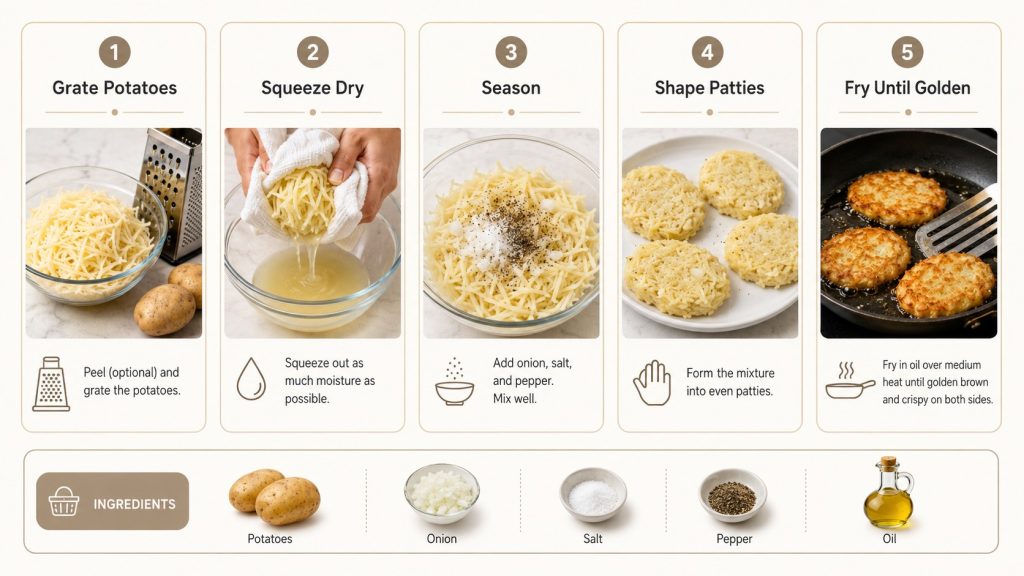
- Peel the potatoes or scrub them thoroughly when keeping the skins.
- Grate them through the largest holes of a box grater.
- Transfer the shreds to a bowl of cold water.
- Swirl them for 15–20 seconds, then drain immediately.
- Place the potatoes inside a clean kitchen towel.
- Twist firmly and squeeze out as much liquid as possible.
- Spread the shreds on a plate and separate compact clumps.
- Microwave them for 2 minutes, then cool for 2 minutes.
- Heat the oil and butter over medium-high heat.
- Add the potatoes in an even layer measuring about 1 cm.
- Season the top with salt, pepper, and optional spices.
- Cook undisturbed for 5–7 minutes.
- Lift one edge and check for a deep golden crust.
- Divide the layer into 4 sections and flip each section.
- Cook the second side for another 4–6 minutes.
- Serve immediately while the edges remain crisp.
Do not compress the potatoes into a dense block. Press only enough to create contact with the pan. Air between the strands helps the interior remain light.
Serious Eats found that squeezing shredded russets improved even browning and helped the crust remain crisp longer. Its tested method also uses a brief microwave stage before skillet cooking.
Let the first side finish before touching it. Frequent lifting interrupts direct contact and tears the forming crust. The potatoes will release more easily after proper browning.
Why Drying Potatoes Matters
Raw potatoes contain considerable water. That moisture must evaporate before the surface can rise above the boiling point of water and brown efficiently.
A towel removes far more liquid than a colander. After squeezing, the bundle should feel noticeably lighter. Repeat the process when water still drips from the cloth.
“Moisture is the enemy of a crisp latke.”
— Max Falkowitz, food writer, quoted by Serious Eats during its testing of shredded potato techniques. The same principle applies to hash browns.
Some recipes recommend long soaking. A quick rinse removes loose surface starch, but excessive washing can weaken the natural binding between strands. Drying remains more important than soaking.
When the squeezed potatoes look almost too dry, they are usually ready. The skillet will supply fat, while the potato interior retains enough moisture to stay tender.
The Correct Pan Temperature
Heat the empty skillet for about 2 minutes before adding fat. The oil should shimmer, but it should not smoke.
Medium-high heat works for most heavy pans. Thin skillets heat rapidly and may require medium heat. Cast iron takes longer to preheat, yet it holds temperature well after the potatoes arrive.
A useful timing guide keeps the process predictable:
| Stage | Heat level | Approximate time | Visual signal |
|---|---|---|---|
| Preheat skillet | Medium-high | 2 minutes | Pan feels evenly hot |
| Heat oil and butter | Medium-high | 30–45 seconds | Butter foams gently |
| Cook first side | Medium-high | 5–7 minutes | Deep golden edges |
| Cook second side | Medium | 4–6 minutes | Crisp surface and soft center |
| Rest before serving | No heat | 1 minute | Steam decreases |
The potatoes should sizzle immediately. Weak sizzling indicates insufficient heat. Violent sputtering means remaining water or excessive temperature.
After using the timing guide, rely on color rather than the clock alone. Burner output, skillet material, and potato thickness all change cooking speed.
Allrecipes chefs recommend medium-high heat and sufficient room between portions. Chef Chris O’Connell describes the target as crisp on both sides with a creamy middle.
Do not cover the skillet. A lid traps steam and softens the crust. Leave the surface exposed throughout cooking.
How to Flip Hash Browns Without Breaking Them
A single large disk looks impressive, but it is difficult to turn. Dividing the potatoes into 4 sections gives better control.
Slide a flexible spatula completely underneath one section. Lift it with a quick, confident movement. Add a small amount of oil to the empty area before placing the uncooked side down.
Another option uses a dinner plate. Slide the entire potato cake onto the plate, invert the skillet over it, then turn both together. This method requires heatproof gloves and a skillet without excessive oil.
Bon Appétit advises leaving the potatoes undisturbed before breaking and flipping them in sections. This creates more crisp surfaces and reduces tearing.
After flipping, avoid pressing aggressively. Heavy pressure squeezes moisture toward the crust. A light touch preserves both shape and texture.
Common Hash Brown Mistakes
Most disappointing results can be traced to preparation or temperature. Correcting one detail often transforms the entire batch.
- Using wet grated potatoes
- Adding potatoes before the pan becomes hot
- Creating a layer thicker than 1.5 cm
- Crowding several portions together
- Stirring during the first minutes
- Using too little cooking fat
- Salting the potatoes long before frying
- Flipping before a crust develops
- Covering the skillet
- Holding finished hash browns in a deep bowl
Wet shreds create pale, flexible potatoes. Return them to a clean towel and squeeze again before cooking.
A thick layer may brown outside while remaining raw inside. Reduce thickness or use the optional microwave stage. Smaller portions also cook more evenly.
Too little fat produces dry patches and irregular color. Add 1 teaspoon near the skillet’s edge when sizzling weakens. The oil will move beneath the potatoes without disturbing them.
Finished hash browns should rest on a wire rack when another batch is cooking. Stacking them or placing them in a bowl traps steam. Keep them warm inside a 100°C oven for no longer than 15 minutes.
Flavor Variations and Serving Ideas
The basic recipe accepts many additions, but wet ingredients should be cooked separately. Raw mushrooms, peppers, or onions release water directly into the potato layer.
Suitable variations include:
- Cheddar and chive hash browns
- Garlic and Parmesan hash browns
- Jalapeño and pepper Jack hash browns
- Smoked paprika and onion hash browns
- Sweet potato and russet hash browns
- Bacon and scallion hash browns
- Mushroom hash browns with thyme
- Hash browns topped with fried eggs
Add grated cheese during the final 2 minutes. Covering the pan briefly melts it, though the crust may soften slightly. Use low-moisture cheese for the cleanest result.
Cook bacon, mushrooms, and onions separately. Drain them before folding them into finished potatoes. This preserves the browned surface.
Serve hash browns beside homemade croissants with classic fillings for a larger brunch. For a savory dinner menu, the site’s authentic Valencian paella recipe offers another detailed guide to controlled browning.
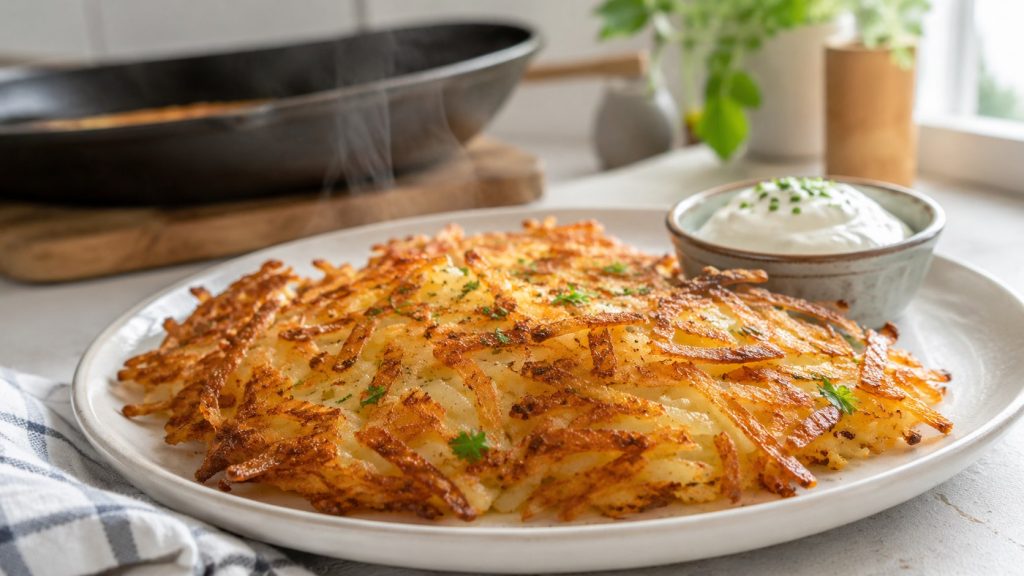
After adding toppings, serve immediately. Sour cream, salsa, ketchup, hot sauce, and avocado should remain on the side. Liquid sauces soften the crust when poured too early.
Can Hash Browns Be Made in an Air Fryer?
An air fryer produces crisp individual strands with less oil. However, it does not always create the unified skillet-style crust.
Preheat the air fryer to 200°C. Mix 450 g of dried potato shreds with 1 tablespoon of oil, salt, and pepper. Spread them thinly inside the basket.
Cook for 12–16 minutes. Turn or loosen the potatoes after 8 minutes. Compact patties may require 18 minutes, depending on thickness.
Spray dry areas lightly with oil. Do not overload the basket because circulating air must reach the potato surface.
Air-fried hash browns suit sandwiches and breakfast bowls. The skillet method remains better for a diner-style plate with a crisp base and softer middle.
Storage and Reheating
Cooked hash browns keep inside a closed container for up to 3 days. Cool them completely before refrigeration to limit condensation.
Reheat them in a dry skillet over medium heat for 3–4 minutes per side. An air fryer needs about 4 minutes at 190°C. An oven requires 8–10 minutes at 210°C.
Avoid the microwave when texture matters. It warms the interior quickly but leaves the crust soft.
For freezing, place cooled portions in one layer until solid. Transfer them to a freezer bag and use them within 2 months. Reheat without thawing.
Raw grated potatoes are less suitable for storage. They oxidize, release liquid, and lose structure. Cooking before freezing gives a more reliable result.
FAQ
How do you make hash browns crispy?
Use russet potatoes, squeeze out their moisture, and preheat the skillet. Cook a thin layer without moving it for 5–7 minutes.
Should you rinse potatoes for hash browns?
A brief rinse can remove loose starch and prevent discoloration. Do not soak them excessively, and dry them thoroughly afterward.
Why are my hash browns soggy?
The potatoes may be wet, crowded, or cooked in a cool pan. A thick layer and early stirring also trap steam.
Can hash browns be made without butter?
Yes. Canola, sunflower, avocado, or vegetable oil works well. Butter mainly adds flavor.
Do hash browns need flour or eggs?
Classic shredded hash browns need neither. Natural potato starch binds the strands after moisture is removed.
How long should hash browns cook?
Cook the first side for 5–7 minutes. The second side usually needs another 4–6 minutes.
Can you use frozen shredded potatoes?
Yes. Thaw them first and squeeze away condensation. Frozen shreds should enter a fully heated skillet.
What heat is best for hash browns?
Medium-high heat develops the first crust. Reduce the burner slightly after flipping when the surface browns too quickly.
Earlier we wrote about How to Make a Reuben Sandwich: The Classic Deli Recipe With Corned Beef and Sauerkraut