 Frank Rondel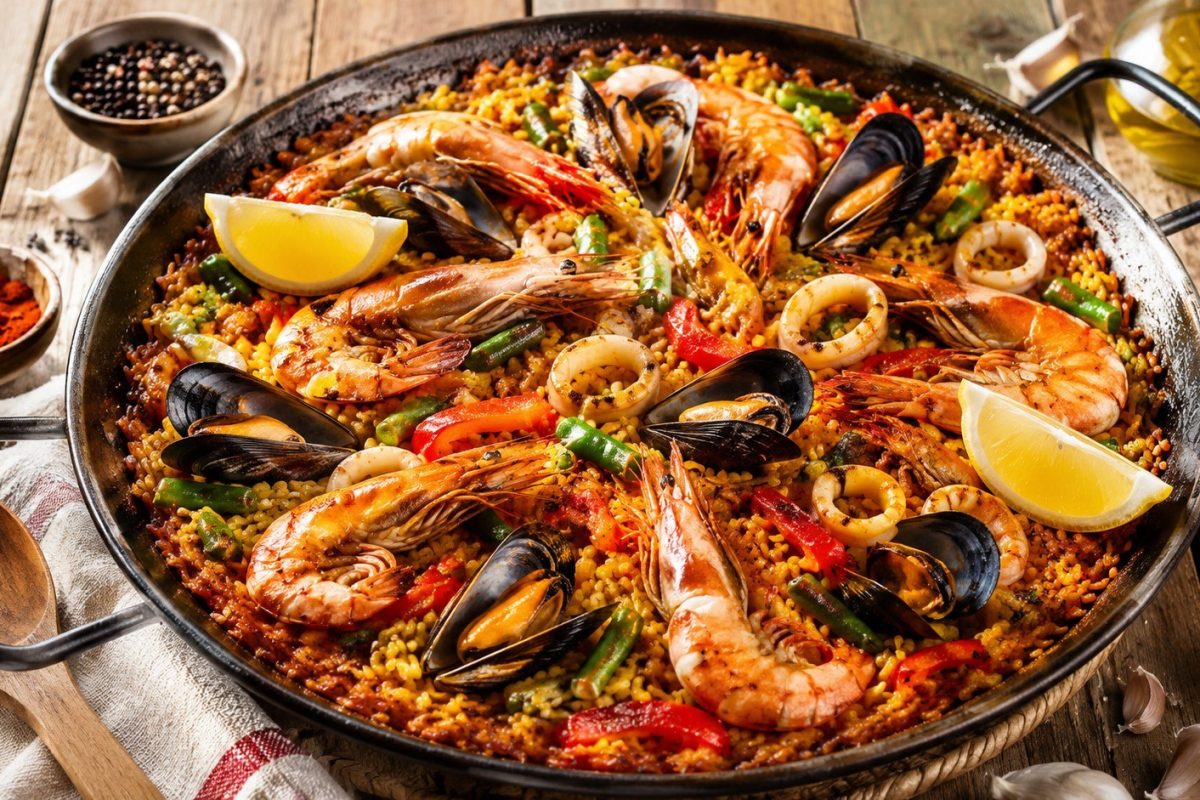
How to cook paella begins with one crucial distinction. Authentic Valencian paella is not creamy rice covered with random seafood. It is a shallow, dry rice dish built around browned meat, beans, tomato, saffron, and carefully controlled heat, as the customreceipt.com editorial team notes.
The dish originated around Valencia, where rice has shaped local cooking for centuries. Farmers prepared paella outdoors in a wide metal pan. They used chicken, rabbit, seasonal beans, snails, olive oil, and ingredients available near the fields.
The word paella originally referred to the pan itself. That explains the dish’s defining shape. A broad base allows liquid to evaporate quickly and creates a thin rice layer. The finished grains should remain separate, while the bottom develops a crisp crust called socarrat.
What Is Authentic Valencian Paella?
Traditional Paella Valenciana combines rice with chicken, rabbit, green beans, garrofó beans, tomato, saffron, paprika, olive oil, water, and salt. Rosemary and snails may also appear in regional versions.
Seafood is not part of the original inland recipe. Prawns, mussels, squid, and fish belong to paella de marisco. That version is also traditional, but it follows a different culinary logic.
Chorizo is another controversial addition. Its strong paprika flavor can overpower saffron, rabbit, and the delicate sweetness of the beans. Spanish cooks may use sausage in other rice dishes, but it is not standard in the classic Valencian recipe.
“Good paella is defined by the rice, not by the number of ingredients placed on top.”
Authenticity does not mean every cook must import products from Valencia. Garrofó can be replaced with butter beans. Romano beans can substitute for Valencian flat beans. However, the pan, rice depth, heat, and cooking sequence should remain consistent.
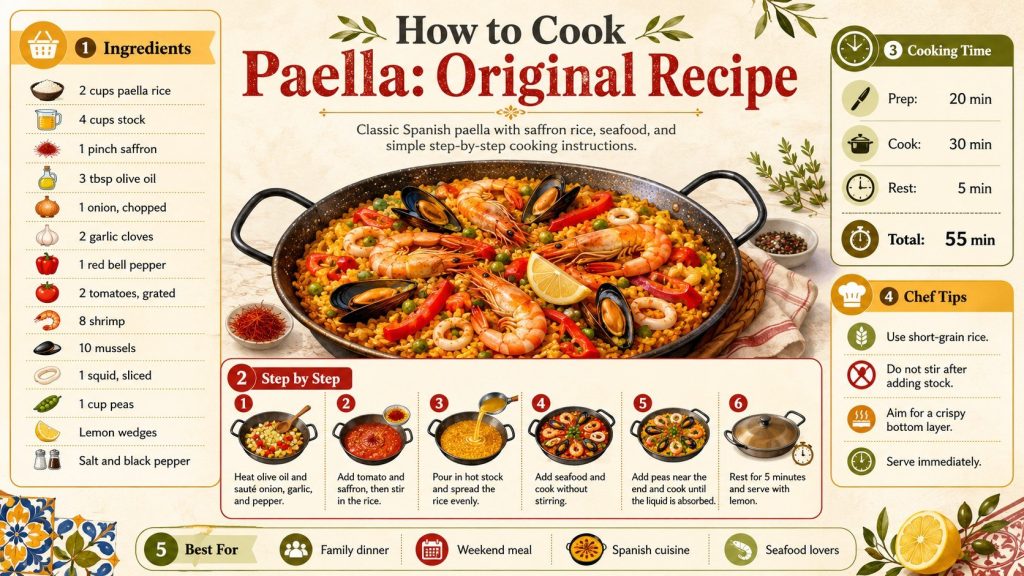
Ingredients for Original Paella Valenciana
This recipe serves 4 people. Use a paella pan measuring about 38–42 centimeters. A smaller pan creates a thick rice layer, which cooks less evenly.
| Ingredient | Amount | Possible substitute |
|---|---|---|
| Bomba or Calasparra rice | 400 g | Spanish short-grain rice |
| Chicken pieces | 500 g | Bone-in chicken thighs |
| Rabbit pieces | 400 g | Additional chicken |
| Flat green beans | 180 g | Romano or runner beans |
| Cooked garrofó beans | 120 g | Large butter beans |
| Ripe tomato, grated | 200 g | Plain crushed tomato |
| Extra-virgin olive oil | 60 ml | Mild Spanish olive oil |
| Sweet paprika | 1 teaspoon | Spanish smoked paprika |
| Saffron threads | 15–20 | Quality saffron powder |
| Water or light stock | 1.2–1.4 liters | Unsalted chicken stock |
| Rosemary | 1 small sprig | May be omitted |
| Salt | To taste | Fine sea salt |
Bomba rice is highly absorbent and remains relatively firm. Calasparra rice produces similar results. Arborio rice releases more starch and can make the dish creamy. Long-grain rice absorbs less broth and lacks the expected texture.
Bone-in chicken and rabbit strengthen the cooking liquid. Boneless meat cooks faster, but it contributes less depth. When rabbit is unavailable, use additional chicken thighs rather than breast meat.
The tomato must be ripe and flavorful. Watery tomatoes need longer cooking. Canned crushed tomatoes can work, but they should contain no herbs, sugar, or heavy seasoning.
Equipment Needed to Make Paella
A traditional paella pan is wide, shallow, and fitted with 2 handles. Carbon steel responds quickly to heat and supports the formation of socarrat. Stainless steel requires less maintenance but changes temperature more slowly.
Prepare the following equipment:
- 1 paella pan measuring 38–42 centimeters;
- 1 large burner or outdoor paella ring;
- 1 measuring jug;
- kitchen tongs;
- 1 box grater;
- 1 small bowl for saffron;
- aluminum foil or a clean kitchen towel.
A wide frying pan can replace a paella pan. Its base must sit evenly over the heat. Deep saucepans and Dutch ovens trap steam, producing soft and heavy rice.
Most domestic burners heat only the center of a large pan. Rotate the pan occasionally before adding the rice. After the rice enters, movement should remain minimal.
Carbon steel must be dried immediately after washing. Apply a thin coat of oil before storage. This prevents rust and keeps the surface ready for future cooking.
How to Prepare the Ingredients
Cut the chicken and rabbit into small bone-in portions. Dry the meat with paper towels. Moist meat steams before browning and cannot create a strong roasted base.
Grate the tomato and discard the skin. Trim the green beans into pieces measuring about 4 centimeters. Rinse the garrofó beans gently and allow them to drain.
Place the saffron threads in a dry pan for about 20 seconds. Use low heat and watch closely. Crush the warm threads and soak them in 100 milliliters of warm water.
Do not wash Bomba rice unless the package specifically recommends it. Surface starch is not the main problem in paella. Stirring and excessive liquid cause more damage.
Prepare every ingredient before heating the pan. Once the paprika enters hot oil, the next step must happen quickly. Burnt paprika creates an unpleasant bitterness that spreads through the entire dish.
How to Cook Paella Step by Step
Place the paella pan over medium-high heat. Add the olive oil and allow it to spread across the base.
Follow this order:
- Season the chicken and rabbit with salt.
- Brown the meat for 12–15 minutes.
- Turn each piece several times.
- Add the green beans.
- Cook the beans for about 4 minutes.
- Move the ingredients toward the pan’s edges.
- Add the grated tomato to the center.
- Cook it until thick and dark.
- Add the paprika for about 15 seconds.
- Pour in the water or stock immediately.
- Add the garrofó beans.
- Simmer for 25–30 minutes.
- Add the saffron infusion.
- Taste and correct the salt.
- Spread the rice evenly across the pan.
- Cook over strong heat for 8 minutes.
- Reduce the heat for another 8–10 minutes.
- Create the socarrat during the final minute.
- Rest the paella for 5–8 minutes.
The meat must become golden rather than black. Browning creates the foundation of the broth. Pale chicken produces a weaker result, while burnt edges introduce harsh flavors.
The tomato should lose almost all visible water. It will become thick, glossy, and slightly darker. This concentration principle also matters when preparing homemade tomato soup with a creamy texture. In paella, however, the tomato becomes part of the sofrito rather than a liquid base.
Paprika burns quickly. Stir it through the tomato and add liquid within seconds. Waiting too long can ruin the entire pan.
Once the rice is distributed, do not stir again. Stirring releases starch and prevents the formation of a stable crust. Use a spoon only to spread grains into empty areas during the first moments.
The Correct Rice-to-Liquid Ratio
A practical starting point is about 3 parts liquid to 1 part Bomba rice by volume. However, evaporation changes with the pan diameter, burner strength, weather, and cooking temperature.
For 400 grams of rice, prepare 1.2–1.4 liters of liquid. Keep another 150 milliliters of hot stock nearby. It can rescue rice that remains firm after the main liquid disappears.
Never add cold water during cooking. Cold liquid interrupts boiling and creates uneven doneness. Heat any additional stock before pouring it around the driest sections.
The broth should taste slightly more seasoned than finished soup. Rice absorbs salt and weakens the initial intensity. Correcting the seasoning after cooking is much harder.
Watch the pan instead of trusting a timer alone. The rice should gradually emerge above the liquid. Small holes will appear between the grains as steam escapes.
How to Make Crispy Socarrat
Socarrat is the toasted layer at the bottom of the pan. It should be crisp, aromatic, and brown. Black rice with a bitter smell is burned, not properly caramelized.
Listen during the final minutes. Gentle crackling means the remaining moisture is disappearing. Loud frying sounds indicate that the bottom may be overheating.
Raise the heat for 30–60 seconds when the rice is almost ready. Smell the steam above the pan. A nutty, toasted aroma signals that the crust is forming.
Slide the edge of a metal spoon under the rice. The bottom should offer slight resistance. Do not scrape the pan aggressively before resting.
Resting allows residual heat to finish the crust. It also redistributes moisture across the rice. Cover the pan loosely, since a tight lid traps steam and softens the surface.
Common Paella Mistakes
Several errors can turn an authentic Spanish paella recipe into a soft rice casserole. Most failures involve the wrong cookware, unsuitable rice, or excessive movement.
Avoid these common mistakes:
- using a deep or narrow pot;
- adding too much rice for the pan;
- stirring after the rice enters;
- using only turmeric instead of saffron;
- pouring in heavily salted stock;
- covering the pan during active cooking;
- adding cold liquid halfway through;
- burning the tomato or paprika;
- serving without resting;
- overloading the surface with toppings.
A deep pan limits evaporation. The upper grains may remain wet while the bottom becomes overcooked. Paella needs a thin layer rather than a deep mound.
Turmeric creates yellow rice but cannot replace saffron’s aroma. A small amount of real saffron is more useful than several spoonfuls of turmeric.
Too many toppings also cause problems. They block evaporation and make serving difficult. The rice should remain the central feature of the dish.
If the rice is still hard, add a small amount of hot stock. Pour it around the firm areas rather than flooding the whole pan. Continue over low heat.
If the grains become soft, remove the pan immediately. Extra cooking will not restore their structure. Let the dish rest uncovered for several minutes.
Can You Make Seafood Paella?
Seafood paella is a recognized Spanish variation. It usually contains prawns, mussels, squid, clams, or firm white fish. The cooking liquid should be based on fish rather than chicken.
Sear the prawns briefly and remove them. Cook squid in the same oil, then prepare the tomato base. Return the prawns during the final 5 minutes.
Mussels need enough steam to open. Add them during the final 7–8 minutes. Discard shells that remain closed after proper cooking.
Octopus requires separate preparation because raw tentacles do not become tender within normal paella cooking time. This guide to cleaning and cooking octopus until tender explains the correct simmering and finishing stages.
Precooked octopus should enter the pan near the end. Extended cooking can make it dry or rubbery. Cut it into manageable pieces and place them across the rice during the final minutes.
How to Serve Paella
Serve paella directly from the pan after resting. Place it at the center of the table. Portions should include rice from both the center and the crisp outer areas.
Offer lemon wedges separately. Excessive lemon can hide saffron and roasted meat flavors. A simple tomato salad provides cleaner acidity.
Paella is substantial, so side dishes should remain restrained. Bread is usually unnecessary because the meal already contains plenty of starch.
Good accompaniments include:
- tomato and onion salad;
- roasted peppers;
- marinated olives;
- grilled artichokes;
- chilled sparkling water;
- dry Spanish white or light red wine.
Dessert should remain fresh and balanced. Citrus sorbet, seasonal fruit, or a thin pastry works well. A classic homemade fruit tart with crisp pastry provides a suitable finish without overwhelming the meal.
Serve the paella within several minutes after resting. Delayed serving softens the grains and weakens the crust. Refrigerate leftovers within 2 hours.
Reheat leftovers in a wide frying pan. Add only a few drops of water and cover briefly. Remove the lid at the end to restore some crispness.
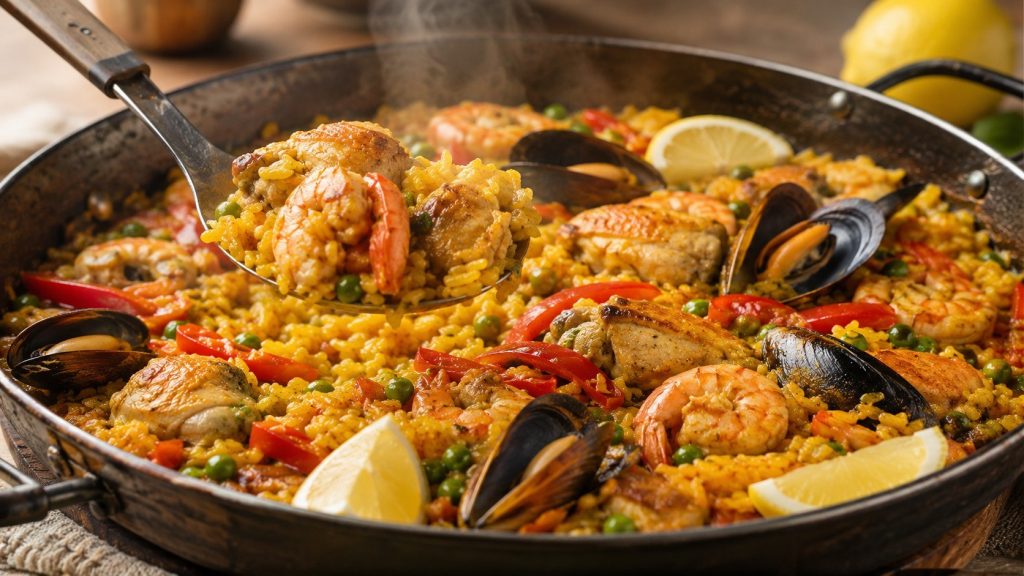
How to Store Leftover Paella
Transfer leftover paella into a shallow container. Do not leave the entire pan at room temperature for several hours. Cooked rice requires careful cooling and refrigeration.
Store meat paella for no longer than 24–48 hours. Seafood paella is best eaten within 24 hours. Reheat only the portion needed.
Freezing is possible, but the rice texture will change. Beans may also become softer. Freeze cooled portions in airtight containers and use them within 1 month.
Thaw frozen paella in the refrigerator. Reheat it until steaming throughout. Avoid repeated cooling and reheating.
FAQ
What Is the Secret to Good Paella?
The main secret is building flavor before adding rice. Brown the meat thoroughly, reduce the tomato, and season the broth. After adding rice, stop stirring.
What Rice Is Best for Paella?
Bomba rice is the most reliable option. Calasparra and Senia rice also work well. Avoid instant rice, long-grain rice, and strongly starchy risotto rice.
Should Paella Be Stirred?
No. Spread the rice once and leave it undisturbed. Continued stirring releases starch and prevents socarrat from forming.
Does Authentic Paella Contain Seafood?
Traditional Valencian paella contains chicken, rabbit, beans, tomato, saffron, and rice. Seafood belongs to a separate coastal version.
Can I Cook Paella Without a Paella Pan?
Yes. Use the widest and shallowest frying pan available. Keep the rice layer thin and monitor uneven heating.
Can I Replace Rabbit With Chicken?
Yes. Use additional bone-in chicken thighs or drumsticks. Avoid replacing all the meat with chicken breast, which dries quickly.
Why Is My Paella Rice Still Hard?
The liquid may have evaporated too quickly. Add a small amount of hot stock and continue cooking over low heat.
Why Is My Paella Wet?
The pan may be too narrow, the heat may be too low, or too much stock was added. Increase the heat carefully and allow moisture to evaporate.
How Long Should Paella Rest?
Rest it for 5–8 minutes. Cover it loosely with foil or a clean towel. Do not seal the pan tightly.
How Do I Know When Paella Is Ready?
The liquid should be absorbed, and the grains should remain separate. The bottom should crackle gently and smell toasted rather than burnt.
Earlier we wrote about How to Make French Croissants at Home: Classic Recipe and Delicious Fillings