 Frank Rondel
How to make tomato soup is one of those kitchen questions that looks simple until the pot is on the stove. The difference between a flat red liquid and a rich, silky bowl is not expensive equipment. It is heat control, tomato choice, acidity balance, and a few patient minutes with onion, garlic, and oil, as noted by customreceipt.com.
A good tomato soup should taste bright, not sharp. It should feel smooth without becoming heavy. It should work with pantry tomatoes in winter and ripe market tomatoes in summer. This recipe gives you both options, plus practical fixes for soup that tastes too sour, too thin, or too bland.
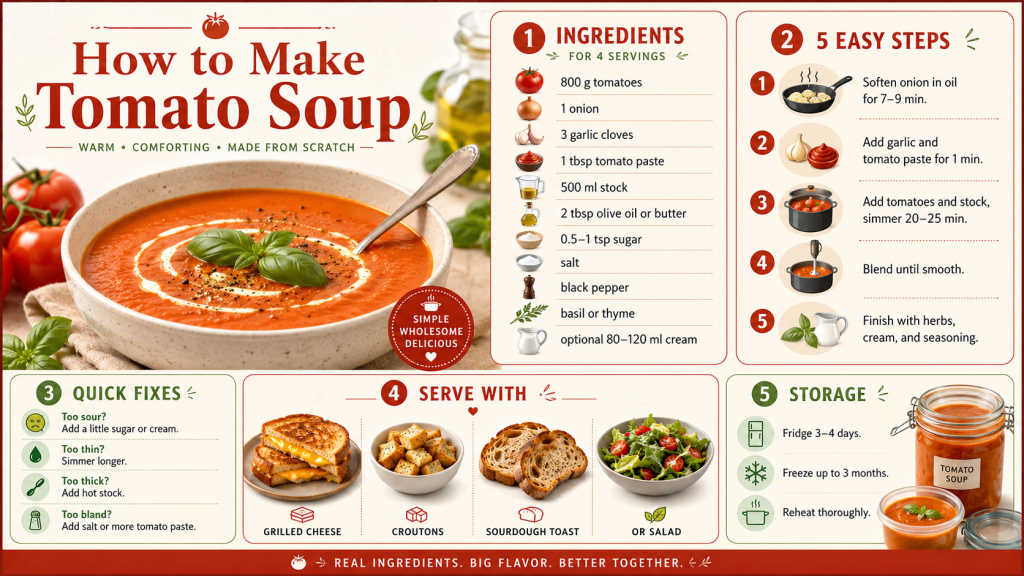
Ingredients for homemade tomato soup
For 4 servings, you need a short list. The flavor comes from how you cook these ingredients, not from adding 20 extras. If you like practical home cooking, the same logic appears in this guide to homemade bread with a crispy crust: simple ingredients give better results when timing and texture are controlled.
| Ingredient | Amount | Why it matters |
|---|---|---|
| Canned whole tomatoes or ripe fresh tomatoes | 800 g | Main body and acidity |
| Olive oil or butter | 2 tbsp | Helps soften onion and carry flavor |
| Yellow onion | 1 medium | Adds sweetness and depth |
| Garlic | 3 cloves | Gives aroma without overpowering |
| Tomato paste | 1 tbsp | Adds concentrated tomato flavor |
| Vegetable or chicken stock | 500 ml | Controls thickness and seasoning |
| Sugar or honey | 0.5–1 tsp | Balances acidity if needed |
| Salt | 1–1.5 tsp | Brings tomato flavor forward |
| Black pepper | 0.5 tsp | Adds warmth |
| Basil, thyme, or oregano | 1–2 tsp | Gives a fresh herbal layer |
| Cream, milk, or coconut milk | 80–120 ml | Optional, for a softer finish |
Use canned whole tomatoes when fresh tomatoes are pale, watery, or out of season. Whole canned tomatoes usually keep better texture than pre-crushed ones. If using fresh tomatoes, choose ripe Roma, plum, or beefsteak tomatoes and roast them first. Roasting removes excess water and builds sweetness. Do not add cream too early, because strong acidity and high heat can make dairy split. Add it near the end, after blending.
Step-by-step tomato soup recipe
Start with a heavy pot or Dutch oven. Heat 2 tbsp olive oil or butter over medium heat. Add the chopped onion with a pinch of salt and cook for 7–9 minutes, until soft and lightly golden.
Add minced garlic and tomato paste. Stir for 1 minute. This small step matters because tomato paste tastes raw if it is only dissolved in liquid. Frying it briefly gives the soup a deeper color and a warmer taste.
Add the tomatoes with their juices. Break them with a spoon. Pour in 500 ml stock, add black pepper, and bring the pot to a gentle simmer. Cook for 20–25 minutes, uncovered, until the soup smells sweet and the tomatoes lose their raw edge.
Blend until smooth with an immersion blender. For an extra silky texture, pass the soup through a fine sieve. Taste before adding cream. Adjust with salt, a pinch of sugar, or a splash of stock.
Basic method:
- Soften onion slowly, not aggressively.
- Fry garlic and tomato paste for aroma.
- Simmer tomatoes with stock until mellow.
- Blend until smooth.
- Finish with herbs, cream, and final seasoning.
This order keeps the soup clean and balanced. Onion needs time to turn sweet. Garlic needs only a short contact with heat. Tomatoes need enough simmering to relax their acidity. Cream belongs at the end because it is a finishing ingredient, not a boiling base. If the soup seems too thick after blending, loosen it with 50–100 ml hot stock. If it tastes too thin, simmer it for 5–8 minutes more.
How to make tomato soup creamy without making it heavy
Creamy tomato soup does not need a full cup of heavy cream. You can create body with olive oil, cooked onion, a small carrot, white beans, or even a slice of stale bread blended into the pot. These options make the soup feel round without turning it into a sauce.
For a classic creamy version, add 80–120 ml cream after blending. Keep the heat low. Stir gently and stop before the soup boils hard. The color should turn orange-red, not pale pink.
Useful creamy additions:
- 1 small carrot, cooked with the onion
- 80 ml heavy cream for a restaurant-style texture
- 100 ml milk for a lighter version
- 100 g white beans for protein and thickness
- 1 tbsp butter at the end for shine
- 1 slice sourdough bread, simmered and blended
Each option changes the character of the soup. Carrot makes it sweeter. Beans make it more filling. Bread gives a Tuscan-style body. Butter adds gloss and softens acidity. Milk works, but it gives less richness than cream. Coconut milk is useful for a dairy-free soup, though it adds its own flavor.
For readers who want a cold, creamy idea after a warm soup course, this protein ice cream recipe with Greek yogurt and frozen banana is a useful follow-up. It uses the same kitchen principle: texture depends on liquid control, not on complicated equipment.
Fresh tomatoes or canned tomatoes: which is better?
Fresh tomatoes are best when they smell sweet before cutting. If they look beautiful but taste watery, the soup will taste watery too. In that case, canned tomatoes are the safer choice.
Canned tomatoes are picked and processed at high ripeness, which makes them reliable. They also save time. For a weeknight dinner, canned whole tomatoes produce a stronger result than average supermarket fresh tomatoes.
Fresh tomatoes need one extra step. Cut them in half, place them on a tray, add oil and salt, then roast at 200°C / 400°F for 25–35 minutes. Their edges should wrinkle and darken slightly. Add them to the pot with their juices.
Best uses:
- Canned tomatoes: fast dinner, winter cooking, consistent flavor
- Fresh tomatoes: summer soup, garden tomatoes, roasted version
- Cherry tomatoes: sweeter soup with less cooking time
- Fire-roasted canned tomatoes: smoky flavor with no extra work
The best answer depends on season. In July or August, fresh ripe tomatoes can make a brighter soup. In colder months, canned tomatoes usually win. Do not mix excellent fresh tomatoes with weak canned tomatoes just to use both. The soup should have one clear tomato profile. If you want extra complexity, add a few roasted cherry tomatoes as garnish instead.
Seasoning tomato soup: salt, sugar, acid, and herbs
Tomato soup often fails because cooks season it only once. Tomatoes change while they simmer. Their acidity softens, the liquid reduces, and salt becomes more noticeable. Taste at the beginning, in the middle, and at the end.
Salt is not just for saltiness. It opens the tomato flavor. Sugar is not for making the soup sweet. It corrects sharp acidity when tomatoes are too aggressive.
Add herbs with intention. Basil gives a fresh, sweet aroma. Thyme makes the soup more savory. Oregano pushes it toward an Italian profile. Smoked paprika creates a warmer, deeper bowl.
A simple seasoning guide:
- Too sour: add 0.5 tsp sugar, 1 tbsp cream, or 1 small cooked carrot.
- Too bland: add salt, tomato paste, or a splash of good stock.
- Too thin: simmer uncovered for 8–10 minutes.
- Too thick: add hot stock in small amounts.
- Too flat: add basil, black pepper, or a few drops of lemon juice.
- Too harsh: cook 10 minutes longer on low heat.
Do not fix everything at once. Change 1 thing, stir, and taste. A small amount of sugar can save sharp tomatoes, but too much will make the soup taste commercial. Lemon juice is useful only when the soup lacks brightness, not when it is already sour. Cream softens the soup, but it also mutes herbs and salt. Final seasoning should happen after blending, because texture changes how flavor lands.
What to serve with tomato soup
Tomato soup is famous with grilled cheese because fat, crunch, and salt match the acidity of tomatoes. Still, there are better options when you want a lighter lunch or a more complete dinner.
A crusty sourdough slice works well with olive oil and black pepper. Garlic croutons add texture. A boiled egg turns the soup into a quick meal. Chickpeas, lentils, or small pasta make it more filling. For a more ambitious dinner, readers can also pair soup with a pasta course such as pappardelle with sous vide beef and asparagus, where slow cooking and timing shape the final texture.
Good pairings:
- Grilled cheese with cheddar or Gruyère
- Sourdough toast with olive oil
- Garlic croutons and basil
- Roasted chickpeas
- Small pasta, such as orzo
- Mozzarella toast
- Green salad with lemon dressing
Choose the side by the soup’s texture. A creamy soup likes something crisp. A chunky tomato soup can handle pasta or beans. If the soup is rich, avoid a heavy sandwich with too much butter. For dinner, serve it with salad and bread rather than only cheese. For lunch, a smaller bowl with toast is enough. The goal is contrast: soft soup, crisp side, clean acidity.
Storage, reheating, and meal prep
Cool tomato soup before storing, but do not leave it out for hours. Divide it into shallow containers so it cools quickly. Refrigerate within 2 hours. Homemade tomato soup usually keeps well for 3–4 days in the fridge.
For freezing, skip the cream if possible. Dairy can separate after thawing. Freeze the tomato base, then add cream after reheating. Use airtight containers and leave a little space at the top because liquid expands.
When reheating, warm the soup slowly and stir often. Soups and sauces should be reheated thoroughly, not only warmed at the edges. For travel planning and food safety, this guide on how to transport food in checked baggage safely is also useful for readers who cook at home before flights.
Practical storage rules:
- Fridge: 3–4 days in a sealed container
- Freezer: up to 3 months for best quality
- Reheat: bring to a steady boil
- Cream: add after thawing for best texture
- Containers: use shallow boxes for faster cooling
Meal prep works especially well with tomato soup because flavor improves overnight. The onion, tomato paste, and herbs settle into a smoother taste. Keep toppings separate, or croutons will turn soft. If the soup thickens in the fridge, add a splash of stock while reheating. Do not reheat the same pot several times. Warm only the portion you plan to eat.
Common mistakes when making tomato soup
The first mistake is rushing the onion. Raw onion flavor is easy to recognize, and it makes the soup taste unfinished. Give it time on medium heat.
The second mistake is adding too much liquid early. Soup can always be thinned later. It is harder to rebuild flavor after drowning tomatoes in stock.
The third mistake is using cream to hide weak flavor. Cream can soften acidity, but it cannot replace salt, heat, or good tomatoes. Fix the base first.
Avoid these errors:
- Burning garlic before adding tomatoes
- Using watery fresh tomatoes without roasting
- Adding cream during hard boiling
- Forgetting tomato paste
- Blending before the tomatoes fully simmer
- Serving without final tasting
A strong tomato soup is built in layers. Onion gives sweetness. Tomato paste gives depth. Simmering gives maturity. Blending gives texture. Herbs give freshness. Final seasoning ties everything together. When one layer is missing, the soup may still look fine, but it will taste incomplete.
FAQ
How long should tomato soup simmer?
Tomato soup should simmer for 20–25 minutes after the tomatoes and stock are added. This is enough time for canned tomatoes to mellow and for onion flavor to blend into the base. Fresh roasted tomatoes may need less time because roasting already concentrates them.
Can I make tomato soup without cream?
Yes. Use olive oil, carrot, white beans, or bread for body. These options make the soup smooth without dairy. Coconut milk also works, but it adds a noticeable flavor.
Why does my tomato soup taste sour?
It usually tastes sour because the tomatoes are very acidic, undercooked, or not balanced with salt. Add a small pinch of sugar, cook the soup longer, or stir in a little cream. A cooked carrot also helps.
Can I use fresh tomatoes instead of canned tomatoes?
Yes, but roast them first for better flavor. Fresh tomatoes contain more water, so roasting helps concentrate sweetness. Use about 900 g fresh tomatoes for 4 servings.
How do I make tomato soup thicker?
Simmer it uncovered for 8–10 minutes, add a small cooked carrot, or blend in white beans. You can also use less stock at the start. Add more liquid only after blending.
What is the best herb for tomato soup?
Basil is the most classic choice. Thyme gives a deeper savory taste, while oregano makes the soup taste more Mediterranean. Use 1 main herb rather than mixing too many.
Earlier we wrote about How to Cook Shashlik Without a Grill at Home: Juicy Oven Recipe and Marinade Hacks