 Frank Rondel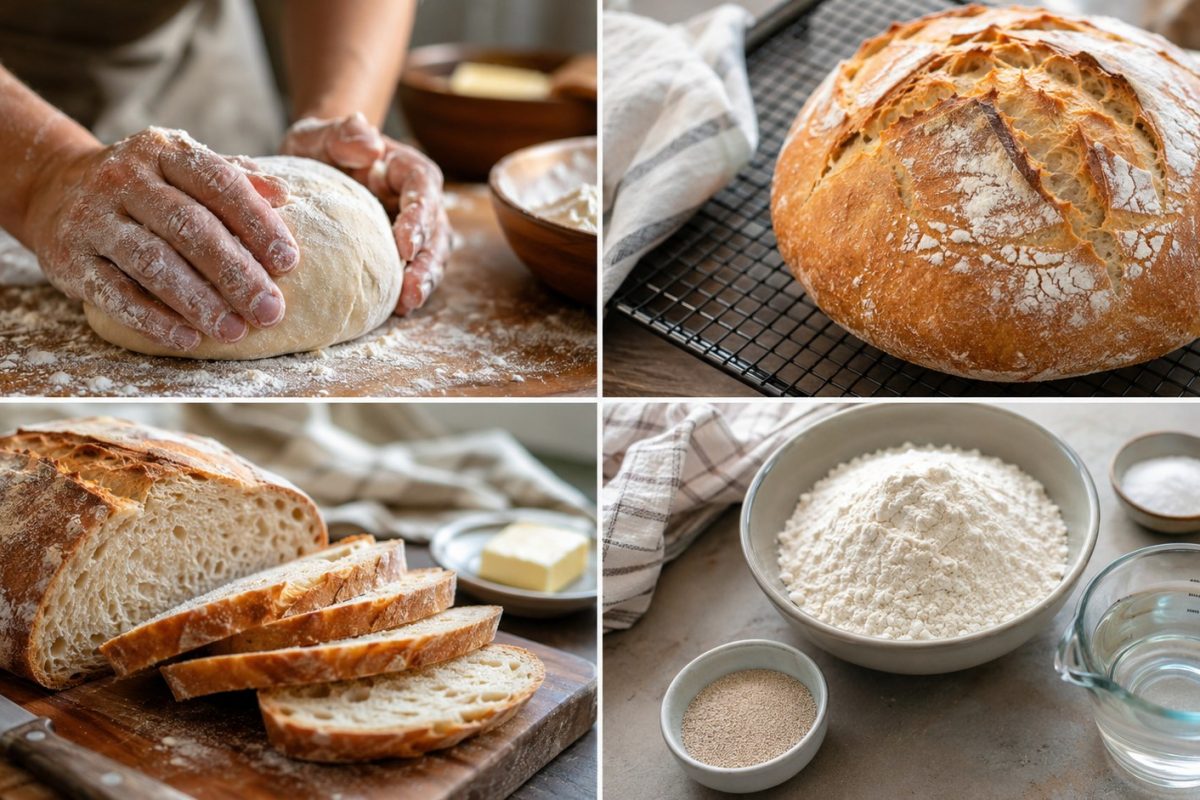
How to make homemade bread remains one of the fastest-growing food searches in 2026. Many families now prefer baking at home because store bread prices continue rising. Fresh bread creates a richer aroma, softer texture, and better flavor than mass-produced products. Homemade baking also gives complete control over ingredients and fermentation time. As noted by the editorial team of customreceipt.com, more readers now search for practical kitchen recipes instead of processed food alternatives.
Making bread from scratch sounds complicated at first. In reality, beginners can bake a quality loaf with simple ingredients and patience. The process becomes easier after understanding flour, yeast, and fermentation basics. A good loaf depends more on timing than expensive equipment. Many home cooks also improve other recipes after mastering dough preparation, including dishes like homemade udon, where texture and resting time matter equally.
Why homemade bread tastes different from supermarket bread
Store bread focuses mainly on long shelf life. Homemade bread focuses on freshness and flavor. That single difference changes everything from crust texture to aroma. Fresh loaves develop natural air pockets and richer taste during slow fermentation.
Another important factor is ingredient quality. Bakers can choose organic flour, filtered water, or less sugar. Many commercial breads contain preservatives and stabilizers. Homemade recipes avoid many unnecessary additives.
People also enjoy the emotional side of baking. Bread often becomes part of weekend family traditions. The smell alone changes the atmosphere inside the kitchen.
Before starting, understanding ingredient roles helps prevent common mistakes.
| Ingredient | Main Purpose | Helpful Tip |
|---|---|---|
| Bread flour | Creates gluten structure | Use high-protein flour |
| Yeast | Helps dough rise | Fresh yeast works faster |
| Salt | Improves flavor | Add after mixing flour |
| Warm water | Activates yeast | Ideal temperature is 35–40°C |
| Olive oil | Adds softness | Optional but useful |
Ingredient balance changes bread dramatically. Small flour differences affect hydration and elasticity. Water quality also influences fermentation speed. Even experienced bakers continue adjusting recipes over time. Beginners should avoid changing measurements during the first attempts.
Fresh bread also teaches ingredient balance. The same principle matters in other homemade recipes, including this guide on homemade udon, where texture depends on flour, water, and resting time.
Essential kitchen tools for homemade bread
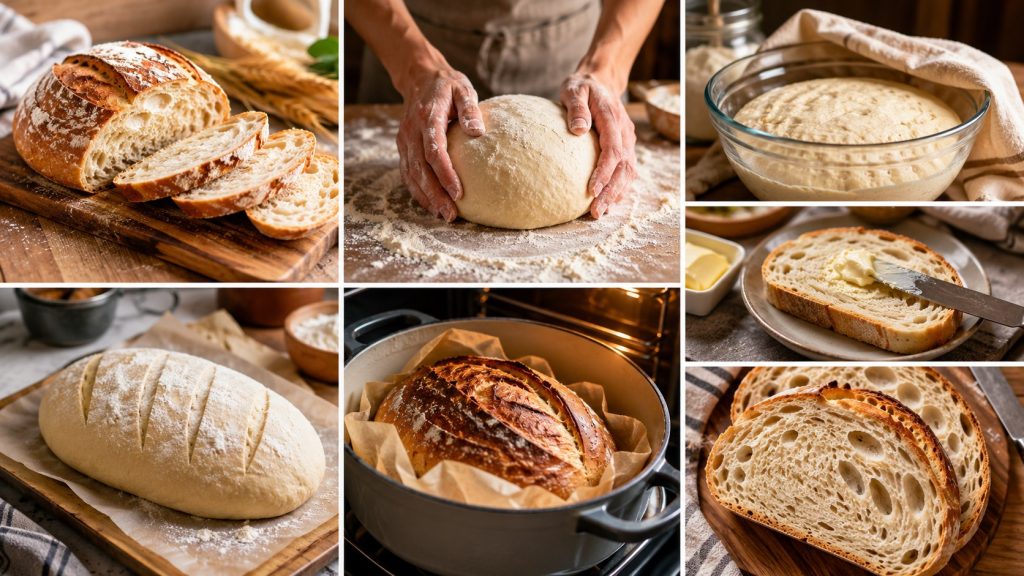
Professional bakery tools are unnecessary for beginners. Most kitchens already contain basic equipment needed for bread baking. However, several tools improve consistency and texture significantly.
Useful bread-making tools include:
- Large mixing bowl
- Kitchen scale
- Dough scraper
- Baking tray or Dutch oven
- Sharp knife for scoring
- Kitchen towel for covering dough
A kitchen scale remains one of the most important upgrades. Measuring flour by cups creates inconsistent hydration levels. Even 20–30 extra grams can change dough texture.
Steam also improves crust development. Professional bakeries use steam ovens for crispy surfaces. Home bakers can place hot water inside a metal tray during baking. This method creates a bakery-style crust naturally.
For readers who like detailed home cooking methods, the step-by-step guide on BBQ ribs in the oven also shows how temperature and patience change the final texture.
Temperature control matters in many recipes. Readers who enjoy precise cooking techniques may also like this guide on BBQ ribs in the oven, where cooking temperature changes texture completely.
Step-by-step homemade bread recipe for beginners
This recipe creates a classic loaf with crispy crust and soft interior. The dough stays manageable even for first-time bakers.
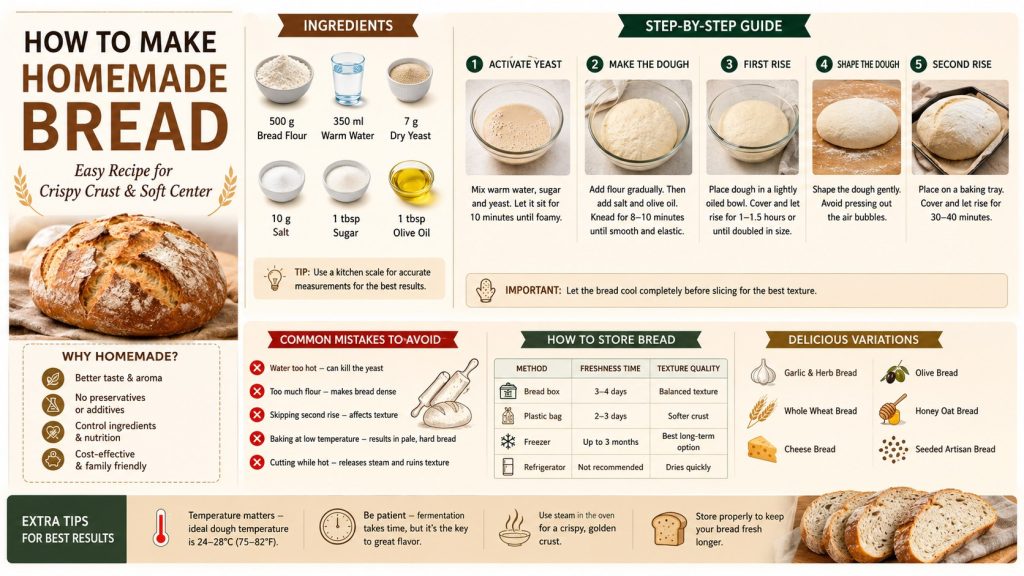
Ingredients:
- 500 g bread flour
- 350 ml warm water
- 7 g dry yeast
- 10 g salt
- 1 tablespoon sugar
- 1 tablespoon olive oil
Mix warm water, sugar, and yeast in a bowl. Leave the mixture for 10 minutes until bubbles appear. That confirms yeast activity.
Gradually add flour while mixing slowly. Add salt and olive oil afterward. Knead the dough for around 10 minutes until smooth and elastic.
Place dough inside a lightly oiled bowl. Cover with a towel and leave for 1–1.5 hours. The dough should double in size during fermentation.
Shape the loaf carefully after the first rise. Avoid pressing out all air bubbles. Place dough onto a tray and allow another 30–40 minutes for the second rise.
Bake at 220°C for 30–35 minutes. Add hot water inside the oven during the first baking stage.
Bread should cool completely before slicing. Cutting too early releases steam and damages texture.
Common bread mistakes beginners often make
Most failed loaves happen because of small technical mistakes. Fortunately, those problems are easy to fix after understanding fermentation basics.
The most common baking mistakes include:
- Water temperature being too hot
- Using excessive flour during kneading
- Skipping the second rise
- Baking at low temperature
- Cutting bread immediately after baking
Yeast becomes inactive in very hot water. Dough also turns heavy when extra flour gets added repeatedly. Sticky dough feels uncomfortable at first, but softer dough usually creates lighter bread.
Second fermentation remains essential for flavor and structure. Many beginners skip this stage because they feel impatient. However, the second rise creates better internal texture and air distribution.
Cooling is equally important. Bread continues cooking internally after leaving the oven. Steam redistribution stabilizes the crumb naturally.
How to store homemade bread correctly
Fresh homemade bread contains fewer preservatives than supermarket products. Proper storage therefore becomes extremely important.
Cotton bread bags work better than plastic packaging. Plastic traps moisture and softens crust quickly. Bread boxes often provide the best balance between airflow and freshness.
Freezing also works surprisingly well. Sliced bread freezes more conveniently and reduces waste later. Toasting frozen slices restores texture effectively.
| Storage Method | Freshness Time | Texture Quality |
| Bread box | 3–4 days | Balanced texture |
| Plastic bag | 2–3 days | Softer crust |
| Freezer | Up to 3 months | Best long-term option |
| Refrigerator | Not recommended | Bread dries quickly |
Homemade bread remains useful even after becoming slightly stale. Older slices work perfectly for croutons, breadcrumbs, or French toast. Nothing truly needs to be wasted in home baking.
Bread variations worth trying after the first loaf
After mastering a classic recipe, many bakers experiment with different flavors. Small additions completely transform bread texture and aroma.
Popular homemade bread variations include:
- Garlic and herb bread
- Whole wheat bread
- Cheese bread
- Olive bread
- Honey oat bread
- Seeded artisan bread
Whole wheat flour absorbs more water than white flour. Cheese bread develops softer texture and stronger aroma. Seed mixes improve crunch and nutrition.
Sweet bread recipes also pair perfectly with warm drinks. Many readers combine fresh loaves with recipes like homemade hot chocolate during colder months.
Sourdough bread continues growing in popularity worldwide. However, sourdough starters require more patience and maintenance. Beginners should first understand classic yeast fermentation before moving toward advanced techniques.
Earlier, we also wrote about how to prepare Philadelphia sushi rolls at home with simple ingredients and restaurant-style texture.
FAQ
Why is my homemade bread dense?
Dense bread usually results from weak yeast, under-kneading, or short fermentation time. Cold kitchens also slow dough development.
Can I use all-purpose flour instead of bread flour?
Yes. All-purpose flour works well for beginners. Bread flour simply creates stronger gluten structure.
Why does bread crack during baking?
Cracking often happens because dough was under-proofed or lacked steam during baking.
How long should dough rise?
Most bread dough needs 1–2 hours for the first rise and 30–45 minutes for the second rise.
Is homemade bread healthier than store bread?
Usually yes. Homemade bread contains fewer preservatives and allows full ingredient control.
Can homemade bread be frozen?
Yes. Bread freezes well for up to 3 months when sliced properly before storage.
Earlier we wrote about How to Make Pappardelle With Sous Vide Beef and Asparagus: Restaurant-Style Pasta Recipe at Home