 Frank Rondel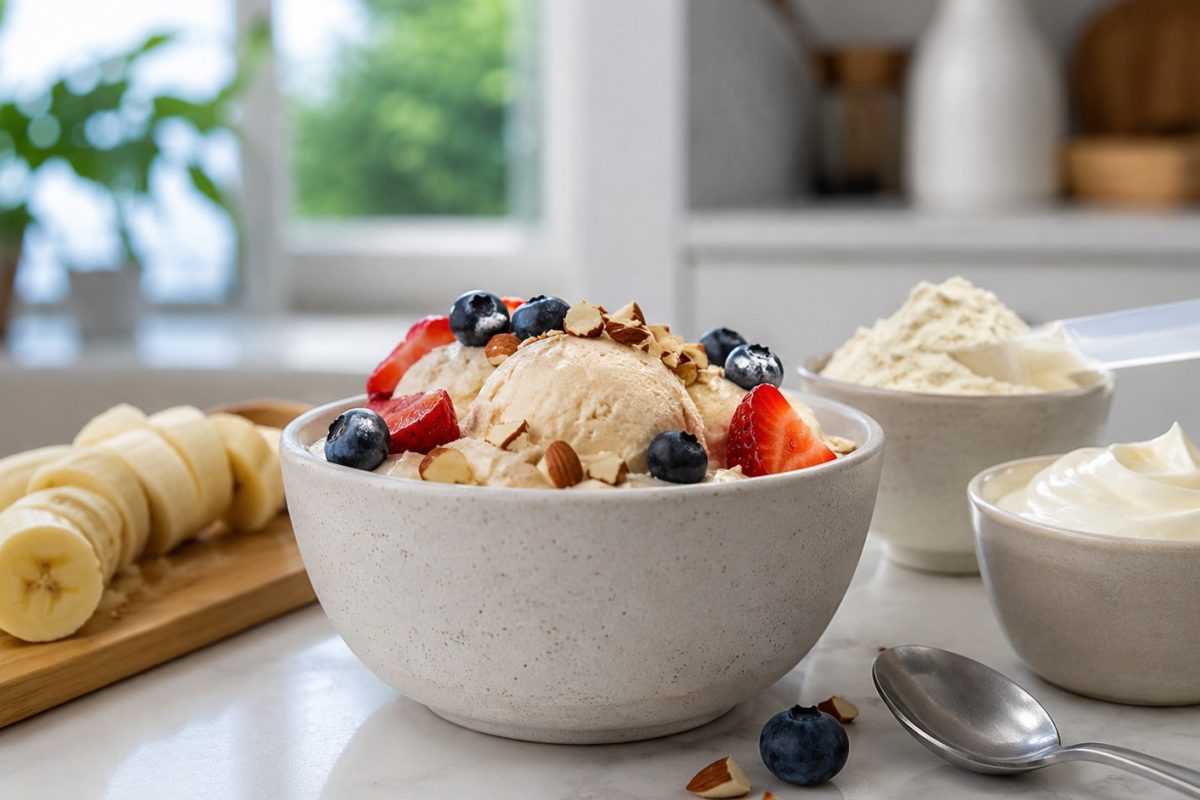
Protein ice cream has moved far beyond a fitness trend. It is now a practical homemade dessert for people who want something cold, creamy and satisfying without a heavy sugar load. The idea is simple: take a few high-protein ingredients, blend them into a thick base and freeze them just long enough to get a soft, scoopable texture. The best versions taste closer to real ice cream than to a protein shake, especially when Greek yogurt, frozen fruit and a good protein powder work together. This recipe is easy enough for a weekday evening, but detailed enough to avoid the common icy texture, as noted by customreceipt.com.
Why protein ice cream became so popular
A good protein ice cream recipe answers a very modern problem. Many people want dessert, but they also want it to fit into a balanced routine.
Classic ice cream is delicious, yet it is often high in sugar and low in protein. Homemade protein ice cream gives more control over ingredients, sweetness and portion size. It also feels more practical because you can change the recipe for training days, evening cravings or a lighter weekend dessert. That flexibility explains why the search for high-protein frozen desserts keeps growing.
The texture is the real challenge.
If you simply mix protein powder with milk and freeze it, you usually get a hard, icy block. That is why the base needs creamy ingredients. Greek yogurt, skyr, cottage cheese, banana or nut butter help the mixture stay smoother. Readers who enjoy simple home cooking may also like this guide on how to make homemade bread, where timing and texture also decide the final result.
Protein ice cream is not about making dessert “perfectly clean”. It is about making it more useful, more filling and still enjoyable.
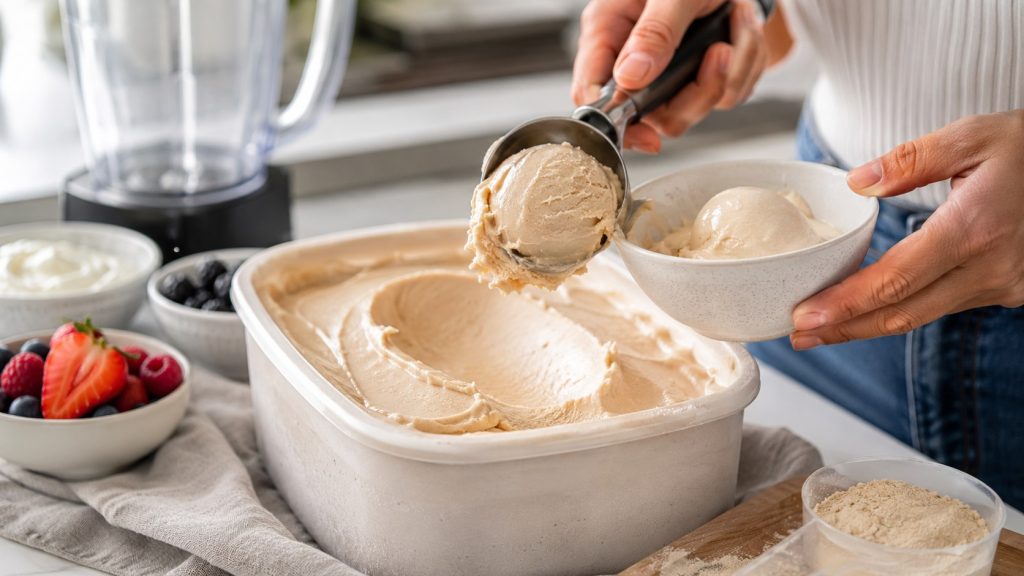
Ingredients for a creamy protein ice cream recipe
The basic version needs only a few ingredients. You do not need an ice cream machine.
A strong blender or food processor is enough. Use frozen fruit as the cold base because it gives body from the first seconds of blending. Banana gives the creamiest texture, while berries make the dessert lighter and fresher. Greek yogurt adds density and protein. Protein powder gives structure, but it should not dominate the flavor.
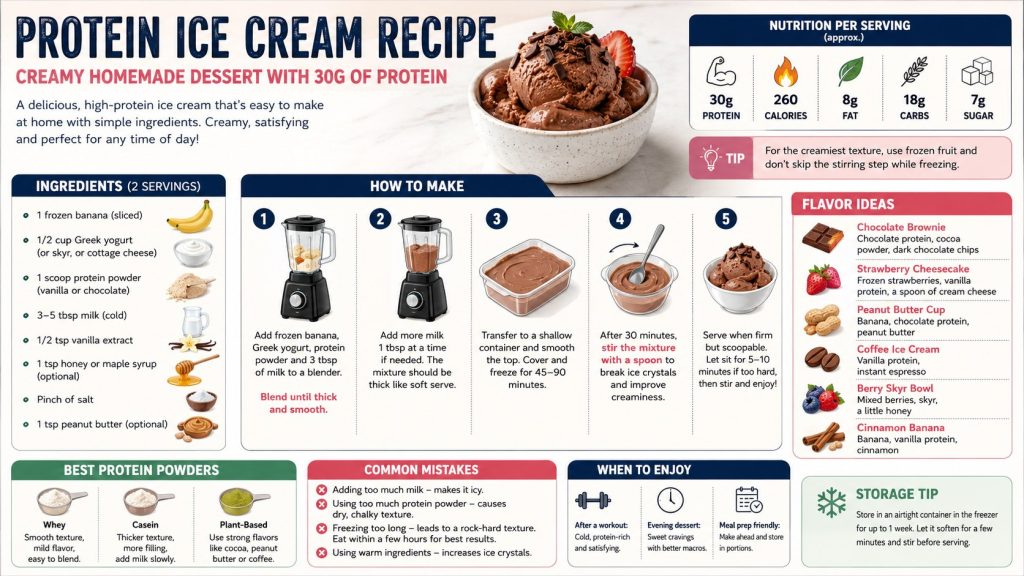
For two small servings, prepare:
- one frozen banana, sliced before freezing;
- half cup Greek yogurt, skyr or thick cottage cheese;
- one scoop vanilla or chocolate protein powder;
- three to five tablespoons cold milk;
- half teaspoon vanilla extract;
- one teaspoon honey or maple syrup, if needed;
- a pinch of salt;
- one teaspoon peanut butter, optional.
Do not add all the milk at once.
This is one of the most important details. Too much liquid helps the blender for a moment, but it ruins the final texture after freezing. The base should look thick, almost like soft serve, before it goes into the freezer.
Taste the mixture before you freeze it. Some protein powders are already very sweet, while others need a little honey or maple syrup. A pinch of salt also helps because it makes the flavor deeper and less flat.
How to make protein ice cream step by step
Start with the frozen banana, Greek yogurt and protein powder. Place them in the blender and add three tablespoons of cold milk.
Blend slowly at first, then increase the speed. Stop once or twice to scrape down the sides. The mixture should become thick and glossy, not thin and pourable. If the blender cannot move, add one more tablespoon of milk. Do this carefully because the base must stay dense.
Once the texture looks smooth, transfer it into a shallow container.
Cover it and place it in the freezer for 45 to 90 minutes. After 30 minutes, stir the mixture with a spoon. This small step helps reduce ice crystals and gives the dessert a softer texture. It also makes the final scoop look closer to real ice cream.
“The difference between creamy and icy homemade ice cream often comes down to liquid control and freezing time.”
Serve the dessert when it is firm but still scoopable. If it becomes too hard, leave it on the counter for about 10 minutes. Then stir it again before serving. That simple move brings back a softer texture.
For readers who like precise kitchen techniques, the same logic appears in this recipe for pappardelle with sous vide beef and asparagus, where temperature and timing shape the final texture.
The best protein powder for homemade ice cream
Whey protein usually gives the smoothest result.
It blends well, tastes mild and does not thicken too aggressively. Vanilla whey works especially well with banana, berries and peanut butter. Chocolate whey is better for a richer dessert. If you are making this recipe for the first time, whey is usually the safest choice.
Casein behaves differently. It absorbs more liquid and creates a thicker, pudding-like base.
This can be useful, but it may also make the mixture too dense. If you use casein, add milk slowly and blend longer. The texture can be excellent, but it needs more control. Too much casein can make the dessert feel heavy.
Plant protein can work too.
Pea, rice or mixed plant protein powders are often grainier. They may need a stronger flavor base, such as cocoa, peanut butter or coffee. The most practical rule is simple: use a protein powder you already enjoy in a shake. Freezing will not hide a chalky or artificial taste.
Flavor ideas that actually work
Once the basic recipe works, you can change the flavor without rebuilding everything. The trick is to keep the structure stable.
Every extra ingredient changes texture. Cocoa powder makes the base thicker. Berries add more water. Peanut butter makes the dessert smoother and richer. That is why the base should remain dense before freezing, even when you add flavor boosters.
Here are several combinations that work well:
- chocolate brownie style: chocolate protein, cocoa powder and dark chocolate chips;
- strawberry cheesecake style: frozen strawberries, vanilla protein and a spoon of cream cheese;
- peanut butter cup style: banana, chocolate protein and peanut butter;
- coffee protein ice cream: vanilla protein and instant espresso;
- berry skyr bowl: mixed berries, skyr and a little honey;
- cinnamon banana version: banana, vanilla protein and cinnamon.
After adding extras, check the texture again.
This is why recipes should not be treated like strict formulas. Protein powders differ. Yogurt brands differ. Frozen fruit can also contain different amounts of water. A good homemade dessert always needs a final texture check before freezing.
What makes protein ice cream creamy
Creaminess comes from fat, protein, air and controlled moisture. Commercial ice cream often uses stabilizers. A homemade version usually does not.
That means ingredients must do more work. Before choosing a base, think about the result you want. A dessert-style bowl needs more richness. A lighter post-workout version needs more protein and less added fat. Both can be good, but they should not be built the same way.
| Ingredient | What it adds | Best for |
|---|---|---|
| Greek yogurt | Creaminess and protein | Vanilla, berry and cheesecake flavors |
| Frozen banana | Natural sweetness and smooth texture | Chocolate, peanut butter and cinnamon versions |
| Cottage cheese | Thick texture and high protein | Low-sugar, high-protein recipes |
| Skyr | Dense texture and light tang | Berry and vanilla bowls |
| Peanut butter | Richness and smoother freezing | Chocolate and banana recipes |
| Frozen berries | Freshness and color | Lighter summer versions |
This guide helps avoid random mixing.
Banana and peanut butter create a dessert-like result. Skyr and berries make a lighter bowl. Cottage cheese is useful when you want more protein with less sugar. A small amount of fat can improve texture, and that does not automatically make the recipe unhealthy. It simply helps the dessert freeze better and taste more complete.
If you enjoy recipes where texture depends on a few simple ingredients, this guide to homemade Japanese udon is another useful example of why water, structure and resting time matter.
Common mistakes that ruin protein ice cream
The first mistake is adding too much milk. It seems helpful because the blender moves faster. But the mixture becomes watery and freezes harder.
Add milk one tablespoon at a time.
The second mistake is freezing the dessert for too long. Homemade protein ice cream is best when eaten soon after freezing. If it stays overnight, it often becomes very firm. This is normal because the recipe does not contain industrial stabilizers. Let it soften before serving, then stir it with a spoon.
Another problem is using too much protein powder.
More protein does not always mean a better dessert. Two scoops can make the taste dry, chalky and heavy. For most recipes, one scoop is enough. Also avoid warm ingredients because they increase freezing time and create more ice crystals.
The best texture usually comes from restraint: less liquid, one scoop of protein, thick dairy and short freezing time.
How much protein is in one serving
The amount depends on the ingredients.
One scoop of protein powder often gives around 20 to 25 grams of protein. Greek yogurt or skyr may add another 10 to 15 grams. That means one large serving can reach around 30 grams of protein. This makes homemade protein ice cream useful after training or as a filling evening dessert.
Still, nutrition depends on toppings.
Chocolate, peanut butter, granola and syrup can quickly change the calorie count. That is not necessarily bad. It only means toppings should match the purpose. For a lighter bowl, use berries and a small amount of dark chocolate. For a richer dessert, add peanut butter or crushed cookies.
The best version is the one that fits your routine. Some days that means a simple post-workout bowl. Other days it means a more indulgent dessert with a better protein profile than classic ice cream.
When to serve protein ice cream
Protein ice cream works well after a workout. It is cold, filling and easy to digest for many people.
Banana and yogurt make it satisfying without making it too heavy. If you train in the evening, it can replace a standard dessert. It also works as a weekend snack when you want something sweet but more balanced. In that case, make the flavor more interesting with coffee, cocoa, cinnamon or a small amount of chocolate.
For meal prep, freeze the base in small containers.
Do not expect it to stay perfectly soft straight from the freezer. Let each portion sit for a few minutes before eating. Stirring after softening improves texture. This dessert is especially useful for people who want something sweet but do not want to feel hungry again quickly.
For a warmer dessert-style drink, readers can also try this recipe for homemade hot chocolate, which works well when you want something creamy but not frozen.
FAQ
Can I make protein ice cream without banana?
Yes, banana is not required. You can use frozen berries, mango, skyr or cottage cheese instead.
Banana gives the smoothest texture, but other bases work well too. If you skip banana, use a thicker dairy ingredient to avoid an icy result. Cottage cheese and skyr are especially useful because they add protein and density at the same time.
Can I make protein ice cream without protein powder?
Yes, but it becomes more like high-protein frozen yogurt.
Use Greek yogurt, skyr or cottage cheese as the main protein source. Add fruit, vanilla and a little sweetener. The texture can still be creamy, especially if the base is thick before freezing.
Why does my protein ice cream freeze too hard?
It usually has too much liquid or not enough creamy base. Long freezing time also makes it harder.
Use less milk, add Greek yogurt and eat it after short freezing. If it is already hard, let it soften and stir before serving. This helps bring back a softer, scoopable texture.
Is whey or casein better for protein ice cream?
Whey is usually smoother and easier for beginners.
Casein makes the base thicker and denser. Both can work, but they need different amounts of milk. Start with whey if you want a more classic ice cream texture.
Can protein ice cream help with weight loss?
It can help if it replaces a more calorie-dense dessert. Protein also makes the serving more filling.
Still, portions and toppings matter. A healthy base can become heavy if you add too much nut butter, syrup or chocolate. Keep the toppings simple if your goal is a lighter dessert.
Earlier we wrote about How to Make Homemade Bread at Home With Crispy Crust and Soft Center