 Frank Rondel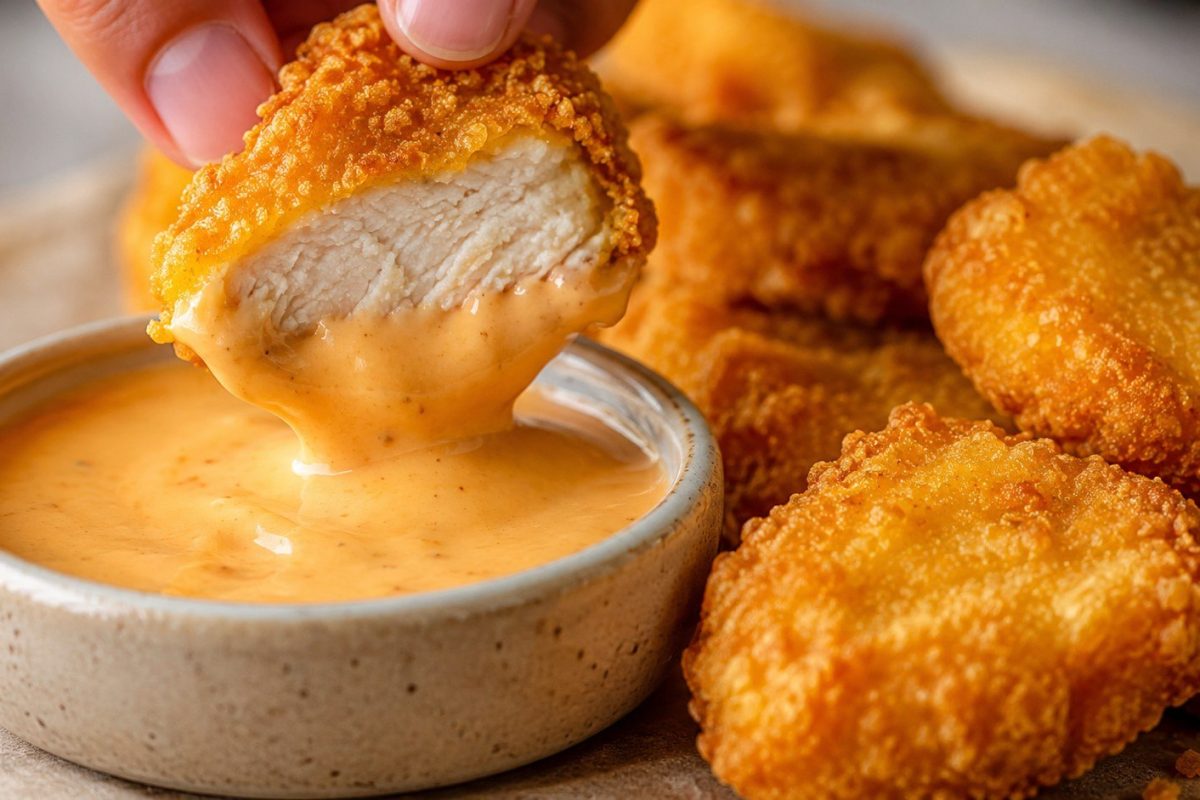
How to make McDonald’s chicken nuggets at home without a dry center or heavy breading? The closest result requires finely processed chicken, light seasoning, a thin flour layer, and ice-cold batter. Stable oil temperature creates the familiar golden crust, while brief chilling helps every nugget keep its shape, as noted by the customreceipt.com.
McDonald’s states that its American Chicken McNuggets contain white boneless chicken with a seasoned coating. Recipes and ingredient declarations can differ between countries. The method below is therefore a homemade copycat recipe, not McDonald’s confidential commercial formula.
Why McDonald’s Chicken Nuggets Have a Distinctive Texture
A Chicken McNugget does not have the fibrous structure of a sliced chicken breast. Its center is smooth, tender, and nearly identical from one piece to another. That texture begins with chicken processed into a thick, cohesive mixture.
Whole chicken chunks create firmer bites and irregular cooking times. Finely processing the meat distributes salt, moisture, and seasonings more evenly. It also allows the cook to shape nuggets of the same thickness.
The crust matters just as much as the filling. Breadcrumbs create a rough and relatively thick exterior. McDonald’s-style nuggets need a finer coating that remains light, crisp, and close to the chicken.
The principle is similar to preparing KFC-style chicken with a crispy peppery crust, although the final coatings are different. KFC-style chicken needs a rougher flour crust. Homemade McNuggets require a smoother batter and smaller pieces.
Ingredients for Homemade McDonald’s Chicken Nuggets
This recipe produces about 24 medium nuggets. The exact number depends on the weight and thickness of each piece.
For the chicken mixture
- 600 g skinless chicken breast
- 1 teaspoon fine salt
- ½ teaspoon white pepper
- ½ teaspoon garlic powder
- ½ teaspoon onion powder
- 1 teaspoon cornstarch
- 2 tablespoons cold water
- 1 teaspoon neutral vegetable oil
White pepper is particularly useful in a McDonald’s chicken nuggets recipe. It adds mild heat without leaving black spots inside the pale chicken mixture.
For the dry coating
- 100 g all-purpose flour
- 40 g cornstarch
- ½ teaspoon fine salt
- ½ teaspoon garlic powder
- ¼ teaspoon white pepper
For the wet batter
- 120 g all-purpose flour
- 40 g cornstarch
- 1 teaspoon baking powder
- ½ teaspoon fine salt
- 180–210 ml ice-cold sparkling water
- 1 small egg
- 1 teaspoon neutral vegetable oil
For frying
- 1–1.5 liters canola, sunflower, corn, or refined peanut oil
Cornstarch limits gluten development and makes the coating crisper. Baking powder creates small air pockets when the batter reaches hot oil. Cold sparkling water helps keep the crust thin and light.
Do not replace all the flour with cornstarch. A starch-only coating can become hard and fragile. Flour provides structure, while starch reduces heaviness.
The batter should coat the back of a spoon and fall in a steady ribbon. If it sits like paste, add sparkling water by the tablespoon. If it runs away immediately, mix in a small amount of flour.
Ingredient Ratios and Their Purpose
Each ingredient has a practical role. The proportions below prevent the nugget from becoming rubbery, greasy, or excessively coated.
| Component | Recommended amount | Main purpose | Possible substitute |
|---|---|---|---|
| Chicken breast | 600 g | Lean and mild filling | Boneless chicken thigh |
| Cornstarch | 80 g total | Binding and crispness | Potato starch |
| Sparkling water | 180–210 ml | Light batter texture | Ice-cold still water |
| Baking powder | 1 teaspoon | Air pockets in the crust | ½ teaspoon baking soda |
| White pepper | ¾ teaspoon total | Mild fast-food seasoning | Finely ground black pepper |
| Neutral oil | As required | Even frying without strong flavor | Canola or sunflower oil |
Chicken thigh creates a juicier but stronger-tasting center. A mixture containing 80% breast and 20% thigh offers more moisture without changing the flavor too much.
Potato starch can replace cornstarch in equal quantities. It produces a sharp crunch, although the coating may brown differently. Rice flour is another option, but it creates a drier shell.
The temperature of the ingredients also affects the result. Warm chicken becomes difficult to shape. Warm batter absorbs more oil and loses some of its lightness.
Keep the chicken, egg, and water refrigerated until needed. Mix the batter shortly before frying rather than preparing it several hours ahead.
How to Prepare the Chicken Mixture
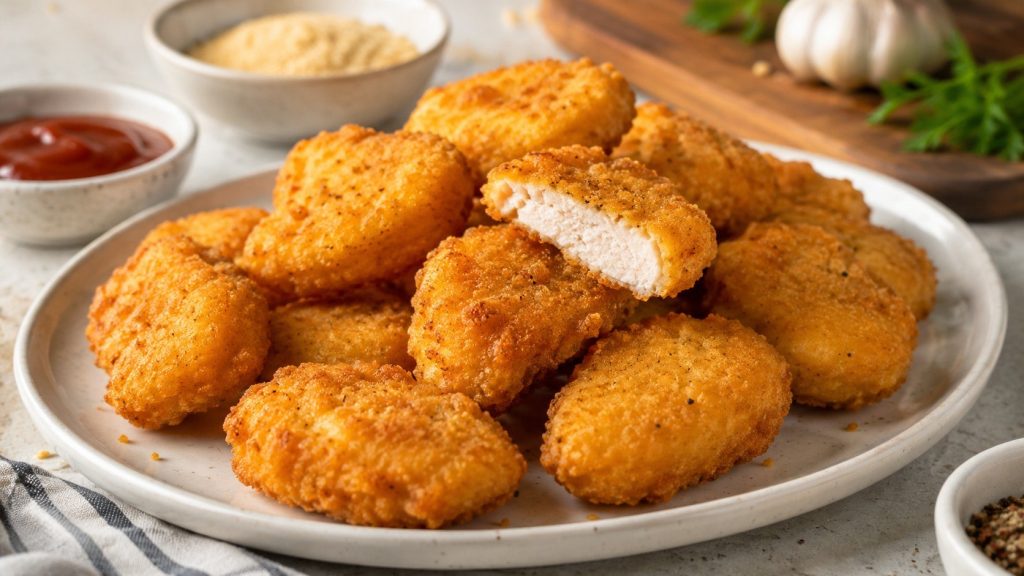
Cut the chilled chicken breast into cubes measuring about 2 cm. Place the pieces in a food processor with salt, white pepper, garlic powder, onion powder, cornstarch, water, and oil.
Pulse the mixture in short intervals. Stop twice to scrape down the sides of the bowl. Continue until the chicken resembles a thick paste with no large pieces.
Avoid running the food processor continuously. The motor creates heat, and warm chicken becomes sticky. Excessive processing may also produce a rubbery center.
Transfer the chicken mixture to a cold bowl. Cover it and refrigerate for about 20 minutes. This short rest helps the mixture absorb seasoning and become easier to handle.
Wet your hands with cold water before shaping. Divide the chicken into portions weighing about 25 g. Flatten each piece to approximately 1.2 cm.
Make several simple rounded shapes rather than identical circles. Uniform thickness is more important than visual perfection. Nuggets of similar size finish cooking at approximately the same time.
Place the pieces on a parchment-lined tray. Freeze them for 30–40 minutes until firm but not completely frozen.
Brief freezing prevents the nuggets from losing their shape during coating. Fully frozen pieces require longer frying, however. Their crust may darken before the center becomes hot.
How to Coat McDonald’s-Style Nuggets
Combine the dry coating ingredients in a shallow bowl. Whisk the wet batter in a separate bowl immediately before frying.
Cover each chilled nugget with the flour mixture. Shake away loose flour, then dip the piece into the cold batter. Let the excess drip into the bowl for about 2 seconds.
For a thicker crust, return the battered nugget to the flour mixture. Press the coating gently and remove loose patches. This second dry layer is optional because the classic version should not become heavily breaded.
Several details help the coating remain attached:
- Keep the chicken cold until coating begins.
- Cover the entire surface with the dry mixture.
- Mix the batter shortly before frying.
- Remove thick pools of batter from the edges.
- Fry each coated batch without a long delay.
- Let the oil recover between batches.
Wet, unfloured chicken causes the batter to slide away. Loose flour burns in the oil and leaves dark particles on later batches.
Do not stack coated nuggets. Their surfaces will stick together and tear apart. Place them in one layer on a clean tray.
Work with 5 or 6 pieces at a time. Keep the remaining shaped chicken inside the refrigerator while each batch is coated and fried.
How to Fry Chicken Nuggets Until Crisp
Heat the oil in a deep, heavy pan to 175°C or 347°F. A kitchen thermometer provides a more reliable result than visual guessing.
Lower 5 or 6 nuggets carefully into the oil. Fry them for 3–4 minutes, turning once. The coating should become evenly golden rather than dark brown.
Transfer the cooked pieces to a wire rack. Paper towels hold steam beneath the nuggets, which softens the bottom crust.
Check the thickest nugget with an instant-read thermometer. Chicken should reach an internal temperature of 74°C or 165°F before serving.
“All poultry should reach a safe minimum internal temperature of 165°F,” according to current USDA food-safety guidance.
Allow the oil to return to 175°C before adding another batch. Oil below 165°C can produce pale and greasy nuggets. Oil above 185°C may burn the coating before the center cooks.
Let each batch rest for 2 minutes. The short pause allows the heat to distribute through the chicken while the outer layer remains crisp.
For a complete homemade fast-food meal, serve the nuggets with crispy homemade French fries without a deep fryer. Prepare the potatoes first, then keep them warm on a rack while frying the chicken. Do not cover the fries or nuggets because trapped steam softens both coatings. The fries can also be finished in an oven when the frying pan is occupied.
The Double-Fry Method for Extra-Crispy Nuggets
Double frying creates a drier and more brittle exterior. It is useful when preparing several batches for a party.
Fry the nuggets at 165°C for about 2½ minutes. Remove them and leave them on a wire rack for 4 minutes. Increase the oil temperature to 190°C.
Return the nuggets to the oil for another 45–60 seconds. The second frying stage removes surface moisture and strengthens the crust.
Do not leave partially cooked chicken at room temperature for an extended period. Complete the second frying stage promptly and confirm that the center reaches 74°C.
The double-fry method also makes serving easier. The first stage cooks most of the chicken. The final stage then refreshes each batch shortly before it reaches the table.
This method is not essential for a weekday meal. A single controlled fry at 175°C still produces an excellent result.
How to Make McDonald’s-Style Sweet and Sour Sauce
The nugget coating supplies salt, mild spice, and crunch. A sweet and sour dip adds fruitiness and acidity.
Place the following ingredients in a small saucepan:
- 120 g apricot preserves
- 2 tablespoons rice vinegar
- 1½ tablespoons light corn syrup or honey
- 1 tablespoon soy sauce
- 1 teaspoon yellow mustard
- ½ teaspoon garlic powder
- 2 tablespoons water
- 1 teaspoon cornstarch
Whisk over low heat for 3–4 minutes. Remove the saucepan when the sauce becomes glossy and slightly thickened.
Apricot preserves create the fruity base. Rice vinegar cuts through the richness of fried chicken. Soy sauce adds salt and a subtle savory note.
For a hotter sauce, add ¼ teaspoon cayenne pepper. For more freshness, stir in 1 teaspoon of lemon juice after cooking.
Strain the sauce when a perfectly smooth consistency is preferred. Let it cool for several minutes before serving. Store leftovers inside a closed container for up to 5 days.
Sweet and sour sauce is not the only suitable option. Homemade guacamole with avocado, lime, jalapeño, and tomato creates a cooler contrast to hot fried chicken. The recipe uses a thick texture that stays on the nugget instead of running across the plate.
Serve guacamole in a separate bowl. Placing it directly over the nuggets makes their crust soft. A thick dip also works well when the nuggets are included in a larger snack platter.
Serving Homemade Nuggets as a Party Meal
A serving of 6 nuggets per person works for a light meal with fries and salad. Allow 8–10 pieces when nuggets are the main dish.
Place the cooked nuggets on a wide platter instead of piling them inside a deep bowl. Air circulation helps preserve the crust. Serve sauces in several small containers.
A larger snack menu can include homemade nachos with melted cheese and fresh toppings. Build the nachos in layers and add wet toppings after baking. This keeps the chips firm and prevents the platter from becoming soggy.
Useful additions include:
- French fries or potato wedges
- Fresh cucumber and carrot sticks
- Coleslaw with a light dressing
- Pickles or pickled jalapeños
- Sweet and sour sauce
- Honey mustard
- Barbecue sauce
- Guacamole
- Homemade nachos
Bring the nuggets to the table as soon as possible. Their texture is strongest during the first 10–15 minutes after frying.
Keep sauces away from the main platter until serving. Even a small amount of liquid can weaken the coating.
For children, prepare one mild sauce without chili. Adults can add cayenne, jalapeño, or hot sauce separately.
Air Fryer and Oven Methods
Deep frying creates the closest copycat result because hot oil surrounds every surface. An air fryer can still produce crisp homemade chicken nuggets with less oil.
For air frying, skip the wet batter. Use the dry coating and spray every nugget generously with neutral oil. Cook at 200°C for 10–12 minutes.
Turn the nuggets after 6 minutes. Spray any pale flour patches before continuing. Check that the center reaches 74°C.
For oven baking, preheat a metal tray inside the oven. Arrange the coated nuggets on the hot tray and spray them with oil.
Bake at 220°C for 14–18 minutes. Turn them once during cooking. A preheated surface helps the bottom begin browning immediately.
Use a mixture containing about 60% flour and 40% cornstarch for these methods. Wet batter can drip through an air-fryer basket or spread across a baking tray.
Air-fried nuggets remain lighter and less blistered than deep-fried pieces. Oven-baked nuggets develop firmer edges and may need more oil spray.
Common Mistakes That Ruin Homemade Nuggets
Warm chicken is one of the most common problems. It sticks to the hands, loses its shape, and becomes difficult to coat.
Overprocessing is another risk. The mixture must become cohesive, but excessive blending creates an unpleasant rubbery texture.
Avoid these preparation errors:
- Oil temperature is too low: the coating absorbs oil and stays pale.
- Batter is too thick: the crust becomes heavy and bread-like.
- Nuggets are too large: the exterior browns before the center cooks.
- The pan is overcrowded: oil temperature falls immediately.
- Cooked nuggets sit on paper: trapped steam softens the underside.
- Seasoning is excessive: salt and spices hide the chicken flavor.
- The coating rests too long: wet batter becomes sticky and uneven.
After the list, the first correction is simple: use a thermometer. It prevents most problems involving oil and internal chicken temperature.
Keep the batter bowl over ice when cooking a large quantity. Cold batter forms a lighter coating and remains easier to control.
Remove burnt flour pieces from the oil between batches. A small metal strainer works well. Burnt crumbs can attach themselves to fresh nuggets and create bitter spots.
Do not reuse heavily darkened oil. Fresh neutral oil provides a cleaner flavor and a more attractive crust.
Keep finished batches inside a 100°C oven for no longer than 20 minutes. Place them on a rack and leave them uncovered.
Storage, Freezing, and Reheating
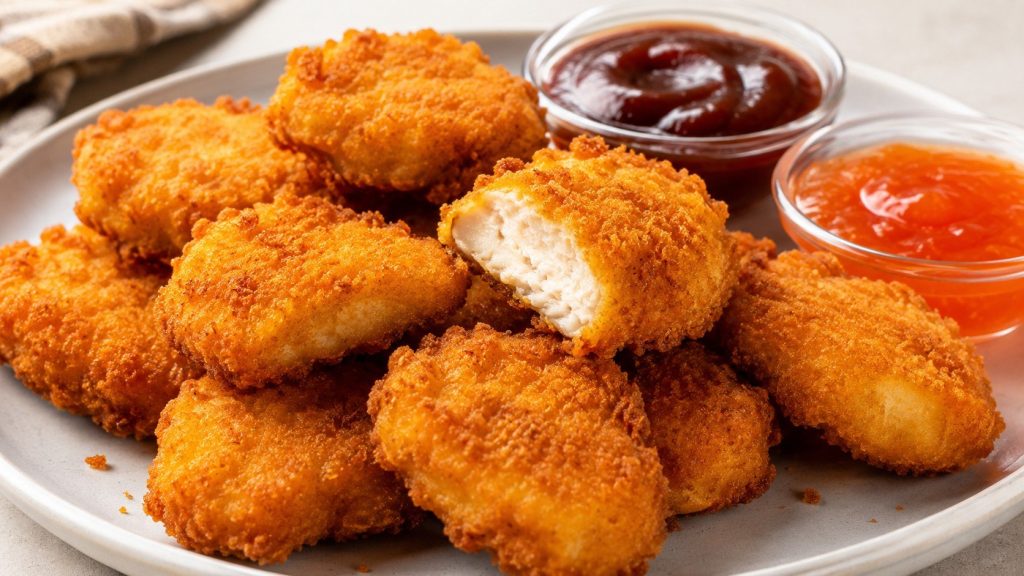
Cooked nuggets can be refrigerated for up to 3 days inside an airtight container. Let them cool before closing the lid because trapped condensation softens the coating.
Reheat refrigerated nuggets in an air fryer at 190°C for 4–5 minutes. An oven requires approximately 8 minutes at 210°C.
Avoid microwave reheating when crispness matters. Microwaves heat moisture inside the coating and make it soft.
For longer storage, freeze cooked nuggets in one layer. After 2 hours, transfer them to a freezer bag or closed container.
Frozen nuggets retain their best quality for about 2 months. Reheat them without thawing in an air fryer at 190°C for 7–9 minutes.
Raw shaped chicken can also be frozen. However, thawed chicken releases moisture and becomes harder to coat evenly.
Freezing fully cooked nuggets usually provides a more predictable result. Always reheat them until the centers are completely hot.
FAQ
Can I make McDonald’s chicken nuggets without a food processor?
Yes, but the center will be coarser. Mince the chicken very finely with a sharp knife. Mix it vigorously with the water, cornstarch, oil, and seasonings.
Why does the batter fall off during frying?
The chicken may be too wet or insufficiently floured. Cold oil can also prevent the batter from setting quickly. Coat every surface and fry the pieces without delay.
Which oil is best for chicken nuggets?
Canola, sunflower, corn, and refined peanut oil work well. Choose a neutral oil with a high smoke point.
Can I use chicken thighs?
Yes. Chicken thighs produce richer and juicier nuggets. Mixing thigh meat with chicken breast creates a balanced texture.
How can I make the nuggets crispier?
Use cornstarch, keep the batter cold, and maintain the correct oil temperature. Double frying provides an even sharper crust.
Can homemade nuggets be prepared in advance?
Shape the chicken several hours ahead and keep it refrigerated. Mix the batter and coat the nuggets only shortly before frying.
Are homemade nuggets identical to McDonald’s McNuggets?
No. McDonald’s uses commercial processing equipment, standardized ingredients, and proprietary production methods. This recipe recreates the general texture and flavor at home.
What sauces work with homemade Chicken McNuggets?
Sweet and sour sauce, honey mustard, barbecue sauce, ranch, spicy mayonnaise, and guacamole all work well. Serve every sauce separately to protect the crust.
Can McDonald’s-style nuggets be baked?
Yes. Bake them at 220°C for 14–18 minutes and turn them once. Spray the coating with oil before cooking.
How do I know when chicken nuggets are cooked?
Use an instant-read thermometer. The thickest nugget must reach an internal temperature of 74°C or 165°F.
Earlier we wrote about How to Make a McDonald’s Cheeseburger at Home: Exact Ingredients and a 30-Minute Recipe