 Frank Rondel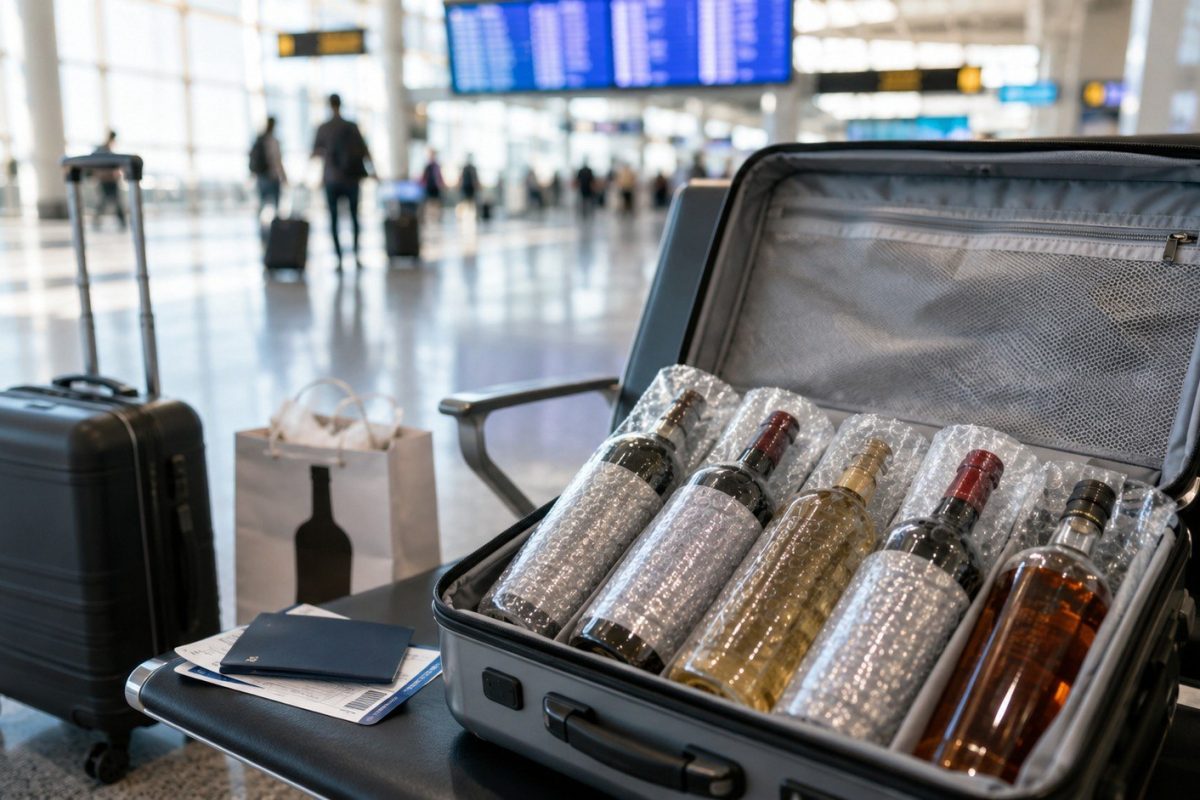
How much alcohol can you bring from abroad when entering the United States? Most travelers aged 21 or older may include 1 liter within their personal duty-free allowance. Larger quantities are not automatically prohibited, but they must be declared and may be taxed. Separate aviation limits apply to bottles carried by plane, as the customreceipt.com editorial team notes.
The method of travel matters. Customs officers assess the quantity, value, intended use, and destination state. Airlines and airport security focus on alcohol strength, packaging, baggage type, and fire safety.
A traveler can therefore comply with airline rules while exceeding the duty-free customs allowance. The reverse is also possible. Understanding this distinction prevents confiscation, penalties, damaged luggage, and expensive delays at the border.
How Much Alcohol Can You Bring Into the United States?
US Customs and Border Protection generally allows travelers aged 21 or older to include 1 liter of alcohol duty-free within their personal exemption. This quantity may consist of wine, beer, liqueur, or distilled spirits.
The allowance concerns customs duty, not the maximum quantity a person may possess. Federal rules do not set a single absolute limit for alcohol imported for genuine personal use. However, travelers must declare every bottle, including products bought at airport duty-free stores.
Additional alcohol may be admitted after payment of customs duty and federal excise tax. According to US Customs and Border Protection, unusually large quantities may be treated as possible commercial imports.
Border officers may consider several factors:
- the total number and size of bottles;
- the alcoholic strength of each beverage;
- the total purchase value;
- whether the bottles remain factory-sealed;
- whether the products are for personal use or gifts;
- how frequently the traveler crosses the border;
- the alcohol laws of the destination state.
Travelers should answer questions precisely and retain their receipts. A customs declaration does not automatically result in a high payment. Duty on limited quantities of beer or wine is often modest. Concealment can lead to seizure, fines, and a longer inspection. Officers may also question purchases divided between passengers to disguise one person’s commercial shipment.
Alcohol Import Limits at a Glance
Customs allowances and aviation safety limits regulate different issues. The following comparison shows which rule applies in common situations.
| Situation | General rule | Main condition |
|---|---|---|
| Duty-free customs allowance | Usually 1 liter | Traveler must be at least 21 |
| Alcohol above the allowance | Often permitted | Full declaration and possible tax |
| Drinks containing 24% ABV or less | No FAA quantity limit | Airline baggage limits still apply |
| Drinks above 24% and up to 70% ABV | Up to 5 liters per passenger | Unopened retail packaging |
| Drinks above 70% ABV | Prohibited on passenger aircraft | Applies to checked and carry-on bags |
| Liquids taken through security | Containers up to 100 ml | Must meet the TSA liquids rule |
| Alcohol transported by car | No FAA baggage limit | Customs and state laws still apply |
| Alcohol bought duty-free | Must be declared | Purchase location creates no customs exemption |
ABV means alcohol by volume. Most beer contains less than 10% ABV, while ordinary wine usually stays below 24%. Whisky, vodka, rum, and gin commonly contain about 40% ABV. Overproof spirits can exceed the aircraft safety limit.
Airlines may impose stricter conditions than federal rules. They can also limit checked baggage weight, reject damaged bottles, or require protective packaging. Travelers should review the carrier’s rules before buying several heavy bottles.
How Much Alcohol Can You Pack in Checked Baggage?
Checked baggage is usually the most practical place for full-sized wine and spirit bottles. The permitted quantity depends mainly on alcohol strength.
Drinks containing 24% ABV or less are not restricted by the FAA hazardous-material quantity rule. This group includes most beer, cider, sparkling wine, and ordinary table wine. The practical limit is determined by the airline’s weight and baggage policy.
Alcohol containing more than 24% but no more than 70% ABV is limited to 5 liters per passenger. Bottles must remain unopened and inside retail packaging. The current restriction appears in guidance from both the TSA and the Federal Aviation Administration.
The 5-liter limit applies to the traveler, not each suitcase. Packing 4 liters in one bag and 3 liters in another still produces a total of 7 liters. That amount exceeds the permitted aviation limit for spirits above 24% ABV.
Passengers carrying wine beside edible souvenirs should also review the rules for transporting food in checked baggage. Sauces, oils, preserves, and glass jars need similar leak-resistant protection. Agricultural and customs controls may also apply after arrival.
Checked baggage can include:
- wine and beer below 24% ABV;
- up to 5 liters of factory-sealed whisky;
- up to 5 liters of vodka, gin, rum, or tequila;
- fortified wine above 24% ABV within the 5-liter limit;
- liqueurs with clearly marked alcohol content.
Each bottle should have a readable label. Unmarked liquids may attract additional security attention. Homemade spirits can be rejected because their strength and composition cannot be verified. A traveler should never transfer alcohol into an ordinary water bottle.
Can You Carry Alcohol in Hand Luggage?
Full-sized bottles cannot normally pass through a US airport security checkpoint. The TSA liquids rule limits carry-on containers to 100 ml, or 3.4 fluid ounces.
Small miniature bottles may pass through security when they fit inside the permitted transparent liquids bag. However, carrying a miniature bottle does not give the passenger permission to drink it during the flight.
FAA rules prohibit passengers from consuming personal alcohol aboard an aircraft unless the carrier serves it. Cabin crew must control onboard alcohol service. Opening a duty-free bottle at the seat can therefore lead to intervention.
Alcohol bought after security may be allowed in the cabin. Duty-free staff usually place bottles inside sealed security bags with purchase receipts. Passengers should not open these bags before completing their journey.
Connecting flights create additional risks. A passenger may need to pass through security again after collecting baggage and clearing customs. Rules can differ by airport and country. When possible, duty-free bottles should be moved into checked baggage after customs, with proper protection.
What the 24%, 70%, and 5-Liter Limits Mean
The most important aviation figures are 24%, 70%, and 5 liters.
Alcohol at or below 24% ABV is not regulated as hazardous material under the standard passenger alcohol rule. Ordinary beer and wine fall into this category. Airline weight limits still apply.
Alcohol above 24% and no higher than 70% ABV is restricted to 5 liters per passenger. Each container must be factory-sealed and intended for retail sale.
Alcohol above 70% ABV, or more than 140 proof, is prohibited in both checked and carry-on baggage. This rule may affect high-strength grain alcohol, some overproof rum, and specialty spirits.
A bottle marked 75% ABV cannot be made legal by wrapping it carefully. Moving it from the cabin to checked baggage also changes nothing. The prohibition is based on flammability, not suitcase location.
Travelers buying unfamiliar local products should inspect the label before payment. Some regional spirits are much stronger than standard whisky or vodka. When no reliable ABV appears, leaving the bottle behind is safer.
How to Pack Wine and Spirits Without Breaking the Bottles
Glass bottles face pressure, vibration, impact, and rough baggage handling. A duty-free shopping bag alone provides almost no protection.
Before packing, confirm the ABV, bottle volume, airline allowance, and customs requirements. Keep every cap, seal, and label intact.
Use the following method:
- Place each bottle inside a sealed plastic bag.
- Wrap every bottle separately in thick clothing.
- Add a protective bottle sleeve when available.
- Position bottles near the suitcase center.
- Keep glass away from shoes and hard objects.
- Separate bottles with soft layers.
- Fill empty spaces to prevent movement.
- Weigh the suitcase before leaving.
After packing, the bottles should not move when the suitcase is gently tilted. Two glass surfaces must never touch directly. Inflatable wine sleeves offer better protection than thin bubble wrap. A hard-shell suitcase reduces crushing but cannot stop internal movement.
Alcohol can also affect baggage fees. Four 1-liter bottles add at least 4 kilograms before packaging. The excess baggage charge may exceed the price saved abroad.
Bringing Alcohol by Car From Canada or Mexico
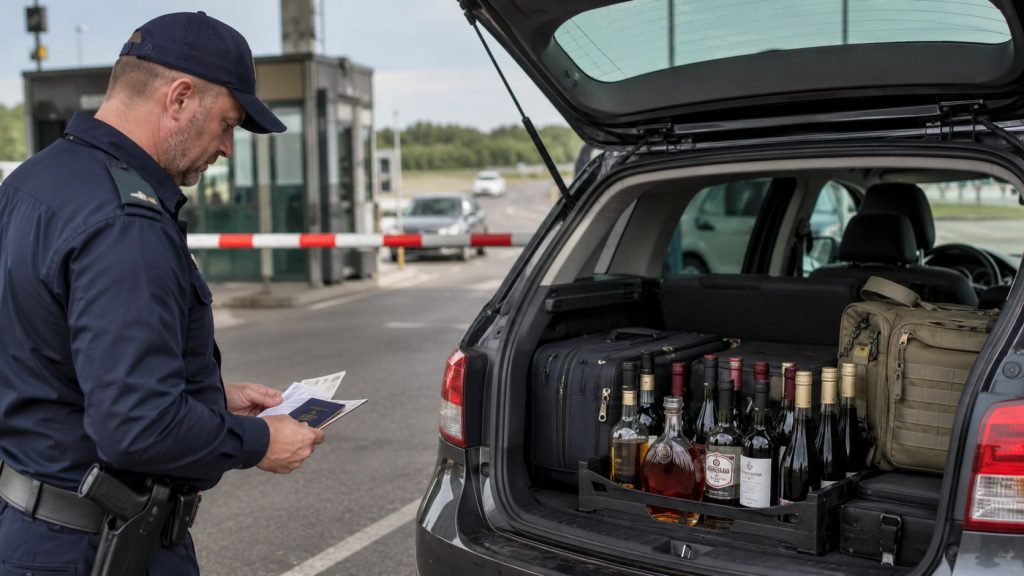
Travelers entering the United States by car must follow the same federal customs rules. They must declare alcohol and be at least 21 years old.
For qualifying US residents returning from Canada or Mexico, CBP describes an $800 personal exemption that can include 1 liter of alcohol. Eligibility conditions can depend on the length and frequency of travel.
Driving removes FAA baggage restrictions. A motorist can physically transport more than 5 liters because passenger aircraft safety rules do not apply. Customs, taxation, personal-use requirements, and state restrictions remain in force.
Border officers may ask:
- where the alcohol was purchased;
- how much each bottle cost;
- whether it is intended for resale;
- who will consume it;
- where the traveler lives;
- whether the products will remain in the destination state.
Drivers preparing for a long journey can also use this guide to safe road trip foods and storage. Alcohol should remain separate from food, drinking water, and temperature-sensitive products. Bottles should be secured inside the trunk or cargo compartment.
Open-container laws apply after the border crossing. A sealed trunk is normally safer than the passenger compartment. Bottles should remain closed throughout the journey. The driver should never consume alcohol before or during the trip.
Duty-Free Alcohol Still Has to Be Declared
The term duty-free refers to the purchase or tax arrangement. It does not remove the traveler’s declaration duties.
A bottle bought in an airport shop still counts toward the applicable alcohol allowance. A traveler carrying 3 liters should declare all 3 liters, not only the quantity above the exemption.
The first liter may qualify for duty-free treatment. The remaining 2 liters may be assessed for customs duty and federal excise tax. CBP states that additional quantities may generally enter after the relevant charges are paid.
Receipts help officers calculate value. Without documentation, customs may estimate the price. This becomes important with vintage wine, rare whisky, or premium cognac.
The safest declaration includes:
- the exact number of bottles;
- the volume of every bottle;
- the total purchase value;
- the country of purchase;
- the type of beverage;
- confirmation that the alcohol is for personal use.
The shop does not complete US customs formalities for the traveler. Responsibility remains with the person carrying the products across the border.
State Alcohol Laws May Be Stricter
Federal customs clearance does not guarantee that every quantity is permitted in the destination state. Alcohol distribution and transportation remain heavily regulated at state level.
Some states allow residents to bring reasonable personal quantities. Others impose limits, state taxes, permits, or reporting requirements. Rules can differ for residents, visitors, military personnel, and licensed businesses.
Travelers carrying more than a few bottles should check the destination state’s alcohol-control authority. They should also review the law of the state where customs clearance occurs.
A connecting passenger normally completes customs formalities at the first US airport. After clearance, the remaining flight is domestic. Alcohol must still comply with airline and TSA rules for the next segment.
State restrictions become especially relevant when transporting wine cases, wedding supplies, collectible spirits, or purchases intended for several households. A quantity that appears personal to one traveler may look commercial to an inspector.
Can You Bring Homemade Alcohol?
Homemade wine may be admitted for personal use, but it must still be declared. CBP notes that homemade wine generally follows the same customs procedure as store-bought wine.
Air transport creates another issue. Alcohol above 24% ABV must remain inside unopened retail packaging. Homemade spirits usually do not meet that requirement.
Homemade wine below 24% ABV may avoid the 5-liter aviation restriction. However, the airline or security staff may reject leaking, unidentified, or poorly sealed containers.
Useful supporting information includes:
- a label describing the beverage;
- its known alcoholic strength;
- the producer’s name;
- the production location;
- confirmation that it is a personal gift;
- secure and leak-resistant packaging.
Products containing fruit, herbs, seeds, or plant material may face agricultural inspection. Travelers should declare those ingredients as well. An unmarked bottle creates unnecessary uncertainty and can delay screening.
Common Mistakes at Airports and Land Borders
The most common mistake is assuming that duty-free alcohol does not need to be declared. Another is confusing the 1-liter customs allowance with the 5-liter aviation limit.
A passenger may legally pack 4 liters of 40% whisky under FAA rules. However, only 1 liter may qualify for the standard customs exemption. The remaining 3 liters must still be declared.
Other frequent errors include:
- packing spirits above 70% ABV;
- carrying unsealed bottles;
- hiding alcohol among clothing;
- ignoring state limits;
- exceeding the airline’s baggage weight;
- allowing bottles to move inside the suitcase;
- asking a traveler under 21 to carry alcohol.
US travelers under 21 cannot import alcohol, even when the bottle is intended as a gift for an adult. Moving bottles into a younger passenger’s suitcase does not create another allowance.
False declarations can turn a minor tax issue into a customs violation. Honest disclosure normally creates fewer problems than concealment.
Practical Examples for Travelers
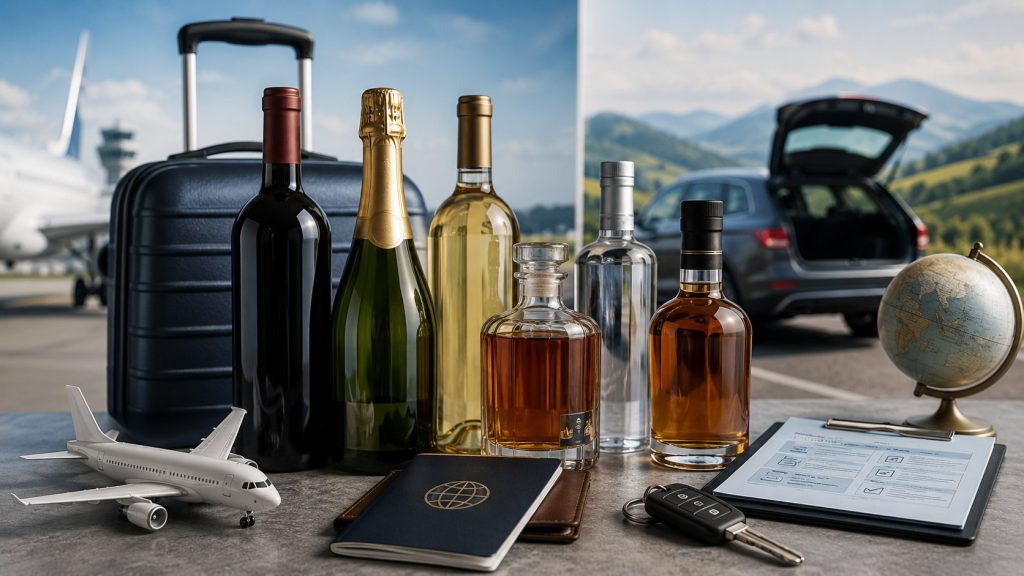
A traveler returns from France with 2 bottles of wine. Each bottle contains 750 ml, producing a total of 1.5 liters. Ordinary wine can travel in checked baggage because it remains below 24% ABV. All 1.5 liters must be declared.
Another traveler carries 4 bottles of whisky containing 1 liter each. The whisky is 40% ABV. The 4-liter total remains below the 5-liter aviation limit. Every bottle must stay sealed in retail packaging.
A couple carries 8 liters of 40% spirits. Each adult has 4 liters in checked baggage. The amount meets the aviation limit per passenger. Customs exemptions, declarations, and possible taxes are assessed separately.
A driver returns from Canada with 12 bottles of wine. FAA restrictions do not apply to the vehicle. Customs may still investigate whether the case is for personal use. State rules may impose additional conditions.
A passenger buys a bottle marked 75% ABV. The bottle cannot travel on a passenger aircraft. Checked baggage does not provide an exception.
What to Check Before Departure
Identify the first US port of entry and the final destination state. Check customs requirements, state restrictions, TSA rules, and the carrier’s baggage policy.
Photograph every receipt and bottle label. The images should show volume, price, and ABV. Keep the original receipts where they can be reached during inspection.
Passengers planning a long flight should prepare for the entire journey, not only customs. Travelers with dietary requirements can review how to order a vegetarian meal on a plane before departure. Special meals and duty-free purchases usually require separate advance planning.
Before leaving, confirm:
- every bottle has a readable ABV label;
- no spirit exceeds 70% ABV;
- spirits above 24% total no more than 5 liters;
- all bottles remain factory-sealed;
- checked baggage stays within the weight limit;
- receipts are available;
- the full quantity will be declared.
The simplest arrangement is 1 liter per traveler aged 21 or older. Keep the bottle sealed, documented, and protected. Larger quantities may remain lawful, but they require closer attention to taxes and state rules.
FAQ
How much alcohol can I bring into the United States duty-free?
Most eligible travelers aged 21 or older may include 1 liter within their personal duty-free allowance. Larger quantities must be declared and may be taxed.
Can I bring 2 bottles of wine into the United States?
Usually, yes. Two 750 ml bottles equal 1.5 liters. Both bottles must be declared, and part of the quantity may exceed the standard exemption.
How much alcohol is allowed in checked baggage?
Alcohol at or below 24% ABV has no FAA hazardous-material quantity limit. Drinks above 24% and up to 70% ABV are limited to 5 liters per passenger.
Can whisky travel in carry-on luggage?
Only containers holding no more than 100 ml can pass through ordinary security. Larger bottles may be carried when purchased after security under applicable procedures.
Can I drink my own alcohol during the flight?
No. Passengers may not consume personal alcohol aboard the aircraft unless it is served by the airline.
Does duty-free alcohol need to be declared?
Yes. Duty-free purchases count toward customs allowances and must be included in the declaration.
Can I bring more than 1 liter by car?
Larger personal quantities may be admitted after declaration. Customs duty, federal excise tax, and state restrictions may apply.
Can someone under 21 carry alcohol as a gift?
No. Travelers under 21 cannot import alcohol into the United States, even when it belongs to another person.
Is alcohol above 70% ABV permitted in checked baggage?
No. Beverages above 70% ABV are prohibited in checked and carry-on baggage on passenger aircraft.
What happens if alcohol is not declared?
Customs officers may seize the bottles, impose penalties, or conduct a more detailed inspection. Declaring the full quantity is safer.
Earlier we wrote about McDonald’s Chicken Nuggets Recipe: How to Make 24 Crispy Nuggets With Homemade Dipping Sauce