 Frank Rondel
What to prepare for a road trip is one of the most searched travel-related questions before vacations, family drives, train journeys, and long bus rides. The right food can save money, prevent digestive problems, and keep energy levels stable for hours. Choosing safe products is especially important during summer travel when high temperatures can quickly spoil meals. As noted by customreceipt.com, proper travel meal planning helps reduce food waste and lowers the risk of foodborne illness.
Why Travel Food Requires Special Planning
Food carried during a journey faces several challenges. Temperature changes, long storage times, and limited access to refrigeration can turn even fresh products into a health risk.
The safest travel meals share three characteristics:
- They remain stable for several hours.
- They do not require reheating.
- They are easy to transport.
Many travelers make the mistake of packing foods that spoil within 2–3 hours. Mayonnaise salads, cream-filled pastries, and fresh seafood are among the highest-risk options.
“Food safety depends primarily on temperature control and storage time. The danger zone for bacterial growth is between 4°C and 60°C.” — U.S. Food and Drug Administration guidance.
Best Safe Foods to Take on the Road
Several products remain fresh longer and are convenient to eat while traveling.
Recommended Travel Foods
| Food Product | Approximate Safe Storage Time | Travel Convenience |
|---|---|---|
| Apples | 1–2 days | Excellent |
| Bananas | 1 day | Excellent |
| Carrots | 1 day | Very good |
| Hard cheese | 6–8 hours | Good |
| Nuts | Several weeks | Excellent |
| Protein bars | Several months | Excellent |
| Crackers | Several weeks | Excellent |
| Dried fruit | Several months | Excellent |
| Boiled eggs | Up to 6 hours cooled | Moderate |
| Whole-grain bread | 2–3 days | Excellent |
These foods provide a balance of carbohydrates, fiber, protein, and healthy fats. They also generate less waste and require minimal preparation.
A combination of fruits, nuts, and whole-grain products often supplies enough energy for journeys lasting 4–8 hours.
Easy Chicken Wrap Recipe for Travel
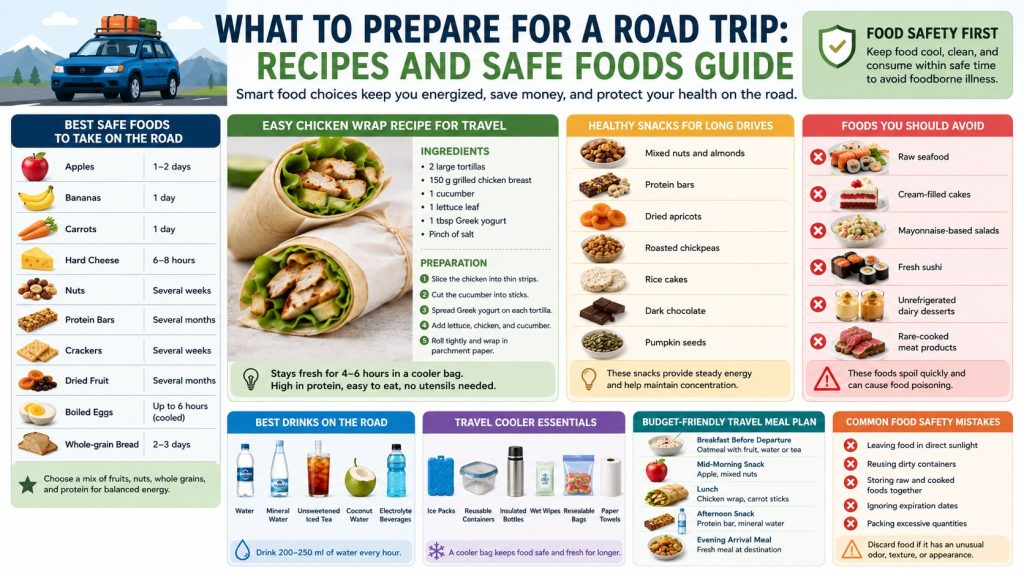
One of the most practical travel meals is a chicken wrap.
Ingredients
- 2 large tortillas
- 150 g grilled chicken breast
- 1 cucumber
- 1 lettuce leaf
- 1 tbsp Greek yogurt
- Pinch of salt
Preparation
- Slice the chicken into thin strips.
- Cut the cucumber into sticks.
- Spread Greek yogurt on each tortilla.
- Add lettuce, chicken, and cucumber.
- Roll tightly and wrap in parchment paper.
This meal remains fresh for approximately 4–6 hours when stored in a cooler bag.
The wrap contains a good balance of protein and carbohydrates. It is also easy to eat without utensils.
Healthy Snacks for Long Drives
Many people rely on gas station snacks. However, homemade alternatives are often healthier and cheaper.
Smart Snack Choices
- Mixed nuts and almonds
- Protein bars
- Dried apricots
- Roasted chickpeas
- Rice cakes
- Dark chocolate
- Pumpkin seeds
These products contain nutrients that help maintain concentration during long trips.
Drivers especially benefit from foods that release energy gradually rather than causing sugar spikes.
Foods You Should Avoid During Travel
Some products create unnecessary health risks.
High-Risk Foods
- Raw seafood.
- Cream-filled cakes.
- Mayonnaise-based salads.
- Fresh sushi.
- Unrefrigerated dairy desserts.
- Rare-cooked meat products.
These foods can spoil rapidly in warm conditions.
Even a short stop under direct sunlight can raise vehicle temperatures above 40°C, accelerating bacterial growth.
After consuming spoiled food, symptoms may appear within a few hours and include nausea, stomach cramps, vomiting, and diarrhea.
Drinks That Work Best on the Road
Hydration is just as important as food selection.
The safest options include:
- Water.
- Mineral water.
- Unsweetened iced tea.
- Coconut water.
- Electrolyte beverages.
Avoid excessive consumption of sugary soft drinks.
Energy drinks may temporarily increase alertness but can later contribute to fatigue and dehydration.
For most adults, drinking 200–250 ml of water every hour during long travel is a reasonable guideline.
Travel Cooler Essentials
A small cooler bag dramatically improves food safety.
Items Worth Packing
- Ice packs.
- Reusable containers.
- Insulated bottles.
- Wet wipes.
- Paper towels.
- Resealable storage bags.
A cooler can extend the freshness of sandwiches, fruit, and dairy products by several hours.
Travelers driving more than 5–6 hours should strongly consider insulated storage.
Budget-Friendly Travel Meal Plan
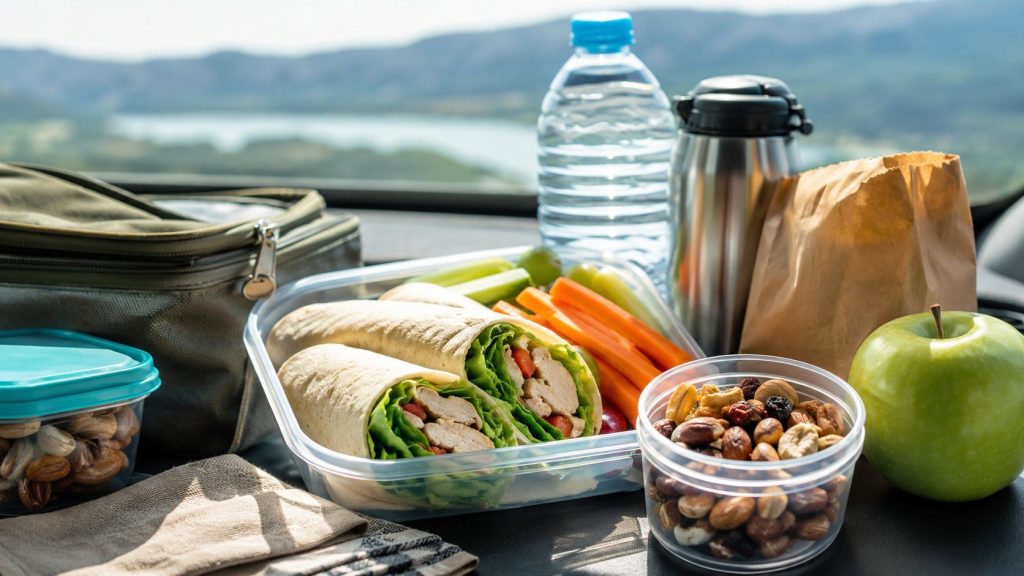
Preparing food at home often costs significantly less than buying meals during a trip.
Sample Day Travel Menu
Breakfast Before Departure
- Oatmeal with fruit.
- Water or tea.
Mid-Morning Snack
- Apple.
- Mixed nuts.
Lunch
- Chicken wrap.
- Carrot sticks.
Afternoon Snack
- Protein bar.
- Mineral water.
Evening Arrival Meal
- Fresh meal at destination.
This approach keeps food costs predictable while providing balanced nutrition.
Common Food Safety Mistakes During Travel
Many cases of food poisoning result from preventable errors.
The most frequent mistakes include:
- Leaving food in direct sunlight.
- Reusing dirty containers.
- Storing raw and cooked foods together.
- Ignoring expiration dates.
- Packing excessive quantities.
Small adjustments can significantly reduce risks.
Food should be discarded immediately if it develops an unusual odor, texture, or appearance.
FAQ
What is the safest food to take on a road trip?
Nuts, whole fruits, protein bars, crackers, and properly stored wraps are among the safest options.
How long can sandwiches stay fresh while traveling?
Most sandwiches remain safe for 2–6 hours depending on ingredients and storage temperature.
Can I take boiled eggs on a trip?
Yes. Boiled eggs can be transported safely for several hours when kept cool.
What foods spoil fastest in a car?
Seafood, dairy desserts, mayonnaise salads, and cream-filled pastries spoil very quickly.
Is a cooler bag necessary?
For trips longer than 4 hours, a cooler bag significantly improves food safety.
What drink is best for long-distance travel?
Water remains the safest and most effective hydration option.
Earlier we wrote about How to Cook Funchoza: Recipes, Sauces, and Timing Tips