 Frank Rondel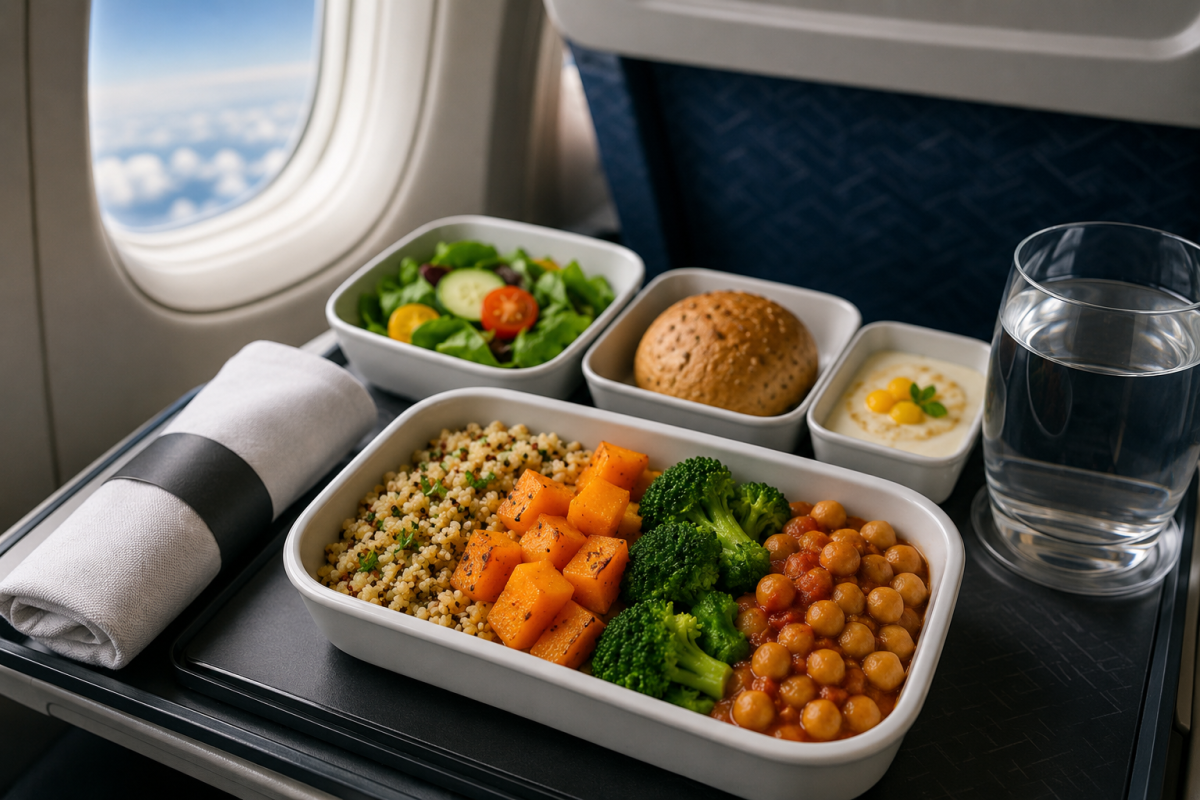
Standard in-flight meals rarely suit every dietary preference. Many airline menus still prioritize meat-based entrees, dairy-heavy side dishes, and desserts prepared with animal-derived ingredients. Travelers who avoid meat often discover that the default “vegetarian” option onboard may still include fish sauce, gelatin, or broths made from animal stock, аs noted by customreceipt.com..
Airline catering systems work differently from restaurants. Meals are prepared hours before departure, loaded according to passenger manifests, and distributed based on pre-registered requests.
That process explains why passengers searching for how to order a vegetarian meal on a plane should never wait until boarding to mention dietary preferences.
Meal availability also depends on the route, aircraft type, and airline category. International long-haul carriers usually support broader dietary customization than regional or low-cost airlines. Some short domestic flights do not offer hot meals at all, while premium international routes may include more than ten special meal categories.
Passengers planning long international itineraries may also find useful preparation advice in articles about how to save money on groceries and how to make iced coffee at home before departure.
What Counts as a Vegetarian Meal on Airlines
Airlines classify meals through standardized catering codes developed by the International Air Transport Association. Those codes help cabin crews identify preordered meals quickly during service.
The term “vegetarian” does not mean the same thing across all airlines.
Some carriers classify dairy and eggs as vegetarian ingredients, while others separate vegan and lacto-ovo vegetarian meals into different categories. Regional catering contractors may also interpret meal standards differently depending on local cuisine. Travelers requesting special meals should understand the differences before selecting an option during booking.
Choosing the wrong meal code can result in receiving food that does not match dietary expectations.
| Meal Type | Includes | Excludes | Typical Airline Code |
|---|---|---|---|
| Vegetarian Lacto-Ovo | Dairy, eggs, vegetables | Meat, fish | VLML |
| Vegan | Plant-based foods only | Meat, dairy, eggs, honey | VGML |
| Asian Vegetarian | Spiced vegetarian Asian cuisine | Meat, fish | AVML |
| Jain Meal | Non-root vegetarian dishes | Onion, garlic, potatoes | VJML |
| Hindu Vegetarian Meal | Indian vegetarian meals | Beef, pork, meat products | AVML/VHML |
Several airlines also support:
- Gluten-free vegetarian meals
- Kosher vegetarian meals
- Low-fat vegetarian meals
- Vegan Asian meals
- Raw vegetable meal variations
Passengers searching for vegetarian airplane meal options often assume all vegetarian meals are identical.
In reality, meal composition depends heavily on regional catering providers and airline standards. Some airlines also rotate menus seasonally, meaning the same meal code may produce different dishes throughout the year.
“Special meals are typically loaded separately from standard catering because airlines must match each request to individual passenger records before departure.”
Official catering terminology and meal code references are available through IATA official resources.
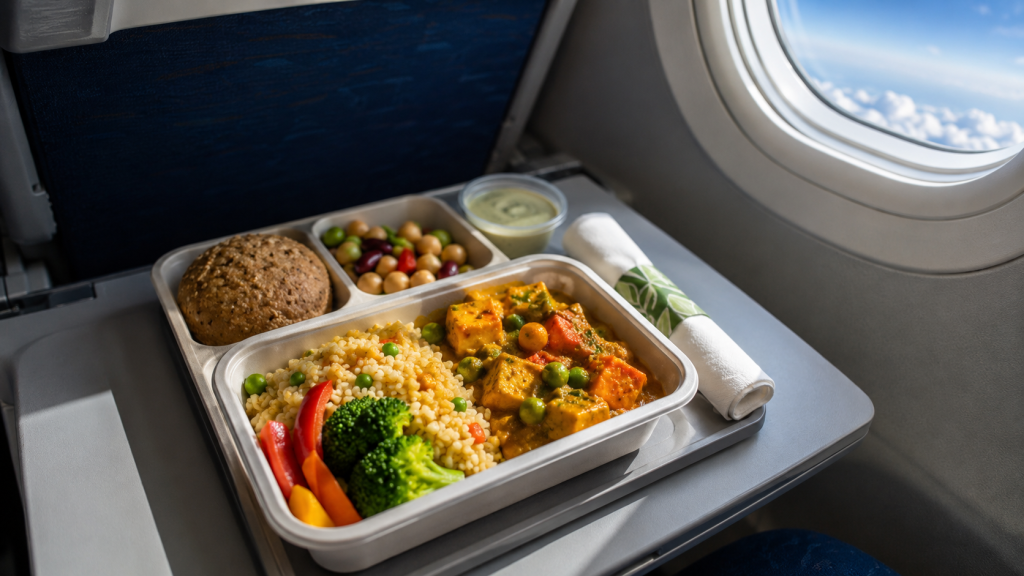
How Airline Special Meal Requests Work
Most major airlines allow passengers to request special meals during booking. Others require travelers to manage dietary preferences after the reservation is confirmed.
The process sounds straightforward, but multiple operational systems influence whether the request actually reaches the catering provider. International carriers usually offer the largest selection of dietary options because long-haul flights involve multiple meal services and longer travel times. Domestic routes often provide fewer customization choices.
Passengers should understand how meal requests move through airline systems before departure. Airlines generally transmit dietary data to catering companies several hours before boarding begins, leaving little room for last-minute changes.
Booking Stage
During direct booking on airline websites, travelers typically encounter a “Meal Preference” or “Special Services” section near seat selection.
Common categories include:
- Vegetarian meals
- Vegan meals
- Kosher meals
- Halal meals
- Gluten-free meals
- Diabetic meals
Airlines operating international wide-body aircraft usually support more detailed dietary categories than regional fleets.
Premium cabins may also include preorder dining systems unavailable in economy class.
Managing Reservations After Purchase
Passengers who skip meal selection during booking can often modify preferences later through:
- Airline mobile apps
- “Manage Booking” sections
- Customer support chat
- Telephone service centers
Some airlines also save meal preferences inside loyalty program profiles for future flights.
Meal Request Deadlines
Deadlines differ between airlines and routes.
Catering providers require time to prepare and transport meals before aircraft loading begins.
Typical cutoff times include:
- 24 hours before departure
- 36 hours before departure
- 48 hours before departure
- 72 hours on selected international routes
Flights under two hours frequently offer limited catering and may not support customized meals at all.
A meal request before flight becomes especially important on overnight and ultra-long-haul itineraries where onboard alternatives remain limited. Travelers changing flights close to departure should also reconfirm meal requests because schedule modifications occasionally reset dietary preferences automatically.
Travelers comparing international carriers can also review articles about Charlie Puth live in Atlantic City when planning entertainment-focused travel itineraries.
Official airline policies:
How to Request a Vegetarian Meal Online
Requesting special meals online has become easier in recent years, but the process still differs between airlines, travel agencies, and codeshare partnerships.
Some booking systems transfer meal requests automatically, while others require manual confirmation with the operating carrier.
Passengers booking through third-party platforms often assume dietary preferences move seamlessly between systems. In practice, airline reservation databases may not synchronize correctly. That issue appears most frequently on codeshare itineraries involving multiple airlines.
Following a structured process reduces the risk of meal request failures.
- Book directly through the airline website when possible
Direct bookings usually provide the most reliable meal request tools and clearer confirmation screens. - Open the “Manage Booking” section after ticket purchase
Most airlines allow passengers to modify meal preferences after payment. - Choose the correct meal category carefully
VGML refers to vegan meals, while VLML applies to vegetarian meals that may include dairy or eggs. - Confirm the meal appears on the itinerary
Many airlines display catering codes directly inside booking summaries. - Reconfirm during online check-in
Last-minute system issues occasionally remove meal preferences after schedule changes.
Passengers using online travel agencies should retrieve the airline reservation code and verify the request directly with the operating airline.
Airline Apps and Mobile Booking
Mobile apps increasingly support:
- Meal preordering
- Menu previews
- Real-time reservation updates
- Seat-based dining customization
Full-service airlines typically provide more advanced digital meal systems than budget carriers.
Some carriers now display actual menu photos before departure, particularly in premium cabins.
Low-Cost vs Full-Service Airlines
The difference between low-cost and traditional airlines affects meal availability significantly.
Some budget carriers sell only packaged snacks onboard, while premium international airlines offer extensive preorder menus.
| Airline Type | Meal Availability | Vegetarian Selection |
|---|---|---|
| Full-Service International | Included meals | Broad special meal support |
| Regional Airlines | Limited hot meals | Basic vegetarian choices |
| Low-Cost Carriers | Buy-on-board snacks | Availability varies |
Passengers researching how to request a special meal should also verify whether the operating airline matches the ticketing airline.
Codeshare partnerships remain one of the most common causes of failed catering requests.
Travelers preparing for overnight flights may also benefit from reading how to relieve back pain at home before long-haul travel.
Which Airlines Offer the Best Vegetarian Meal Options
Airline catering quality varies dramatically between carriers and departure airports.
Some international airlines invest heavily in plant-based dining, while others still treat vegetarian meals as secondary alternatives. Meal quality also depends on cabin class. Business and first-class passengers usually receive more customized vegetarian dishes than economy travelers, especially on long-haul routes.
Several airlines consistently rank among the strongest providers of vegetarian food on airlines.
Singapore Airlines
Singapore Airlines supports extensive vegetarian and vegan catering across international routes.
Its “Book the Cook” program allows premium passengers to preorder customized dishes before departure. The airline also provides strong Asian vegetarian and Jain meal selections.
Emirates
Emirates expanded vegan menu offerings significantly on long-haul routes. Plant-based desserts, vegetable grain bowls, and vegan curries now appear regularly on selected services.
Departure airport catering still influences meal consistency.
Qatar Airways
Qatar Airways maintains one of the strongest premium-cabin vegetarian menus among Middle Eastern carriers. Economy service remains more standardized but still supports multiple dietary requests.
Lufthansa
Lufthansa provides vegetarian and vegan meals on most long-haul flights, though short European routes may offer only limited cold catering.
Delta Air Lines
Delta Air Lines mainly supports vegetarian meal requests on international services. Domestic flights often rely on snack boxes rather than full hot meals.
Air India
Air India naturally integrates vegetarian cuisine into many onboard menus.
Indian vegetarian and Jain meal selections remain widely available.
The table below compares several leading international carriers. Meal quality can still vary depending on departure city and catering contractor.
| Airline | Vegan Meal Availability | Preorder System | Strongest Routes |
|---|---|---|---|
| Singapore Airlines | Excellent | Yes | Asia, Europe |
| Emirates | Very Good | Yes | Middle East, Long-Haul |
| Qatar Airways | Very Good | Yes | International |
| Lufthansa | Good | Limited | Europe-US |
| Delta Air Lines | Moderate | Limited | International only |
| Air India | Excellent | Yes | India routes |
Passengers researching airline meal options should remember that the same airline may provide completely different catering experiences depending on the departure airport.
Common Problems Passengers Face
Even properly confirmed meal requests sometimes fail because airline catering involves multiple operational systems.
A passenger may successfully select a vegetarian meal during booking yet still receive a standard tray onboard. Operational disruptions create most catering problems. Aircraft substitutions, delayed manifests, and codeshare coordination issues can all interfere with special meal loading.
Several problems appear repeatedly across international airlines.
Most Common Catering Issues
- Special meals not loaded onto the aircraft
- Incorrect vegetarian category assigned
- Vegan meals replaced with dairy-based alternatives
- Meal requests lost after schedule changes
- Codeshare flights ignoring dietary preferences
- Last-minute aircraft swaps reducing catering inventory
Passengers traveling on busy international routes face higher risks during peak holiday seasons when catering operations operate under tighter schedules.
Delayed inbound aircraft can also shorten catering preparation windows at airports.
Practical Solutions
Travelers can reduce catering issues through several practical steps:
- Reconfirm meal requests before departure
- Save screenshots of meal confirmations
- Mention dietary requests during airport check-in
- Bring backup vegetarian snacks
- Verify codeshare operating airlines carefully
Passengers managing multi-airline itineraries should also arrive at airports early enough to resolve catering issues before boarding begins.
Vegetarian vs Vegan Airline Meals
Many passengers use “vegetarian” and “vegan” interchangeably, but airlines treat them as separate catering categories.
Understanding the distinction helps avoid onboard meal surprises.
Vegetarian airline meals usually permit:
- Dairy products
- Cheese
- Yogurt sauces
- Egg-based desserts
Vegan meals exclude all animal-derived ingredients entirely.
Travelers ordering a vegan meal on a flight should pay particular attention to hidden ingredients.
Airline catering kitchens often prepare meals in large centralized facilities where labeling standards vary between regions.
Ingredients That Frequently Cause Problems
Certain ingredients appear vegetarian at first glance but may contain animal-derived additives:
- Parmesan made with animal rennet
- Gelatin desserts
- Cream soups
- Fish-based sauces
- Honey glazes
- Butter-coated rice
Cross-contamination can also occur during meal preparation and packaging.
Regional Catering Differences
An airline may serve different vegetarian meals depending on the departure city.
Asian catering centers often provide stronger vegetarian menus than smaller regional airports with limited specialty inventory. Passengers ordering a vegetarian inflight meal for medical or allergy reasons should contact airlines directly instead of relying solely on automated meal selection systems.
Tips Before a Long Flight
Long-haul flights create additional challenges for vegetarian travelers because food alternatives disappear once boarding doors close.
Delays, missed connections, or catering errors can leave passengers with limited options for many hours. Preparation reduces dependence on onboard inventory and improves flexibility during irregular operations.
Travelers flying internationally should prepare several backup solutions before departure.
Recommended Pre-Flight Checklist
- Bring shelf-stable vegetarian snacks
- Check airport restaurant availability in advance
- Confirm meal requests during online check-in
- Download the airline mobile app
- Carry a refillable water bottle where permitted
- Pack protein-rich travel snacks
- Research transit airport food availability
Preparation becomes especially important during overnight flights and airport transfers where restaurant operating hours may be limited.
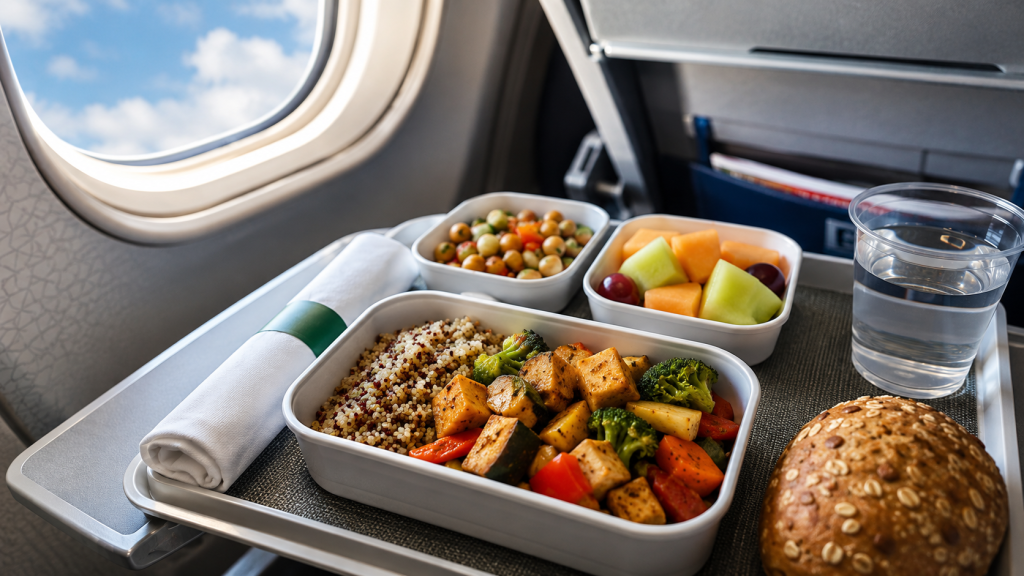
Useful Backup Foods for Long Flights
Certain foods travel well and remain practical during extended itineraries:
- Protein bars
- Mixed nuts
- Dried fruit
- Crackers
- Instant oatmeal cups
- Plant-based jerky
Passengers should also verify customs restrictions before carrying food across international borders.
Some countries restrict dairy, fresh produce, or nut imports even for personal consumption.
Many airlines distribute special meals before standard trays during cabin service. That system helps crews identify dietary requests quickly, though it also means passengers receive fewer replacement options if something goes wrong.
Special Meal Codes Airlines Commonly Use
Airline catering relies heavily on abbreviations that appear inside booking systems and boarding manifests.
Understanding those codes helps passengers avoid selecting incorrect meal categories during booking. Some travelers accidentally choose Asian vegetarian meals expecting vegan dishes, while others select standard vegetarian meals without realizing dairy ingredients remain included.
The following meal codes appear frequently across international airlines.
| Code | Meaning |
|---|---|
| VGML | Vegan Meal |
| VLML | Vegetarian Lacto-Ovo Meal |
| AVML | Asian Vegetarian Meal |
| VJML | Jain Vegetarian Meal |
| GFML | Gluten-Free Meal |
| KSML | Kosher Meal |
Passengers researching special meal codes airlines use should always verify meal descriptions directly with the operating carrier because definitions occasionally vary between regions.
FAQ
How early should a vegetarian meal be requested?
Most airlines recommend submitting meal requests at least 24 to 48 hours before departure.
Are vegetarian meals free on international flights?
Full-service international airlines usually include vegetarian meals without additional charges.
Can passengers request vegan meals after booking?
Yes. Most major airlines allow meal modifications through reservation management systems or mobile apps.
What happens if the airline forgets the meal?
Cabin crews may provide alternative vegetarian items if available, though options can remain limited on full flights.
Do budget airlines offer vegetarian meals?
Some low-cost carriers sell vegetarian snacks and sandwiches onboard, but selection depends on route and aircraft type.
Is vegetarian food healthier on planes?
Vegetarian meals may contain more vegetables and grains, though nutritional quality varies between airlines and catering providers.
Are special meals served before standard meals?
Many airlines distribute special meals first to simplify identification during cabin service.
Can passengers request a gluten free vegetarian airline meal?
Some international airlines support combined dietary requests, though availability depends on route-specific catering capabilities.
Earlier we wrote about Homemade Tiramisu Recipe Step by Step: Easy Italian Dessert With Ladyfinger Cookies and Coffee Cream