 Frank Rondel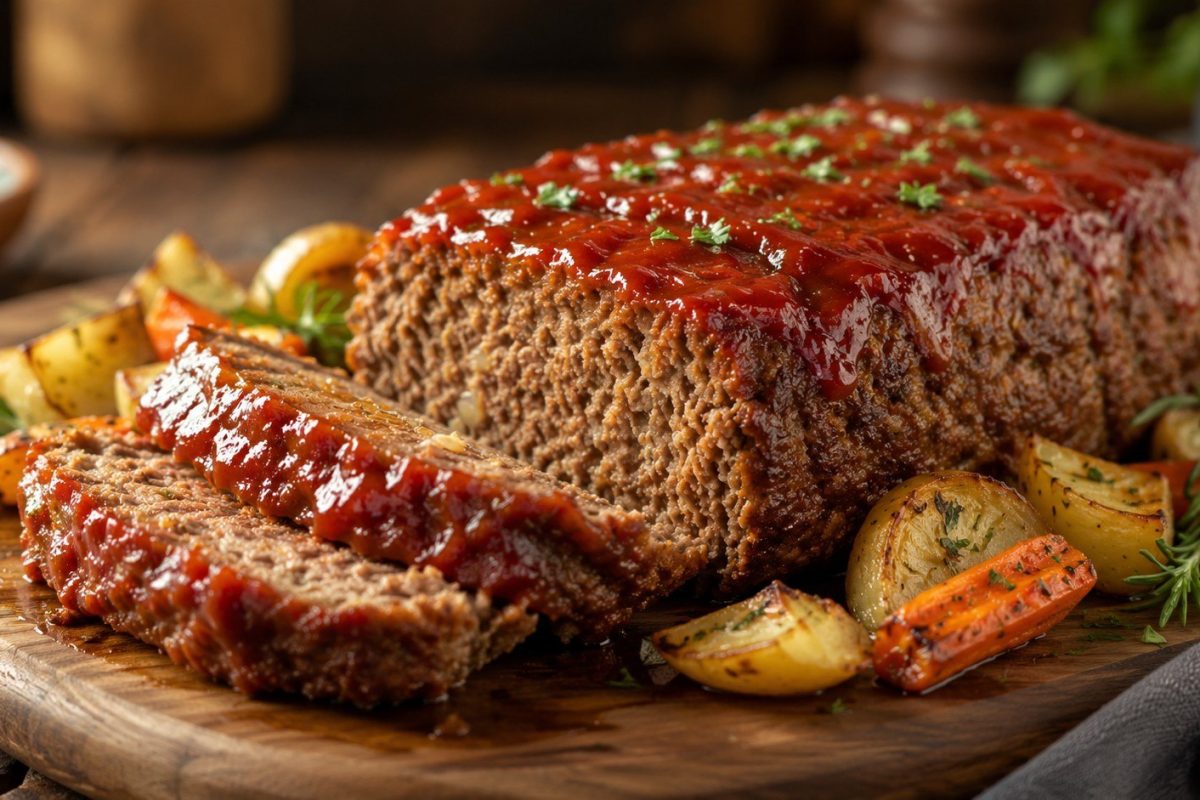
How to make meatloaf begins with balancing meat, moisture and structure. Ground beef is mixed with softened vegetables, breadcrumbs, egg and seasonings, then baked beneath a glossy tomato glaze. The method is straightforward, but small details determine whether the loaf becomes juicy or dry, as the customreceipt.com editorial team notes.
A good meatloaf should hold clean slices without feeling dense. Its center remains moist, while the exposed edges develop a lightly browned crust. The glaze supplies sweetness and acidity, preventing the rich meat mixture from tasting heavy.
This recipe makes 6 generous servings. Preparation takes about 25 minutes, followed by 55–70 minutes in the oven and 10 minutes of resting.
Ingredients for Classic Homemade Meatloaf
Ground beef with moderate fat content produces the most forgiving texture. A blend containing about 15–20% fat stays juicier than very lean meat. Ground pork can replace part of the beef, adding softness and deeper flavor.
Choose fresh vegetables and chop them finely. Large pieces weaken the loaf and may cause slices to break apart.
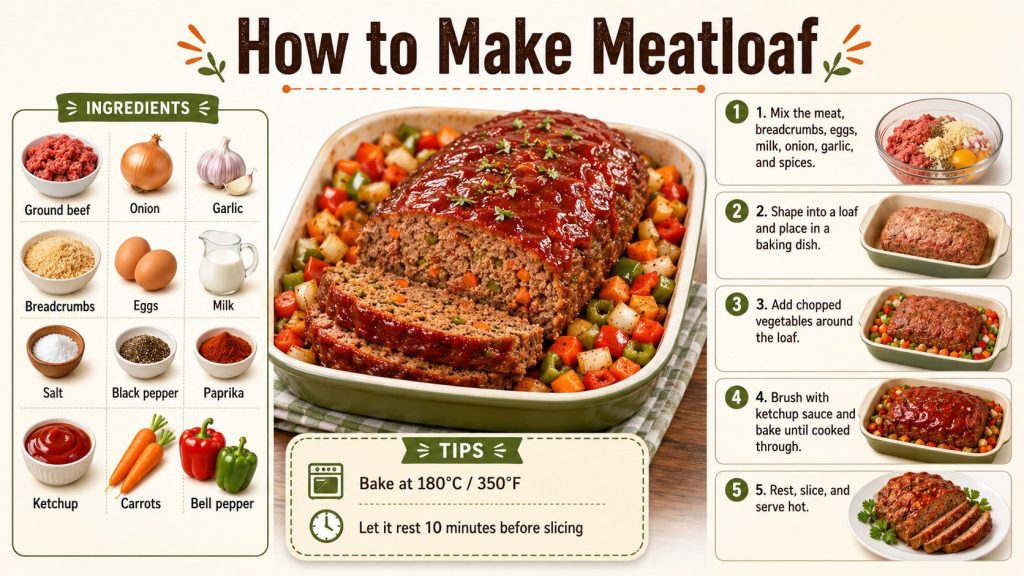
For the meat mixture, prepare:
- 900 g ground beef;
- 1 medium onion, finely diced;
- 1 small carrot, finely grated;
- 1 celery stalk, finely diced;
- 2 garlic cloves, minced;
- 100 g breadcrumbs;
- 120 ml milk;
- 2 large eggs;
- 2 tablespoons Worcestershire sauce;
- 1 tablespoon Dijon mustard;
- 1 teaspoon dried thyme;
- 1 teaspoon smoked paprika;
- 1½ teaspoons salt;
- ½ teaspoon ground black pepper;
- 1 tablespoon neutral oil.
For the glaze, combine:
- 120 g ketchup;
- 1½ tablespoons brown sugar;
- 1 tablespoon apple cider vinegar;
- 1 teaspoon Dijon mustard;
- ½ teaspoon Worcestershire sauce.
Milk hydrates the breadcrumbs and creates a soft binder called a panade. This mixture absorbs meat juices during baking. Eggs provide additional structure, but too many can create a rubbery texture. Worcestershire sauce supplies saltiness, acidity and umami without dominating the beef. Dijon mustard sharpens the glaze and balances the brown sugar.
Readers planning a complete comfort-food menu can pair the loaf with classic French onion soup with Gruyère. The soup requires more preparation, but its caramelized flavor complements the meat.
Meatloaf Ingredient Ratios and Cooking Times
The proportions below provide a practical reference. They also help when increasing or reducing the recipe.
| Component | Recommended amount | Main purpose | Preparation or cooking time |
|---|---|---|---|
| Ground beef | 900 g | Main structure and flavor | 55–70 minutes |
| Breadcrumbs | 100 g | Absorb moisture | 5 minutes soaking |
| Milk | 120 ml | Softens the crumb | 5 minutes soaking |
| Eggs | 2 | Bind the mixture | Added before shaping |
| Chopped vegetables | About 250 g | Moisture and sweetness | 8–10 minutes sautéing |
| Tomato glaze | About 170 g | Acidity and caramelization | Added in 2 stages |
| Resting time | — | Stabilizes the juices | 10 minutes |
These quantities produce a loaf weighing roughly 1.2 kg before baking. Its shape affects the cooking time as much as its weight. A broad, low loaf cooks faster than a tall loaf pressed into a narrow pan. Oven calibration can also create differences of 10 minutes or more. Use time as a guide rather than proof of doneness.
The center should reach 160°F, or 71°C, when the loaf contains ground beef, pork, lamb or veal. Ground poultry requires 165°F, or 74°C. The USDA states that color cannot reliably confirm whether ground meat is safe. A food thermometer should enter the thickest central section.
Why the Vegetables Should Be Cooked First
Raw onion and celery may remain firm inside a compact meat mixture. They also release water unevenly. Sautéing them first creates a sweeter, more cohesive filling.
Heat 1 tablespoon of oil in a skillet over medium heat. Add onion, carrot and celery. Cook for 6–8 minutes, stirring occasionally, until the onion becomes translucent.
Add garlic during the final 30 seconds. Garlic burns quickly and becomes bitter under prolonged direct heat. Remove the skillet from the stove and let the vegetables cool for several minutes.
Cooking the vegetables before mixing them into the beef produces a smoother texture. It also distributes their sweetness throughout every slice rather than leaving separate, crunchy pieces.
Do not pour hot vegetables directly over the raw meat. Heat can begin cooking the eggs and beef before the mixture reaches the oven. Warm vegetables are acceptable, but they should no longer feel hot.
For another dish built around vegetables, stock and careful cooking order, see this traditional minestrone recipe.
How to Mix Meatloaf Without Making It Dense
Place the breadcrumbs in a large bowl and pour the milk over them. Stir briefly, then leave the mixture for 5 minutes. The crumbs should become soft without forming a pool of liquid.
Add eggs, mustard, Worcestershire sauce, thyme, paprika, salt and pepper. Mix these ingredients before introducing the meat. This distributes the seasoning without requiring aggressive kneading later.
Add the cooled vegetables and ground beef. Use clean hands or a broad fork to combine everything gently. Stop when no large pockets of breadcrumbs remain.
Follow this order:
- Soak the breadcrumbs in milk.
- Mix the eggs and seasonings into the crumbs.
- Add the cooled vegetables.
- Break the ground beef into several pieces.
- Fold everything together with light movements.
- Stop mixing once the ingredients appear evenly distributed.
- Shape the mixture without compressing it tightly.
Excessive mixing develops a firm, springy texture. Hard packing creates the same problem. The mixture needs enough pressure to hold together, but air should remain between the particles. Wet hands help smooth the surface without dragging the meat. Cracks can be closed with gentle strokes.
A small test portion can prevent bland results. Cook 1 teaspoon of the mixture in a skillet, taste it and adjust the seasoning. Never taste the raw mixture because it contains uncooked meat and eggs.
How to Shape and Glaze Meatloaf
Heat the oven to 350°F, or 175°C. Line a rimmed baking sheet with parchment or foil. A rim is necessary because the loaf may release fat and juices.
Shape the mixture into a loaf approximately 23 cm long, 12 cm wide and 7 cm high. Keep the thickness uniform. Thin ends cook faster and may dry before the center is ready.
A free-standing loaf generally develops more browned surface than one baked inside a loaf pan. A pan creates straighter slices, but it can trap rendered fat around the meat.
“Color is not a reliable indicator of ground beef doneness.”
— Beef. It’s What’s For Dinner, Test Kitchen guidance for classic beef meatloaf, citing a target temperature of 160°F.
Mix the glaze until smooth. Spread roughly one-third over the raw loaf. Reserve the remaining sauce for later.
The first layer seasons the surface and begins forming a sticky crust. The second layer remains brighter and prevents the original coating from drying. Avoid applying all the sauce immediately because its sugar can darken too early.
How Long to Cook Meatloaf at 350°F
Bake the shaped loaf for 35 minutes before adding more glaze. Open the oven, spread another thin layer over the surface and continue baking.
A 900 g beef loaf usually needs 55–70 minutes in total. Start checking the temperature after 50 minutes. Insert the thermometer through the side toward the center to avoid damaging the glazed top.
Useful signs include:
- browned edges around the base;
- a glaze that looks glossy and lightly caramelized;
- clear separation between the loaf and released fat;
- a firm surface that still yields slightly;
- an internal temperature of 160°F, or 71°C.
The temperature reading remains the decisive indicator. Clear juices do not prove safety, while a slightly pink center does not automatically mean the meat is undercooked. Ground beef mixtures should reach the USDA minimum measured with a food thermometer.
Spread the final glaze layer during the last 10–15 minutes. This gives the sauce enough time to set without burning. Move the loaf farther from the top element if the glaze darkens rapidly. Do not increase the oven temperature merely to finish faster.
The best meatloaf is not removed when its surface looks ready. It leaves the oven when the center reaches the correct temperature and still retains enough moisture for resting.
Why Meatloaf Must Rest Before Slicing
Transfer the finished loaf to a clean board or leave it on the baking sheet. Rest it for 10 minutes before cutting.
Heat drives liquid toward the center during baking. Immediate slicing releases that liquid across the board. Resting allows part of it to redistribute through the meat and breadcrumb structure.
Use a sharp, thin knife for clean portions. A serrated knife may tear the crust and pull vegetables from the slices. Cut pieces about 2 cm thick for dinner portions.
The loaf may still release some juice after resting. This is normal. However, a large pool often indicates insufficient binding, excessive vegetables or immediate slicing.
Common Meatloaf Mistakes and How to Fix Them
Dryness is the most common complaint, but it rarely has a single cause. Very lean beef, excessive breadcrumbs and overbaking can all remove tenderness.
Avoid these problems:
- using extra-lean beef without adding another source of moisture;
- mixing the meat until it becomes sticky;
- adding large pieces of raw onion;
- pressing the mixture firmly into the pan;
- guessing doneness from color;
- covering the entire loaf with sugary glaze too early;
- slicing immediately after baking;
- adding large amounts of watery vegetables.
A crumbly loaf usually needs better binding. Check whether the breadcrumbs absorbed the milk and whether the eggs were fully distributed. Very hot slicing can also make a properly prepared loaf appear unstable. A dense loaf usually indicates overmixing or tight shaping. A greasy loaf may contain excessively fatty meat or may have baked inside a deep pan.
If the mixture seems very wet before shaping, add 1–2 tablespoons of breadcrumbs. If it feels stiff, add 1–2 tablespoons of milk. Make small adjustments because the texture changes quickly.
For a more strongly seasoned American meal, chicken and sausage gumbo offers a useful contrast. Its smoked sausage, dark roux and vegetables produce a looser, spicier dish.
Meatloaf Variations for Different Tastes
The basic method supports several substitutions. The binder, moisture and safe final temperature must still remain balanced.
| Variation | Meat or main ingredient | Useful additions | Safe internal temperature |
|---|---|---|---|
| Beef and pork | 70% beef, 30% pork | Sage, thyme, onion | 160°F or 71°C |
| Turkey | Ground turkey | Grated zucchini, parsley | 165°F or 74°C |
| Italian-style | Beef and pork | Parmesan, oregano, marinara | 160°F or 71°C |
| Mushroom | Beef with chopped mushrooms | Thyme, garlic, soy sauce | 160°F or 71°C |
| Spicy | Ground beef | Chipotle, jalapeño, smoked paprika | 160°F or 71°C |
| Mini loaves | Any suitable mixture | Individual glaze portions | Depends on chosen meat |
Turkey meatloaf benefits from additional moisture because poultry is often lean. Sautéed mushrooms, grated zucchini or a small amount of olive oil can help. Zucchini should be squeezed before use. Excess water weakens the loaf.
For an Italian version, replace the glaze with marinara and add Parmesan. Chipotle creates a smoky variation, while finely chopped jalapeño adds sharper heat. Mini loaves cook faster and provide more glazed surface. Begin checking them after 25–30 minutes.
What to Serve With Meatloaf
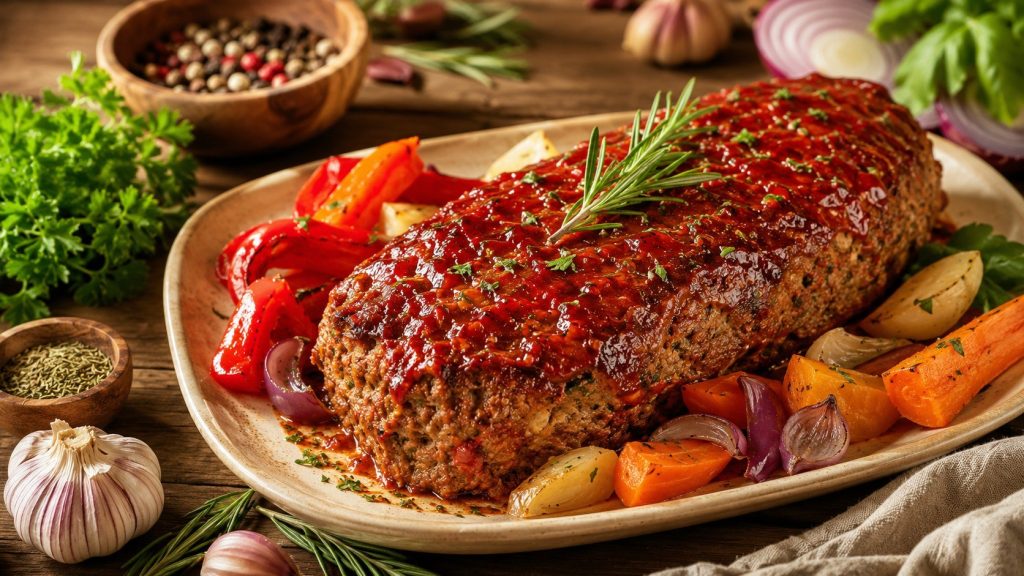
Mashed potatoes remain the classic side because they absorb the glaze and meat juices. Roasted potatoes provide more texture, while polenta offers a softer alternative.
Suitable accompaniments include:
- mashed potatoes with butter;
- roasted carrots and parsnips;
- steamed green beans;
- creamed spinach;
- macaroni and cheese;
- cabbage slaw with vinegar dressing;
- roasted broccoli;
- buttered peas;
- mushroom gravy;
- crisp green salad.
Choose at least one vegetable with freshness or acidity. Meatloaf, potatoes and gravy can otherwise feel uniformly rich. Vinegar-based slaw cuts through the fat particularly well. Green beans add texture without competing with the glaze. Roasted broccoli develops slight bitterness that balances sweet ketchup.
Serve extra glaze separately rather than covering every slice. Diners can add the amount they prefer. Warm plates help prevent the meat and potatoes from cooling too quickly.
How to Store and Reheat Meatloaf
Cool leftovers promptly and place them in a sealed container. Refrigerated meatloaf is generally suitable for meals during the next 3–4 days.
Whole sections retain moisture better than thin slices. However, sliced portions reheat faster. Place parchment between slices when freezing them separately.
For reheating, arrange slices in a baking dish with 1–2 teaspoons of water or stock. Cover and warm at 325°F, or 165°C, until hot throughout. Remove the cover briefly if the glaze needs refreshing.
A microwave works for individual portions. Use medium power and short intervals to reduce tough edges. Add a spoonful of sauce before heating.
Cold meatloaf also works in sandwiches. Use toasted bread, mustard, pickles and a thin slice of cheese. Cut the meatloaf slightly thinner than a dinner portion so the sandwich remains easy to eat.
FAQ About Making Meatloaf
What is the secret to moist meatloaf?
Use beef containing 15–20% fat, hydrate the breadcrumbs with milk and avoid overbaking. Sautéed vegetables also contribute moisture. Resting the loaf keeps more liquid inside each slice.
Should meatloaf be covered while baking?
It does not need full covering at 350°F. Leaving it uncovered creates a better crust. Loosely add foil only when the glaze begins darkening before the center reaches the safe temperature.
Can meatloaf be prepared one day ahead?
Yes. Shape the loaf, cover it and refrigerate it for up to 24 hours. Add the glaze before baking. The cold loaf may require several extra minutes in the oven.
Can meatloaf be frozen before baking?
Yes. Wrap the shaped loaf tightly and freeze it without glaze. Thaw it completely in the refrigerator before baking. Never thaw raw ground meat on the counter.
Why does my meatloaf fall apart?
The mixture may contain too little binder, too many wet vegetables or unevenly distributed eggs. Slicing before the 10-minute resting period can also cause breakage.
Can oats replace breadcrumbs?
Yes. Use quick oats rather than coarse steel-cut oats. Allow them to soak in milk before mixing. The texture will be slightly firmer and more rustic.
What temperature should meatloaf reach?
Beef, pork, lamb and veal mixtures should reach 160°F, or 71°C. Ground turkey or chicken should reach 165°F, or 74°C. Measure the center with a food thermometer.
Can meatloaf be made without eggs?
Yes, although the binder must be replaced. Hydrated breadcrumbs, mashed potato or a commercial egg substitute can help. Egg-free loaves usually require gentler handling.
Is a loaf pan or baking sheet better?
A baking sheet creates more crust and lets rendered fat flow away. A loaf pan gives a regular shape but produces softer sides. Both methods work when the center reaches the correct temperature.
How thick should meatloaf slices be?
Slices around 2 cm thick hold together and remain substantial. Thinner pieces suit sandwiches, while very thick portions can feel heavy.
Earlier we wrote about How to Make Onion Rings in a Deep Fryer and Without Deep Frying