 Frank Rondel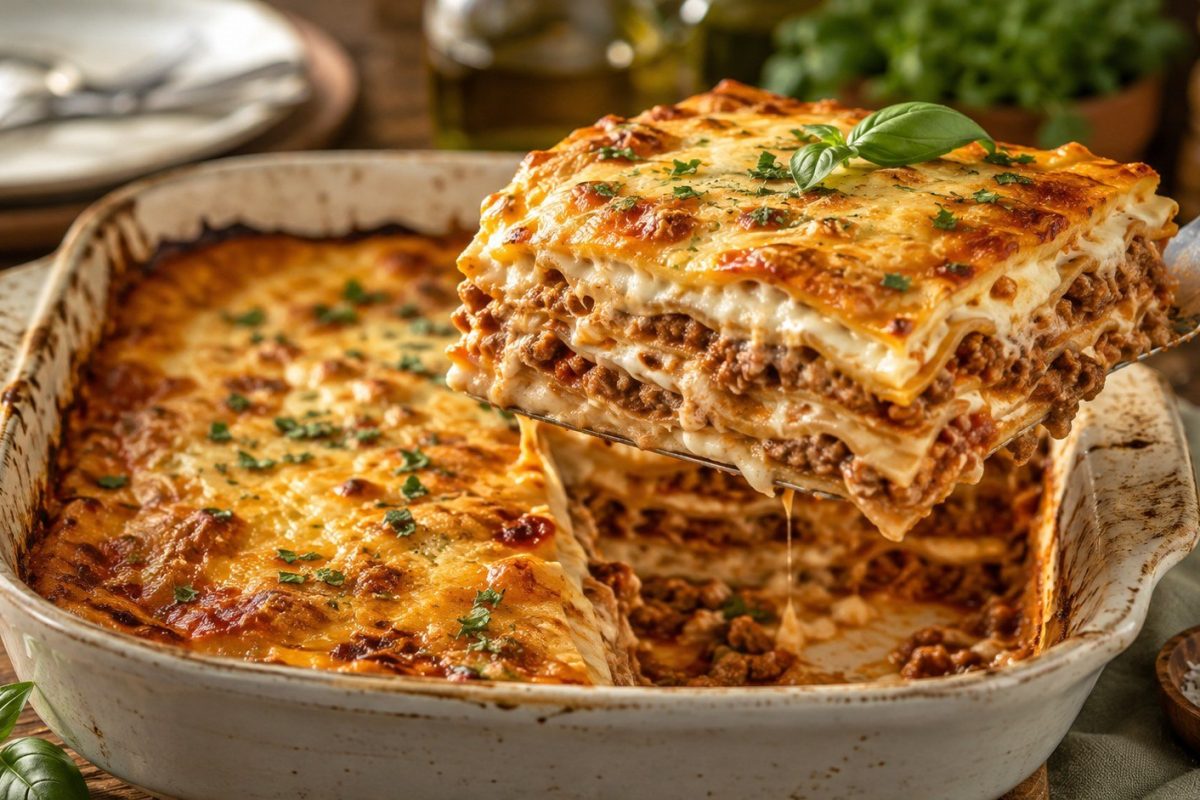
How to make lasagna without dry pasta, watery sauce, or collapsing layers begins with controlling moisture. This recipe combines beef ragù, ricotta, mozzarella, Parmesan, and pasta sheets in a balanced 9-by-13-inch dish, as the customreceipt.com editorial team notes.
A reliable homemade lasagna recipe does not depend on rare ingredients or professional equipment. It depends on a thick sauce, properly prepared pasta, restrained cheese layers, and enough resting time after baking.
The recipe below produces 8 generous servings. Preparation takes about 35 minutes, followed by 45–55 minutes in the oven. Allow another 15–20 minutes before cutting.
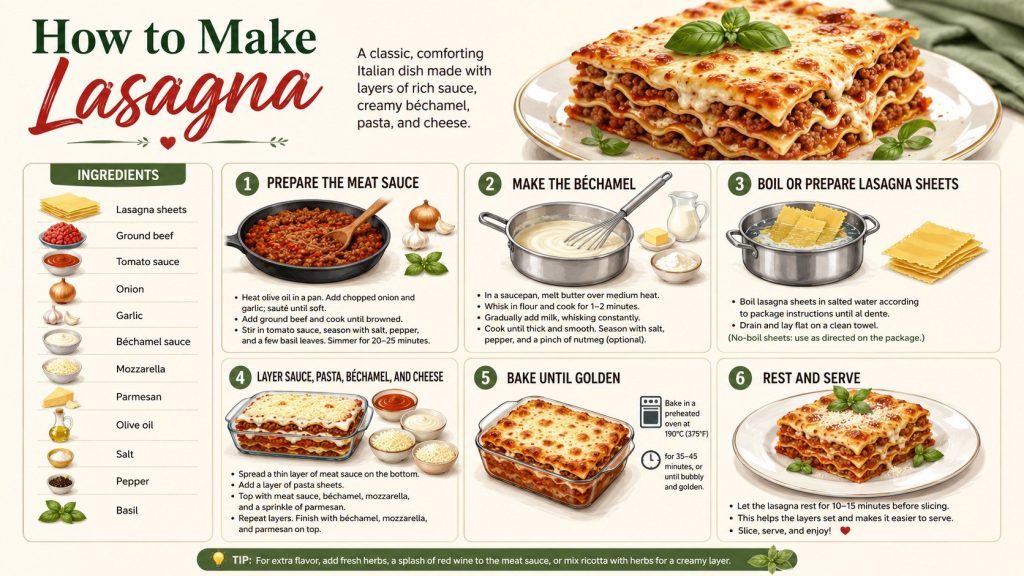
Ingredients for Homemade Lasagna
Use ground beef containing about 15–20% fat. Very lean meat can make the sauce dry, while excessively fatty beef may leave oil between the layers.
Whole-milk ricotta provides a smoother filling than low-fat versions. Freshly grated mozzarella also melts more evenly than pre-shredded cheese, which often contains anti-caking starch.
For one standard baking dish, prepare:
- 12 lasagna noodles;
- 1 tablespoon olive oil;
- 1 medium yellow onion, finely chopped;
- 3 garlic cloves, minced;
- 1 lb or 450 g ground beef;
- 28 oz or 800 g crushed tomatoes;
- 15 oz or 425 g tomato sauce;
- 2 tablespoons tomato paste;
- 1 teaspoon dried oregano;
- 1 teaspoon dried basil;
- ½ teaspoon red pepper flakes, optional;
- 1 teaspoon salt;
- ½ teaspoon black pepper;
- 15 oz or 425 g whole-milk ricotta;
- 1 large egg;
- ¼ cup chopped parsley;
- 3 cups shredded mozzarella;
- ¾ cup grated Parmesan.
These quantities create 3 complete pasta layers with enough sauce to cover every noodle. The tomato paste strengthens the sauce without adding excess liquid. Egg helps the ricotta layer hold its shape after slicing. Parsley brings freshness, but basil can replace it. Parmesan supplies saltiness and a deeper savory flavor. Measure the cheese before assembly because overloading one layer can leave the others dry.
For another baked dish built around controlled moisture, see this sweet potato casserole recipe.
Equipment Needed for the Recipe
Lasagna requires no specialized appliance. A heavy saucepan and a deep baking dish handle nearly every stage.
Prepare the following equipment before cooking:
- a 9-by-13-inch or 23-by-33-centimeter baking dish;
- a large saucepan or Dutch oven;
- a wide pot for the noodles;
- a colander;
- a mixing bowl;
- a wooden spoon;
- a ladle;
- aluminum foil;
- an instant-read thermometer.
A deep ceramic or glass dish helps contain bubbling sauce. Metal dishes heat faster and may brown the edges several minutes earlier. The saucepan should provide enough surface area for moisture to evaporate from the meat sauce. A narrow pot slows reduction and may produce a watery filling. Foil protects the upper layer during most of the baking period. A thermometer provides better information than cheese color alone.
Prepare every component before assembly. Lasagna becomes difficult to manage when hot noodles, unfinished sauce, and unmixed cheese compete for attention.
How to Make Lasagna Meat Sauce
Heat the olive oil over medium heat. Add the chopped onion and cook for 5–7 minutes, until soft and lightly golden.
Stir in the garlic and cook for 30 seconds. Garlic burns quickly, so add the beef immediately afterward.
Break the meat into small pieces with a wooden spoon. Cook for 7–9 minutes, until no pink areas remain. Drain excess fat when more than 2 tablespoons collect in the pot.
Add the tomato paste and cook it with the beef for 1 minute. This brief frying stage removes its raw flavor and develops sweeter notes.
Pour in the crushed tomatoes and tomato sauce. Add oregano, basil, pepper flakes, salt, and black pepper. Simmer uncovered for 20–25 minutes.
The finished lasagna meat sauce should look thick enough to cling to a spoon. A watery sauce releases steam inside the dish and causes unstable layers. If liquid still pools on the surface, continue simmering for another 5–10 minutes.
Do not reduce the sauce into a paste. The noodles need moisture during baking, particularly when using oven-ready sheets.
For another practical beef-and-tomato dinner, the site’s American goulash cooking guide explains how pasta absorbs sauce during cooking.
Should Lasagna Noodles Be Boiled First?
The correct method depends on the pasta package. Traditional dried noodles usually require boiling, while oven-ready noodles are designed to soften inside the assembled dish.
The main options differ in preparation and moisture requirements:
| Type of pasta | Preparation | Sauce needed | Main advantage | Common risk |
|---|---|---|---|---|
| Traditional dried noodles | Boil 2 minutes less than package directions | Medium | Predictable texture | Tearing or sticking |
| Oven-ready noodles | Use directly from package | High | Faster preparation | Dry edges |
| Fresh pasta sheets | Usually no boiling | Medium | Tender texture | Becoming too soft |
| Soaked dried noodles | Soak in hot water for 20 minutes | Medium to high | Less handling | Uneven softening |
Traditional noodles offer the most control for beginners. Boil them until flexible but still firm in the center. They will continue cooking in the oven. Transfer them to a lightly oiled tray instead of stacking them in the colander. Oven-ready sheets need complete sauce coverage, including every corner. Fresh pasta cooks quickly and requires a slightly thicker sauce. Never use two preparation methods for the same batch.
The Kitchn notes that regular noodles can cook inside a tightly covered casserole when they remain fully covered with sauce. However, results depend on noodle thickness and available moisture.
How to Prepare the Ricotta Filling
Place the ricotta in a medium bowl. Add the egg, parsley, ½ cup Parmesan, ½ teaspoon salt, and several turns of black pepper.
Mix until the egg disappears into the cheese. Do not whip the filling aggressively because excess air can make the baked layer grainy.
If the ricotta releases visible liquid, drain it through a fine sieve for 15–20 minutes. Wet ricotta is a common cause of loose lasagna.
Cottage cheese can replace ricotta, although its curds create a different texture. Blend it briefly when a smoother filling is preferred.
The cheese layer should spread easily but retain its shape. It must not pour from the spoon or feel as stiff as cold cream cheese.
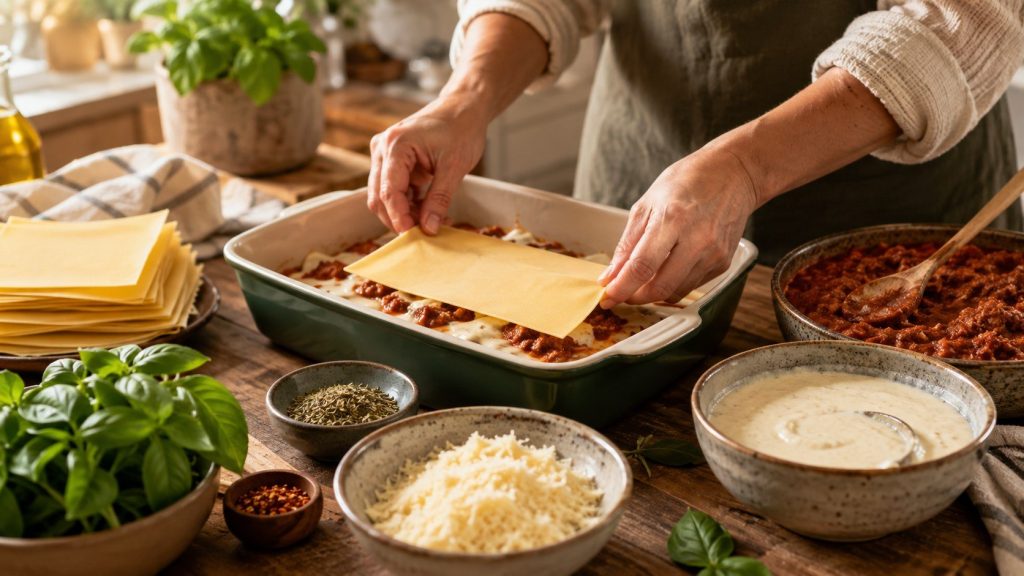
How to Layer Lasagna Correctly
Begin with sauce, not pasta. The first layer prevents sticking and provides moisture underneath the bottom noodles.
Follow this order:
- Spread about 1 cup of meat sauce across the baking dish.
- Add 3–4 noodles in a single layer.
- Spread one-third of the ricotta mixture over the pasta.
- Add about 1 cup of meat sauce.
- Sprinkle with ¾ cup mozzarella.
- Repeat the sequence twice.
- Finish with noodles and the remaining sauce.
- Reserve the final mozzarella and Parmesan for the top.
Spread each component toward the corners. Dry edges usually appear where noodles remain exposed.
Avoid pressing the layers down. Compression pushes sauce outward and creates a dense center. Small gaps between noodles are acceptable because pasta expands. Distribute meat evenly instead of leaving several large clusters. Keep the upper noodles completely covered with sauce. The final cheese should form a relatively thin layer rather than a heavy blanket.
This sequence creates a stable layered lasagna with sauce between every pasta sheet. It also prevents the ricotta from touching the baking dish, where it could scorch.
Lasagna Baking Time and Temperature
Preheat the oven to 375°F or 190°C. Place the dish on a rimmed tray to catch any bubbling sauce.
Cover the lasagna tightly with foil. To prevent sticking, lightly oil the underside or create a loose tent above the cheese.
Bake according to the dish’s starting condition:
| Lasagna condition | Covered baking | Uncovered baking | Resting time |
|---|---|---|---|
| Freshly assembled | 30–35 minutes | 12–15 minutes | 15–20 minutes |
| Refrigerated overnight | 40–45 minutes | 12–15 minutes | 20 minutes |
| Frozen and thawed | 45–55 minutes | 15 minutes | 20 minutes |
| Individual reheated portion | 20–25 minutes | 5 minutes | 3–5 minutes |
Remove the foil when the sauce bubbles around the edges. Add the reserved mozzarella and Parmesan if they were not added earlier. Return the dish uncovered until the top becomes golden in several places. Avoid waiting for the entire surface to turn brown because the edges may dry first. Cold ceramic dishes need additional heating time. Oven temperatures vary, making internal temperature more reliable than timing alone. Let the dish remain untouched after baking.
Barilla recommends heating lasagna until its center reaches at least 160°F. USDA guidance requires reheated leftovers to reach 165°F or 74°C.
Why Lasagna Must Rest Before Cutting
Resting is not a decorative final step. The sauce thickens, melted cheese stabilizes, and pasta absorbs some remaining moisture.
Cutting immediately releases liquid onto the plate. The layers may slide apart even when the lasagna was assembled correctly.
Wait at least 15 minutes for a freshly baked dish. A very deep or heavily sauced lasagna may require 20–25 minutes.
Use a sharp knife to cut through the cheese. Lift each portion with a wide metal spatula. Wipe the knife between cuts for cleaner edges.
The finished slice should remain upright without becoming dry. A small amount of sauce around the base is normal.
Common Lasagna Mistakes
Most failures come from moisture imbalance rather than incorrect seasoning.
Watch for these problems:
- sauce that was not reduced before assembly;
- noodles boiled until completely soft;
- uncovered pasta corners;
- watery ricotta;
- excessive mozzarella between layers;
- a dish filled above its rim;
- foil pressed directly against the cheese;
- cutting immediately after baking;
- reheating without covering the portion.
A loose sauce can sometimes be corrected before assembly by simmering it longer. Overcooked noodles cannot be repaired, but careful handling may prevent further tearing. Exposed corners should receive another spoonful of sauce. Wet ricotta needs draining rather than additional Parmesan. Excess cheese creates oil and can prevent layers from bonding. A shallow dish should not be filled to its upper edge. Resting solves many apparent structural problems.
Variations for Meatless or Faster Lasagna
The basic method supports several changes without losing structure.
For vegetarian lasagna, replace beef with sautéed mushrooms, spinach, zucchini, or lentils. Cook vegetables before layering because raw produce releases water in the oven.
Other practical variations include:
- Italian sausage instead of ground beef;
- equal quantities of beef and sausage;
- spinach mixed into the ricotta;
- roasted eggplant between pasta layers;
- béchamel instead of ricotta;
- pesto added in small spoonfuls;
- turkey or chicken for a lighter sauce;
- oven-ready noodles for faster assembly.
Mushrooms should be browned until their released liquid evaporates. Frozen spinach needs thorough squeezing. Zucchini works best when sliced, salted, and roasted first. Sausage adds salt, so reduce the seasoning in the sauce. Béchamel creates a softer, more traditional Italian-style interior. Pesto should remain restrained because its oil can make the dish heavy. Each variation should preserve the balance between sauce, pasta, and filling.
How to Store, Freeze, and Reheat Lasagna
Refrigerate cooked lasagna within 2 hours. USDA guidance advises limiting room-temperature exposure because bacteria grow rapidly between 40°F and 140°F.
Cover the dish tightly or transfer portions into shallow containers. Refrigerated leftovers are generally best eaten within 3–4 days.
To freeze individual portions, cool the lasagna completely. Wrap each piece tightly and place it in a freezer-safe container. Label the package with the date.
Reheat refrigerated lasagna at 350°F or 175°C. Add 1 tablespoon of water or sauce around the portion, then cover it with foil.
The center of reheated easy homemade lasagna should reach 165°F or 74°C. USDA also recommends covering leftovers during reheating to retain moisture and promote even heating.
What to Serve With Lasagna
Lasagna is rich, so the best side dishes provide acidity, bitterness, or crisp texture.
Suitable options include:
- green salad with lemon dressing;
- roasted broccoli;
- sautéed spinach;
- garlic bread;
- grilled zucchini;
- tomato and cucumber salad;
- steamed green beans;
- roasted asparagus.
A sharp salad cuts through melted cheese more effectively than another creamy side. Garlic bread works well when the lasagna contains plenty of sauce. Keep portions moderate when bread is included. Bitter greens balance sweet tomato sauce. Roasted vegetables add texture without competing with the main dish. Avoid serving several heavy casseroles together. Finish with fruit, sorbet, or a small dessert.
For a contrasting seafood menu, consider this Maryland-style crab cake recipe.
FAQ About Making Lasagna
How long does lasagna take to cook?
Freshly assembled lasagna usually needs 45–50 minutes at 375°F. Keep it covered for most of that period, then brown it uncovered.
Can lasagna be prepared the day before?
Yes. Assemble it, cover it tightly, and refrigerate it for up to 24 hours. Add about 10 minutes to the covered baking time.
Why is my lasagna watery?
The sauce may be too thin, the ricotta may contain excess liquid, or vegetables may have released water. Cutting before resting also creates apparent wateryness.
Should lasagna be covered while baking?
Yes. Cover it during the first 30–45 minutes. Remove the foil near the end to brown the cheese.
How many layers should lasagna have?
A standard 9-by-13-inch dish usually holds 3 pasta layers plus the upper finishing layer. Very deep dishes may hold 4.
Can oven-ready noodles replace boiled noodles?
Yes, but they must be completely surrounded by sauce. Check the package because brands require different liquid levels and baking times.
What temperature should cooked lasagna reach?
A freshly baked lasagna should be hot throughout. Reheated leftovers should reach 165°F or 74°C under USDA guidance.
Can ricotta be replaced with cottage cheese?
Yes. Drain cottage cheese first and blend it briefly for a smoother consistency.
How do I prevent the foil from sticking?
Oil the underside lightly or tent the foil above the cheese. Remove it carefully after steam escapes.
Can lasagna be frozen before baking?
Yes. Assemble it in a freezer-safe dish, wrap it tightly, and freeze it. Thaw overnight in the refrigerator before baking for the most even result.
Earlier we wrote about How to Make Fish Tacos: A Crispy, Fresh Dinner Ready in 35 Minutes