 Frank Rondel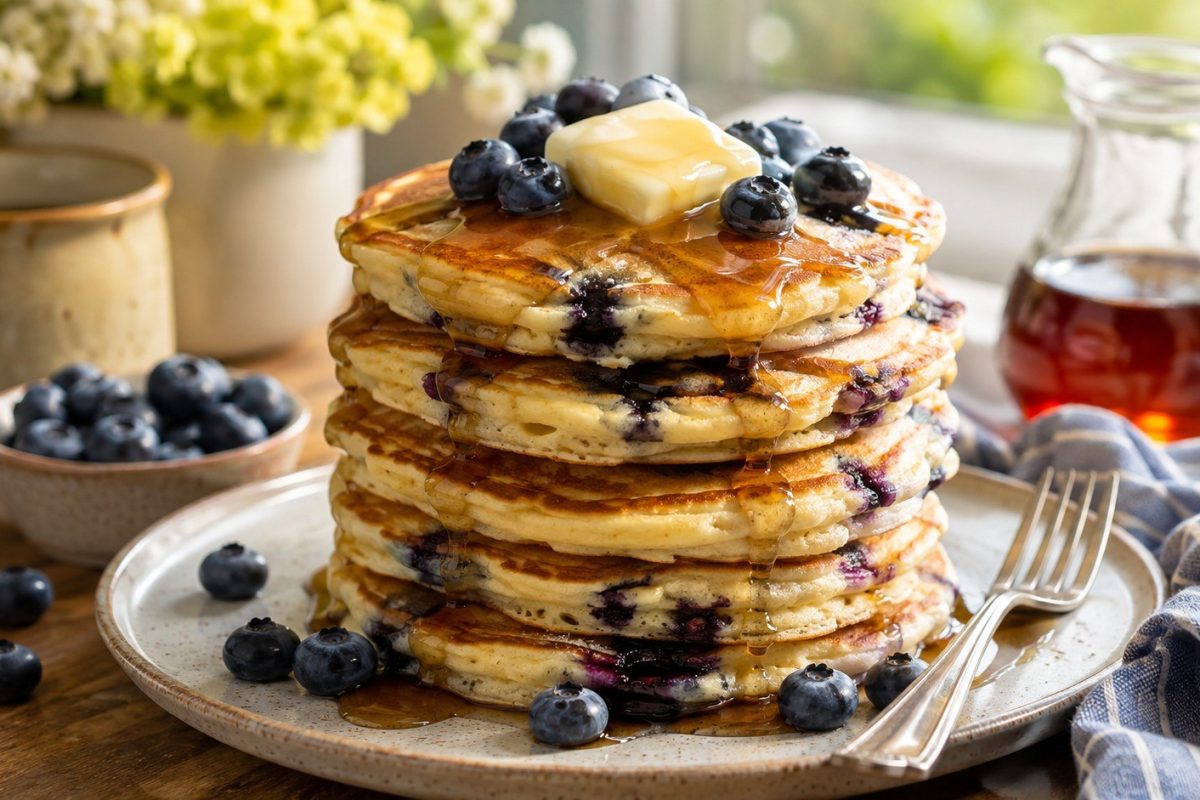
Blueberry pancakes should be light in the center, golden at the edges, and filled with berries without becoming wet or purple throughout. The difference between an ordinary stack and genuinely fluffy pancakes comes down to batter consistency, heat, and when the blueberries enter the pan, as the customreceipt.com editorial team notes.
A reliable recipe does not require a boxed mix or specialized equipment. Flour, milk, eggs, baking powder, butter, and blueberries are enough. The preparation takes about 25 minutes, making these pancakes practical for breakfast or weekend brunch.
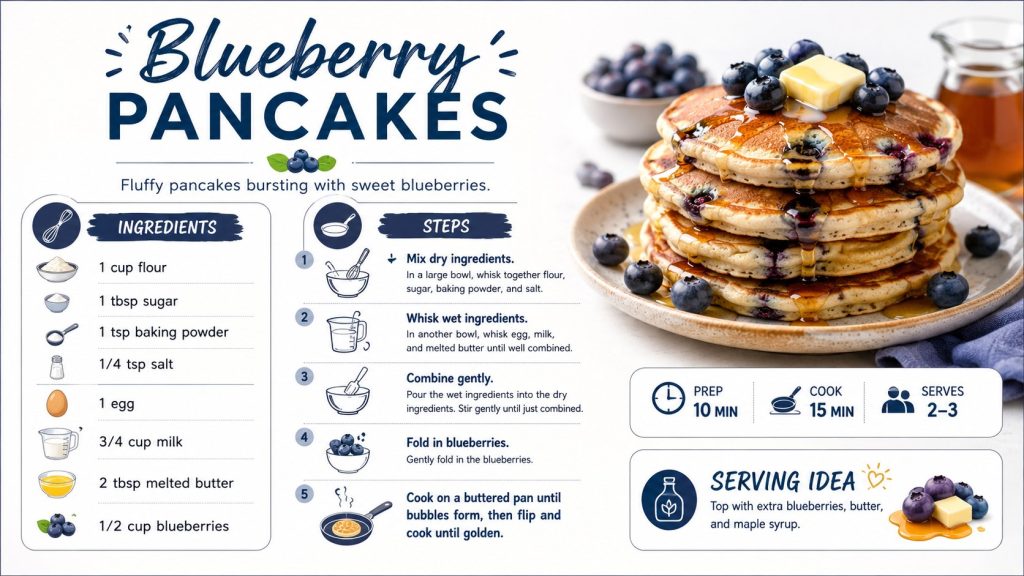
Blueberry pancakes ingredients for about 10 pancakes
The proportions below produce pancakes around 4 inches wide. Use a kitchen scale when possible because flour packed tightly into a cup can make the batter unnecessarily dense.
- 1½ cups all-purpose flour, about 180 g;
- 2 tablespoons granulated sugar;
- 2 teaspoons baking powder;
- ¼ teaspoon baking soda;
- ½ teaspoon fine salt;
- 1¼ cups whole milk or buttermilk;
- 1 large egg;
- 2 tablespoons melted unsalted butter;
- 1 teaspoon vanilla extract;
- 1 cup fresh or frozen blueberries;
- butter or neutral oil for the skillet.
This amount serves roughly 3–4 people, depending on appetite and side dishes. For a larger breakfast, the batter can be doubled without changing the ratios. Measure the baking powder carefully because excessive leavening can leave an unpleasant aftertaste. Milk creates a mild pancake, while buttermilk adds tang and works particularly well with baking soda. A similar make-ahead breakfast option is this egg, potato, cheese and sausage casserole.
Cold milk is acceptable, but room-temperature ingredients combine more easily with melted butter. If the butter immediately forms solid droplets, the milk was probably very cold.
Fresh or frozen blueberries: which work better?
Both types work. Nutrition.gov includes fresh or frozen blueberries in its blueberry oatmeal pancake recipe, so frozen fruit is not merely an emergency substitute.
Fresh berries produce the cleanest-looking pancakes because they release less juice while the batter is being portioned. Frozen blueberries can color the surrounding batter, especially after they begin thawing.
USDA Agricultural Research Service researcher Jim Polashock also addressed the nutritional question directly:
“Blueberries maintain all of their nutritional quality after being frozen.”
Jim Polashock, researcher, USDA Agricultural Research Service, discussing blueberry storage and freezing. USDA ARS source.
For the neatest appearance, keep frozen berries frozen until cooking. Do not thaw them in a bowl and then pour the released purple juice into the batter.
How to make blueberry pancakes step by step
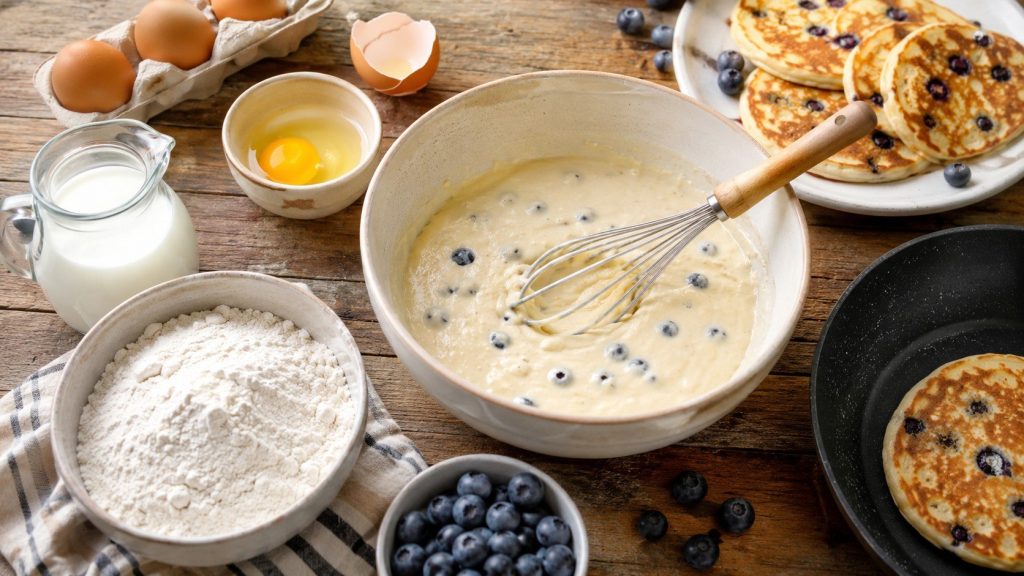
Prepare the dry and wet mixtures separately. This gives better control over gluten development and prevents aggressive whisking after the flour becomes wet.
- Whisk flour, sugar, baking powder, baking soda, and salt in a large bowl.
- In another bowl, whisk milk, egg, melted butter, and vanilla.
- Pour the liquid mixture into the flour mixture.
- Stir only until no large pockets of dry flour remain.
- Leave small lumps rather than whisking the batter completely smooth.
- Rest the batter for about 5–10 minutes.
- Heat a nonstick skillet or griddle over medium heat.
- Lightly grease the cooking surface.
- Pour about ¼ cup of batter for each pancake.
- Scatter several blueberries over each pancake immediately.
- Cook until bubbles appear and the outer edge begins looking dry.
- Flip once and cook until the second side becomes golden.
- Transfer to a plate and continue with the remaining batter.
The USDA-linked Nutrition.gov recipe uses medium heat and recommends flipping after bubbles form and the edges dry. Its blueberry oatmeal pancakes cook about 3–4 minutes on the first side and 1–2 minutes after flipping. Exact timing will change with pan thickness, burner strength, and pancake size. Use appearance as the main signal rather than watching the clock alone. Once the pan reaches a stable temperature, later batches usually cook more predictably. Avoid repeatedly pressing the pancakes with a spatula because that compresses their interior.
The ingredient ratios that control texture
A pancake recipe is a small exercise in moisture management. Too much flour produces a heavy interior, while excessive liquid creates thin pancakes that spread before they can rise.
| Ingredient | Amount | Main role |
|---|---|---|
| All-purpose flour | 1½ cups | Builds structure |
| Milk or buttermilk | 1¼ cups | Provides moisture |
| Egg | 1 | Binds the batter |
| Baking powder | 2 tsp | Creates lift |
| Baking soda | ¼ tsp | Supports browning and leavening |
| Butter | 2 tbsp | Adds tenderness and flavor |
| Blueberries | 1 cup | Adds fruit and moisture |
| Sugar | 2 tbsp | Adds sweetness and browning |
The finished batter should be thick enough to spread slowly after hitting the skillet. It should not behave like water. If it barely moves, add milk by 1 tablespoon increments. If it immediately floods across the pan, a small amount of flour can restore body. Avoid making large corrections before the batter has rested for several minutes.
Why blueberry pancakes become flat or rubbery
The most common problem is overmixing. Once flour absorbs liquid, vigorous mixing encourages gluten development and changes the texture from tender toward chewy.
Another cause is weak or old baking powder. Pancakes depend on chemical leavening for much of their height, so ingredients stored for years can produce disappointing results.
Fluffy blueberry pancakes also need controlled heat. A pan that is too cool lets batter spread. Excessively high heat burns the outside while leaving wet batter around the berries.
The ideal pancake should look almost ready before it is flipped. Its surface develops bubbles, several bubbles break, and the edge changes from glossy batter to a more stable rim.
Should blueberries be mixed into the batter?
They can be, but scattering the berries after the batter enters the skillet offers more control. Every pancake receives a similar number of blueberries, and the main bowl of batter remains pale.
This method is particularly useful with frozen fruit. As frozen berries warm, their juice can bleed into the batter and turn an entire batch gray-purple. Adding them separately limits that effect.
For even distribution, try these practical rules:
- use about 6–10 berries per 4-inch pancake;
- leave some space between berries;
- press large berries only slightly into the wet surface;
- add frozen blueberries straight from the freezer;
- avoid loading the center with too much fruit;
- use smaller wild blueberries when available.
More berries do not automatically produce a better pancake. Excess fruit adds water and creates weak spots around the berries. Large frozen blueberries also cool the center of each pancake. That can require slightly longer cooking before flipping. Smaller berries distribute more evenly and are less likely to tear the pancake. If children prefer fewer bursts of fruit, simply reduce the quantity rather than changing the batter.
How hot should the skillet be?
Medium heat is the safest starting point. Nutrition.gov also specifies a skillet set over medium heat for its blueberry pancake preparation.
Test the surface with one small pancake before cooking a full batch. It should become golden rather than dark brown before its upper surface is ready to flip.
If the first pancake is dark after 60–90 seconds, lower the temperature. If it remains pale while spreading widely, give the skillet more time to heat.
Gas, induction, ceramic, and electric ranges all behave differently. Therefore, a fixed dial number is less useful than observing the first pancake.
How to keep pancakes warm without drying them out
Cooking pancakes individually creates an obvious problem. The first pancake can become cold before the final one leaves the skillet.
Place finished pancakes on a baking sheet in a low oven around 200°F. Avoid sealing a very hot stack tightly because trapped steam softens the surfaces.
Another option is serving in batches. For casual family breakfasts, that often preserves better texture than holding every pancake until the entire batch is finished.
If you are planning a larger brunch, add fruit, yogurt, eggs, or a savory dish. For dessert afterward, customreceipt.com also has a classic banana split recipe.
What to serve with blueberry pancakes
Maple syrup is the obvious choice, but it is not the only one. Blueberries already bring sweetness and acidity, so toppings with contrasting textures work particularly well.
Try these combinations:
- maple syrup and salted butter;
- Greek yogurt and fresh blueberries;
- lemon zest and powdered sugar;
- warm blueberry compote;
- almond or peanut butter;
- chopped pecans or walnuts;
- sliced banana and yogurt;
- whipped ricotta with honey.
A restrained topping usually works better than covering the entire stack with several sweet sauces. Butter contributes richness, while lemon cuts through it. Yogurt gives the breakfast a fresher character. Nuts introduce crunch without altering the pancake itself. Warm berry compote is useful when fresh blueberries are very tart. For a seasonal dessert using a different fruit, see this homemade caramel apples recipe.
Can you make blueberry pancakes with buttermilk?
Yes. Buttermilk creates a slightly tangier flavor and pairs naturally with baking soda. Nutrition.gov also lists buttermilk in its blueberry oatmeal pancake recipe and suggests milk with lemon juice or vinegar as an alternative.
If replacing ordinary milk with buttermilk in this recipe, start with the same volume. Very thick buttermilk may require another tablespoon or 2 of liquid.
The objective remains the same: batter should fall from a spoon slowly rather than pour like cream.
Can you prepare the batter the night before?
It is better to mix the dry ingredients the night before and add liquids in the morning. Chemical leaveners begin reacting after they become wet, so freshly mixed batter generally provides more predictable lift.
Prepared pancakes are easier to store than uncooked batter. Cool them completely, separate layers with parchment, and refrigerate them in a sealed container.
They can also be frozen for later breakfasts. Reheat individual pancakes in a toaster, skillet, microwave, or low oven until heated through.
One food-safety mistake to avoid
Do not taste uncooked pancake batter. Flour may look ready to eat, but the FDA explains that most household flour is raw and has not undergone treatment designed to eliminate bacteria.
“Don’t eat or taste raw (uncooked) flour, dough or batter.”
U.S. Food and Drug Administration, consumer guidance on raw flour and batter. FDA source.
Cooking is therefore part of food safety, not simply a texture preference. Raw batter can contain both untreated flour and raw egg. Keep the tasting spoon away until the pancakes are cooked. Wash utensils and surfaces that contacted raw batter. Children should also be discouraged from tasting it before cooking.
FAQ about blueberry pancakes
Can I use frozen blueberries for pancakes?
Yes. Add them while still frozen to reduce juice bleeding. USDA ARS also reports that blueberries remain nutritionally valuable after freezing.
Why are my blueberry pancakes not fluffy?
The batter may be overmixed, too thin, or made with ineffective baking powder. Low skillet temperature can also let pancakes spread before their structure sets.
How do I stop blueberries from turning pancakes purple?
Do not thaw frozen berries first. Pour the batter onto the skillet, then scatter frozen blueberries directly over each pancake.
When should I flip blueberry pancakes?
Flip when bubbles form and begin breaking across the surface and the edges appear drier. Nutrition.gov uses the same visual cues in its pancake guidance.
Can blueberry pancake batter have lumps?
Yes. A few small lumps are preferable to excessive whisking. The remaining flour hydrates as the batter rests.
Can I make blueberry pancakes without buttermilk?
Yes. Regular milk works well. For more acidity, Nutrition.gov suggests combining milk with lemon juice or vinegar as a buttermilk substitute.
How many blueberries should I add to pancakes?
About 1 cup for this 10-pancake recipe gives a noticeable berry presence without overwhelming the batter. Individual pancakes can receive roughly 6–10 berries depending on their size.
Earlier we wrote about Breakfast Casserole Recipe: How to Make an Egg, Cheese, Potato and Sausage Bake