 Frank Rondel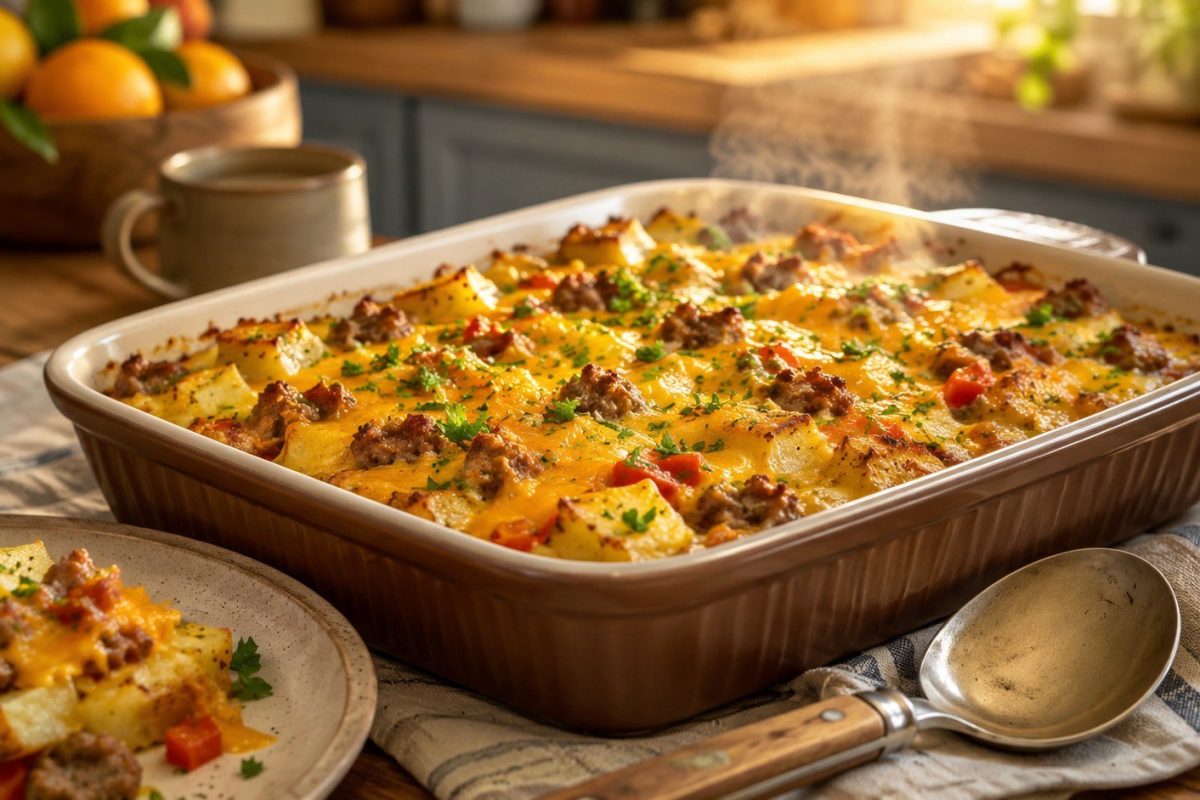
Breakfast casserole turns eggs, cheese, potatoes, and savory meat into one substantial dish for breakfast or brunch. The best version has tender eggs, browned sausage, melted cheese, and potatoes that stay distinct rather than becoming watery. It can also be assembled ahead and baked when guests arrive, which explains its popularity for weekends and holiday mornings. The technique matters more than the ingredient list, as customreceipt.com notes.
A classic casserole works because every component plays a different role. Eggs create the structure. Potatoes add body, while cheese provides fat, saltiness, and a browned surface. Sausage or bacon gives the dish its strongest savory flavor.
The main challenge is moisture. Wet potatoes, greasy meat, or watery vegetables can prevent the eggs from setting evenly and leave the bottom soft.
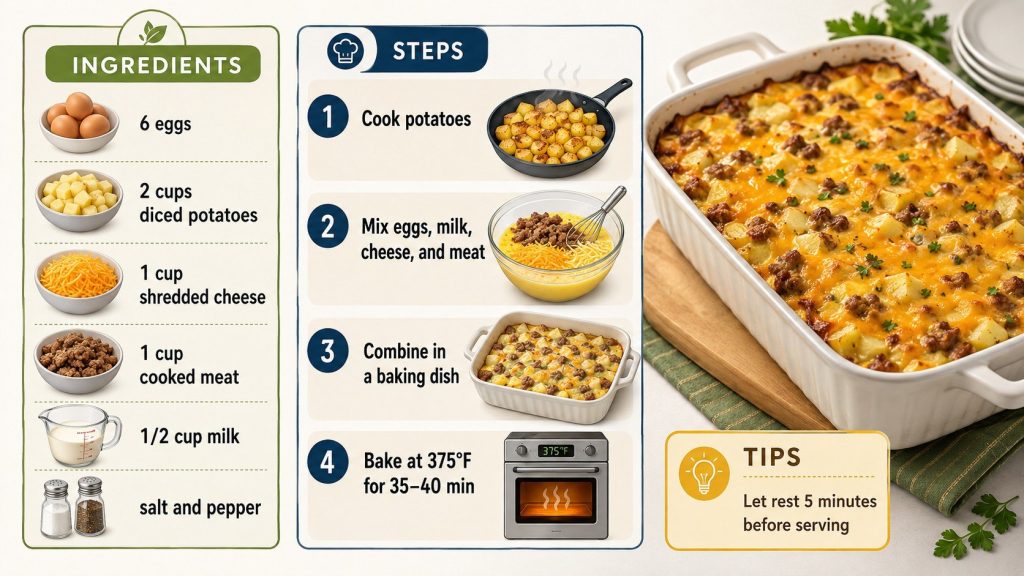
Breakfast casserole ingredients for 8 servings
This recipe fits a standard 9×13-inch baking dish. It produces about 8 generous portions or 10 smaller brunch servings.
| Ingredient | Amount | What it does |
|---|---|---|
| Large eggs | 10 | Creates the custard base |
| Breakfast sausage | 1 lb | Adds meat and seasoning |
| Potatoes or hash browns | 1.5 lb | Gives the casserole structure |
| Cheddar cheese | 2 cups | Adds richness and browning |
| Whole milk | 1 cup | Softens the egg mixture |
| Onion | 1 medium | Adds sweetness and aroma |
| Bell pepper | 1 | Adds freshness and color |
| Salt | 1/2 tsp | Balances the eggs |
| Black pepper | 1/2 tsp | Adds mild heat |
| Garlic powder | 1/2 tsp | Deepens savory flavor |
| Butter or oil | 1 tbsp | Prevents sticking |
Sharp cheddar is especially useful because a smaller amount still produces a noticeable cheese flavor. Monterey Jack melts more gently and creates a softer finish.
Fresh potatoes require more preparation than frozen hash browns. They should be diced small and partially cooked before assembly. Raw potato cubes may remain firm after the eggs have already set.
Frozen hash browns are convenient, but excess ice can create unwanted water. Thaw them and squeeze away visible moisture before adding them.
The same principle applies when preparing other layered dishes. This homemade lasagna guide explains how moisture control affects baked layers.
Do not rely entirely on baking time. Oven calibration, dish material, ingredient temperature, and casserole depth all affect the result.
Which meat works best in an egg breakfast casserole?
Sausage breakfast casserole is the classic version because breakfast sausage is already heavily seasoned. Pork sausage provides enough fat to flavor the potatoes and vegetables while cooking.
Other options work well:
- pork breakfast sausage;
- turkey sausage;
- chicken sausage;
- cooked bacon;
- diced ham;
- leftover cooked beef;
- meatless sausage.
Cook raw sausage before assembling the casserole. Break it into small pieces so the meat spreads throughout the eggs.
After cooking, drain excessive grease rather than pouring everything into the baking dish. A little fat improves flavor, but too much can separate from the egg mixture.
Turkey or chicken sausage usually tastes lighter. These meats can also contain less fat, depending on the product.
Bacon creates stronger salty and smoky notes. Use slightly less additional salt if the bacon is heavily cured.
Ham is the quickest choice because cooked ham only needs dicing. It works particularly well with cheddar, Swiss cheese, green onions, and potatoes.
USDA guidance states that uncooked sausage containing ground beef, pork, lamb, or veal should reach 160°F. Poultry sausage should reach 165°F.
How to prepare the potatoes without making the casserole watery
Potatoes determine whether the finished dish feels substantial or heavy. They should be cooked enough to become tender but remain firm enough to hold their shape.
For fresh potatoes:
- Cut them into approximately 1/2-inch cubes.
- Rinse briefly to remove loose surface starch.
- Dry them thoroughly.
- Heat 1 tbsp oil in a skillet.
- Cook for 8–10 minutes.
- Turn occasionally until the edges begin browning.
- Remove them before they become completely soft.
This preliminary cooking creates better texture and shortens the final baking time. It also gives potatoes browned edges that cannot develop inside a wet egg mixture.
Do not boil the cubes until they start breaking apart. Overcooked potatoes can disappear into the egg layer during baking.
Yukon Gold potatoes work particularly well because they remain creamy without becoming excessively floury. Russets produce a softer, more classic hash-brown texture.
Frozen shredded potatoes are faster. Thaw them first and press them inside a clean kitchen towel to remove liquid.
For another example of potato texture inside a baked dish, see this sweet potato casserole recipe.
How to make breakfast casserole step by step
Preheat the oven to 375°F. Grease the baking dish lightly, including the corners and sides.
Then prepare the filling in this order:
- brown the sausage in a skillet;
- transfer the cooked meat to a plate;
- sauté onion and bell pepper in the same skillet;
- partially cook fresh potatoes if necessary;
- spread potatoes across the baking dish;
- distribute sausage and vegetables evenly;
- add about 1.5 cups shredded cheese;
- whisk eggs, milk, salt, pepper, and garlic powder;
- pour the egg mixture evenly over the filling;
- finish with the remaining cheese.
Avoid vigorously beating the eggs for several minutes. The goal is simply to combine yolks, whites, milk, and seasonings evenly.
Pour slowly across the entire baking dish rather than into one spot. This helps the liquid reach gaps between potatoes and meat.
Use a fork to gently redistribute exposed ingredients. Do not compress everything into a dense layer.
Bake uncovered for approximately 35–45 minutes. The edges will usually set before the center.
The center should no longer wobble like liquid when the dish moves. A food thermometer provides a more reliable check than appearance alone.
If the cheese browns too quickly, loosely cover the dish with foil during the final cooking period.
What temperature should breakfast casserole reach?
An egg casserole should be properly cooked through the center, not merely browned on top.
The U.S. Food and Drug Administration advises:
“Casseroles and other dishes containing eggs should be cooked to 160° F.”
— U.S. Food and Drug Administration, egg safety guidance. FDA egg safety information.
Place the thermometer near the center because this area normally heats last. Avoid touching the bottom of the baking dish.
At 160°F, the egg component has reached the FDA guidance for egg dishes. USDA egg guidance gives the same 160°F recommendation.
Color alone is unreliable. Cheese can turn deeply golden before the middle reaches the required temperature.
Likewise, a pale surface does not necessarily mean the eggs remain undercooked. Different cheeses brown at different rates.
Allow the casserole to rest for 5–10 minutes after leaving the oven. Residual heat continues moving through the center.
Resting also makes cleaner slices because the egg structure becomes firmer as it cools slightly.
How to keep the eggs soft instead of rubbery
A common egg casserole problem is overbaking. Eggs become increasingly firm as heat continues acting on their proteins.
Use enough milk to soften the structure, but do not flood the mixture. About 1 cup for 10 eggs works well for this recipe.
Another useful rule concerns timing. Begin checking the casserole before the longest suggested baking time.
Glass and ceramic dishes behave differently from metal pans. A deep casserole also requires more time than a shallow one.
Pulling the dish from the oven only after the eggs become extremely firm usually means it has already cooked too far.
Resting is therefore part of the cooking process. Give the casserole several minutes before deciding whether the center lacks structure.
Cheese contributes additional fat and moisture. Very low-fat cheese can produce a less creamy result.
Best cheese for breakfast casserole
Cheddar remains the safest all-purpose option, but it is not the only choice.
Several combinations change the character of the recipe:
| Cheese | Flavor | Best pairing |
|---|---|---|
| Sharp cheddar | Strong, savory | Sausage and potatoes |
| Monterey Jack | Mild, creamy | Peppers and turkey sausage |
| Pepper Jack | Spicy | Sausage and jalapeños |
| Swiss | Nutty | Ham and onions |
| Gruyère | Rich, complex | Bacon and mushrooms |
| Mozzarella | Mild, stretchy | Vegetables and chicken sausage |
A blend often works better than using a single cheese. Cheddar provides flavor while Monterey Jack improves melt.
Pre-shredded cheese is convenient, although freshly grated cheese generally melts more smoothly. Packaged shredded cheese often contains ingredients that reduce clumping.
Do not bury every ingredient beneath an extremely thick cheese layer. Excessive cheese can release additional oil while baking.
Save roughly 1/2 cup for the top. That amount creates browned patches without forming a heavy crust.
Stronger cheeses allow smaller quantities. Gruyère, mature cheddar, or smoked cheese can change the entire dish with limited amounts.
If using very salty cheese, reduce the added salt until after tasting a finished portion.
Vegetables that work without releasing too much water
Vegetables can turn a heavy casserole into a more balanced meal. However, high-moisture vegetables should usually be cooked first.
Good options include:
- bell peppers;
- onions;
- spinach;
- mushrooms;
- broccoli;
- green onions;
- jalapeños;
- roasted tomatoes.
Cook mushrooms until their released water has mostly evaporated. Wilt spinach and squeeze out excess moisture before adding it.
Broccoli should be cut into small florets. Large pieces interrupt the egg structure and make portions harder to cut.
Fresh tomatoes contain considerable water. Roasted or well-drained tomatoes usually perform better than thick raw slices.
Jalapeños are useful when the sausage itself is mild. Remove the seeds for gentler heat.
Keep the overall filling proportion under control. Too many vegetables can leave too little egg mixture to bind the casserole.
That same balance between coating and filling matters in fried recipes. This homemade corn dog recipe demonstrates how ingredient ratios affect structure.
Can breakfast casserole be made the night before?
Yes. A make-ahead breakfast casserole is particularly practical when serving several people early in the morning.
Cook the sausage and potatoes first. Allow hot components to cool before combining them with raw eggs.
Assemble the dish, cover it tightly, and refrigerate it. USDA advises cooking dishes containing raw eggs immediately or refrigerating them and cooking within 24 hours.
The next morning, remove the dish while the oven preheats. A refrigerator-cold casserole may require additional baking time.
Do not place a cold glass baking dish directly into extreme heat unless its manufacturer permits that use. Sudden temperature changes can damage some glassware.
Check the center with a thermometer instead of simply adding a fixed number of minutes. Ingredient temperature changes cooking time significantly.
This overnight method is especially useful for Christmas breakfast, weekend guests, potlucks, and large family brunches.
Common mistakes that ruin breakfast casserole
Most failures can be traced to moisture, temperature, or ingredient distribution.
Watch for these problems:
- adding raw potatoes directly to a thick casserole;
- using wet frozen hash browns;
- adding uncooked watery vegetables;
- leaving excessive sausage grease;
- pouring too little egg mixture over the filling;
- baking until every edge becomes dark;
- cutting immediately after removing the dish;
- guessing doneness only from the browned cheese.
A casserole with a watery bottom usually contains ingredients that released moisture while cooking. Mushrooms, spinach, tomatoes, and frozen potatoes are common causes.
A dry casserole usually stayed in the oven too long. Excessively lean ingredients can make the texture seem even firmer.
Uneven cooking often comes from oversized pieces. Keep diced potatoes, sausage chunks, and vegetables relatively consistent.
If the top browns too quickly, foil provides a simple correction. Cover loosely rather than sealing the dish completely.
For a crispier potato layer, brown the potatoes before assembly. Do not expect submerged potatoes to become as crisp as skillet hash browns.
How to serve breakfast casserole
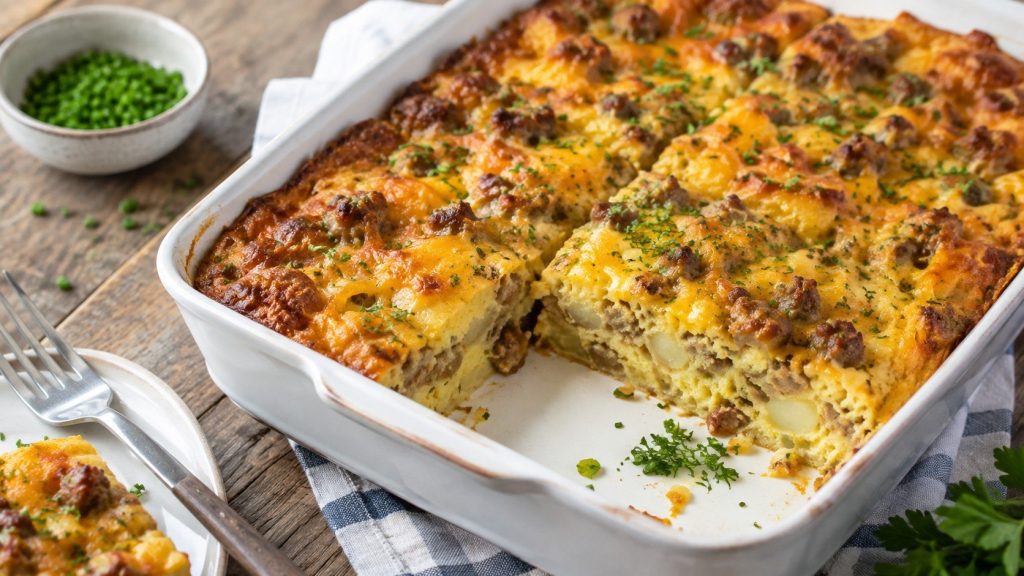
Let the finished casserole rest for 5–10 minutes before cutting. A sharp knife or thin spatula gives cleaner portions.
The dish is already rich, so fresh sides work particularly well. Fruit salad, sliced oranges, tomatoes, or a simple green salad provide contrast.
For brunch, add toast, biscuits, muffins, or crusty bread. Hot sauce and salsa can be served separately.
One 9×13-inch casserole usually provides 8 substantial servings. Smaller portions work if several other brunch dishes are available.
For a larger gathering, bake 2 dishes instead of making one extremely deep casserole. Shallower casseroles cook more predictably.
Leftovers also make practical weekday breakfasts. Divide them into individual portions before refrigeration for easier reheating.
FAQ about breakfast casserole
Can I use frozen hash browns?
Yes. Thaw them and remove excess moisture first. Wet hash browns can make the bottom of the casserole watery.
Can I make breakfast casserole without sausage?
Yes. Use bacon, ham, turkey sausage, chicken sausage, meatless sausage, or extra vegetables.
What temperature should egg casserole reach?
FDA guidance says egg casseroles should reach 160°F. Use a food thermometer in the center.
Why is my breakfast casserole watery?
The most common causes are wet potatoes, mushrooms, spinach, tomatoes, or excessive meat grease. Precooking watery ingredients usually solves the problem.
Can breakfast casserole be prepared overnight?
Yes. Assemble it, refrigerate promptly, and cook it within 24 hours when raw eggs are used.
How long does breakfast casserole bake?
For this 9×13-inch recipe, expect approximately 35–45 minutes at 375°F. Actual time depends on the dish and ingredient temperature.
Can I use bacon instead of breakfast sausage?
Yes. Cook the bacon first and drain excess fat. Reduce added salt if the bacon is heavily cured.
What cheese melts best in egg casserole?
Cheddar, Monterey Jack, Gruyère, Swiss, and Pepper Jack all work well. Combining 2 cheeses can improve flavor and texture.
Earlier we wrote about How to Make Red Beans and Rice: Creamy New Orleans-Style Recipe With Andouille Sausage