 Frank Rondel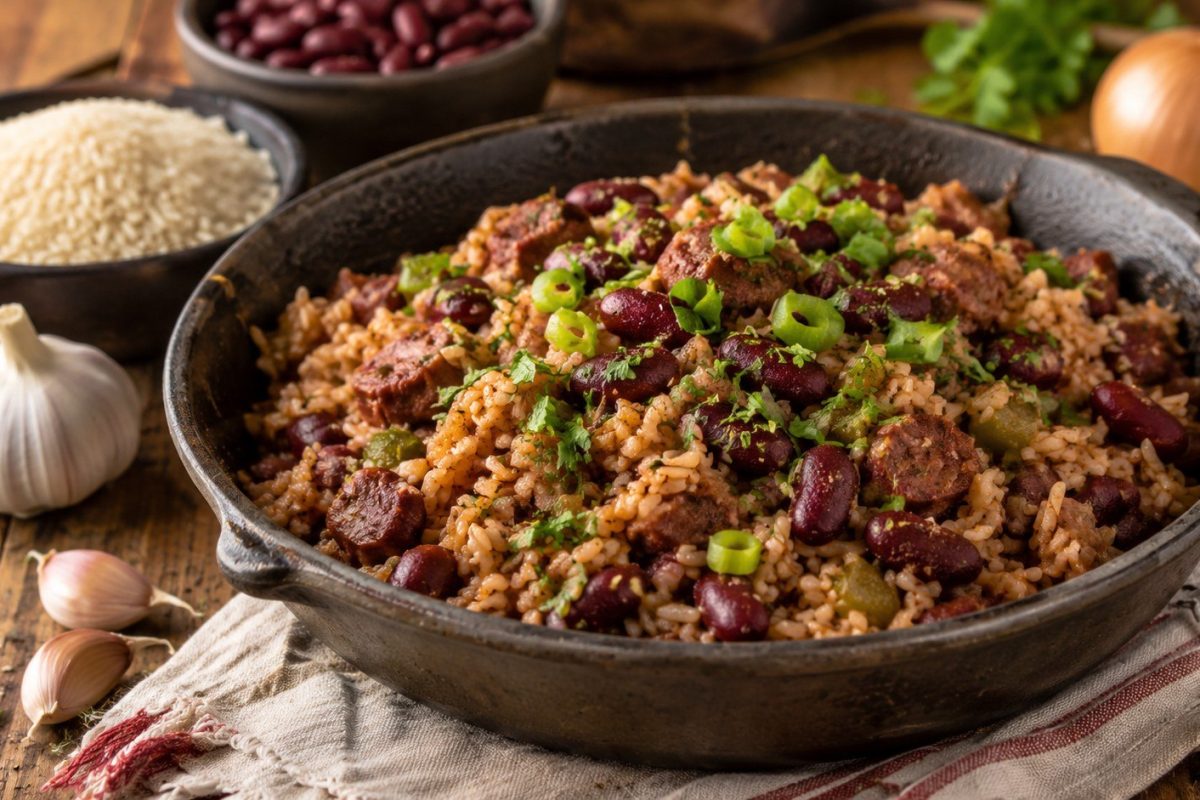
How to make red beans and rice starts with patience, not expensive ingredients. Dried beans, rice, vegetables, smoked sausage, and spices become a rich Louisiana meal after a slow simmer. The best version has creamy beans, separate grains of rice, and smoke without excessive heat, as the customreceipt.com editorial team notes.
The dish is strongly associated with New Orleans. Louisiana’s official tourism authority describes red beans and rice as a long-standing Monday tradition across the state. The familiar explanation links Monday washday with leftover ham from Sunday dinner. A pot of beans could simmer while household work continued.
For home cooks, the useful lesson is simpler. Red beans reward low, steady heat and careful seasoning. Rice should be cooked separately. The beans need enough liquid to become creamy without turning into soup.
What you need for classic red beans and rice
This recipe makes about 6 servings. Dried red kidney beans create the deepest flavor and best texture. Small red beans also work and are common in Louisiana cooking.
If you enjoy Southern dishes built around slow cooking, this Louisiana gumbo recipe uses similar aromatic vegetables. For another bean-centered meal, see this Italian minestrone recipe.
You will need:
- 1 lb, or about 450 g, dried red kidney beans;
- 12 oz, or about 340 g, andouille sausage;
- 1 large yellow onion;
- 1 green bell pepper;
- 2 celery stalks;
- 4 garlic cloves;
- 2 bay leaves;
- 1 teaspoon dried thyme;
- 1 teaspoon smoked paprika;
- 0.25–0.5 teaspoon cayenne pepper;
- 0.5 teaspoon black pepper;
- 6–7 cups water or unsalted chicken stock;
- 1 tablespoon neutral oil;
- salt to taste;
- 2 cups long-grain white rice;
- 3 cups water for the rice;
- sliced scallions or parsley for serving.
Andouille contributes substantial salt and smoke. Therefore, avoid heavily salted stock at the beginning. Kielbasa can replace andouille when necessary. Smoked turkey sausage works for diners avoiding pork. A ham hock adds another layer of flavor but remains optional. Vegetable stock and smoked paprika can support a meatless version. The fundamental method remains almost unchanged.
Do not chase heat with excessive cayenne. Good New Orleans-style red beans taste smoky, savory, herbal, and slightly peppery before they taste hot.
Ingredient ratios and cooking times
The proportions below provide a reliable starting point. Adjust liquid during cooking because bean age affects absorption.
| Component | Amount | Approximate cooking time | Purpose |
|---|---|---|---|
| Dried red beans | 1 lb / 450 g | 90–150 minutes | Main body |
| Andouille sausage | 12 oz / 340 g | 10 minutes plus simmer | Smoke and richness |
| Onion | 1 large | 8–10 minutes | Sweet aromatic base |
| Bell pepper | 1 medium | 8–10 minutes | Fresh vegetal flavor |
| Celery | 2 stalks | 8–10 minutes | Aromatic depth |
| Garlic | 4 cloves | 30–60 seconds | Savory aroma |
| White rice | 2 cups dry | 15–20 minutes | Neutral base |
| Stock or water | 6–7 cups | Added gradually | Controls consistency |
Older dried beans sometimes require considerably longer cooking. Never judge doneness only by a timer. Taste several beans from different parts of the pot. Their centers should be completely tender. The skins can remain intact while the interiors become creamy. Add more hot liquid if the pot begins drying before that point. Avoid adding large amounts near the end because the sauce will become thin.
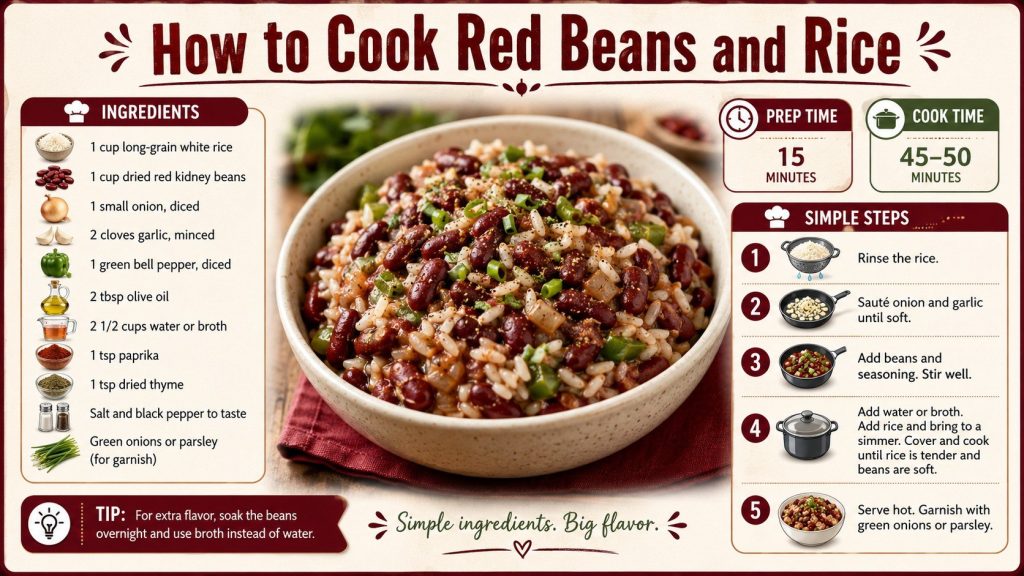
How to prepare dried red kidney beans safely
This stage deserves attention. Raw and undercooked kidney beans naturally contain phytohaemagglutinin, or PHA. The U.S. Food and Drug Administration says high PHA levels can cause nausea, severe vomiting, and diarrhea.
The FDA recommends soaking dried kidney beans for at least 5 hours. The soaking water should then be discarded. Beans should be boiled in fresh water for at least 30 minutes.
Use this sequence:
- Sort the beans and remove damaged beans or debris.
- Rinse them thoroughly under cold water.
- Cover with plenty of water.
- Soak for at least 5 hours, preferably overnight.
- Drain the soaking water completely.
- Add fresh water.
- Bring the beans to a full boil.
- Boil for at least 30 minutes before continuing the slower simmer.
Canned kidney beans have already undergone sufficient heat processing. They can shorten the recipe dramatically. However, their texture becomes softer during extended cooking. Add canned beans after the vegetables and sausage have developed flavor. Rinse them first when you want greater control over sodium. About 3 standard 15-ounce cans replace 1 pound of dried beans for this recipe. The finished result will be quicker but usually less complex.
How to make red beans and rice step by step
A heavy Dutch oven works particularly well. Its thick base reduces scorching during the long simmer. A wide 5–6 quart pot is also suitable.
Heat 1 tablespoon of oil over medium heat. Add sliced andouille and brown it for about 5 minutes. Turn the pieces so both sides develop color. Remove the sausage but leave the rendered fat behind.
Add onion, green bell pepper, and celery. This combination is often called Louisiana’s aromatic “holy trinity.” Cook for 8–10 minutes until softened. Add minced garlic and stir for another 30 seconds.
Readers learning this style of flavor building may also find the vegetable sequence in this French onion soup recipe useful.
Now add the properly prepared beans. Pour in enough fresh water or stock to cover them generously. Add thyme, paprika, black pepper, bay leaves, and part of the cayenne.
Bring everything to a boil, then reduce the heat. Maintain a steady but gentle simmer.
How to get creamy beans without adding cream
The signature texture does not come from dairy. It develops when some beans break down and release starch into the cooking liquid.
After about 60 minutes of simmering, return the sausage. Continue cooking until the beans are completely tender. Depending on the beans, total simmering may take 90–150 minutes.
When the beans are soft, press about 0.5 cup against the side of the pot. Use a wooden spoon. Stir the mashed beans back into the liquid.
That small step transforms a watery broth into a creamy red beans and rice sauce. Do not puree the entire batch. The finished pot needs whole beans for texture.
Keep these practical rules in mind:
- stir more frequently during the final 30 minutes;
- scrape the bottom gently to prevent scorching;
- add hot water when the mixture becomes too thick;
- season with salt near the end;
- remove the bay leaves before serving;
- rest the beans for 10–15 minutes before plating.
The resting period matters because the sauce continues thickening. A pot that looks slightly loose can become perfect after 10 minutes. If it becomes too dense, loosen it with hot stock. Avoid cold liquid because it interrupts the simmer. Taste after every major adjustment. Sausage, stock, and hot sauce can introduce considerable salt. Final seasoning should happen only after their effects are clear.
How to cook the rice correctly
Prepare rice separately while the beans finish. Combining uncooked rice with the beans changes liquid ratios and makes texture harder to control.
For 6 servings, rinse 2 cups of long-grain white rice until the water becomes noticeably clearer. Place it in a saucepan with about 3 cups water. Check the package instructions because rice varieties differ.
Bring the water to a boil. Cover the pan and reduce the heat to low. Cook for about 15–18 minutes without repeatedly lifting the lid.
Turn off the heat when the water has absorbed. Leave the covered rice untouched for another 10 minutes.
Fluff the rice with a fork rather than stirring aggressively. The grains should remain separate beneath the thick, creamy beans.
Serve a modest mound of rice in each bowl. Spoon the beans around or over it. Garnish with scallions, parsley, or a few drops of hot sauce.
Why red beans and rice became a New Orleans Monday tradition
The meal’s cultural importance stretches beyond its inexpensive ingredients. Explore Louisiana says traditional New Orleans-style red beans remain a Monday staple.
One widely repeated explanation connects the dish with weekly domestic routines. Sunday ham provided bones and leftovers. Monday was commonly used for laundry. Beans could simmer for hours with relatively little attention.
“Food unites with complete sincerity.”
— Sara Roahen, author of Gumbo Tales, quoted by Explore Louisiana while discussing red beans and rice.
The exact origin is more complicated than one washday story. Louisiana’s tourism authority notes several competing explanations. What survived is the ritual itself. Restaurants across New Orleans still offer Monday red beans specials. The meal can appear beside sausage, fried chicken, pork chops, or cornbread.
Common mistakes that ruin red beans and rice
Most disappointing batches fail because of texture rather than seasoning. Beans remain hard, rice turns mushy, or excessive liquid creates soup.
Avoid these problems:
- cooking dried kidney beans without proper soaking and boiling;
- adding too much salt before the beans soften;
- using high heat throughout the simmer;
- letting the pot dry and scorch underneath;
- serving the beans before they become creamy;
- cooking rice directly inside the bean pot;
- adding excessive Cajun seasoning before tasting;
- using too much sausage and overpowering the beans.
Low heat does not mean insufficient initial preparation. Dried kidney beans first require the safe high-temperature step described by the FDA. Afterward, a gentler simmer develops texture. Salt is easier to control near the end. A wide pot also encourages controlled evaporation. Stirring becomes increasingly important as starch accumulates. The finished beans should slowly spread across the plate rather than run like broth.
Easy variations for different kitchens
A traditional framework still leaves room for adaptation. You can change the meat, heat, or cooking liquid without losing the character of the meal.
For a vegetarian version, omit sausage and ham. Use vegetable stock, extra smoked paprika, and a small amount of olive oil. Mushrooms can add savory depth, although they are not traditional.
For stronger smoke, use andouille plus a ham hock. Remove the hock before serving. Shred any usable meat back into the pot.
Brown rice also works, but cook it separately. It generally requires more water and additional cooking time.
For a brighter finish, add several drops of vinegar or Louisiana-style hot sauce. Acid should sharpen the beans rather than make them sour.
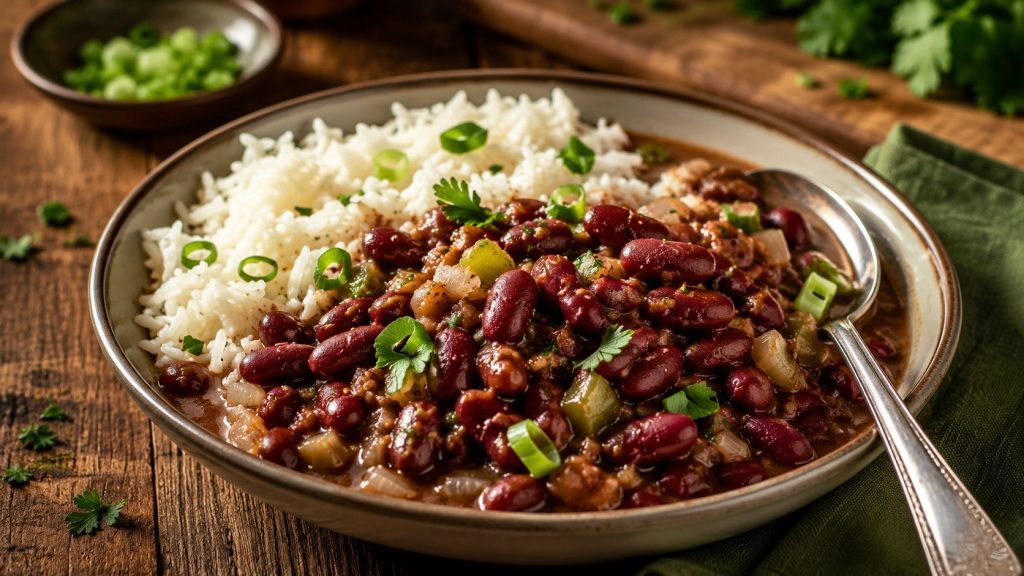
What to serve with red beans and rice
Louisiana red beans and rice can stand alone as a complete main course. Side dishes should provide contrast instead of more starch.
Good options include cornbread, collard greens, mustard greens, a crisp green salad, or roasted vegetables. Fried chicken turns the meal into a larger Southern-style dinner.
For a casual meal, put scallions and hot sauce on the table. Diners can control freshness and heat themselves. Keep extra rice separate. This prevents leftovers from absorbing the bean sauce overnight. The next day’s beans often become thicker, so a splash of water or stock may be useful. Reheat them gently while stirring the bottom.
FAQ about red beans and rice
Can I make red beans and rice with canned beans?
Yes. Use about 3 standard cans for this recipe. Drain and rinse them, then shorten the simmer considerably.
What beans are best for red beans and rice?
Small red beans are especially traditional. Red kidney beans are a widely available substitute and produce a rich, creamy result.
Do I have to soak dried kidney beans?
For dried kidney beans, follow FDA preparation guidance. The agency recommends at least 5 hours of soaking before boiling in fresh water.
How long should dried kidney beans boil?
The FDA advises boiling soaked kidney beans in fresh water for at least 30 minutes to destroy PHA.
Why are my red beans still hard?
They may simply need more cooking. Older beans can soften slowly. Keep enough liquid in the pot and continue simmering.
How do I make red beans creamy?
Mash a small portion of fully cooked beans. Stir them back into the pot and simmer briefly.
Is andouille sausage necessary?
No. Kielbasa, smoked turkey sausage, ham, or another smoked sausage can work. A vegetarian version can omit meat entirely.
Should red beans and rice be spicy?
Not necessarily. Traditional flavor depends more on aromatics, smoke, herbs, and seasoning than extreme heat.
Can red beans and rice be prepared ahead?
Yes. Keep the beans and rice in separate containers. This prevents the rice from becoming excessively soft.
What is the best rice for red beans and rice?
Long-grain white rice is the simplest choice. It stays comparatively separate and provides a neutral base for the creamy beans.
Earlier we wrote about How to Make Corn Dogs at Home: Crispy Batter, Frying Temperature and Easy Recipe