 Frank Rondel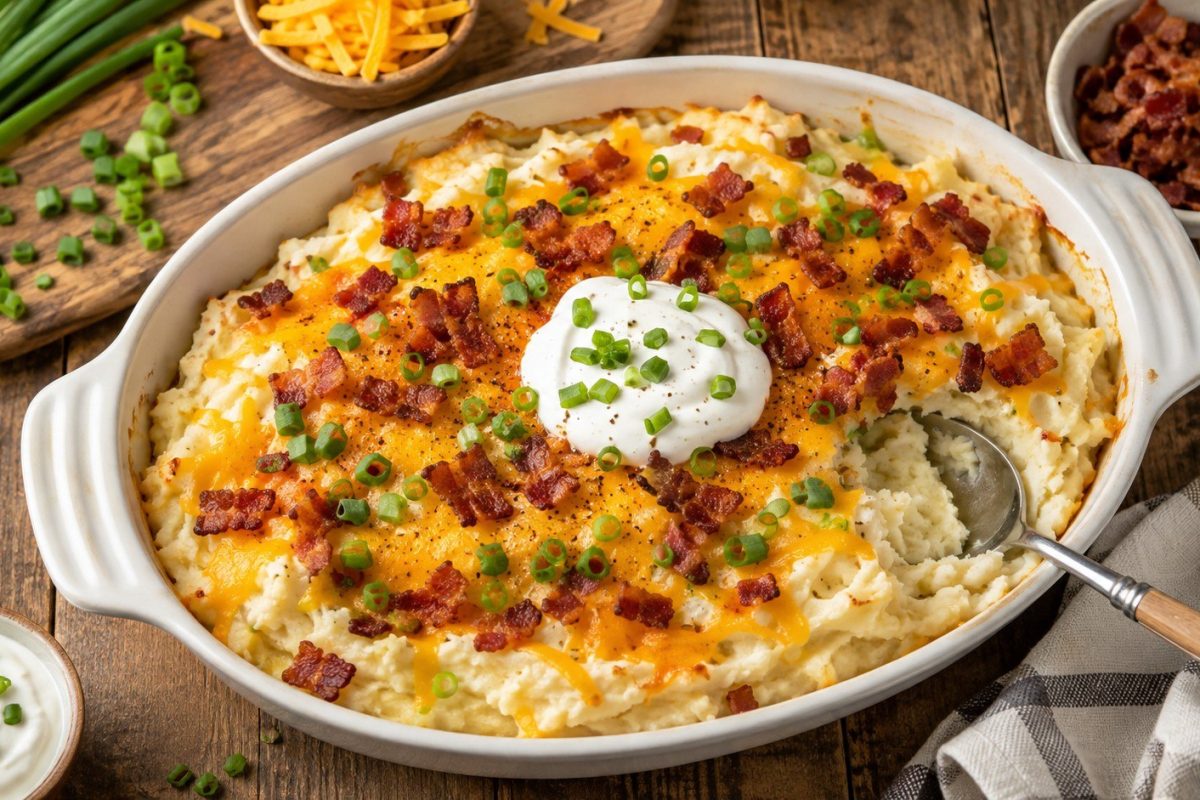
Loaded mashed potatoes turn a basic side dish into something much closer to the center of the plate. Creamy potatoes carry sharp cheddar, sour cream, crisp bacon, butter, and fresh chives. The idea comes from the familiar American loaded baked potato, but the texture is softer and richer. The best version depends less on exotic ingredients than on controlling starch, moisture, and temperature, as the customreceipt.com editorial team notes.
The recipe works for Thanksgiving, Christmas dinner, game day, or an ordinary family meal. It can also be prepared ahead and reheated without losing its creamy texture. The crucial detail is knowing when to mash, when to add dairy, and when to stop stirring.
Good loaded mashed potatoes should remain unmistakably potatoes. Cheese, bacon, and sour cream should support the base rather than bury it.
Loaded mashed potatoes ingredients for 6 servings
Russet potatoes are a strong choice because their high-starch flesh becomes light after cooking. Yukon Gold potatoes create a denser, naturally buttery result. A 50:50 mixture offers an effective compromise between fluffiness and creaminess.
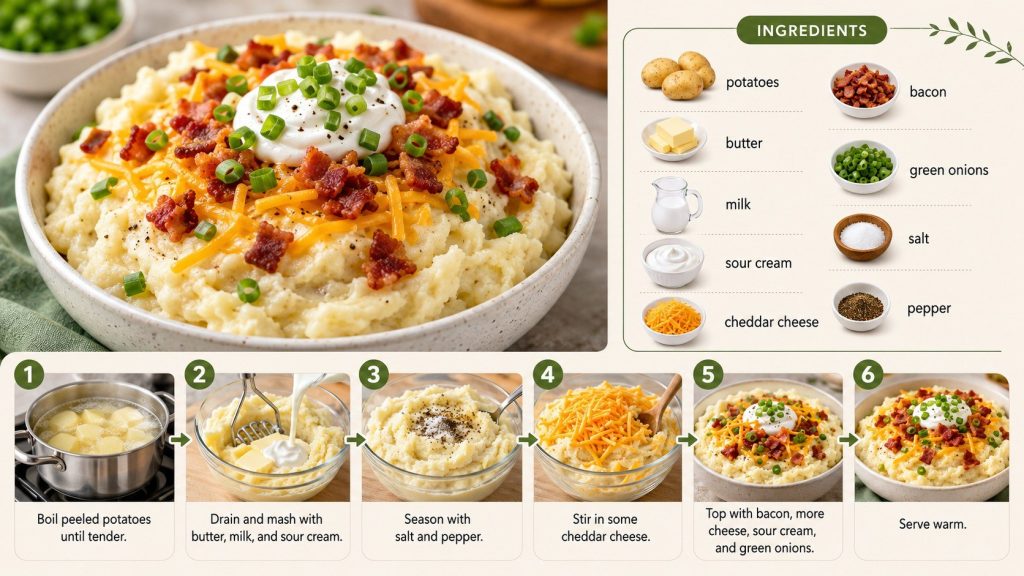
For about 6 generous servings, prepare:
- 3 lb Russet or Yukon Gold potatoes;
- 6 slices bacon;
- 6 tbsp unsalted butter;
- 1/2 cup whole milk;
- 1 cup sour cream;
- 8 oz sharp cheddar cheese, freshly grated;
- 1/4 cup chopped fresh chives or green onions;
- 1 tsp kosher salt, plus more for the cooking water;
- 1/4 tsp freshly ground black pepper;
- optional garlic powder, roasted garlic, or smoked paprika.
This combination follows the classic loaded-potato formula of bacon, cheese, sour cream, and green onions. Similar proportions appear in The Kitchn’s loaded mashed potatoes recipe. Freshly grated cheddar melts more smoothly than many packaged shredded cheeses. Sharp cheddar also provides enough flavor without requiring an excessive quantity. Sour cream introduces acidity, which cuts through the butter and bacon. Chives add freshness at the final stage. Hold some bacon, cheese, and herbs aside for the top.
If you are planning a larger dinner, these potatoes work especially well beside honey-glazed ham. The salty potato mixture balances a sweeter glaze without introducing another sugary side.
Which potatoes make the best loaded mashed potatoes?
Choosing the potato changes the final texture more than adding another spoonful of butter. Russets break down easily and absorb dairy well. Yukon Gold potatoes contain less starch and produce a heavier, silkier mash.
Here is how the most useful choices compare:
| Potato | Finished texture | Flavor | Best use |
|---|---|---|---|
| Russet | Light and fluffy | Mild | Classic loaded mashed potatoes |
| Yukon Gold | Creamy and dense | Naturally buttery | Rich restaurant-style mash |
| 50:50 mixture | Fluffy but creamy | Balanced | Best all-purpose option |
| Red potatoes | Firm and rustic | Mildly sweet | Skin-on chunky mash |
| Fingerlings | Dense | Pronounced | Better roasted than mashed |
Russets are the safest option when a light texture matters most. Yukon Golds are useful when you prefer a richer mash with fewer added fats. Mixing the 2 varieties gives the dish more structure. Waxy potatoes can work, but aggressive mashing can make them sticky. Very small potatoes also require more peeling work for little benefit. Whatever variety you choose, cut the pieces to roughly equal size before cooking.
How to make loaded mashed potatoes step by step
The cooking sequence matters because potatoes continue changing after they leave the water. Hot potatoes release steam rapidly. That short drying period helps them absorb butter and milk instead of becoming watery.
Follow this method:
- Peel the potatoes and cut them into 1-inch chunks.
- Put them into a large pot and cover with cold water.
- Salt the water generously, then bring it to a boil.
- Reduce the heat and simmer until a knife enters easily.
- Meanwhile, cook the bacon until crisp and drain it.
- Warm the milk and butter together without boiling them.
- Drain the potatoes thoroughly and return them to the hot pot.
- Let them steam for about 1–2 minutes over very low heat.
- Mash gently with a potato masher or pass them through a ricer.
- Fold in the warm butter and milk mixture.
- Add sour cream, most of the cheddar, bacon, and chives.
- Season with salt and black pepper, then serve immediately.
Starting potatoes in cold water helps the centers and exteriors cook at a similar rate. Warm dairy is easier to incorporate without cooling the potatoes abruptly. A ricer creates especially fine potatoes, while a hand masher leaves a more rustic texture. Avoid prolonged mixing after the potatoes become smooth. The objective is to distribute the ingredients without repeatedly working the starch. Keep the final toppings separate until serving so they retain texture.
The moment the potatoes become smooth enough is usually the moment to stop. More mixing does not automatically mean creamier potatoes.
The mistake that makes mashed potatoes gluey
A food processor may appear to be the quickest route to perfectly smooth potatoes. It is usually the wrong tool.
Potato cells contain starch, and vigorous mechanical processing releases more of it. That starch combines with moisture and creates the familiar elastic, glue-like texture. A blender can produce the same problem even faster. Hand mashing gives the cook much greater control.
For creamy loaded mashed potatoes, use a potato ricer when you want an exceptionally fine texture. A traditional masher works better if you prefer small irregular pieces.
The order of ingredients matters too. Butter should reach the hot potatoes before large amounts of watery liquid. The fat coats part of the starch and creates a richer mouthfeel.
Cream cheese is another possible addition. Simply Recipes recently highlighted it as a way to create a silkier, slightly tangy mash. However, sour cream already performs a similar flavor role here, so both are not essential.
How much cheese, bacon, and sour cream should you add?
The word “loaded” encourages excess, but more toppings do not always produce a better dish. Too much cheese can make the potatoes heavy. Too much sour cream can loosen them. Bacon can dominate the salt level before you notice.
A practical ratio for 3 lb of potatoes looks like this:
| Ingredient | Balanced amount | Stronger version | What happens if overused |
|---|---|---|---|
| Cheddar | 8 oz | 10–12 oz | Mash becomes heavy |
| Bacon | 6 slices | 8 slices | Salt and smoke dominate |
| Sour cream | 1 cup | 1 1/4 cups | Texture becomes loose |
| Butter | 6 tbsp | 8 tbsp | Richer, heavier finish |
| Milk | 1/2 cup | 3/4 cup | Potatoes may become thin |
| Chives | 1/4 cup | 1/3 cup | Stronger onion flavor |
These quantities are guidelines rather than rigid rules. Add milk gradually because different potatoes absorb different amounts. Bacon brands also vary considerably in saltiness. Taste before adding the final salt. Cheese should melt inside the potatoes without creating long elastic strands. Reserve about 1/4 of the toppings for presentation. That final layer gives each serving both creamy and crisp textures.
For another meal built around potatoes, eggs, cheese, and meat, the site’s breakfast casserole recipe uses the same comfort-food combination differently.
How to make loaded mashed potatoes ahead of time
Make-ahead loaded mashed potatoes are useful when several dishes must reach the table together. Prepare the potatoes normally, but keep some bacon, cheese, and chives separate.
Transfer the finished mash to a lightly buttered baking dish. Cover and refrigerate after cooling promptly. When needed, add a little milk before reheating because chilled potatoes become firmer.
For an oven-finished version, spread the potatoes in a casserole dish. Add cheddar and bacon during the final heating stage. Bake until hot throughout, then scatter fresh chives over the surface.
This approach gives the dish a second personality. The center remains creamy while the upper layer becomes browned and slightly crisp.
USDA guidance says cooked leftovers should generally be refrigerated within 2 hours. Most refrigerated cooked leftovers should be used within 3–4 days. USDA leftovers guidance also recommends reheating leftovers thoroughly.
What can you add to loaded mashed potatoes?
The standard bacon-cheddar combination is only a starting point. Different additions can turn the recipe toward barbecue, steakhouse, vegetarian, or spicy flavors.
Useful variations include:
- roasted garlic and Parmesan;
- caramelized onions and Gruyère;
- jalapeños and pepper Jack;
- smoked Gouda and crispy onions;
- pulled pork and cheddar;
- chopped broccoli and cheddar;
- ranch seasoning and green onions;
- sautéed mushrooms and thyme;
- diced cooked ham and scallions;
- blue cheese with crispy bacon.
Choose 1 dominant variation rather than adding everything simultaneously. Roasted garlic works because it adds sweetness without much extra moisture. Jalapeños provide contrast against fatty dairy. Mushrooms should be browned separately so their water evaporates first. Pulled pork can turn the side dish into a substantial meal. Broccoli makes sense when the potatoes accompany grilled meat. Strong cheeses need smaller quantities than mild cheddar.
What to serve with loaded mashed potatoes
This dish is rich, salty, creamy, and smoky. The best main course therefore needs structure rather than another heavy sauce.
Roast chicken, grilled steak, pork tenderloin, meatloaf, turkey, and baked ham all work well. A fast beef dish is another option. For example, pepper steak with bell peppers supplies vegetables and acidity alongside the potatoes.
Green vegetables are particularly useful. Try roasted broccoli, asparagus, Brussels sprouts, green beans, or a sharp cabbage salad. Their fresher flavors prevent the meal from becoming monotonously creamy.
“Loaded” should describe layers of flavor, not an uncontrolled pile of toppings.
That principle is useful when adjusting the recipe at home. Each ingredient should remain identifiable. The potato still needs to taste like potato.
How to fix loaded mashed potatoes that went wrong
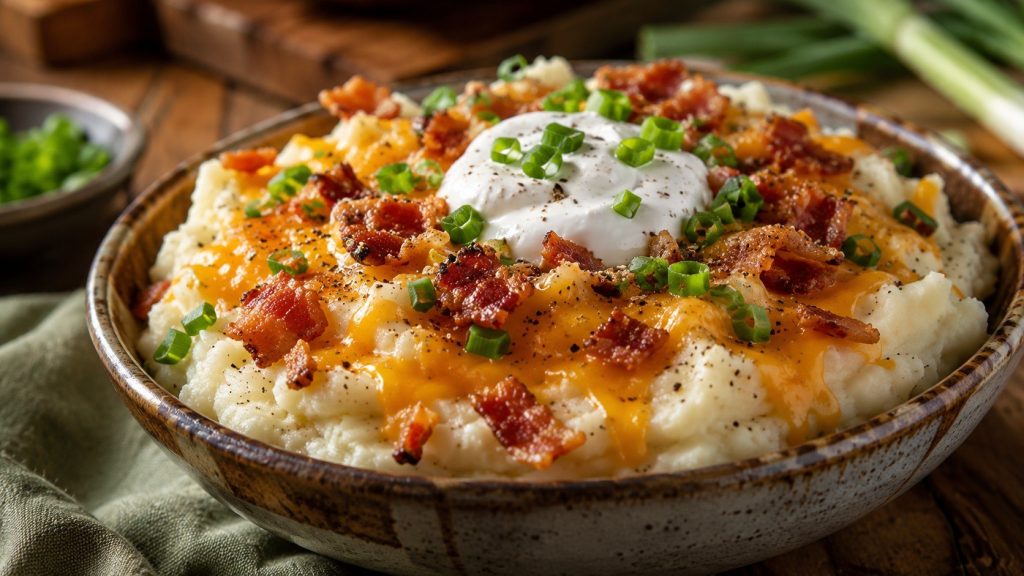
Most problems can be corrected before the dish reaches the table. The exception is severely overprocessed potatoes, because released starch cannot easily be reversed.
Watch for these common problems:
- watery potatoes after adding too much milk;
- gluey texture after aggressive mixing;
- bland flavor from under-salted cooking water;
- greasy potatoes after excessive butter or cheese;
- rubbery cheese caused by too much heat;
- soft bacon added too early;
- cold potatoes caused by chilled milk or sour cream.
Watery potatoes can sometimes be dried gently over low heat while stirring carefully. Another option is adding a small quantity of freshly mashed potato. Bland potatoes usually need salt before they need more butter. Greasy potatoes benefit from fresh chives or a little sour cream for acidity. Keep bacon separate until late if crispness matters. Cheese should be folded into hot potatoes off direct heat. Once dairy enters the mash, avoid aggressive boiling.
FAQ about loaded mashed potatoes
Can I make loaded mashed potatoes without bacon?
Yes. Replace bacon with sautéed mushrooms, crispy onions, roasted broccoli, or smoked cheese. Smoked paprika can provide some of bacon’s smoky character.
What is the best cheese for loaded mashed potatoes?
Sharp cheddar is the most dependable choice. It melts easily and has enough flavor to remain noticeable beside sour cream and bacon.
Can I use leftover mashed potatoes?
Yes. Warm them gently with a small amount of milk or butter first. Then fold in cheese, sour cream, bacon, and herbs.
Should I peel the potatoes?
Russets are usually better peeled because their skins are comparatively thick. Yukon Gold skins are thinner and can remain for a rustic version.
How long do loaded mashed potatoes last in the refrigerator?
Use refrigerated leftovers within about 3–4 days when they were cooled and stored correctly. This follows current USDA food-safety guidance.
Can loaded mashed potatoes be frozen?
They can, although the texture may change after thawing. Recipes containing enough butter and dairy usually freeze better than very lean mashed potatoes.
How do I reheat loaded mashed potatoes without drying them?
Add a splash of milk and cover the dish during most of reheating. Stir gently once or twice, then add fresh toppings before serving.
Can I prepare them for Thanksgiving the day before?
Yes. Refrigerate the prepared potatoes and reheat them the next day. Keep bacon, chives, and some cheese separate until the final heating stage.
Earlier we wrote about How to Make BLT Salad: Crispy Bacon, Juicy Tomatoes and Creamy Dressing