 Frank Rondel
Pepper steak recipe starts with thin slices of beef, hot metal, crisp bell peppers, and a glossy savory sauce. The dish looks simple, yet small mistakes can turn tender steak into gray, chewy strips. The best version depends on slicing direction, pan temperature, cooking order, and sauce consistency, as the customreceipt.com editorial team notes.
Pepper steak belongs to the broad family of Chinese-American stir-fries. It usually combines beef with green or red bell peppers, onion, soy-based sauce, garlic, and ginger. The entire cooking stage can take less than 15 minutes once every ingredient is prepared. The Woks of Life uses the same fast, high-heat approach in its pepper steak method.
The central rule is simple: prepare everything before the beef touches the pan. Stir-frying moves too quickly for chopping vegetables halfway through cooking.
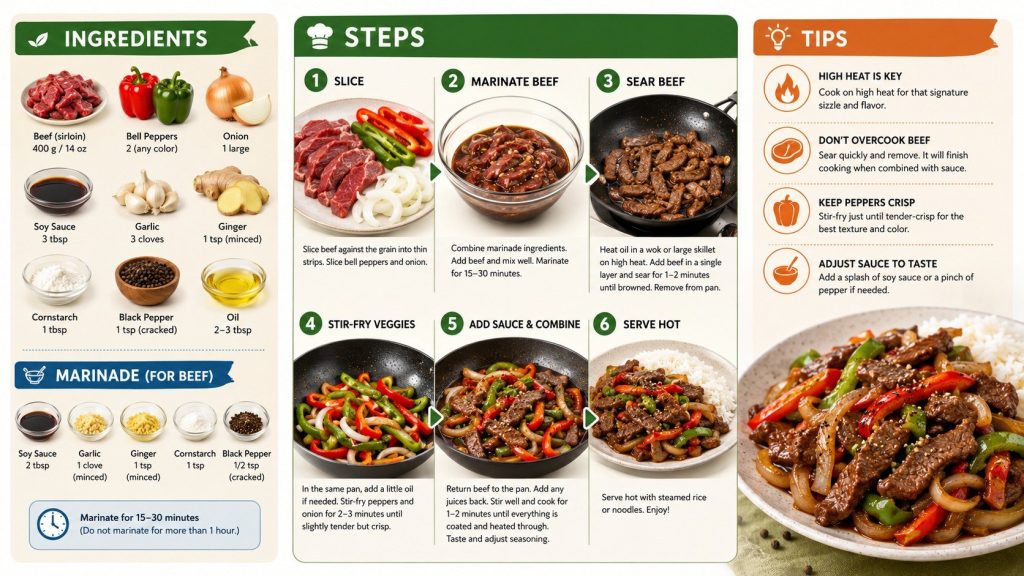
Pepper steak ingredients for 4 servings
A useful pepper steak should taste strongly of beef without becoming dominated by soy sauce. Bell peppers need enough heat to soften slightly while retaining some bite.
For 4 servings, prepare:
- 1.25 lb flank steak, sirloin, or top round;
- 1 large green bell pepper;
- 1 large red bell pepper;
- 1 medium yellow onion;
- 2 garlic cloves;
- 1 tsp freshly grated ginger;
- 2 tbsp neutral cooking oil;
- 1 tsp sesame oil;
- freshly ground black pepper.
For the marinade:
- 1 tbsp low-sodium soy sauce;
- 1 tbsp water;
- 2 tsp cornstarch;
- 1 tsp neutral oil;
- 1 tsp oyster sauce.
For the sauce:
- 1/2 cup low-sodium beef or chicken stock;
- 2 tbsp low-sodium soy sauce;
- 1 tbsp oyster sauce;
- 1 tbsp rice vinegar;
- 1 tsp brown sugar;
- 2 tsp cornstarch;
- 1/2 tsp black pepper.
These quantities create enough sauce to coat the ingredients without turning the dish into soup. Oyster sauce contributes savory depth and mild sweetness. Rice vinegar keeps the sauce from tasting flat or excessively salty.
Cornstarch performs 2 jobs. It helps the marinade cling to the meat and later thickens the cooking liquid. The result should look glossy, not gelatinous. If you regularly cook from scratch, the site’s homemade lasagna guide offers another useful example of controlling moisture instead of relying only on cooking time.
Which beef is best for pepper steak?
Beef for pepper steak needs enough tenderness for very fast cooking. Flank steak is particularly effective because its grain is easy to identify. It also develops strong beef flavor under high heat.
Sirloin is another practical option. It usually needs less tenderizing and has a softer texture. Top round can cost less, although it is leaner and becomes unforgiving when sliced too thickly.
| Beef cut | Texture | Preparation | Best use |
|---|---|---|---|
| Flank steak | Beefy, moderately tender | Slice thinly against grain | Best all-round choice |
| Sirloin | Naturally tender | Minimal marinating needed | Fastest preparation |
| Top round | Lean, firmer | Marinate longer | Budget option |
| Chuck | Rich, more connective tissue | Needs careful tenderizing | Strong beef flavor |
The Woks of Life specifically recommends flank steak and notes that leaner cuts need more tenderizing. It also warns against thick supermarket strips sold as ready-cut stir-fry beef. Those pieces can remain tough during rapid cooking.
Do not judge a cut only by price. A cheaper steak sliced correctly can perform better than expensive beef cut with the grain. Thinness matters because each strip spends very little time over direct heat.
For a different make-ahead meal using bell peppers, eggs, and meat, see this breakfast casserole recipe.
How to slice beef so it stays tender
Find the long visible muscle fibers running through the steak. Turn the meat so your knife crosses those fibers rather than following them.
Then cut the beef into strips about 1/8 to 1/4 inch thick. Slightly freezing the steak for 20–30 minutes makes this much easier.
“To make slicing easier, do it when the beef is still slightly frozen and firm.”
Bill Leung, recipe developer at The Woks of Life, in his published pepper steak preparation guide.
Cutting against the grain shortens the muscle fibers your teeth must break apart. This difference becomes especially noticeable with flank and top round.
Do not make irregular chunks. Thick pieces require more cooking time, while thin strips become done sooner. Mixing both sizes in one skillet almost guarantees uneven texture.
How to marinate pepper steak without drowning it
Place the sliced beef in a bowl. Add soy sauce, water, cornstarch, oil, and oyster sauce. Mix until every strip looks lightly coated.
Leave the beef for about 20–30 minutes in the refrigerator. Tougher cuts can benefit from a longer rest.
The marinade should disappear into the surface rather than pool underneath. Too much liquid becomes a problem when the beef reaches the skillet. Instead of searing, the meat begins steaming in its own moisture.
Proper marinating changes the surface of the beef. It should not turn the bowl into a container of sauce.
This light coating also helps protect thin slices during intense cooking. Cornstarch reduces moisture loss while encouraging the sauce to adhere later.
Make the pepper steak sauce before heating the pan
Mix stock, soy sauce, oyster sauce, rice vinegar, brown sugar, cornstarch, and black pepper in a small bowl.
Whisk until no visible cornstarch remains.
The balance can be adjusted before cooking:
- add another splash of vinegar for a sharper sauce;
- use less sugar for a more savory profile;
- add chili flakes for heat;
- increase black pepper for a stronger pepper-steak character;
- use low-sodium stock if the oyster sauce is already salty.
Do not add extra salt automatically. Soy sauce, oyster sauce, and stock already contribute sodium. Taste the finished sauce before making corrections.
Cornstarch settles quickly. Stir the mixture again immediately before pouring it into the pan. Otherwise, much of the starch may remain at the bottom while thin liquid enters the skillet first.
A sauce that becomes too thick can be loosened with 1–2 tbsp stock or water. A thin sauce usually needs another short simmer rather than another large spoonful of starch.
How to cook pepper steak step by step
Use a wok or the widest heavy skillet available. A crowded 8-inch pan cannot produce the same result as a broad cooking surface.
Prepare all ingredients before starting:
- Heat the empty skillet over high heat.
- Add about 1 tbsp neutral oil.
- Place half the beef in a single layer.
- Sear briefly without constant stirring.
- Turn the strips and finish the second side.
- Transfer the beef to a clean plate.
- Repeat with the remaining beef.
- Add another small amount of oil if needed.
- Stir-fry onion and bell peppers.
- Add ginger and garlic near the end.
- Return the beef and its juices.
- Stir the prepared sauce again.
- Pour it around the hot pan.
- Toss until the sauce becomes glossy.
- Remove from heat as soon as everything is coated.
Cooking in batches is not needless restaurant technique. A large mass of cold meat drops the skillet temperature. Released moisture then accumulates faster than it can evaporate.
That produces pale, watery beef. The flavor also suffers because less browning develops.
The Woks of Life similarly pre-cooks the beef before finishing it with vegetables and sauce. Its published method sears the meat quickly and returns it later.
Why the peppers should stay slightly crisp
Bell peppers are not simply decoration in beef and pepper stir fry. Their freshness balances the rich sauce and provides the dish’s defining texture.
Cook the onion and peppers for roughly 2–3 minutes over strong heat. Exact timing depends on strip thickness and skillet temperature.
The vegetables should lose their raw edge without becoming limp. Green peppers provide a more vegetal, slightly bitter note. Red peppers are sweeter.
Using both creates better contrast.
If every pepper becomes completely soft, the dish loses one of its main structural elements. That is why vegetables enter after the beef has been removed.
For another recipe where ingredient timing strongly changes the finished texture, the site’s blueberry pancake recipe explains why berries are added at a specific stage rather than mixed carelessly.
The cooking times that matter
Pepper steak does not need long simmering. Most of its texture comes from several short stages.
| Stage | Approximate time | What to watch |
|---|---|---|
| Marinating beef | 20–30 min | Light coating on meat |
| Heating skillet | 2–3 min | Very hot surface |
| Searing each beef batch | 1–2 min | Browning without steaming |
| Cooking peppers and onion | 2–3 min | Tender-crisp texture |
| Garlic and ginger | 20–30 sec | Fragrant, not burned |
| Finishing with sauce | 1–2 min | Glossy coating |
These times are guides rather than fixed laws. A thin carbon-steel wok reacts differently from a thick cast-iron skillet. Gas also behaves differently from induction.
The most useful signal is the pan itself. Beef should sizzle immediately after touching the surface.
After the cooking guide above, several details deserve attention. Garlic burns much faster than onion. Add it late rather than at the beginning. Cornstarch sauce also thickens rapidly once boiling begins.
Do not leave the finished dish simmering for 10 minutes. That turns crisp peppers soft and continues cooking the beef.
How hot should pepper steak beef be?
USDA food-safety guidance lists 145°F, or about 63°C, as the safe minimum internal temperature for whole beef steaks, chops, and roasts. It also specifies a 3-minute rest.
Pepper steak creates a practical measurement problem because the strips are thin. A thermometer may be difficult to position accurately inside a narrow slice.
For home cooking, begin with intact whole-muscle beef from a reliable source and handle it cleanly. Keep raw meat separate from ready-to-eat ingredients. Do not reuse a contaminated plate for the finished dish.
The USDA temperature guidance refers to whole cuts. Ground beef follows a different standard and should not be treated as equivalent to sliced steak.
If cooking for people at greater risk from foodborne illness, use conservative food-safety practices and avoid relying only on color.
The 5 mistakes that ruin pepper steak
Most disappointing pepper steak can be traced to technique rather than ingredients.
Common problems include:
- slicing beef with the grain;
- putting too much meat into the pan at once;
- cooking peppers until completely soft;
- forgetting to stir the cornstarch sauce;
- simmering the finished beef for too long.
Each mistake affects a different part of the dish. Wrong slicing creates toughness. Crowding prevents browning. Overcooking vegetables removes contrast.
An unstirred sauce may thicken unevenly because cornstarch sinks during standing. Long simmering then compounds the problem by tightening already thin pieces of beef.
The correction is not complicated. Treat pepper steak as a fast stir-fry rather than a stew.
What to serve with pepper steak
Steamed white rice is the classic companion because it absorbs sauce without competing with its flavor. Jasmine rice is especially useful when you want a lighter aromatic note.
Other options include:
- brown rice;
- noodles;
- cauliflower rice;
- steamed broccoli;
- bok choy;
- green beans;
- simple cucumber salad.
Rice should ideally finish at the same time as the stir-fry. Pepper steak is best immediately after cooking, while its sauce remains glossy and vegetables retain texture.
Noodles make the meal heavier and can absorb more sauce. If using them, prepare slightly more liquid.
A fresh vegetable side works well when the main dish already contains substantial rice. Avoid adding several heavily seasoned side dishes because soy-based flavors quickly accumulate.
Can pepper steak be prepared ahead?
The components can. The finished stir-fry is better fresh.
Slice and marinate the beef earlier in the day. Cut the peppers and onion, then refrigerate them separately. Mix the sauce and keep it covered.
This reduces dinner preparation to heating the pan and cooking.
Cooked pepper steak can usually be refrigerated promptly in a sealed container. Reheat only until hot because prolonged reheating makes the beef progressively firmer.
The sauce may become thicker after refrigeration. Add a small splash of water or stock while reheating.
FAQ about pepper steak
What is pepper steak made of?
Pepper steak usually contains thinly sliced beef, bell peppers, onion, and a savory soy-based sauce. Garlic, ginger, oyster sauce, cornstarch, and black pepper are common additions.
What is the best steak for pepper steak?
Flank steak is an excellent choice because it has strong flavor and slices well against the grain. Sirloin is softer and also works well.
Why is my pepper steak beef tough?
The meat may be sliced with the grain, cut too thickly, or cooked too long. Crowding the skillet can also prevent proper searing.
How do Chinese restaurants make beef so tender?
A common technique is often called velveting. Beef receives a light marinade that may include cornstarch, liquid, oil, and other tenderizing ingredients before rapid cooking.
Can I make pepper steak without oyster sauce?
Yes. Increase soy-based seasoning and stock, then adjust sugar and acidity carefully. The result will taste different because oyster sauce adds distinct savory depth.
Can I use only green bell peppers?
Yes. Green peppers create a more traditional, vegetal flavor. Combining green and red peppers produces more sweetness and visual contrast.
How do I thicken pepper steak sauce?
Cornstarch mixed into cold liquid thickens the sauce as it reaches a simmer. Stir the mixture again before adding it because the starch settles.
Is pepper steak spicy?
Not necessarily. Traditional versions can be peppery without being chili-hot. Add chili flakes, fresh chilies, or chili oil when stronger heat is wanted.
Earlier we wrote about Honey-Glazed Ham Recipe: How to Make Juicy Ham with a Sticky Honey Glaze