 Frank Rondel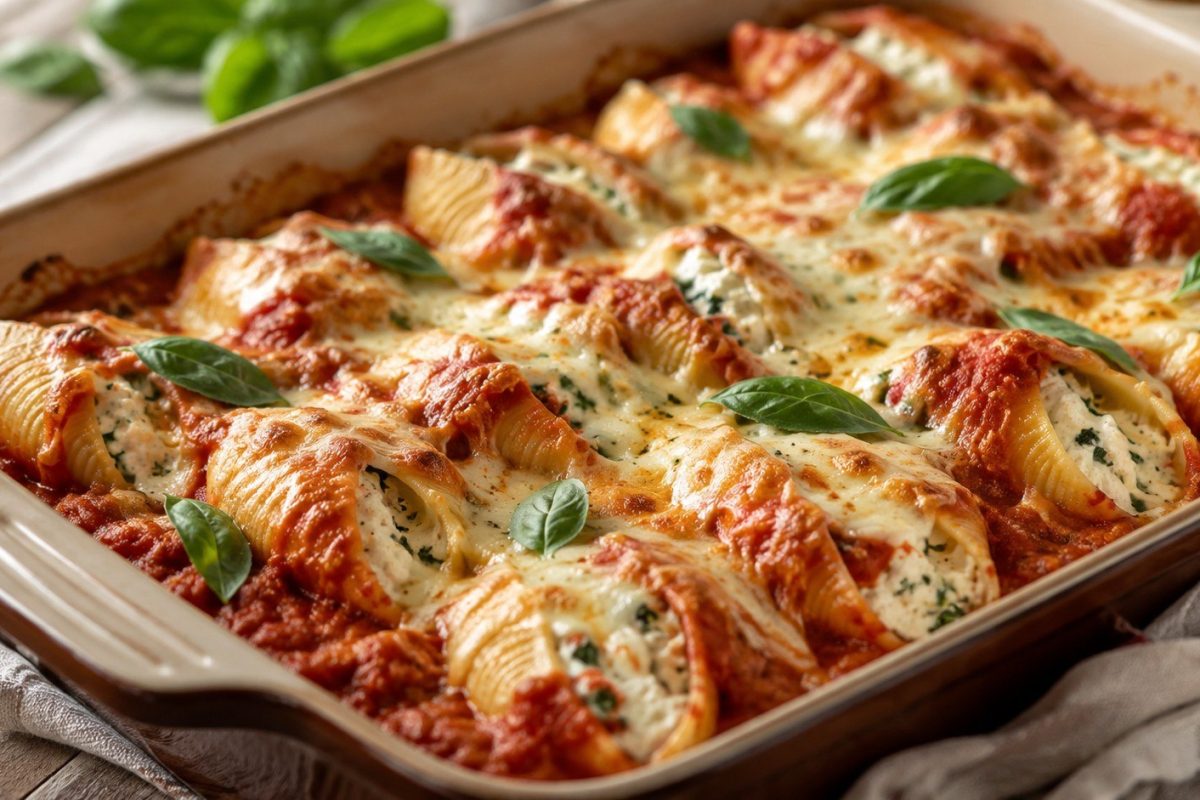
Stuffed shells recipe begins with one simple idea: large pasta shells should hold plenty of creamy cheese without becoming heavy or soggy. Ricotta provides softness, mozzarella adds the familiar stretch, and Parmesan gives the filling a sharper finish. Tomato sauce keeps the pasta moist while everything bakes together, as the customreceipt.com editorial team notes.
The dish looks elaborate, yet most of the work happens before the baking dish reaches the oven. The crucial details are practical ones. Cook the shells only until firm, keep excess liquid away from the ricotta, and use enough sauce underneath.
The best stuffed shells balance 3 textures: tender pasta, creamy filling, and a lightly browned cheese layer.
What You Need for Classic Stuffed Shells
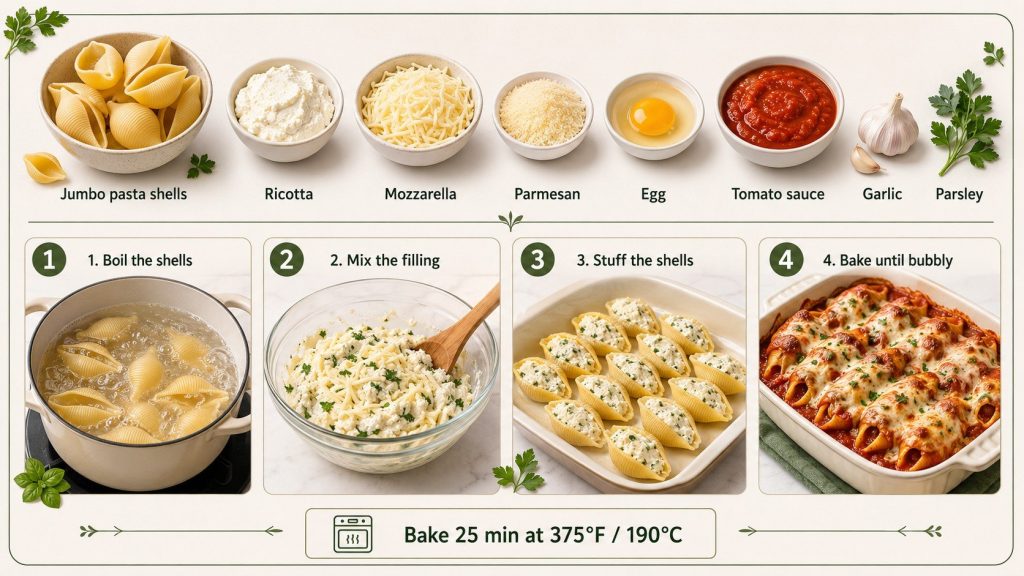
A traditional stuffed shells recipe does not require an unusually long shopping list. The core ingredients are jumbo pasta shells, ricotta, mozzarella, Parmesan, marinara, herbs, and seasoning.
Barilla’s version uses ricotta, mozzarella, Parmesan, basil, marinara, and jumbo shells. It also recommends partially cooking the pasta before baking. That prevents the finished shells from becoming excessively soft. Barilla’s stuffed jumbo shells recipe uses a similar basic structure.
For about 5 to 6 servings, prepare:
- 24 jumbo pasta shells, plus several extras for breakage;
- 15 oz ricotta cheese;
- 2 cups shredded mozzarella;
- 3/4 cup finely grated Parmesan;
- 1 large egg;
- 24 oz marinara sauce;
- 2 garlic cloves, finely grated;
- 2 tablespoons chopped fresh basil;
- 1 tablespoon chopped parsley;
- 1/2 teaspoon dried oregano;
- salt and black pepper;
- 1 teaspoon olive oil.
Extra shells are useful because several may crack during boiling. Whole-milk ricotta gives a richer filling, although part-skim ricotta also works. Freshly grated Parmesan usually melts more evenly than coarse packaged shreds. A thick marinara works better than a watery sauce. Fresh basil gives the finished casserole a cleaner aroma. Garlic should remain restrained because the cheese is meant to dominate.
For another baked pasta idea using similar ingredients, see this easy homemade lasagna recipe. The layering method is different, but the sauce-to-cheese balance follows similar logic.
Ingredient Ratios That Keep the Filling Creamy
Good ricotta stuffed shells depend more on ratios than complicated technique. Too much mozzarella can make the filling rubbery. Too much ricotta without Parmesan may leave it bland.
A useful working ratio looks like this:
| Ingredient | Recommended amount | Main purpose |
|---|---|---|
| Jumbo shells | 24 | Holds the filling |
| Ricotta | 15 oz | Creamy base |
| Mozzarella | 2 cups | Melt and stretch |
| Parmesan | 3/4 cup | Saltiness and depth |
| Marinara | 24 oz | Moisture and acidity |
| Egg | 1 | Helps bind the filling |
| Fresh herbs | 3 tbsp | Fresh aroma |
| Garlic | 2 cloves | Savory background |
These amounts are flexible rather than absolute. A thicker ricotta may need no adjustment. A wet ricotta can benefit from 20 to 30 minutes of draining. Keep about 1/2 cup mozzarella aside for the top. Parmesan should also be divided between filling and finish. The goal is a filling that stays inside each shell when spooned.
If you regularly cook baked pasta, this baked spaghetti recipe explains another method for preventing a cheese casserole from drying out.
How to Cook Jumbo Shells Without Breaking Them
The pasta stage causes more trouble than the filling. Jumbo stuffed shells tear easily when they become completely soft.
Barilla recommends cooking jumbo shells for about half the package time before baking. The company notes that they finish cooking in the oven. Its current recipe uses a 350°F oven and a sauce-lined baking dish.
Follow this sequence:
- Bring a large pot of generously salted water to a steady boil.
- Add the shells and stir gently during the first minute.
- Cook until noticeably firmer than normal al dente pasta.
- Drain carefully without crushing the shells.
- Toss with a small amount of olive oil.
- Spread them separately on a tray to cool.
- Discard badly torn shells and keep the strongest ones for filling.
Do not leave cooked shells piled inside a colander. Their weight can flatten the bottom pieces. Cooling them separately also makes stuffing much easier. They should be comfortable to handle before adding cheese. Slightly firm pasta is preferable at this stage. The marinara and covered oven environment provide more moisture later.
This partial-cooking method also gives the cook more control. Fully cooked pasta can turn soft before the mozzarella browns.
How to Make the Cheese Filling
The filling should be creamy enough to spoon easily but firm enough to stay inside the pasta. Excess moisture is its main enemy.
Place ricotta in a medium bowl. Add 1 1/2 cups mozzarella, 1/2 cup Parmesan, the egg, garlic, basil, parsley, oregano, pepper, and salt. Stir only until evenly combined.
If the ricotta looks unusually wet, drain it before mixing. That small step can prevent a watery layer beneath the pasta.
Taste cannot be checked safely after adding raw egg. Season the cheeses before adding the egg if you need to adjust salt. Parmesan already contributes considerable saltiness.
For a variation, add 5 to 6 oz cooked spinach. Squeeze it extremely dry first. Chopped roasted mushrooms also work, but their moisture should be cooked away beforehand.
How to Assemble Stuffed Shells
Spread about 1 cup marinara across the bottom of a 9 × 13-inch baking dish. The sauce forms a protective layer between pasta and hot ceramic or glass.
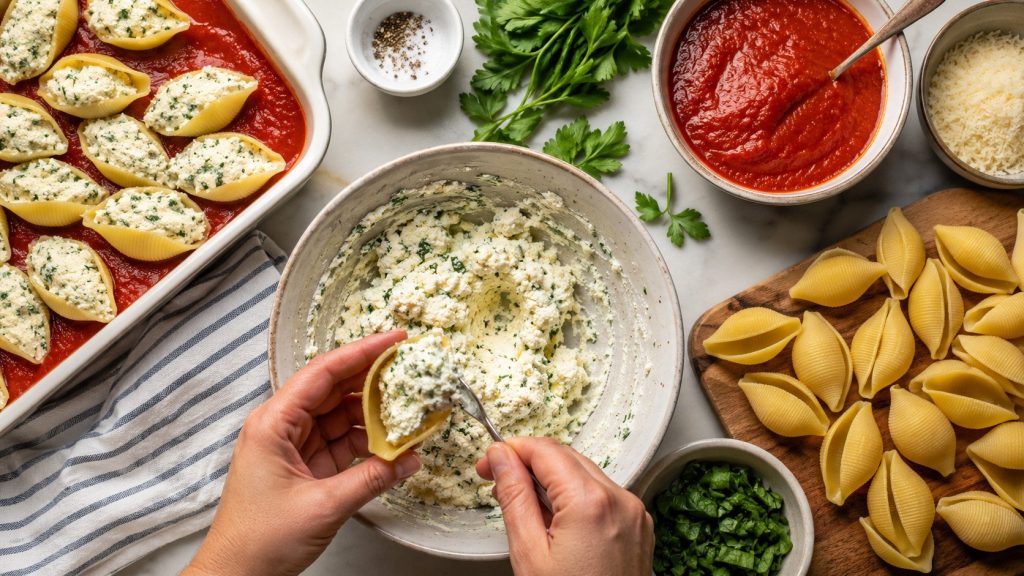
Fill each shell with roughly 1 1/2 to 2 tablespoons of cheese mixture. A teaspoon works, but a piping bag is faster. Arrange each shell with its opening facing upward.
Spoon the remaining marinara around and partly over the shells. Do not bury them completely. The upper edges should remain visible so they develop texture.
Scatter the remaining mozzarella and Parmesan across the top. This produces the familiar browned surface associated with cheese stuffed shells.
“Covering the baking dish during the first part of baking keeps the pasta soft.”
— Barilla, recipe guidance for Ricotta & Mozzarella Stuffed Jumbo Shells, explaining its covered baking method. Source.
Baking Time and Oven Temperature
Preheat the oven to 350°F, or about 180°C. Cover the baking dish with foil before it goes inside.
Bake for about 20 minutes covered. Then remove the foil and continue baking for 5 to 10 minutes. The sauce should bubble around the edges. The mozzarella should be completely melted.
Barilla currently gives the same general 350°F method. It recommends a covered 20-minute bake followed by 5 to 10 minutes uncovered.
Let the dish rest for 5 to 10 minutes after baking. This is not wasted time. The cheese filling firms slightly and becomes easier to serve. The sauce also stops running across the plate. Fresh basil can be added immediately before serving.
How to Make Stuffed Shells Taste Better
The classic recipe is forgiving, but several small changes produce a more polished result.
For stronger flavor, consider these options:
- add lemon zest to the ricotta;
- mix chopped spinach into the filling;
- replace part of the mozzarella with fontina;
- add red pepper flakes to the marinara;
- use roasted garlic instead of raw garlic;
- add cooked Italian sausage for a meat version;
- finish with basil after baking rather than before.
Lemon zest is particularly effective because it cuts through rich dairy without making the filling sour. Spinach gives the casserole a more vegetal character. Sausage makes it substantially heavier and more filling. Red pepper works best in small amounts. Fresh basil should remain bright rather than bake for too long. Choose only 1 or 2 major additions so the recipe keeps its identity.
For a different family-style breakfast casserole, the site also has an egg, potato, cheese and sausage bake.
Common Mistakes That Ruin Stuffed Shells
Overcooked pasta is the most common problem. Soft shells split while filling and become even softer during baking.
Another frequent mistake is using very wet ricotta. Excess whey collects underneath the shells and dilutes the marinara.
Using too little sauce causes a different problem. The exposed pasta can become leathery around the edges. Keep sauce beneath every shell and add some around the sides.
Do not pack the filling too tightly. A shell needs enough cheese to look full, but it should not split under pressure.
Finally, avoid baking uncovered from the beginning. The top can brown before the pasta becomes tender.
Can You Prepare Stuffed Shells Ahead of Time?
Yes. Easy stuffed shells are particularly useful for make-ahead dinners because the casserole can be assembled before baking.
Prepare the pasta, filling, sauce, and cheese topping. Cover the assembled dish and refrigerate it until needed. If the dish is very cold, baking may take slightly longer.
Another option is freezing assembled shells before baking. Use a freezer-safe container and wrap it tightly. Thawing overnight in the refrigerator gives more predictable results than baking a solid frozen casserole.
Cooked leftovers also need sensible handling. USDA guidance says refrigerated leftovers can generally be stored for 3 to 4 days. Frozen leftovers maintain their best quality for a shorter period than their technical frozen safety limit. USDA food-safety guidance provides the current storage recommendation.
What to Serve With Stuffed Shells
Stuffed shells are rich, so the best side dishes provide acidity, crunch, or fresh vegetables. A heavy cream-based side usually competes with the main dish.
A simple green salad with vinaigrette is enough for a weeknight dinner. Roasted broccoli, asparagus, or zucchini also works well. Garlic bread makes sense when extra marinara remains on the plate.
For a larger meal, serve fewer shells per person and add vegetables. For a smaller dinner, 4 or 5 shells can form a generous main course.
The finished dish should reach the table hot, but not straight from the oven. A short rest gives cleaner portions and better texture.
FAQ About Stuffed Shells
Do you have to cook jumbo shells before stuffing them?
For this method, yes. Cook them only until very firm. They finish cooking in marinara inside the oven.
What cheese is best for stuffed shells?
Ricotta is the standard base. Mozzarella provides melt, while Parmesan adds a sharper and saltier flavor.
Why are my stuffed shells watery?
Wet ricotta, undrained spinach, or thin tomato sauce usually causes excess liquid. Drain moist ingredients before assembling the casserole.
What temperature should stuffed shells bake at?
350°F works well for this recipe. Bake covered for about 20 minutes, then uncover for another 5 to 10 minutes.
Can I make stuffed shells without an egg?
Yes, although the filling will be softer. The egg mainly helps the cheese mixture hold together after baking.
How many stuffed shells are one serving?
About 4 shells make a reasonable main-course serving for many adults. Portion size depends on shell dimensions and side dishes.
Can stuffed shells be frozen?
Yes. Assemble them in a freezer-safe dish, cover tightly, and freeze. Thawing in the refrigerator usually gives the most even baking.
How long do leftover stuffed shells last?
USDA recommends using refrigerated leftovers within 3 to 4 days. Store them promptly in a covered container.
Earlier we wrote about Pepper Steak Recipe With Bell Peppers: How to Keep the Beef Tender and the Sauce Glossy