 Frank Rondel
French onion dip recipe starts with a small contradiction. The ingredient list is simple, but rushing the onions ruins everything. Slow caramelization creates sweetness, savory depth, and the unmistakable flavor that powdered seasoning cannot fully reproduce. The finished dip should stay thick enough for potato chips, yet soft enough for vegetables and crackers, as the customreceipt.com editorial team notes.
Homemade French onion dip is also remarkably adaptable. Sour cream supplies acidity, mayonnaise adds body, and caramelized onions provide most of the flavor. A little Worcestershire sauce gives extra savory depth without making the dip taste like sauce.
The difference between ordinary onion dip and an excellent one happens mostly inside the skillet, before the dairy ingredients appear.
What French onion dip actually is
Despite its name, French onion dip is primarily an American party food. An early version became popular during the 1950s by combining sour cream with packaged French onion soup mix. Food & Wine traces the widely known “California dip” version to Los Angeles in 1954.
The homemade approach keeps the creamy character but replaces packaged mix with real onions. Slowly cooked onions develop deeper sweetness and a softer texture. Food & Wine also uses Worcestershire sauce to bring additional umami to the mixture.
That approach matters because homemade French onion dip should taste unmistakably of onions rather than seasoning powder. The cream should support that flavor instead of covering it.
For another rich party dish, stuffed shells with ricotta and mozzarella use a similar principle. Rich ingredients work better when salt, moisture, and texture remain controlled. The same rule applies here.
Ingredients for creamy French onion dip
A good batch makes roughly 2½ to 3 cups. That is enough for about 8 people when other snacks are available.
You will need:
- 2 large yellow onions;
- 2 tablespoons unsalted butter;
- 1 tablespoon olive oil;
- 1¼ cups full-fat sour cream;
- ½ cup mayonnaise;
- 1 teaspoon Worcestershire sauce;
- ½ teaspoon garlic powder;
- ½ teaspoon onion powder;
- ½ teaspoon kosher salt, plus more if needed;
- ¼ teaspoon freshly ground black pepper;
- 1 tablespoon chopped chives;
- 1 teaspoon lemon juice, optional.
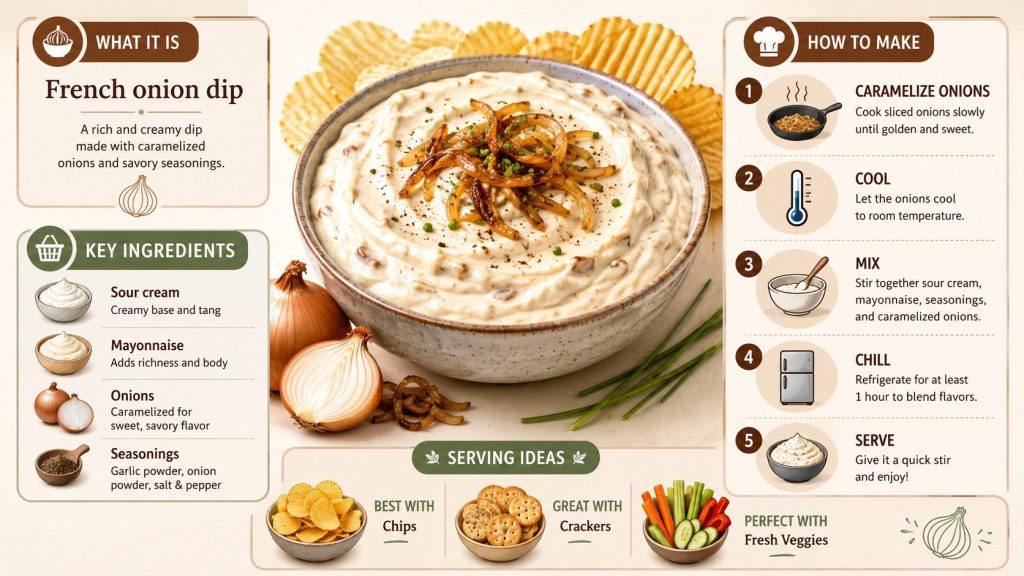
Yellow onions are the safest choice because they balance sweetness and savory character. Sweet onions produce a milder result, while red onions change both color and flavor. Full-fat sour cream creates better body than many reduced-fat versions. Mayonnaise makes the mixture smoother and rounds out the acidity. Lemon juice is optional, but a small amount can sharpen a very rich batch.
Do not increase every seasoning before tasting the chilled dip. Cold dairy can mute salt initially, while the onion flavor strengthens during resting. Worcestershire sauce should remain a background note rather than dominate. Chives add freshness at the end. Keep some aside for serving.
The ingredient ratios that control texture
French onion dip is forgiving, but the dairy ratio changes its character considerably.
| Ingredient | Recommended amount | Main purpose |
|---|---|---|
| Yellow onions | 2 large | Sweetness and savory depth |
| Sour cream | 1¼ cups | Tang and creamy base |
| Mayonnaise | ½ cup | Richness and smoother texture |
| Butter | 2 tbsp | Browning and flavor |
| Olive oil | 1 tbsp | Helps onions cook evenly |
| Worcestershire sauce | 1 tsp | Umami |
| Chives | 1 tbsp | Fresh finish |
More mayonnaise produces a richer and slightly looser dip. More sour cream makes it tangier and usually lighter on the palate. Cream cheese can replace some mayonnaise when a very thick dip is desired. However, it should first reach room temperature for smoother mixing. Food & Wine similarly recommends softened dairy when combining cream cheese with sour cream.
Do not judge the final thickness immediately after mixing. Refrigeration firms the dairy and lets the onions distribute flavor. A dip that seems slightly loose can become noticeably thicker after 1 hour. Conversely, excessive cream cheese can make cold dip difficult to scoop.
How to caramelize onions without burning them
Caramelization is the decisive stage in a French onion dip with caramelized onions. High heat creates browned edges quickly, but often leaves harsh or partly raw onions.
Slice the onions thinly and reasonably evenly. Heat butter and oil in a wide skillet over medium heat.
Follow this sequence:
- Add the sliced onions with a small pinch of salt.
- Cook for about 5 minutes until they begin softening.
- Reduce the heat to medium-low.
- Cook for another 25–35 minutes.
- Stir every few minutes rather than continuously.
- Add 1 tablespoon water if browned residue becomes too dark.
- Remove the onions when they become deep golden brown.
- Cool them completely before mixing with dairy.
A wide skillet works better than a small saucepan because moisture escapes faster. The onions should gradually change from white to translucent, golden, then deeper brown. Dark brown spots are acceptable, but black edges introduce bitterness. Adding small amounts of water can loosen flavorful browned material from the skillet. Food & Wine uses a similar method and cooks onions until golden before cooling them.
Cooling is not optional. Hot onions can loosen sour cream and mayonnaise, giving the dip an oily texture. Chop the cooled onions if the strands are very long. Small pieces distribute better across every scoop.
“Making the dip with real caramelized onions provides truer onion flavor and chunkier texture compared to packaged soup mix.”
— Food & Wine editorial recipe guidance, Caramelized Onion Dip, explaining its fresh-onion method.
How to make French onion dip step by step
Once the onions are ready, the remaining work takes only several minutes. Use a medium mixing bowl rather than a blender.
Add sour cream and mayonnaise first. Stir until completely smooth. Then add Worcestershire sauce, garlic powder, onion powder, pepper, and most of the chives.
Fold in the cooled onions gently. Taste before adding more salt.
Give the finished dip at least 1 hour in the refrigerator when possible. The rest changes more than its temperature.
The onion flavor moves into the dairy while the base becomes thicker. Overnight refrigeration produces an even stronger result. Cover the bowl tightly so the dip does not absorb refrigerator odors. Before serving, stir it once and check the seasoning again. Add the reserved chives only at the end.
If you are preparing several dishes for guests, a make-ahead breakfast casserole shows the same planning advantage. Components prepared earlier reduce last-minute kitchen work.
Why your French onion dip tastes flat
A flat dip usually has enough fat but insufficient contrast. Salt is one possibility, although adding more should not be the automatic response.
Several problems are especially common:
- onions were cooked only until soft;
- onions were burned instead of slowly browned;
- too much sour cream diluted their flavor;
- the mixture received no acidic element;
- insufficient salt muted the savory notes;
- the dip was served immediately after mixing;
- too much garlic powder overwhelmed the onion flavor.
The first correction should be tasting the onions themselves. Properly caramelized onions should already taste sweet and deeply savory. If they remain sharp, the cooking stage ended too early. A few drops of lemon juice can brighten a rich dip without making it lemon-flavored. Worcestershire sauce can add depth, but excessive amounts make the flavor muddy.
Resting also solves more problems than people expect. Onion compounds, salt, and seasonings need time to spread through the dairy base. Taste again after chilling before changing the recipe.
Sour cream, Greek yogurt or cream cheese?
There is no single compulsory dairy base. Each variation changes texture and richness.
Sour cream provides the classic tangy profile. Greek yogurt makes a lighter and sharper dip. Cream cheese gives considerably more density and richness.
For a balanced variation, replace ¼ cup sour cream with thick Greek yogurt. This keeps the creamy onion dip recognizable while giving it more acidity.
Cream cheese works differently. Use about 4 oz softened cream cheese alongside sour cream rather than replacing everything. Food & Wine uses both sour cream and cream cheese in its caramelized onion version.
The easiest mistake is combining several rich ingredients without enough acidity. Fat carries flavor, but too much makes each bite feel heavy. That is why sour cream remains such an effective base.
What to serve with French onion dip
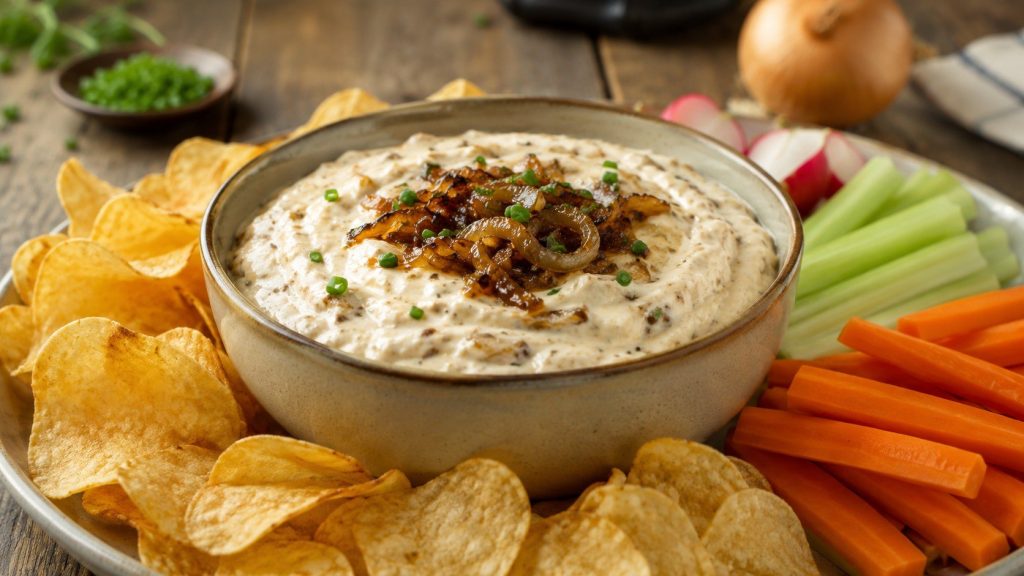
Ridged potato chips remain the classic partner because their structure holds thick dip well. They also provide strong salt and crunch against the soft dairy base.
Other useful options include:
- kettle-cooked potato chips;
- pretzel crisps;
- toasted baguette slices;
- pita chips;
- carrot sticks;
- celery;
- cucumber spears;
- bell pepper strips;
- radishes;
- crackers.
Choose at least 2 different textures when serving guests. Chips provide crunch, while raw vegetables make the platter feel less heavy. Thick crackers work better than delicate varieties because dense dip can break thin ones. Crostini turns the dip into something closer to a canapé. Vegetables should be dry before serving so water does not collect around the dip.
For a larger meal, pair the appetizer with something substantial but texturally different. Red beans and rice with andouille sausage provides a useful example of a main dish built around slow-cooked savory flavors.
How long French onion dip lasts in the refrigerator
Fresh dip should stay refrigerated in a clean, covered container. Food & Wine states its caramelized onion dip can be refrigerated for up to 3 days.
For party service, temperature matters more than appearance. The FDA advises discarding perishable foods left at room temperature longer than 2 hours. That limit becomes 1 hour above 90°F.
Do not keep returning a large bowl to the refrigerator after guests have repeatedly used it. Instead, serve smaller portions and replenish them from a chilled container. This keeps the unused dip colder and reduces unnecessary handling. Keep the main batch at 40°F or below when possible.
Freezing is less attractive. Sour cream and mayonnaise can separate after thawing, producing a grainy or watery texture. Fresh or refrigerated preparation gives more predictable results.
Can French onion dip be made ahead?
Yes, and it often tastes better that way. Prepare the dip about 4–24 hours before serving.
Caramelize the onions first and let them cool completely. Mix the dip, cover it, and refrigerate. Hold fresh chives or other garnish until serving time.
The resting period is especially useful for easy French onion dip because it reduces last-minute preparation. You only need to stir, taste, and transfer the dip into a serving bowl.
If it becomes too thick overnight, stir in 1 teaspoon sour cream at a time. Avoid adding water because it weakens both texture and flavor.
FAQ about French onion dip
What is French onion dip made of?
Classic homemade versions combine caramelized onions with sour cream and seasonings. Mayonnaise, cream cheese, Worcestershire sauce, herbs, or onion powder are common additions.
Can I make French onion dip without mayonnaise?
Yes. Replace the mayonnaise with extra sour cream or thick Greek yogurt. The result will taste tangier and slightly less rich.
How long should onions cook for French onion dip?
Plan on roughly 30–40 minutes for deep caramelization. Exact timing depends on pan size, heat, onion quantity, and moisture.
Why does homemade French onion dip taste better the next day?
Resting allows onion, salt, herbs, and seasonings to spread through the dairy base. The chilled dip also becomes thicker.
Which onions are best for French onion dip?
Yellow onions provide the most balanced result. Sweet onions work well when a milder, sweeter profile is preferred.
Can French onion dip be made with onion soup mix?
Yes. That is the fast retro version associated with California dip. Fresh caramelized onions provide a different texture and deeper onion character.
What chips are best with French onion dip?
Ridged or kettle-cooked potato chips work particularly well. Their stronger structure survives scooping thick chilled dip.
Earlier we wrote about Stuffed Shells Recipe: How to Make Jumbo Pasta Shells With Creamy Cheese Filling