 Frank Rondel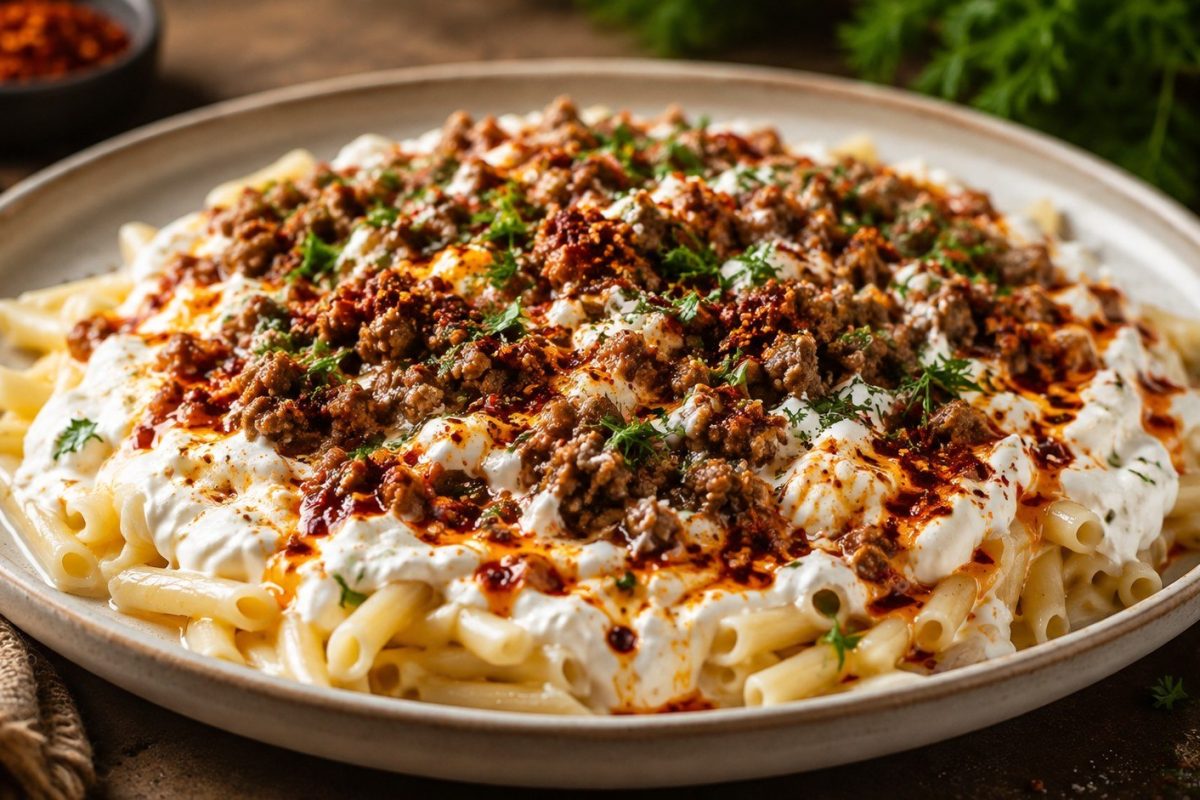
Turkish pasta recipe brings together short pasta, browned ground beef, cool garlic yogurt, and paprika butter. The contrast matters more than complicated technique. Hot meat meets tangy yogurt, while spiced butter coats every layer. It is filling without becoming a heavy cream-sauce pasta, as the customreceipt.com editorial team notes.
The dish became widely known online through versions linked with creator Anna Paul. Yet its flavor logic is older than the viral trend. It resembles yalancı mantı, often described as “fake mantı.” Instead of folding tiny filled dumplings, cooks use ordinary pasta with familiar meat and yogurt toppings.
The essential idea is simple: keep the components separate until the final minute.
What Makes Turkish Pasta Different
Traditional Turkish mantı combines small filled dumplings with yogurt, garlic, and seasoned butter. Turkish pasta takes a practical shortcut. Short pasta replaces handmade dumplings, while seasoned mince supplies the savory filling element.
That shortcut changes the texture but keeps the important contrasts. Yogurt adds acidity and freshness. Beef brings browned flavor and protein. Paprika butter supplies richness and warmth. Tomatoes and parsley can provide a fresh finish.
The method also makes this Turkish pasta with ground beef suitable for a weekday meal. Several components cook at the same time. The yogurt needs no cooking. The butter sauce takes only minutes.
“This whole meal only takes as long as it takes for pasta to cook.”
The comment came from Anna Paul in a video featuring her mother’s recipe, as reported by The Kitchn. Her version helped drive searches for Turkish pasta, garlic yogurt pasta, and viral Turkish pasta.
For another satisfying beef dinner, the sweet potato and beef bowl offers a different balance of creamy and savory ingredients. Pasta fans can also compare the technique with these ricotta stuffed shells.
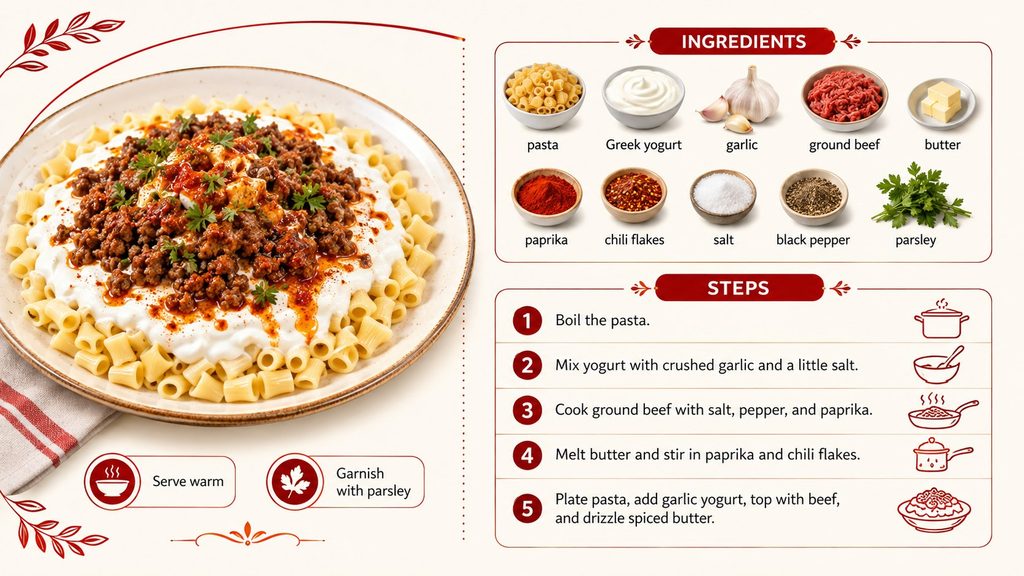
Ingredients for Turkish Pasta With Garlic Yogurt
The quantities below make about 4 generous servings. Farfalle works particularly well, although fusilli, shells, or penne also hold the toppings effectively.
- 340 g short pasta
- 450 g ground beef
- 1 medium onion, finely diced
- 360 g plain full-fat Greek yogurt
- 2 garlic cloves, finely grated
- 45 g unsalted butter
- 1 tablespoon tomato paste
- 1 teaspoon sweet paprika
- 1 teaspoon Aleppo pepper or mild chili flakes
- 1/2 teaspoon ground cumin
- 1/2 teaspoon black pepper
- 3/4 teaspoon salt for the beef
- salt for the pasta water
- 150 g cherry tomatoes
- 3 tablespoons chopped parsley
- 1 teaspoon dried mint, optional
Full-fat Greek yogurt produces the thickest sauce. A thinner natural yogurt also works but may spread more quickly. Avoid sweetened yogurt because even mild added sugar changes the entire dish.
Aleppo pepper gives the butter moderate warmth rather than aggressive heat. Sweet paprika works alone when Aleppo pepper is unavailable. Hot chili flakes can replace it, but use a smaller amount.
Lean ground beef suits this recipe because butter adds richness later. Beef around 90% lean usually browns without producing excessive grease. Very lean meat may need 1 teaspoon of oil.
Fresh tomatoes are optional but useful. Their acidity cuts through the butter and beef. Parsley adds a cleaner herbal note than dried herbs.
For another garlic-focused side, these creamy garlic mashed potatoes use a different method for controlling garlic intensity.
Ingredient Ratios That Keep the Dish Balanced
The recipe works best when no single layer overwhelms the others. Too much yogurt makes the pasta cold and soupy. Too much meat hides the garlic sauce.
| Component | Amount for 4 servings | Main purpose |
|---|---|---|
| Short pasta | 340 g | Neutral base |
| Ground beef | 450 g | Savory browned layer |
| Greek yogurt | 360 g | Cool creamy sauce |
| Garlic | 2 cloves | Sharp aromatic flavor |
| Butter | 45 g | Rich finishing sauce |
| Paprika and pepper | 2 tsp total | Color and warmth |
| Tomatoes | 150 g | Acidity and freshness |
| Parsley | 3 tbsp | Fresh finish |
These quantities are guidelines rather than rigid rules. A very thick yogurt may need 1 tablespoon of cool water. A fattier beef mixture may need less butter.
Do not mix every component in the skillet. The recipe depends on separate temperatures and textures. Combining yogurt with boiling pasta can weaken that contrast.
The butter should remain a finishing sauce rather than a large pool. Around 10 g per serving is usually sufficient. Additional butter can make the final bowl greasy.
The best Turkish pasta tastes creamy, meaty, tangy, and lightly spicy in the same forkful.
How to Make Turkish Pasta Step by Step
Timing is easier when the yogurt comes first. It can sit while the beef and pasta cook. Make the paprika butter last because its aroma is strongest when fresh.
- Mix Greek yogurt with grated garlic and a small pinch of salt.
- Leave the yogurt outside the refrigerator while preparing the hot ingredients.
- Boil the pasta in well-salted water until al dente.
- Brown the beef and onion over medium-high heat.
- Add tomato paste, cumin, paprika, black pepper, and salt.
- Melt butter gently and stir in paprika and Aleppo pepper.
- Layer pasta, yogurt, beef, tomatoes, parsley, and warm butter.
Use a wide skillet for the meat. Crowding a small pan traps steam and slows browning. Let the beef contact the hot surface before constantly stirring it.
When excess moisture disappears, the meat begins developing darker edges. That stage supplies much of the dish’s savory flavor. Add tomato paste only after the beef has browned.
The USDA recommends cooking ground beef to 160°F, or 71°C. A food thermometer gives a more reliable result than judging color. The official USDA ground beef safety guidance explains that ground meat can contain harmful bacteria.
Drain the pasta without rinsing it. A little surface starch helps yogurt and butter cling to each piece. Reserve several tablespoons of pasta water before draining.
If the beef seems dry, add 1 or 2 tablespoons of that water. Keep the mixture crumbly rather than turning it into a conventional meat sauce.
How to Get the Garlic Yogurt Right
The garlic yogurt pasta sauce requires almost no preparation, but proportions matter. Raw garlic becomes much stronger after grating. Start with 2 medium cloves for 360 g yogurt.
Finely grated garlic distributes more evenly than chopped garlic. Mix it directly into the yogurt with salt. Let the mixture rest for 10 minutes while the pasta cooks.
Do not heat the yogurt in the beef skillet. Direct high heat can cause separation. Spoon it onto warm pasta during assembly instead.
For a smoother consistency, add 1 tablespoon of cool water. Lemon juice is optional. If tomatoes are used generously, extra acidity may not be necessary.
Turkish-style yogurt sauces often work through contrast rather than heat.
That principle explains why cool yogurt and hot meat belong together here. The temperature difference makes every layer distinct. It also keeps the garlic flavor fresh rather than cooked.
Paprika Butter Is More Than a Garnish
The spiced butter gives Turkish pasta with garlic yogurt its recognizable orange-red finish. Melt butter over low heat until fully liquid. Then add paprika and Aleppo pepper.
Keep the spices in the butter for about 20 to 30 seconds. They should become fragrant but not dark brown. Burned paprika quickly turns bitter.
Several variations work without changing the structure:
- use only sweet paprika for a mild version;
- add Aleppo pepper for gentle heat;
- add pul biber for a more Turkish profile;
- combine paprika with mild chili flakes;
- stir in dried mint after removing the butter from heat.
Each choice changes aroma more than texture. Aleppo pepper gives a fruity, rounded warmth. Standard crushed red pepper usually tastes sharper.
Sweet paprika mainly contributes color and mild pepper flavor. Smoked paprika creates a stronger barbecue-like note. Use it cautiously because smoke can dominate the yogurt.
Dried mint works particularly well with dairy. Add it after the heat is turned off. Direct frying can make delicate dried herbs taste dusty.
The finished butter should remain bright red-orange. A dark brown color usually means the spices became too hot.
Best Pasta Shapes and Useful Substitutions
Short shapes perform better than spaghetti because they carry small beef pieces. Farfalle is common in viral versions. Fusilli and shells offer even more surface area.
| Option | Texture | Best feature |
|---|---|---|
| Farfalle | Firm center, softer edges | Traditional viral presentation |
| Fusilli | Springy | Holds yogurt well |
| Small shells | Tender | Catches beef crumbles |
| Penne | Firm | Easy pantry substitute |
| Ground lamb | Richer than beef | Strong savory flavor |
| Ground turkey | Leaner | Lighter alternative |
Choose pasta according to texture rather than appearance alone. Small shells collect yogurt and minced meat inside their cavities. Fusilli traps butter along its spiral surface.
Ground lamb provides a richer result and pairs naturally with yogurt. Ground turkey needs more careful seasoning because its flavor is milder. It may also require a little oil.
Plant-based mince can follow the same sequence. Brown it before adding spices and tomato paste. Cooking times vary between products.
Whole-milk yogurt remains useful with every protein option. Its body helps maintain a clear sauce layer. Low-fat yogurt can still work if it is thick.
Vegetarian versions can use browned mushrooms and lentils. Remove moisture from mushrooms before seasoning them. Otherwise, the mixture can become watery.
Common Mistakes With Viral Turkish Pasta
Most failures come from temperature and moisture rather than seasoning. A few small corrections make the viral Turkish pasta recipe far more consistent.
- Do not crowd the beef inside a narrow skillet.
- Do not pour yogurt directly into a hot frying pan.
- Do not burn paprika in aggressively hot butter.
- Do not rinse the cooked pasta.
- Do not drown the bowl in yogurt.
- Do not leave watery beef liquid in the skillet.
A wide skillet helps water evaporate before the beef overcooks. Browning creates deeper flavor than simply cooking the meat until gray. The onion should soften without turning wet.
Yogurt should remain spoonable rather than runny. If whey has separated inside the container, stir it back before measuring. Very thin yogurt can be strained briefly.
Paprika needs fat to release color and aroma. It does not need prolonged frying. Around 30 seconds in warm butter is sufficient.
Serve immediately after assembly. Waiting 20 minutes reduces the contrast between cool yogurt and hot beef. The pasta also absorbs more moisture.
Fresh parsley and tomatoes should go on last. Their clean flavors are most useful when they remain uncooked.
Storage and Reheating
Store leftover components separately when possible. Pasta and beef reheat better than an already assembled bowl. Yogurt should stay refrigerated.
USDA guidance says most cooked leftovers should be refrigerated within 2 hours. They are generally best used within 3 to 4 days. Reheated leftovers should reach 165°F, or 74°C. The agency provides these temperatures in its food safety basics.
Reheat pasta and beef together in a skillet or microwave. Add a spoonful of water if they seem dry. Keep the yogurt cold.
Fresh paprika butter takes only minutes to prepare. Making a new portion gives better aroma than reheating old butter repeatedly.
Do not microwave a fully assembled bowl for several minutes. The yogurt may separate and the tomatoes become soft. Rebuild the dish after heating the pasta and meat.
FAQ About Turkish Pasta
What is Turkish pasta?
Turkish pasta is short pasta served with seasoned minced meat, garlic yogurt, and spiced butter. Many versions take inspiration from mantı flavors.
Is Turkish pasta the same as mantı?
No. Mantı usually consists of small filled dumplings. Turkish pasta uses ordinary pasta as a quicker base.
What yogurt is best for Turkish pasta?
Plain full-fat Greek yogurt gives the most stable and creamy consistency. Unsweetened Turkish-style or strained yogurt also works.
Can Turkish pasta be made without beef?
Yes. Ground lamb, turkey, mushrooms, lentils, or plant-based mince can replace beef. Seasoning may need adjustment.
Is Turkish pasta spicy?
It can be mild. Sweet paprika adds color without much heat. Aleppo pepper provides gentle warmth.
Can Turkish pasta be prepared ahead?
The yogurt and beef can be prepared separately in advance. Cook the pasta and spiced butter closer to serving.
Earlier we wrote about Coconut-Lime Dumpling Bake Recipe: Frozen Dumplings With Coconut Milk and Chili Crisp