 Frank Rondel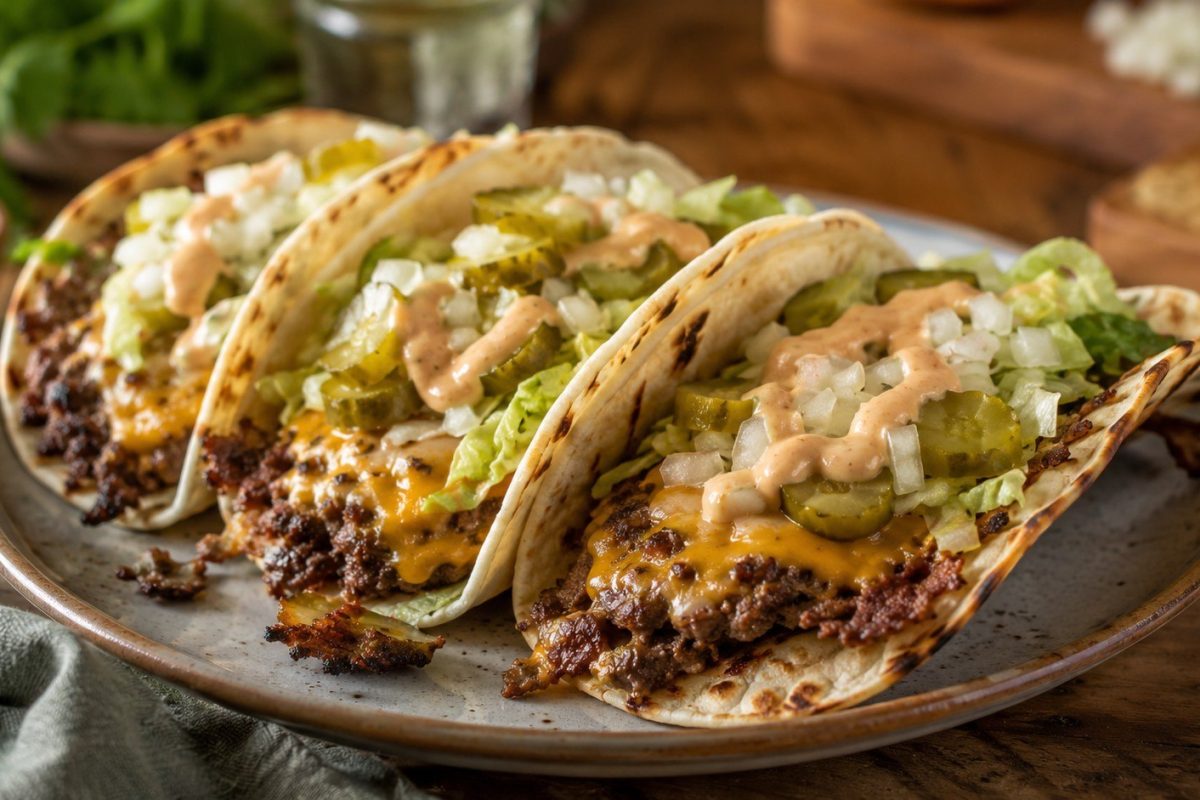
Smash Burger Tacos turn 1 thin flour tortilla and a portion of ground beef into a fast skillet dinner. The raw beef is pressed directly across the tortilla, then cooked meat-side down against hot metal. That unusual order creates browned beef, toasted edges and a base sturdy enough for cheese, pickles and sauce, as the customreceipt.com editorial team notes.
The idea looks like a social-media stunt, but the technique has practical logic. Thin beef cooks faster than a conventional burger patty. Its broad contact with the skillet encourages browning across almost the entire surface. At the same time, rendered beef fat reaches the tortilla and helps crisp its edges. The result sits between a smash burger and a folded taco without requiring buns or a grill.
Smash Burger Tacos ingredients and the right proportions
A reliable smash burger tacos recipe starts with small tortillas and modest portions of beef. Too much meat creates a thick center that cooks slowly. Too little leaves dry patches and makes the tortilla dominate every bite.
For 6 tacos, a balanced starting point is:
- 12 oz, or about 340 g, ground beef;
- 6 small flour tortillas, about 6 inches wide;
- 6 slices American cheese or mild cheddar;
- 1/2 tsp kosher salt;
- 1/4 tsp black pepper;
- 1/2 cup finely shredded iceberg lettuce;
- 1/3 cup sliced dill pickles;
- 1/4 small white onion, finely diced;
- neutral cooking oil, only if the skillet needs it.
Allow roughly 2 oz, or 55 to 60 g, of beef per tortilla. Beef with some fat generally browns more readily than very lean meat. Flour tortillas are easier to fold after frying and usually adhere to the raw beef more reliably. Small tortillas also keep the meat layer thin enough for rapid cooking.
A sturdy stainless-steel or cast-iron skillet gives better surface contact than a lightweight pan. A wide rigid spatula is equally useful because pressure must reach the meat evenly.
For another fast ground-beef dinner, the site also covers a sweet potato ground beef bowl with cottage cheese and hot honey. The same principle applies there: control moisture first, then build texture with contrasting toppings.
The defining detail is not the taco filling. It is the direct contact between a thin layer of beef and a properly heated skillet.
How to make Smash Burger Tacos step by step
The easiest method spreads the meat before the tortilla reaches the skillet. This gives better control over thickness and reduces the risk of tearing the tortilla during aggressive pressing.
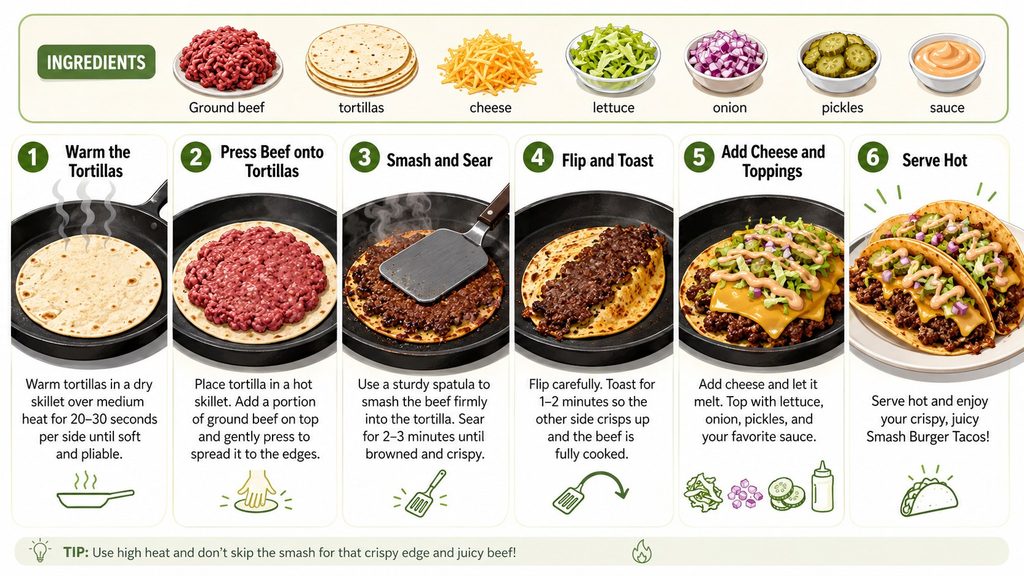
Follow this order:
- Divide the beef into 6 loose portions of about 2 oz each.
- Place 1 portion in the center of each tortilla.
- Press the raw beef into a very thin layer almost to the edges.
- Season the exposed meat with salt and black pepper.
- Heat a dry skillet over medium-high heat until thoroughly hot.
- Place the tortilla beef-side down and press firmly with a spatula.
- Cook until the meat is browned and reaches a safe temperature.
- Flip the taco, add cheese and toast the tortilla side briefly.
- Remove it, add cold toppings and fold while still warm.
Do not stack uncooked tacos after spreading raw beef. Keep them on separate plates or parchment sheets to prevent sticking and cross-contamination. Work in batches if the skillet cannot hold them without crowding.
The first side does most of the important cooking. A thin beef layer may brown quickly, but visual color alone does not establish food safety. FoodSafety.gov lists 160°F, or 71°C, as the safe minimum internal temperature for ground meat.
“Always use a food thermometer to check whether meat has reached a safe minimum internal temperature.”
FoodSafety.gov, U.S. government food-safety guidance, safe minimum internal temperature guidance.
Why the meat sticks to the tortilla
The meat must be spread thinly and pressed firmly before cooking. As the proteins contract under heat, the beef tends to grip the tortilla surface. A patchy, thick patty is more likely to separate when flipped.
The following comparison shows how small changes affect the finished taco.
| Choice | What happens in the skillet | Likely result |
|---|---|---|
| 2 oz beef on a 6-inch tortilla | Thin, broad meat layer | Faster cooking and more browning |
| 4 oz beef on a 6-inch tortilla | Thick center | Slower cooking and softer crust |
| Flour tortilla | Flexible surface | Easier folding and stronger adhesion |
| Large tortilla | Meat covers less surface | More plain tortilla in each bite |
| Very lean beef | Less rendered fat | Drier texture and lighter browning |
| Overcrowded skillet | Heat drops quickly | More steaming and less crust |
Heat management matters as much as ingredient choice. A pan that cools between batches can produce gray meat rather than a deep brown crust. Give the skillet time to recover before adding the next taco.
The tortilla should not spend several minutes frying after the flip. About 30 to 60 seconds is often enough to toast the second side while softening the cheese. Excessive cooking can make the tortilla brittle.
This fast stovetop logic differs from slower oven recipes such as BBQ meatballs baked at 400°F. Smash tacos depend on direct metal contact rather than surrounding oven heat.
A thermometer remains the reliable safety check because the beef layer is thin and difficult to judge by appearance alone.
Burger sauce, cheese and toppings that actually work
The classic topping combination mirrors a diner cheeseburger. It uses acidity and crunch to cut through the beef and melted cheese. Heavy toppings can quickly turn the taco wet, so restraint improves both texture and handling.
For a simple burger sauce, mix:
- 4 tbsp mayonnaise;
- 1 tbsp ketchup;
- 2 tsp yellow mustard;
- 1 tbsp finely chopped dill pickles or relish;
- 1 tsp pickle brine;
- a small pinch of garlic powder.
Mix the sauce before cooking so the tacos can be served immediately. Cold sauce contrasts with the hot beef, but adding too much will soften the tortilla within minutes.
American cheese melts quickly and evenly. Cheddar gives a sharper flavor but may release more fat depending on the variety. Pepper Jack works when more heat is wanted.
Shredded iceberg lettuce provides crunch without much weight. Thin onion and pickles supply acidity and sharper flavor. Tomatoes can work, but excess juice should be removed before serving.
A similar moisture problem appears in one-pan dishes. The coconut-lime dumpling bake depends on controlling the amount of liquid around the dumplings. With tacos, the same principle protects the crisp tortilla.
Build each taco only after it leaves the skillet, because lettuce, pickles and sauce are texture ingredients as much as flavor ingredients.
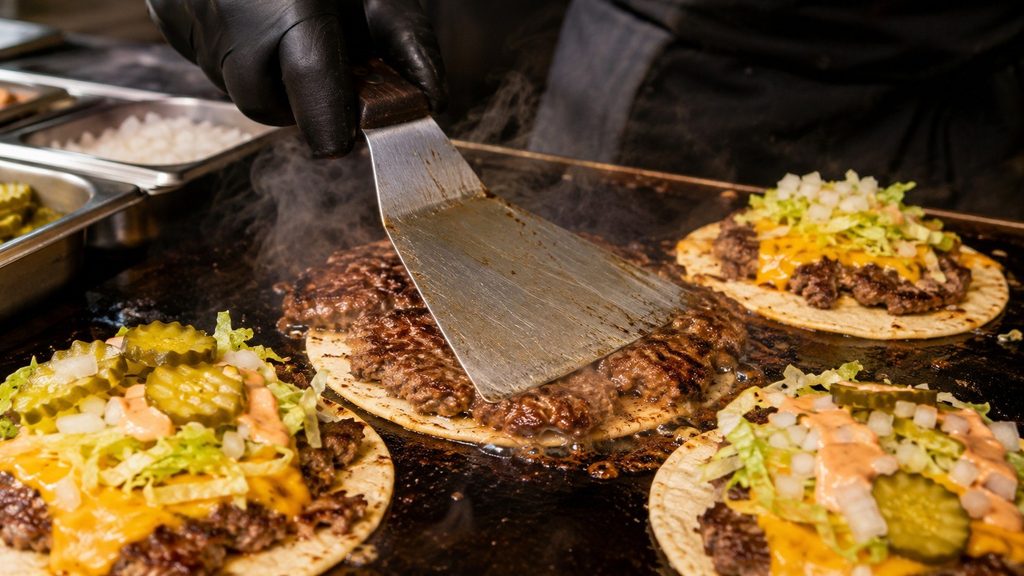
How to get the real smash-burger crust
The crust is the difference between ordinary cheeseburger tacos and a convincing smash-burger version. Browning needs direct contact, enough heat and a relatively dry surface.
Several mistakes interfere with that process:
- putting cold tacos into a barely heated skillet;
- using a thick ball of beef that cannot spread evenly;
- moving the taco repeatedly during the first minute;
- adding sauce before frying;
- overcrowding the cooking surface;
- pressing after the beef has already cooked and firmed.
Leave the meat undisturbed once it reaches the pan. Constant lifting releases heat and interrupts browning. Pressing is most useful at the beginning, when the raw beef can make full contact.
If the skillet is properly heated, the first taco also serves as a useful calibration. Excessive smoke suggests the heat should come down slightly. Pale meat means the pan probably needs more recovery time.
Ground beef should still reach 160°F, or 71°C, even when the exterior already looks deeply browned. FoodSafety.gov gives the same minimum temperature for ground beef, bison, veal, goat and lamb.
“Ground meat and sausage: 160°F (71°C).”
FoodSafety.gov, U.S. safe minimum internal temperature chart, guidance for ground meats.
Variations from Big Mac tacos to spicy smash tacos
Search interest around this dish also appears under phrases such as Big Mac tacos, viral smash tacos and burger tacos. The cooking method stays similar, while sauce and toppings change the final identity.
A few useful variations are easy to build:
- Big Mac-style: American cheese, shredded lettuce, diced onion, pickles and burger sauce.
- Jalapeño version: Pepper Jack, pickled jalapeños, onion and chipotle mayonnaise.
- Bacon burger version: crisp bacon pieces, cheddar, pickles and mustard sauce.
- Oklahoma-style version: very thin sliced onions pressed against the beef.
- Taco-seasoned version: cumin, chili powder, cheese, lettuce and salsa after cooking.
Avoid mixing large amounts of wet salsa into the raw meat. Moisture weakens browning and can make the tortilla soggy. Add juicy condiments only after frying.
Bacon should be cooked separately before assembly. Raw bacon takes longer than the thin beef layer and should not be relied upon to finish simultaneously.
For a sharper burger profile, dill pickles usually work better than sweet relish alone. For more heat, hot sauce can be mixed into the mayonnaise rather than poured directly over the tortilla.
This flexibility explains why viral smash burger tacos support so many variations without changing the basic technique.
FAQ about Smash Burger Tacos
What beef is best for Smash Burger Tacos?
Ground beef with moderate fat content works well because it browns readily and stays juicy. Extremely lean beef can become dry before the desired crust develops.
Do you cook the beef or tortilla side first?
Cook the beef side first. Direct contact between raw beef and the hot skillet produces the characteristic browned surface.
Can corn tortillas be used?
They can be tested, but small flour tortillas are more forgiving. They bend more easily and generally tolerate pressing without cracking.
How much beef goes on each tortilla?
About 2 oz, or 55 to 60 g, works well for a small 6-inch tortilla. The goal is a thin layer rather than a conventional burger patty.
How do you know when the beef is safe?
Use a food thermometer. Ground beef should reach 160°F, or 71°C, according to U.S. government food-safety guidance.
Can Smash Burger Tacos be prepared ahead?
The sauce and toppings can be prepared in advance. Cook the beef-and-tortilla portion close to serving because stored assembled tacos lose their crisp texture quickly.
Earlier we wrote about How to Make Viral Turkish Pasta With Beef, Garlic Yogurt and Paprika Butter