 Frank Rondel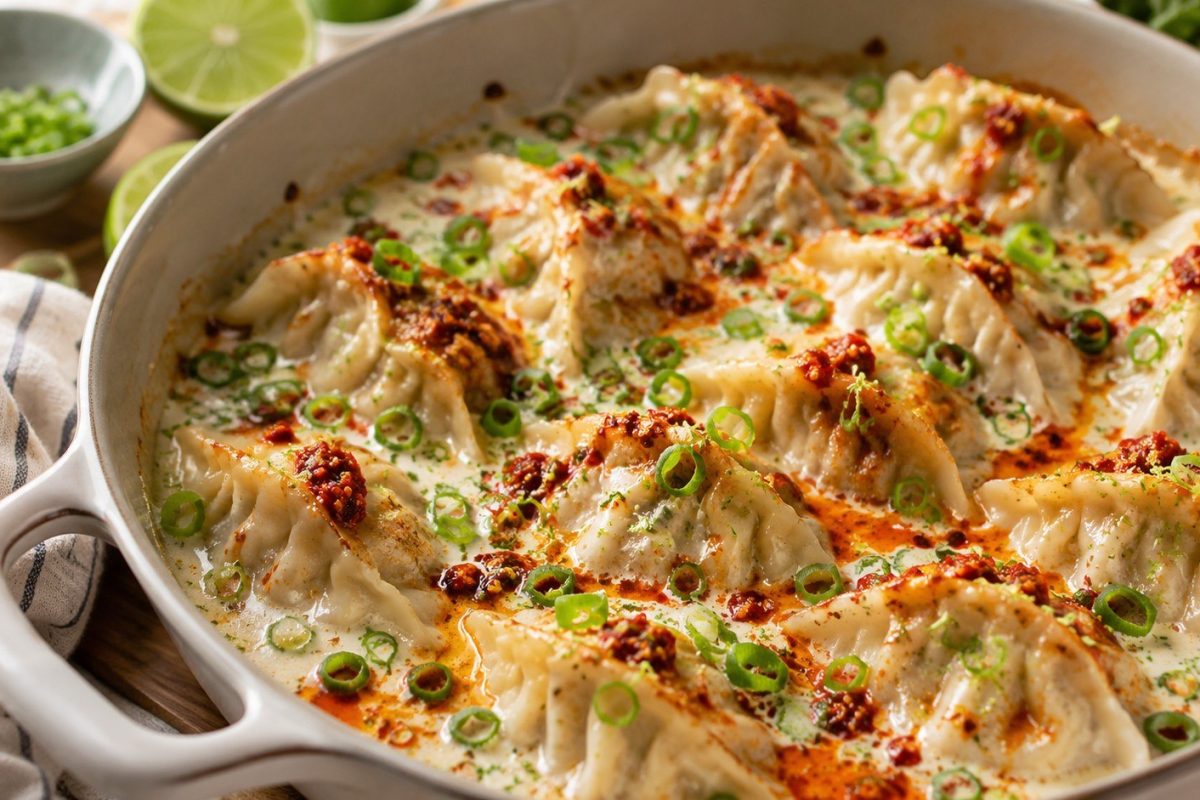
Coconut-Lime Dumpling Bake turns frozen dumplings into a full dinner with almost no stovetop work. Coconut milk becomes the sauce, while lime cuts its richness and chili crisp supplies heat and texture. Green onions arrive last, so their fresh bite survives the oven. The result sits somewhere between a curry, a casserole, and a bowl of saucy potstickers, as the customreceipt.com editorial team notes.
The method is unusually forgiving. Frozen dumplings go directly into the baking dish without thawing. A seasoned coconut mixture surrounds them, creating steam while reducing into a creamy sauce. The tops remain exposed enough to keep some structure rather than becoming completely soft.
The central trick is simple: the dumplings need enough liquid to steam, but they should never disappear beneath the sauce.
Coconut-Lime Dumpling Bake ingredients
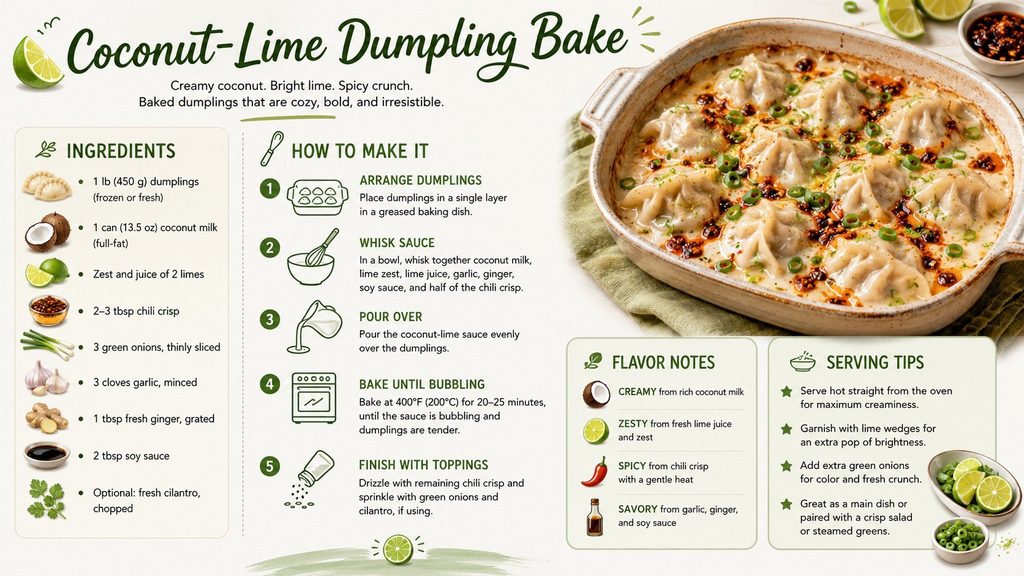
The ingredient list is short, but every component has a specific job. Full-fat coconut milk gives the sauce better body than most light versions. Fresh lime supplies acidity, while soy sauce creates the salty foundation.
For 3 to 4 servings, use:
- 16 oz frozen chicken, pork, shrimp, or vegetable dumplings;
- 13.5 oz full-fat unsweetened coconut milk;
- 2 tbsp low-sodium soy sauce;
- 1 tbsp fresh lime juice;
- 1 tsp finely grated lime zest;
- 2 tsp grated fresh ginger;
- 2 garlic cloves, finely grated;
- 1 to 2 tbsp chili crisp dumplings topping;
- 2 green onions, thinly sliced;
- 2 cups chopped bok choy or baby spinach;
- 1 tsp toasted sesame oil;
- 1 tsp brown sugar or honey, optional;
- lime wedges for serving.
The coconut milk should be stirred before measuring because canned coconut fat often separates. Low-sodium soy sauce gives more control over seasoning. The optional sugar should remain subtle rather than making the sauce sweet. Bok choy gives the dish more structure than spinach. Spinach works faster and almost disappears into the sauce. Keep most chili crisp for the final garnish because its crunchy solids soften during baking.
For another creamy dish built around careful moisture control, this guide to garlic mashed potatoes explains why texture often depends more on technique than extra fat.
Best dumplings and coconut milk for the recipe
Medium frozen potstickers or gyoza work best. Their wrappers are thin enough to soften in steam but sturdy enough to survive baking. Very large dumplings can require extra cooking time, especially when filled with raw meat.
| Ingredient choice | What it changes | Best use |
|---|---|---|
| Chicken gyoza | Mild, savory filling | Most balanced version |
| Pork potstickers | Richer flavor | Strong lime and chili sauce |
| Vegetable dumplings | Lighter finish | Extra bok choy or spinach |
| Shrimp dumplings | Delicate filling | Less chili crisp |
| Full-fat coconut milk | Thick, glossy sauce | Best overall texture |
| Light coconut milk | Thinner sauce | Lighter serving |
| Coconut cream | Very rich sauce | Dilute before baking |
The dumplings should fit in one layer whenever possible. Crowding traps more steam and can make wrappers unusually soft. Coconut cream requires dilution because it contains considerably less free liquid. Light coconut milk works, although the finished sauce will be thinner. Frozen soup dumplings are a poor choice because their construction is designed for another cooking method. Always follow the package instructions when they require a specific cooking procedure.
A cold, crisp side can offset the coconut sauce. The BLT salad recipe offers that contrast when the dumpling bake anchors a larger meal.
How to make coconut milk dumplings in the oven
Use an 8-inch or 9-inch baking dish for a compact batch. A very large pan spreads the sauce too thinly and accelerates evaporation.
Follow this sequence:
- Heat the oven to 400°F.
- Whisk coconut milk, soy sauce, lime juice, zest, ginger, garlic, sesame oil, and optional sugar.
- Spread chopped bok choy across the baking dish.
- Arrange frozen dumplings in one layer with their seams facing upward.
- Pour the coconut mixture around and partly over the dumplings.
- Cover tightly with foil and bake for 20 minutes.
- Remove the foil and bake another 8 to 12 minutes.
- Check that the dumplings are fully cooked according to their package directions.
- Finish with chili crisp, green onions, and fresh lime.
Covering the dish first is not merely convenient. It creates the humid environment needed to soften frozen wrappers. Removing the foil later allows exposed surfaces to dry slightly. The sauce also reduces during those final minutes. Large dumplings may need more time than thin gyoza. If the sauce becomes too thick, stir in 2 to 3 tbsp hot water. Let the dish stand for 3 minutes before serving because the sauce thickens slightly off heat.
“Use a food thermometer to make sure that the food is cooked to a safe, minimum internal temperature.”
U.S. Department of Agriculture, Food Safety and Inspection Service, food-safety guidance, regarding cooked foods and leftovers.
Why lime and chili crisp change the sauce
A dumpling bake with coconut milk can become heavy if every ingredient pushes toward richness. Lime prevents that problem. Its juice adds sharp acidity, while the zest contributes citrus aroma without more liquid.
Add most lime juice before baking, but reserve a wedge for the finished dish. Fresh juice added at serving tastes brighter than juice exposed to prolonged heat. Green onions perform a similar function because their raw sulfurous bite contrasts with the sweet coconut base.
Chili crisp works best as a finishing ingredient because its fried pieces keep more texture outside the oven.
The oil carries chile flavor across the coconut sauce. The solids provide another sensation entirely. They add small crisp fragments against tender wrappers and soft vegetables.
“Color and texture are unreliable indicators of safety.”
U.S. Food and Drug Administration, Food Facts, in its guidance on using thermometers for meat and poultry. The FDA Food Code lists 165°F for poultry and certain stuffed foods.
How to adjust heat, salt, and sauce thickness
The sauce should taste slightly stronger before baking than it should on the plate. Dumplings and vegetables absorb some seasoning as they cook. That does not mean soy sauce should be added without measuring.
Useful adjustments include:
- add 1 tsp more lime juice if the sauce tastes flat;
- add 1 tsp soy sauce if coconut dominates completely;
- add hot water when the sauce becomes too concentrated;
- use extra chili crisp only after tasting the finished dish;
- add spinach when more vegetables are needed without extra cooking time;
- use cilantro with the green onions for a more herbal finish.
Salt is the easiest element to overdo because frozen dumplings are already seasoned. Chili crisp may also contain substantial sodium. Taste the prepared sauce before adding extra soy. Lime can make a salty sauce seem more balanced without introducing more salt. Water is useful when reduction has gone too far. Additional coconut milk can work too, but it also increases richness.
For another party-friendly dish where seasoning is built gradually, homemade French onion dip uses caramelized onions rather than extra seasoning to deepen flavor.
Common mistakes with viral dumpling bake recipes
The popularity of the viral dumpling bake format comes partly from its simplicity. Yet several errors can turn a quick dinner into a pan of broken wrappers or watery coconut broth.
The most common problems are:
- Thawing the dumplings before baking, which can make wrappers fragile.
- Completely submerging them, which removes textural contrast.
- Using coconut cream without adding enough water.
- Adding all chili crisp before baking and losing its crunch.
- Skipping the covered stage and leaving thick wrappers undercooked.
- Overloading the dish with watery vegetables.
Frozen dumplings are useful precisely because their structure is firm when they enter the oven. Vegetables such as mushrooms and zucchini release much more water than spinach. Cook them first or reduce other liquid. Bok choy can usually go directly into the dish. Thick wrappers require longer steaming than delicate gyoza skins. Package directions remain the safest guide because fillings and wrapper thickness vary between brands.
Storage and reheating
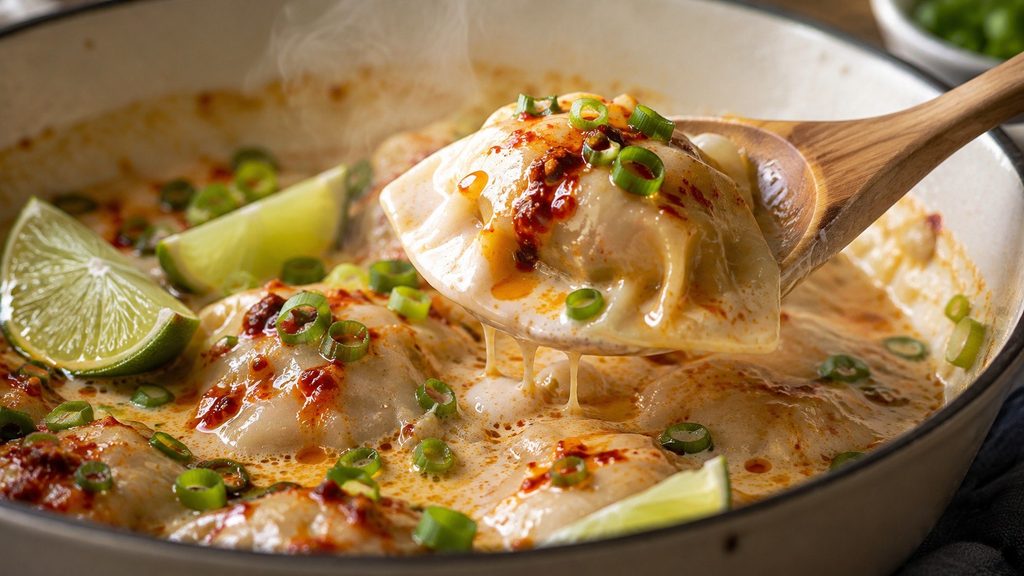
Leftovers are best when the dumplings and remaining sauce are transferred into a shallow covered container quickly. USDA guidance recommends refrigerating cooked leftovers within 2 hours and using most within 3 to 4 days.
Reheating in the oven gives wrappers a firmer surface. Microwave reheating is faster, but the dumplings become softer. Add 1 or 2 tbsp water before reheating if the coconut sauce has tightened in the refrigerator.
“Leftovers can be kept in the refrigerator for 3 to 4 days.”
U.S. Department of Agriculture, Food Safety and Inspection Service, guidance for safely storing cooked leftovers.
For reheating, USDA recommends bringing leftovers to 165°F. A thermometer is more reliable than judging the center by appearance. Coconut-based sauce may separate slightly after refrigeration. Stirring gently after reheating usually brings it back together. Fresh green onions should be added again rather than reheated. New chili crisp restores the crunch lost during storage.
FAQ
Can frozen dumplings go directly into the baking dish?
Yes. Most frozen potstickers and gyoza can cook from frozen when enough hot steam surrounds them. Check the package instructions for brand-specific requirements.
What temperature should Coconut-Lime Dumpling Bake use?
400°F works well for this method. Cover the dish first, then uncover it near the end for better surface texture.
Can light coconut milk replace full-fat coconut milk?
Yes, but the sauce will be thinner. Reduce added water and allow several extra uncovered minutes if needed.
How much chili crisp should be used?
Start with 1 tbsp for the entire dish. Add more at serving after checking the heat and salt level.
What vegetables work with coconut dumpling bake?
Bok choy, spinach, napa cabbage, edamame, and thinly sliced peppers work well. Watery vegetables may need precooking.
How long do leftovers keep?
USDA guidance gives most cooked leftovers a refrigerated window of 3 to 4 days. Reheat leftovers to 165°F before serving.
Earlier we wrote about Dumpling Bake: Frozen Dumplings Baked in Creamy Sauce