 Frank Rondel
Garlic mashed potatoes should taste unmistakably of potato, with garlic adding depth rather than covering everything beneath it. The best version is creamy without becoming runny, fluffy without feeling dry, and rich enough to accompany steak, roast chicken, turkey, or ham. Getting that balance depends less on adding extra butter than on choosing the right potato, controlling moisture, and knowing when to stop mixing, as the customreceipt.com editorial team notes.
The recipe looks simple because its ingredient list is short. Yet mashed potatoes expose mistakes quickly. Too much mechanical mixing releases additional starch and can turn a promising side dish into something sticky and elastic. Cold dairy cools the potatoes before it incorporates properly, while excess liquid can leave the finished mash loose.
The crucial moment comes after draining. Potatoes need to lose surface moisture before they are asked to absorb butter, milk, and garlic.
Garlic mashed potatoes ingredients for 6 servings
A balanced recipe does not need a dozen additions. Garlic, potatoes, butter, milk or cream, salt, and pepper provide the basic structure. Fresh herbs can finish the dish, but they should remain optional.
For approximately 6 servings, prepare:
- 3 lb Russet potatoes, Yukon Gold potatoes, or a 50:50 mixture;
- 1 whole garlic bulb, or 5–6 large garlic cloves;
- 6 tbsp unsalted butter;
- 3/4 cup whole milk or half-and-half;
- 1–1 1/2 tsp kosher salt, plus salt for the cooking water;
- 1/4 tsp freshly ground black pepper;
- 2 tbsp chopped chives or parsley, optional;
- 2 tbsp sour cream, optional for extra tang.
These quantities produce potatoes that are rich without becoming excessively heavy. Milk should still be added gradually because potato varieties absorb liquid differently. Salt also needs adjustment near the end, particularly when salted butter replaces unsalted butter. Fresh chives provide contrast to the roasted garlic and dairy. Sour cream is useful when a slightly sharper flavor is wanted. For a heavier variation with cheese and bacon, the site’s guide to loaded mashed potatoes follows a different ratio designed for additional toppings.
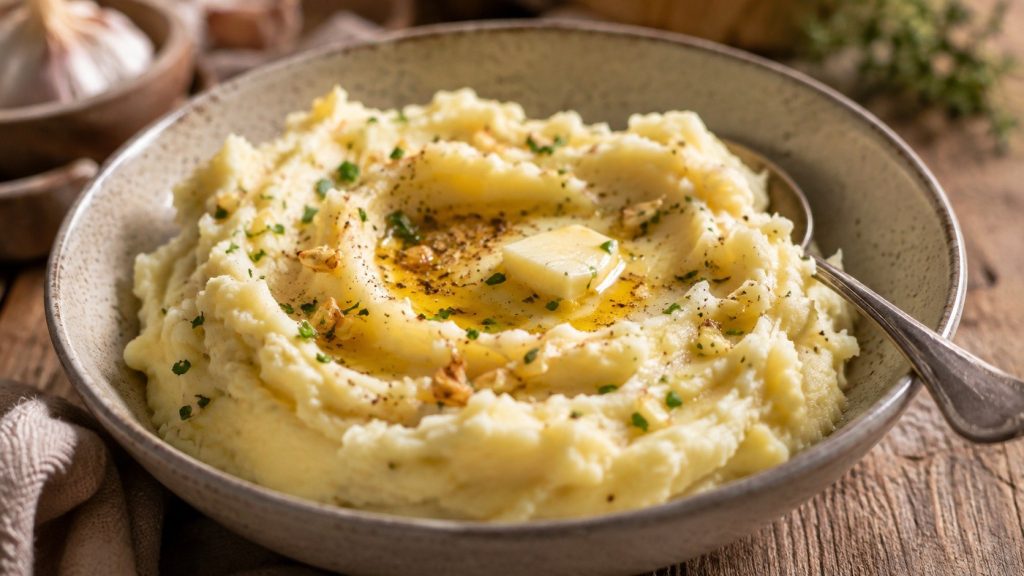
Which potatoes make the best garlic mashed potatoes?
Potato choice changes the texture before the first spoonful of butter enters the pot. Russet potatoes contain enough starch to break down easily and produce a light mash. Yukon Golds tend to create a denser, naturally creamy result.
A mixture of both is often the most forgiving option for home cooks.
| Potato choice | Final texture | Flavor | Best use |
|---|---|---|---|
| Russet | Light, fluffy | Mild | Classic fluffy mash |
| Yukon Gold | Creamy, dense | Naturally buttery | Rich garlic mash |
| 50:50 mixture | Fluffy and creamy | Balanced | Best all-purpose choice |
| Red potatoes | Chunkier | Mildly sweet | Rustic skin-on version |
| Fingerling potatoes | Dense | Pronounced | Usually better roasted |
Russets work especially well when the potatoes will be passed through a ricer. Yukon Golds need less dairy to taste rich. Mixing them creates enough starch for fluffiness while retaining some of the Golds’ natural density. Waxy potatoes can still be mashed, but they tolerate aggressive handling poorly. Uniform size also matters because uneven pieces finish cooking at different times. The site’s breakfast casserole with potatoes shows another use for potatoes when a firmer structure is preferred.
Roasted garlic or boiled garlic: which method works better?
There are 2 practical approaches to garlic mashed potatoes. Roasting the garlic produces the deeper result. The cloves soften, their sharp edge decreases, and their flavor becomes rounder.
To roast a whole bulb, cut away the top to expose the cloves. Drizzle it lightly with oil, wrap it loosely in foil, and roast around 400°F until soft. Depending on size, this commonly takes roughly 35–50 minutes.
A faster version cooks peeled garlic cloves with the potatoes. This gives a cleaner, sharper garlic flavor and avoids turning on the oven.
Roasted garlic is especially useful for holiday dinners because it can be prepared earlier. The softened cloves can then be squeezed directly into the potatoes.
“The more you work the potatoes, the more starch escapes.”
— Serious Eats, culinary explanation of mashed-potato starch and texture. The publication explains that excessive mechanical handling can make mashed potatoes dense and gummy.
The distinction explains why blenders and food processors are risky here. They are fast, but speed is exactly the problem. A hand masher provides more control. A potato ricer produces an especially fine result without repeatedly beating the starch. Once the texture is right, further mixing usually makes it worse rather than better.
How to make garlic mashed potatoes step by step
The cooking sequence matters. Starting the potatoes in cold water promotes more even cooking because the centers heat gradually with the exteriors.
Follow this method:
- Peel the potatoes and cut them into roughly 1-inch pieces.
- Place them in a large saucepan and cover them with cold water.
- Salt the water generously.
- Bring it to a boil, then reduce the heat to a steady simmer.
- Cook until a knife passes through the potatoes with little resistance.
- Warm the butter and milk in a separate saucepan.
- Drain the potatoes thoroughly.
- Return them to the warm pot for 1–2 minutes.
- Mash them gently or pass them through a potato ricer.
- Squeeze in the roasted garlic and mix lightly.
- Fold in the warm butter and dairy gradually.
- Season with salt and pepper, then serve immediately.
The short drying stage after draining is easy to skip, but it has an obvious purpose. Surface water competes with milk and butter and can dilute both texture and flavor. Warm dairy also incorporates more smoothly than refrigerator-cold milk. Add it in several portions rather than pouring everything in at once. Stop once the potatoes hold soft peaks and move easily under the spoon. If they already look creamy, another minute of vigorous stirring will not improve them.
For genuinely creamy garlic mashed potatoes, restraint matters more than force. Mash less, add liquid gradually, and let hot potatoes absorb the fat.
How much garlic should you use?
Garlic intensity is personal, but useful ratios make experimentation easier. One whole roasted bulb for 3 lb of potatoes produces a noticeable flavor without dominating the plate.
Those who prefer a stronger version can use 1 1/2 bulbs. A mild family version may need only 4 roasted cloves.
The most practical ranges are:
- mild: 3–4 roasted cloves per 3 lb potatoes;
- balanced: 1 medium roasted bulb;
- strong: 1 1/2 bulbs;
- very strong: 2 bulbs, preferably roasted rather than raw;
- fresh-garlic version: 3–5 cloves cooked with the potatoes.
Roasted garlic behaves differently from raw minced garlic. Heat softens its pungency and produces a sweeter, more rounded character. Raw garlic added near the end can taste harsh and remain noticeable for hours. Garlic powder works in an emergency, but it produces a flatter flavor. If using it, begin with 1/2 tsp and adjust gradually. Avoid combining large quantities of roasted garlic, raw garlic, and garlic powder unless an intentionally aggressive flavor is wanted.
Butter, milk, cream, or sour cream?
Dairy determines both texture and richness. Creamy garlic mashed potatoes do not require heavy cream, although cream makes the result more luxurious.
The following combinations solve different problems:
| Dairy choice | Result | Useful amount for 3 lb potatoes |
|---|---|---|
| Whole milk | Light and creamy | 1/2–3/4 cup |
| Half-and-half | Richer, smooth | 1/2–3/4 cup |
| Heavy cream | Very rich | 1/3–1/2 cup |
| Sour cream | Tangy, dense | 2–4 tbsp |
| Cream cheese | Silky, slightly tangy | 2–4 oz |
Recent culinary guidance from Simply Recipes also identifies room-temperature cream cheese as one method for creating a silkier mash. However, adding several rich dairy products at once can make the potatoes heavy. Butter plus whole milk is enough for most dinners. Half-and-half works well when the potatoes accompany lean meat. Sour cream creates useful acidity beside fatty beef or ham. For a sweeter main course, these potatoes can accompany honey-glazed ham.
Why garlic mashed potatoes become gluey
The most common failure has little to do with the recipe’s ingredient quantities. It comes from overworking cooked potatoes.
Heat causes potato starch granules to swell. Aggressive processing damages more cells and releases additional starch into the surrounding moisture. Serious Eats describes starch control as central to maintaining a fluffy texture and recommends avoiding excessive mechanical work.
Several warning signs appear quickly:
- the mash stretches instead of falling softly from the spoon;
- the surface becomes unusually glossy;
- potatoes feel elastic rather than fluffy;
- stirring becomes increasingly difficult;
- adding more milk does not restore the original texture.
Once potatoes become severely gluey, they are difficult to return to a classic mash. Do not try to repair them with a blender. Instead, change the dish. Spread them in a baking dish, cover them with cheese, and bake until browned. Another possibility is turning them into potato cakes. Slightly dense potatoes can still be improved with warm butter or cream, but severely overprocessed starch cannot simply be removed.
How to make garlic mashed potatoes ahead
A holiday side dish becomes more useful when it does not demand attention during the final 10 minutes before dinner. Make-ahead garlic mashed potatoes can work, provided moisture and reheating are handled carefully.
Prepare the potatoes normally, but keep them slightly firmer than the final serving texture. Refrigerate them promptly in a covered container.
When reheating, add a small amount of hot milk or cream. Fold it through gently instead of vigorously stirring the cold potatoes.
USDA food-safety guidance recommends refrigerating perishable cooked food promptly rather than leaving it at room temperature for extended periods. Its general food-safety advice emphasizes cleaning, preventing cross-contamination, proper cooking, and prompt chilling.
For a dinner party, reheating can be done in a covered baking dish. A saucepan over low heat also works when the quantity is smaller. Add liquid in tablespoons rather than large splashes. Taste again after reheating because chilled foods can appear less seasoned. Fresh herbs should usually be added after the potatoes become hot. This keeps their flavor sharper and their appearance cleaner.
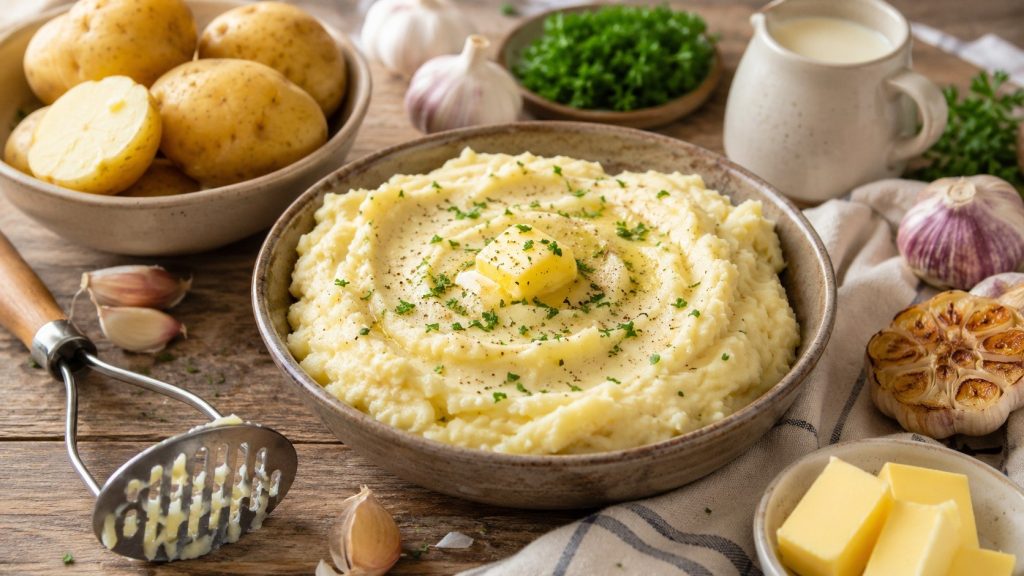
What to serve with garlic mashed potatoes
Garlic mash is rich enough to support strongly flavored main courses but neutral enough for simple meat or vegetable dishes.
Good combinations include:
- roast chicken with pan juices;
- grilled or pan-seared steak;
- meatloaf with tomato glaze;
- roast turkey;
- pork tenderloin;
- honey-glazed ham;
- braised beef;
- roasted mushrooms;
- green beans;
- asparagus or Brussels sprouts.
A rich side needs contrast somewhere else on the plate. Green vegetables bring freshness and texture. A sharp salad can perform the same job. Heavy cream sauce on both the meat and potatoes may make the meal feel monotonous. Pan juices, mustard-based sauces, or wine reductions are usually easier partners. Garlic potatoes also work well under braised meat because the mash absorbs sauce without competing with it.
FAQ about garlic mashed potatoes
Can I use raw garlic in mashed potatoes?
Yes, but use it cautiously. Raw garlic is considerably sharper than roasted garlic. Finely grate 1 small clove into hot potatoes and taste before adding more.
How many potatoes do I need per person?
Around 1/2 lb of raw potatoes per person is a practical estimate for a generous side dish. Larger holiday meals with many sides may require slightly less.
Can I make garlic mashed potatoes without milk?
Yes. Warm stock can replace milk, although the texture will be less rich. Olive oil can replace butter for a dairy-free version.
Are Russet or Yukon Gold potatoes better?
Russets create a lighter result, while Yukon Golds produce denser and creamier potatoes. A 50:50 mixture offers a useful compromise.
Should I peel the potatoes?
Russets are usually better peeled because their skin is comparatively thick. Yukon Gold skins can remain when a rustic texture is desired.
Can garlic mashed potatoes be frozen?
They can be frozen, although the texture may change after thawing. Versions containing enough butter and dairy generally reheat better than very lean mashed potatoes.
How do I reheat mashed potatoes without drying them?
Add a small amount of warm milk, cream, or butter. Reheat gently while covered and fold rather than beat the potatoes.
Can I roast the garlic the day before?
Yes. Roast it, cool it, refrigerate it in a sealed container, and add it when the potatoes are prepared.
What makes restaurant-style mashed potatoes so smooth?
A potato ricer, careful moisture control, warm dairy, and limited mixing make a major difference. Some restaurant versions also use considerably more butter than home recipes.
How can I make the garlic flavor stronger?
Increase roasted garlic before adding raw garlic. Roasting allows a larger quantity without producing the harshness associated with uncooked cloves.
Earlier we wrote about Loaded Mashed Potatoes: How to Make Them Creamy, Cheesy and Crispy