 Frank Rondel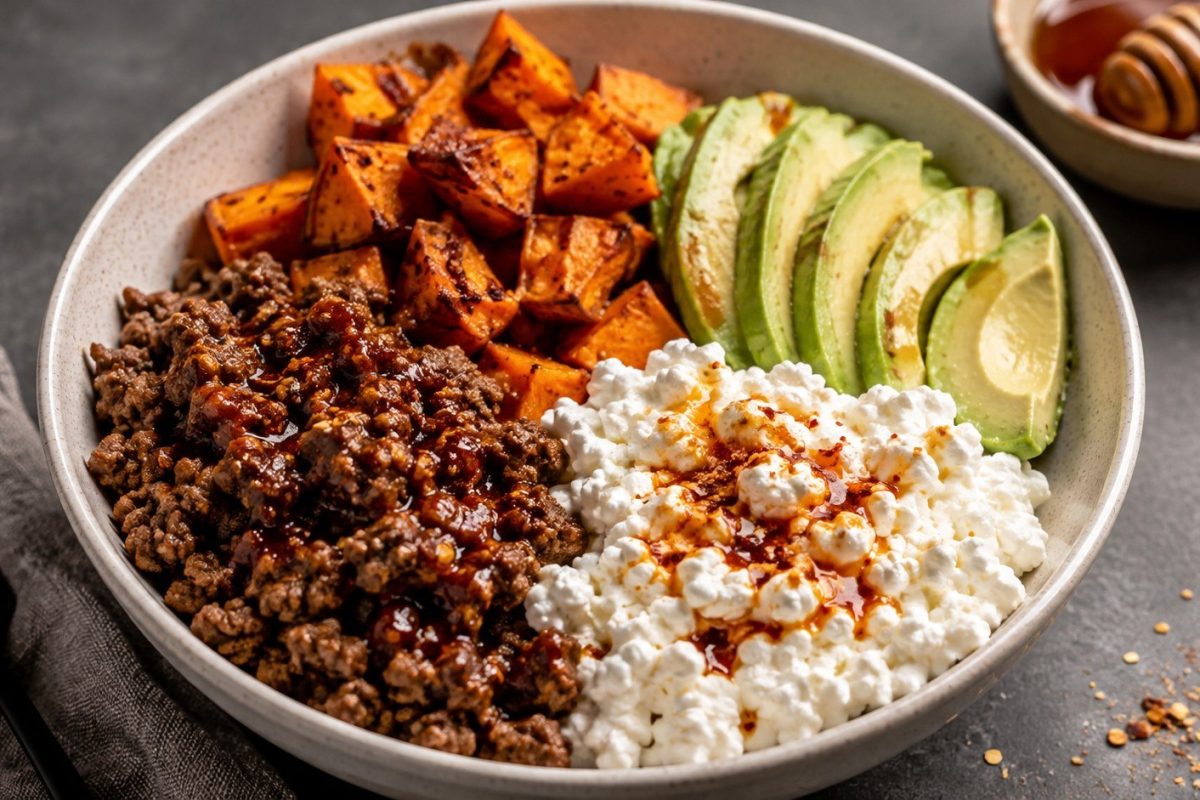
Hot Honey Cottage Cheese Sweet Potato Beef Bowl combines ingredients that seem unrelated until the first bite. Roasted sweet potato brings caramelized sweetness, while seasoned beef adds salt, fat, and deep savory flavor. Cold cottage cheese softens both, avocado supplies richness, and hot honey creates the final sweet-spicy contrast, as the customreceipt.com editorial team notes.
The bowl became a recognizable social-media recipe because it solves several dinner problems at once. It needs no complicated sauce, uses familiar supermarket ingredients, and can be prepared in about 35 minutes. Current recipe versions commonly combine taco-seasoned ground beef, roasted sweet potatoes, cottage cheese, avocado, and hot honey.
The unusual part is not any individual ingredient. It is the temperature and texture contrast between hot beef, crisp-edged potatoes, cold cheese, creamy avocado, and warm honey.
Hot Honey Cottage Cheese Sweet Potato Beef Bowl ingredients
A good bowl depends more on proportions than on adding extra toppings. Too much cottage cheese makes everything wet. Excess honey buries the beef under sweetness. Large sweet potato cubes can remain firm inside while scorching outside.
For 4 substantial servings, prepare:
- 1.25 lb lean ground beef, preferably 90/10;
- 2 medium sweet potatoes, about 1.5 lb total;
- 2 cups cottage cheese;
- 2 ripe avocados;
- 2 tbsp olive or avocado oil;
- 2 tbsp hot honey, plus more for serving;
- 1 tsp smoked paprika;
- 1 tsp ground cumin;
- 1 tsp chili powder;
- 1/2 tsp garlic powder;
- 1/2 tsp onion powder;
- kosher salt;
- black pepper;
- 1 lime;
- optional cilantro, scallions, jalapeño, or red pepper flakes.
The basic formula is flexible, but the main proportions should remain recognizable. About 5 oz cooked beef per serving gives the bowl enough substance. A half-cup of cottage cheese produces creaminess without turning everything into a dairy sauce. Half an avocado is usually enough for richness. Hot honey should behave like a finishing condiment, not a dressing.
For another beef dish where timing controls texture, see this pepper steak recipe with bell peppers. The same principle applies here: strong heat develops better flavor than slowly steaming meat.
What each ingredient actually contributes
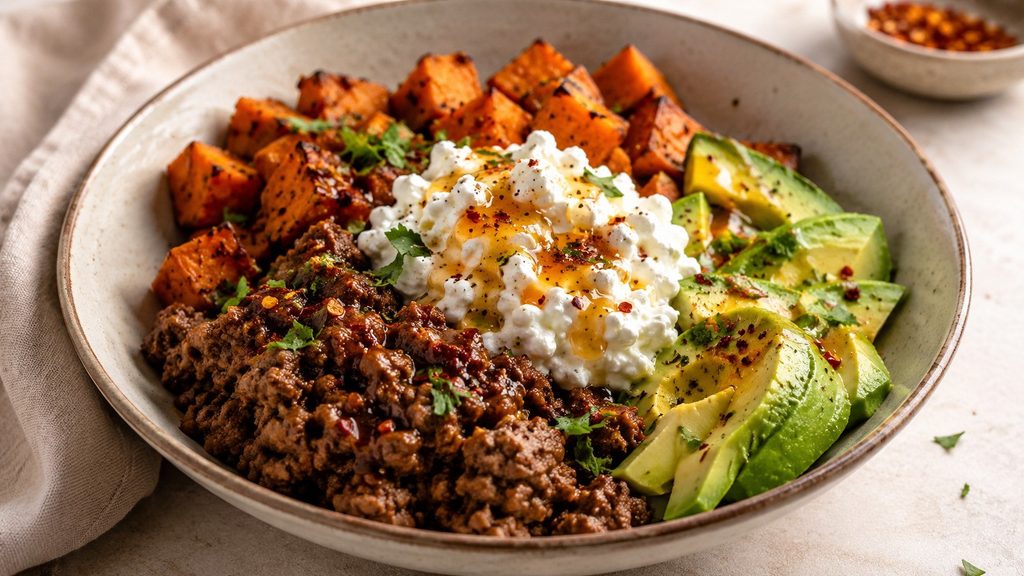
The popularity of the cottage cheese sweet potato beef bowl makes more sense when each ingredient has a defined job.
| Ingredient | Main role | Texture | Practical tip |
|---|---|---|---|
| Ground beef | Savory protein base | Browned, crumbly | Use a wide skillet |
| Sweet potato | Sweet carbohydrate base | Crisp outside, tender inside | Cut into 3/4-inch cubes |
| Cottage cheese | Creamy contrast | Cool, soft | Add directly from refrigerator |
| Avocado | Richness | Buttery | Slice immediately before serving |
| Hot honey | Sweet heat | Sticky | Drizzle at the end |
| Lime | Acidity | Juicy | Use after cooking |
| Spices | Depth and aroma | Dry seasoning | Bloom briefly with beef |
The combination works because no single component needs to do everything. The cottage cheese replaces a heavier creamy sauce. Sweet potato carries spices well while adding natural sweetness. Avocado makes the dish feel richer without another cooked element. Lime cuts through the dairy and beef.
The honey is especially important. Similar sweet-savory logic also appears in honey-glazed ham, where salt and sweetness sharpen each other. Here, chili prevents the honey from tasting dessert-like.
How to roast sweet potatoes so they brown instead of steam
Heat the oven to 425°F. Peel the sweet potatoes if preferred, although peeling is optional. Cut them into roughly 3/4-inch cubes.
Toss the potatoes with 1 tbsp oil, smoked paprika, salt, and black pepper. Spread them across a large baking sheet in one layer. Leave visible space between pieces.
Roast for 20 to 25 minutes. Turn them after about 15 minutes. They are ready when the edges are browned and the centers yield easily to a fork.
The most common mistake is overcrowding. Crowded potatoes release moisture that becomes trapped around neighboring pieces. They soften, but their surfaces remain pale.
Roasting also concentrates the potato’s natural sweetness. USDA nutrient data list baked sweet potato as a source of dietary fiber and vitamin A.
If the potatoes look wet after 15 minutes, moving them around will not solve the problem. Give them more surface area and stronger dry heat.
After a list or cooking sequence, one point deserves emphasis. Consistency matters more than perfect geometry. Pieces of similar size finish together. Tiny fragments burn before larger cubes soften. Very large chunks also dilute the sweet-to-savory balance in each spoonful. A wide metal sheet usually browns better than a crowded ceramic dish. Parchment is convenient, but direct metal contact can produce slightly darker edges.
How to cook the ground beef properly
The beef should taste browned, not boiled. Set a large skillet over medium-high heat and allow it to become hot before adding meat.
Add the beef and press it across the skillet. Leave it undisturbed for about 2 minutes. That first contact encourages browning.
Then break it into medium crumbles and add:
- cumin;
- chili powder;
- garlic powder;
- onion powder;
- salt;
- black pepper.
Continue cooking until the meat is browned throughout. Drain excess rendered fat if the skillet becomes greasy.
USDA food-safety guidance recommends cooking raw ground beef to 160°F internal temperature measured with a food thermometer. Color alone is not considered a reliable safety indicator.
“Cook all raw ground beef to an internal temperature of 160 degrees F.”
USDA Food Safety and Inspection Service, consumer guidance on ground-beef safety.
The meat should remain juicy despite reaching the required temperature. Lean 90/10 beef works particularly well because it provides flavor without flooding the bowl with fat. Extra-lean beef can also work, although it benefits from careful cooking. Avoid constantly stirring from the first second. Continuous movement limits direct contact with the skillet and reduces browning.
How to assemble the viral sweet potato beef bowl
Assembly affects the dish more than expected. Do not stir every ingredient together before serving.
Divide the roasted sweet potatoes among 4 bowls. Place seasoned ground beef beside them rather than directly over everything.
Add about 1/2 cup cottage cheese per serving. Arrange sliced avocado alongside it. Finish with hot honey and lime juice.
A useful order is:
- roasted sweet potatoes;
- browned ground beef;
- cold cottage cheese;
- fresh avocado;
- hot honey;
- lime juice;
- optional herbs or jalapeño.
This produces distinct temperatures and textures until the eater begins mixing the bowl. Cottage cheese warms slightly where it touches the beef but remains cold elsewhere. Avocado keeps its shape. Honey coats the exposed potato edges and beef instead of disappearing into the cheese.
Five or 6 ingredients can therefore produce more variation than a heavily dressed salad. Every forkful can contain a different ratio. The final lime juice is particularly useful when the honey tastes too dominant. Fresh cilantro adds brightness, while scallions add sharper onion flavor. Pickled jalapeños provide acidity and heat simultaneously.
Why cottage cheese works better than expected
Cottage cheese is not merely included because it became fashionable online. Its mild acidity and cool temperature perform a practical culinary function.
USDA-derived nutrition data for low-fat cottage cheese show about 12.4 g protein per 100 g. Exact values vary by brand and fat percentage.
That makes a high-protein beef bowl possible without adding another meat portion. Cottage cheese also creates contrast against the roasted vegetables and spices.
People who dislike visible curds can blend cottage cheese until smooth. Add a squeeze of lime and a pinch of salt before blending. The result behaves more like a thick crema.
Do not heat the cottage cheese in the skillet. Extended heat can separate moisture and make the bowl watery. Cold cheese placed beside hot ingredients gives a cleaner texture.
A similar temperature principle matters in potato dishes. The site’s loaded mashed potatoes recipe explains how moisture and temperature change potato texture.
How to make hot honey at home
Commercial hot honey is convenient, but this recipe needs only a small amount. Homemade hot honey can be prepared in several minutes.
For a basic version, combine:
- 1/4 cup honey;
- 1/2 to 1 tsp crushed red pepper flakes;
- 1 tsp apple cider vinegar or lime juice.
Warm the honey gently over low heat. Add the chili flakes and remove the pan from heat. Allow the mixture to infuse for 5 to 10 minutes.
Do not aggressively boil honey. The goal is infusion, not caramelization. Add more chili after tasting because heat develops during resting. Vinegar is optional, but a small quantity makes the condiment less one-dimensional. For stronger heat, use fresh sliced chili during infusion and remove it before serving.
The finished hot honey beef bowl recipe should taste sweet first and spicy shortly afterward. If the honey overwhelms the meal, reduce the amount to 1 tsp per serving. If the beef seasoning is already very spicy, mild hot honey creates a better balance. Plain honey with chili flakes sprinkled separately also works when time is short.
Air fryer, oven or skillet: which method is fastest?
Sweet potatoes are the only component that can meaningfully change the cooking time. The beef itself usually needs fewer than 10 minutes.
| Method | Temperature | Typical time | Result |
|---|---|---|---|
| Oven | 425°F | 20–25 minutes | Even caramelization |
| Air fryer | 400°F | 12–16 minutes | Crispest edges |
| Covered skillet | Medium heat | 15–20 minutes | Softer texture |
| Microwave then skillet | High, then medium-high | 8–12 minutes | Fastest compromise |
Cooking times depend on cube size and appliance performance. An air fryer works best when the basket is not overloaded. Oven roasting is easier for 4 servings because more potatoes fit in one layer. Skillet cooking saves equipment but produces less consistent browning. The microwave method is useful when dinner must be finished quickly. Microwave the cubes until almost tender, then brown them in a hot skillet.
Whichever method is used, avoid adding hot honey before roasting. Honey can darken rapidly and create burnt spots. Add it only after the bowl is assembled. Seasoning the potatoes before cooking is enough to create a flavorful crust.
Meal prep without ruining avocado and cottage cheese
This recipe is useful for meal preparation, but storing every component together is a mistake.
Keep cooked beef and roasted sweet potatoes in one container if necessary. Store cottage cheese separately. Keep avocado whole until the day it will be eaten.
USDA guidance states that most cooked leftovers can generally remain refrigerated for 3 to 4 days. Refrigerated leftovers should be stored promptly in covered containers.
Reheat only the beef and potatoes. USDA recommends reheating leftovers to 165°F.
Then add fresh cottage cheese, avocado, lime, and honey. This preserves the contrast that makes the bowl interesting.
Prepared this way, the meal avoids the usual problem of meal-prep bowls becoming uniformly soft. Roasted potatoes will lose some crispness after refrigeration. Reheating them in an air fryer restores more texture than microwaving. Beef can be reheated with 1 tbsp water to prevent drying. Hot honey should remain at room temperature for easier drizzling.
Easy variations that still preserve the idea
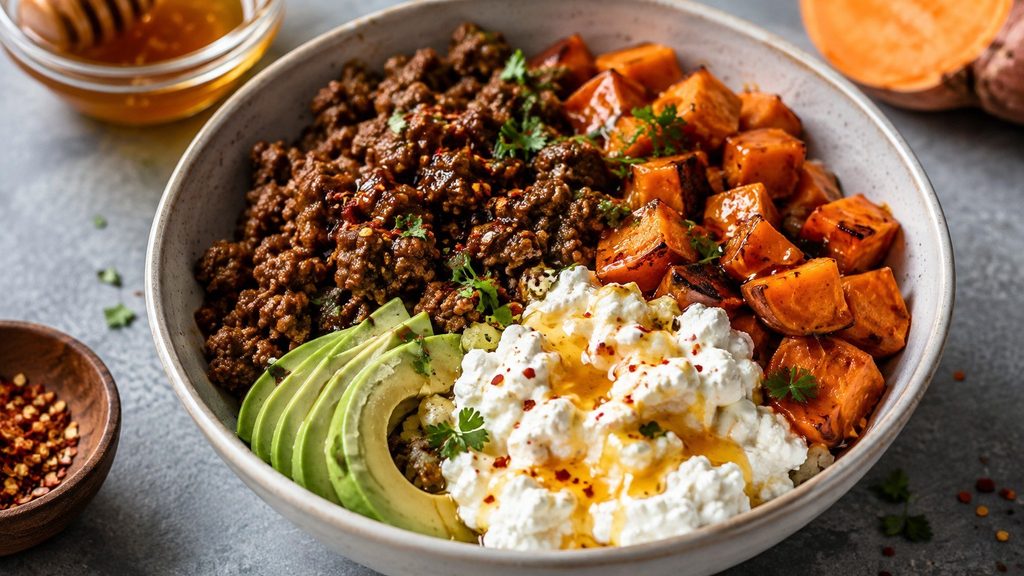
The original combination can support changes without losing its identity.
Useful variations include:
- substitute ground turkey for beef;
- use roasted butternut squash instead of sweet potato;
- add black beans for more volume;
- replace avocado with guacamole;
- add pickled red onions;
- use blended cottage cheese;
- add spinach or shredded cabbage;
- replace hot honey with honey and chili crisp.
The best substitutions preserve the same flavor architecture. There should still be something savory, something sweet, something creamy, and something acidic or spicy. Replacing beef with turkey works because the other components provide enough moisture. Butternut squash produces a slightly softer, less starchy base. Pickled onions are particularly effective because they cut through both avocado and cottage cheese.
Avoid adding several heavy sauces at once. Ranch, mayonnaise, melted cheese, and hot honey can quickly bury the sweet potato. The simplicity of this bowl is one reason it works. A few strongly contrasting ingredients are more effective than a long topping list. Adjust one component at a time and taste before adding another.
FAQ about Hot Honey Cottage Cheese Sweet Potato Beef Bowl
Is Hot Honey Cottage Cheese Sweet Potato Beef Bowl healthy?
It can be a nutritionally substantial meal. It combines protein, carbohydrates, dairy, and avocado. Portion size and ingredient choices determine the final calorie and sodium content.
Can I use regular honey instead of hot honey?
Yes. Drizzle regular honey over the finished bowl and add chili flakes, cayenne, or sliced jalapeño separately.
What ground beef is best for this recipe?
Lean 90/10 beef offers a useful balance between flavor and rendered fat. Extra-lean beef also works but can dry faster.
Can cottage cheese be blended?
Yes. Blending creates a smoother sauce-like texture without changing the basic ingredient.
Can I make the sweet potatoes in an air fryer?
Yes. Cook small cubes at about 400°F for roughly 12 to 16 minutes. Shake the basket during cooking.
How long does the beef bowl keep in the refrigerator?
Cooked beef and sweet potatoes are best used within 3 to 4 days under USDA leftover-storage guidance. Store dairy and avocado separately.
Why does hot honey work with cottage cheese?
Honey supplies sweetness while chili adds contrast. Cottage cheese moderates the heat and provides a cool, mildly tangy background.
What can replace avocado?
Guacamole, a small amount of olive oil, tahini, or extra cottage cheese can provide richness. Their flavors will change the final balance.
Earlier we wrote about Garlic Mashed Potatoes: How to Make Them Creamy, Fluffy and Full of Flavor