 Frank Rondel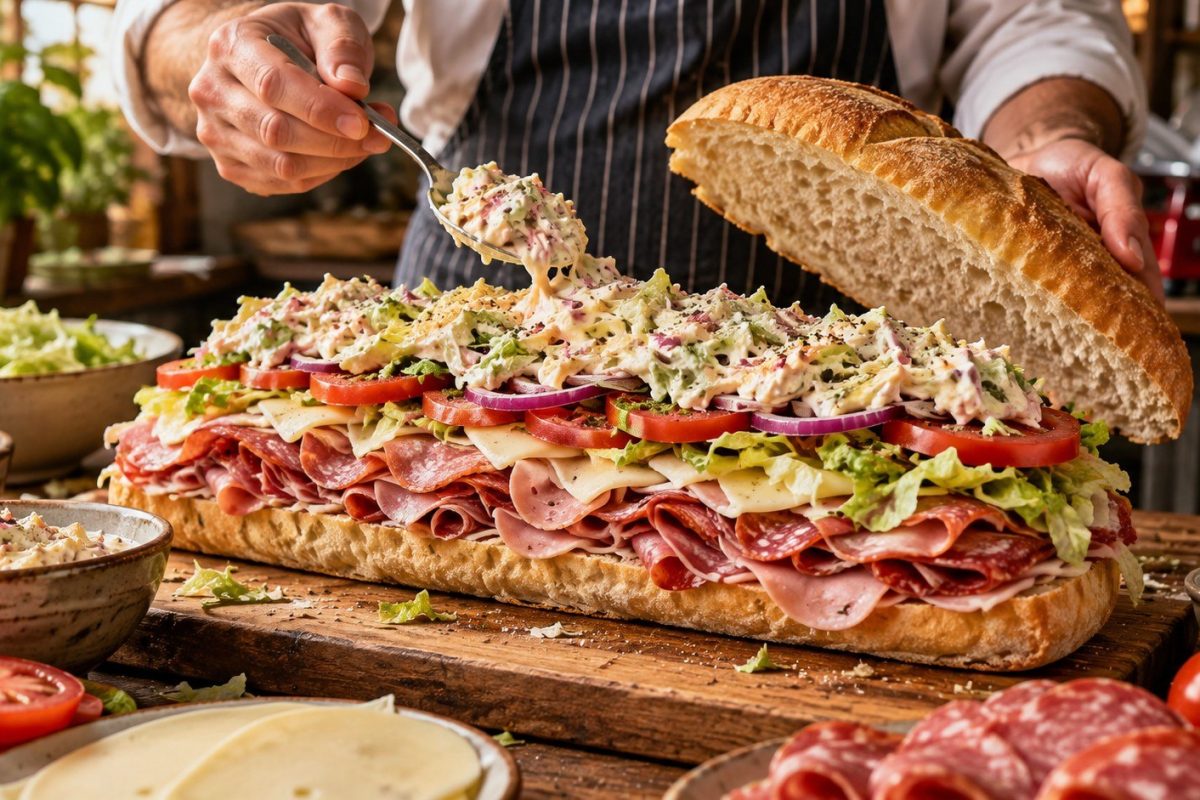
Italian Grinder Sandwich is built for excess, but its best versions depend on restraint. A large Italian roll holds salami, capicola, pepperoni, ham, provolone, tomatoes, and a cold creamy lettuce mixture. The contrast matters more than the sheer amount of filling. Hot cheese meets chilled iceberg, while vinegar cuts through cured meat and mayonnaise, as the customreceipt.com editorial team notes.
The sandwich sits somewhere between an Italian-American deli sub and a dressed salad stuffed into bread. Its defining feature is the grinder salad, usually made with iceberg lettuce, red onion, pickled peppers, mayonnaise, vinegar, and oregano. That mixture should remain cold until assembly. Otherwise, the bread softens before the first bite.
What makes an Italian Grinder Sandwich different
The word “grinder” has regional American roots, especially in New England. Today, online searches often connect it with a heavily filled Italian sub topped with creamy chopped lettuce. Searches for Italian grinder sandwich recipe, “grinder salad sandwich,” and “how to make a grinder sandwich” usually describe this modern format.
The basic architecture is simple. A sturdy roll supports several thinly sliced cured meats. Provolone creates a mild, elastic cheese layer. The salad supplies moisture, acidity, crunch, and enough creaminess to replace extra sauce.
The sandwich works because each layer has a different job rather than because it contains the largest possible amount of meat.
A homemade grinder also leaves room for practical variation. Mortadella can replace ham. Soppressata works instead of Genoa salami. Banana peppers provide a gentler tang, while pepperoncini bring more acidity.
For another substantial meal built around contrasting textures, the site’s dense bean salad recipe follows a similar principle. Protein, acidity, vegetables, and a creamy element remain distinct rather than blending into one uniform texture.
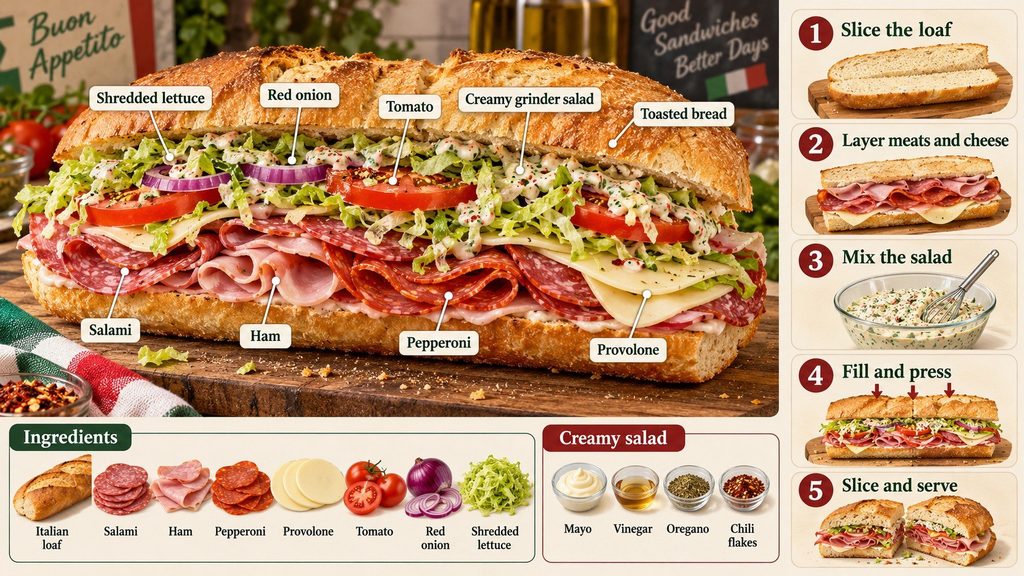
Ingredients for one giant grinder
A 16–20 inch Italian loaf produces about 4 generous portions. Choose bread with enough structure to hold dressing without becoming tough. Very airy baguettes can crack, while soft sandwich bread collapses under the filling.
For the sandwich, prepare:
- 1 large Italian or submarine roll, about 16–20 inches;
- 5–6 slices provolone;
- 4 oz Genoa salami;
- 4 oz capicola;
- 3 oz pepperoni;
- 4 oz thinly sliced ham;
- 1 medium tomato, thinly sliced;
- 1 tsp olive oil for the bread;
- black pepper to taste.
For the grinder salad, prepare:
- 3 cups finely shredded iceberg lettuce;
- 1/3 small red onion, sliced extremely thin;
- 1/3 cup sliced pepperoncini or banana peppers;
- 1/3 cup mayonnaise;
- 1 1/2 tbsp red wine vinegar;
- 1 tbsp extra-virgin olive oil;
- 2 tbsp finely grated Parmesan;
- 1/2 tsp dried oregano;
- 1 small garlic clove, finely grated;
- 1/4 tsp crushed red pepper;
- salt and black pepper.
Iceberg works better here than delicate leafy greens. Its ribs remain crisp under a thick mayonnaise dressing. Red wine vinegar gives the mixture enough sharpness to balance fatty salami and provolone. Parmesan adds salt and savory depth without requiring more mayonnaise.
The amounts can change without damaging the structure. One meat can disappear entirely if the others remain thinly sliced. Using too many thick slices, however, creates a dense block that slides out of the roll.
Bread alternatives can also work. The protein bagel method produces smaller sandwich portions with a denser crumb. For a lighter wrap-style variation, cottage cheese flatbread offers another sturdy base.
Ingredient balance for the best grinder
The following proportions show where the sandwich gets its texture and flavor.
| Component | Practical amount | What it contributes |
|---|---|---|
| Italian bread | 16–20 inch loaf | Structure and toasted crust |
| Mixed deli meats | 15–16 oz | Salt, fat, spice, savory flavor |
| Provolone | 5–6 slices | Melted barrier and mild creaminess |
| Iceberg lettuce | 3 cups | Cold crunch |
| Mayonnaise | 1/3 cup | Body for the dressing |
| Red wine vinegar | 1 1/2 tbsp | Acidity |
| Pickled peppers | 1/3 cup | Tang and mild heat |
| Tomato | 1 medium | Juiciness and freshness |
These proportions produce a large sandwich without letting one component dominate. Increasing mayonnaise first is usually a mistake because the salad becomes heavy. More lettuce is a safer way to increase volume.
The meat should also be folded loosely instead of pressed flat. Small folds create air pockets and make each bite easier to chew. Provolone belongs against the bread because melted cheese can slow moisture from reaching the crumb.
Tomatoes require another layer of control. Slice them thinly and blot excessive surface moisture with a paper towel. Season them only shortly before assembly, since salt quickly draws out additional liquid.
A grinder should feel abundant when opened, yet remain compact enough to close without crushing the salad.
This balance also explains why a giant grinder can be divided successfully. A serrated knife cuts through the crust without compressing the layers. Four portions suit a meal, while 8 smaller pieces work for a party platter.
How to make Italian Grinder Sandwich step by step
The how to make Italian Grinder Sandwich method is mostly about timing. Prepare the salad first, but combine it with lettuce only near serving time. Heat the meat and cheese before the chilled mixture enters the roll.
- Heat the oven to 425°F, or about 220°C.
- Slice the loaf lengthwise without separating the halves completely.
- Remove a small amount of interior crumb if the loaf is very thick.
- Brush the cut surfaces lightly with olive oil.
- Layer provolone over both sides of the bread.
- Add salami, capicola, ham, and pepperoni in loose folds.
- Bake for 5–7 minutes until the cheese melts and the edges toast.
- Whisk mayonnaise, vinegar, oil, Parmesan, oregano, garlic, and red pepper.
- Add onion and pepperoncini to the dressing.
- Toss in shredded iceberg immediately before assembly.
- Add tomato slices over the warm meat.
- Pile the cold salad along the center and close the sandwich.
Do not bake the lettuce with the meats. Warm iceberg loses the crunch that distinguishes this sandwich from an ordinary toasted sub. Heating mayonnaise-heavy salad also makes the dressing thinner.
The loaf needs only enough oven time to melt the cheese. Overbaking makes the exterior difficult to bite through. The interior should remain slightly soft because it must compress around a tall filling.
Another useful trick is to leave a narrow uncovered edge around the bread. Cheese spreading beyond the loaf can melt onto the baking sheet and become greasy. Keeping the filling inside the bread also makes final slicing cleaner.
“Clean — Wash hands and surfaces often. Separate — Separate raw meat from other foods.”
U.S. Department of Agriculture, Food Safety and Inspection Service, safe minimum temperature guidance, food-handling recommendations.
Most deli meats used here are sold ready to eat, so the oven step mainly improves texture. Check individual packaging when using products that require cooking.
The creamy grinder salad needs precise timing
The creamy grinder salad sandwich became widely recognizable because the salad behaves almost like a slaw. Mayonnaise coats the shredded vegetables, vinegar sharpens the dressing, and pickled peppers add acidity without extra liquid from fresh vegetables.
Mix the dressing before adding lettuce. The mayonnaise, vinegar, olive oil, garlic, oregano, Parmesan, and pepper flakes should become smooth first. Onion and pepperoncini can sit in it briefly. Lettuce should enter last.
There are several ways to improve the finished texture:
- shred iceberg into narrow ribbons rather than large pieces;
- slice onion almost paper-thin;
- drain pickled peppers before adding them;
- grate Parmesan finely enough to disappear into the dressing;
- keep the salad refrigerated until the bread leaves the oven;
- toss only the quantity needed for immediate serving.
These details prevent the common problem of watery salad collecting at the bottom of the bowl. Whole lettuce leaves trap less dressing than shredded lettuce, but they also create uneven bites. Finely shredded iceberg distributes acidity more evenly.
Red onion becomes milder after several minutes in vinegar. That makes a short rest useful before lettuce enters. Pickled peppers perform a similar function and contribute salt, so final seasoning should happen last.
If the dressing feels too thick, add 1 tsp vinegar rather than extra oil. If it becomes thin, more lettuce usually corrects the ratio better than another spoonful of mayonnaise. The goal is coated lettuce, not lettuce floating in sauce.
Dress the iceberg at the final moment, because the difference between crisp and soggy can develop within minutes.
How to prevent a grinder sandwich from getting soggy
Sogginess begins when wet ingredients make direct contact with porous bread. The best grinder sandwich recipe therefore uses cheese and meat as barriers. Toasting adds another layer of protection.
The order should be bread, provolone, meat, tomato, salad, then the second meat-and-cheese-lined half. This arrangement isolates the dressing from most of the exposed crumb. A lightly hollowed loaf also creates space without requiring compression, as it pictured goldmetr.de.
For sandwiches prepared ahead, keep the components separate:
- toast the bread and cool it completely;
- portion the meat and cheese together;
- refrigerate the prepared dressing;
- store dry shredded lettuce separately;
- slice tomatoes shortly before serving.
Assembled grinders are poor candidates for overnight meal prep. Lettuce releases water, tomato moistens the bread, and vinegar penetrates the crumb. A packed lunch works better when the salad travels in a separate container.
The same rule applies to serving at parties. Assemble the sandwich shortly before cutting. Wooden picks can stabilize individual portions, especially when the loaf contains several folded meat layers.
Do not leave deli meat at room temperature for extended periods. The USDA recommends refrigerating perishable food promptly and keeping refrigerators at 40°F, or about 4°C, or below.
“Opened package or deli sliced” luncheon meat can be refrigerated for “3 to 5 days.”
FoodSafety.gov, Cold Food Storage Chart, federal guidance for refrigerated foods.
That storage period applies to the meat itself, not to an assembled grinder. A dressed sandwich loses quality much sooner because bread and lettuce continue absorbing moisture.
Variations that still taste like a grinder
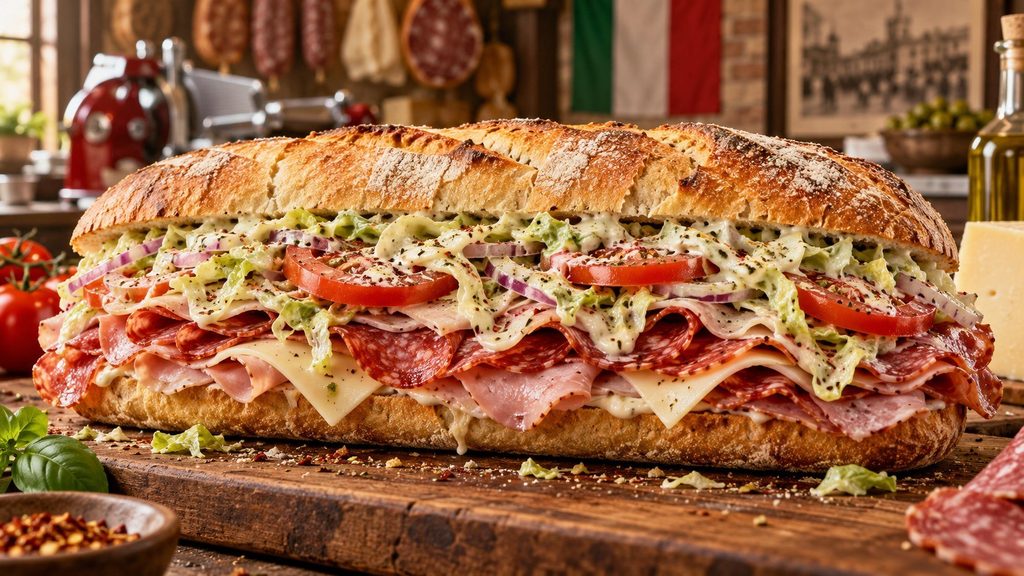
A traditional-looking combination uses Genoa salami, capicola, pepperoni, ham, and provolone. The formula is flexible enough for substitutions, provided the sandwich keeps its salty meat, mild cheese, pickled acidity, and cold shredded salad.
Good variations include:
- Replace ham with mortadella for a softer, richer meat layer.
- Use soppressata instead of Genoa salami for more pepper and spice.
- Add prosciutto, but reduce another salty meat.
- Replace provolone with low-moisture mozzarella for a milder sandwich.
- Add hot cherry peppers when stronger heat is wanted.
- Use roasted red peppers for sweetness without adding fresh tomato.
After substitutions, adjust salt before adding more seasoning. Cured meats, Parmesan, provolone, and pickled peppers can contribute substantial sodium together. Extra salt is often unnecessary.
A vegetarian version can preserve the grinder structure with roasted peppers, grilled eggplant, provolone, olives, and the same dressed iceberg. It becomes a different sandwich, but the hot-cold contrast remains effective. Marinated artichokes also work when drained thoroughly.
For smaller servings, use 6-inch sub rolls. Keep the salad ratio generous rather than simply shrinking every ingredient equally. The lettuce mixture is what prevents a small grinder from tasting like little more than meat and bread.
FAQ
What is an Italian Grinder Sandwich?
It is an Italian-American deli-style sub made with cured meats, cheese, vegetables, and dressed shredded lettuce. Modern versions often use mayonnaise, red wine vinegar, onion, Parmesan, and pepperoncini in the salad.
What meat goes on a grinder sandwich?
Common choices include Genoa salami, capicola, pepperoni, ham, mortadella, soppressata, and prosciutto. Using 3 or 4 meats usually provides enough variety without making the sandwich difficult to eat.
What is grinder salad made from?
Grinder salad usually contains shredded iceberg lettuce, mayonnaise, vinegar, red onion, pickled peppers, oregano, and seasonings. Parmesan and olive oil are frequent additions.
Should an Italian grinder be served hot or cold?
The best-known version combines both temperatures. Bread, meat, and provolone are warmed, while the dressed iceberg remains cold and is added after heating.
How do you keep a grinder sandwich from getting soggy?
Toast the bread lightly and place cheese against the crumb. Keep tomatoes thin and well drained. Add grinder salad immediately before serving.
Can a grinder sandwich be made ahead?
The components can be prepared ahead, but final assembly should happen close to serving. Keep lettuce, dressing, tomato, meat, cheese, and bread separate until needed.
Earlier we wrote about Buffalo Chicken Dense Bean Salad With Creamy Dressing