 Frank Rondel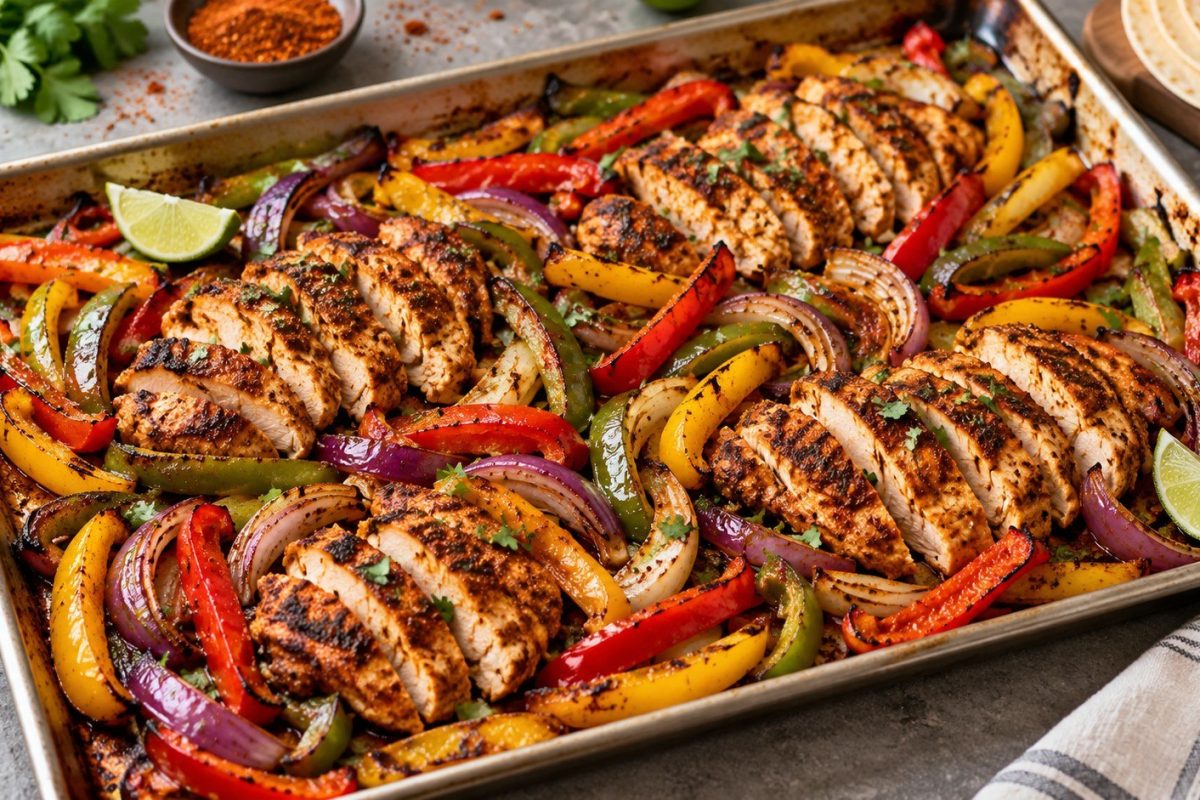
Chicken Fajita Sheet Pan Dinner turns chicken, bell peppers, and onions into a complete meal on one baking sheet. The method uses high oven heat, a concentrated spice mix, and enough space for vegetables to roast instead of steam. It delivers the familiar flavors of skillet fajitas with less active cooking and fewer dishes, as noted by the editorial team at customreceipt.com.
The appeal is practical rather than complicated. Chicken and vegetables cook together, while tortillas and toppings stay outside the oven. The important details are the thickness of the chicken strips, vegetable size, seasoning balance, and pan temperature. Get those right, and the edges brown while the chicken stays moist.
The biggest mistake with sheet-pan fajitas is overcrowding the pan, which traps moisture and prevents proper browning.
Ingredients for Chicken Fajita Sheet Pan Dinner
A reliable chicken fajita sheet pan dinner needs ingredients that can tolerate high heat without becoming soft too quickly. Bell peppers work particularly well because they sweeten as their edges darken. Red onion keeps more structure than many yellow onions and brings mild sweetness.
For 4 servings, the following proportions provide enough vegetables without burying the chicken.
| Ingredient | Amount | Purpose |
|---|---|---|
| Boneless chicken breast or thighs | 1.5 lb | Main protein |
| Red bell pepper | 1 large | Sweetness and color |
| Yellow bell pepper | 1 large | Mild pepper flavor |
| Green bell pepper | 1 large | Slight bitterness |
| Red onion | 1 medium | Sweet, roasted onion flavor |
| Olive or avocado oil | 2 tbsp | Helps browning |
| Chili powder | 2 tsp | Main seasoning |
| Ground cumin | 1.5 tsp | Earthy flavor |
| Smoked paprika | 1 tsp | Smoky character |
| Garlic powder | 1 tsp | Savory base |
| Dried oregano | 0.5 tsp | Herbal note |
| Fine salt | 1 tsp | Seasoning |
| Black pepper | 0.5 tsp | Mild heat |
| Lime | 1 | Finishing acidity |
| Tortillas | 8 small | Serving |
Chicken breast gives leaner, firmer strips. Boneless thighs contain more fat and remain forgiving when cooking times vary slightly. Both work, but combining pieces of different thickness creates uneven results.
Cut peppers into strips close to 0.5 inch wide. Thin pieces collapse before the chicken browns. Very thick pieces can remain almost raw in their centers.
The same principle of uniform cutting applies to air fryer chicken bites. Equal-sized pieces make temperature control easier regardless of the cooking appliance.
Red onion should be cut into wedges or broad slices. Tiny diced onion tends to scorch at the edges before the larger ingredients finish. Lime belongs at the end because prolonged heat removes much of its fresh acidity.
Keep the seasoning dry before roasting; wet marinades add moisture exactly where browning needs a dry surface.
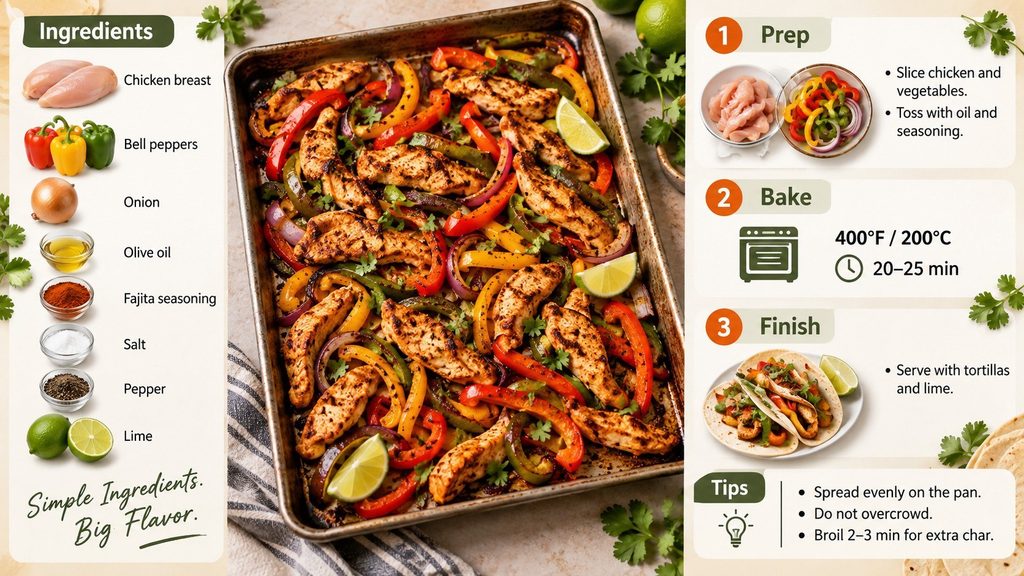
How to Make Sheet Pan Chicken Fajitas
Heat the oven to 425°F, or about 218°C. A fully heated oven matters because a cool start gives the vegetables time to release water before browning begins.
Use a large rimmed baking sheet. A half-sheet pan is preferable when cooking the full recipe. Line it with foil or parchment for easier cleanup, although direct metal contact can increase browning.
The easy sheet pan chicken fajitas method follows a simple order:
- Slice chicken across the grain into similar strips.
- Cut the peppers into broad, even strips.
- Slice the onion into wedges.
- Mix chili powder, cumin, paprika, garlic, oregano, salt, and pepper.
- Toss chicken with about half the oil and seasoning.
- Coat vegetables separately with the remaining oil and spices.
- Spread everything across the hot baking sheet.
- Roast for about 15 minutes.
- Turn the ingredients and check the chicken.
- Continue cooking until the chicken reaches 165°F.
- Finish with fresh lime juice before serving.
The separate seasoning step keeps raw chicken juices from spreading unnecessarily through the vegetable bowl. It also allows salt and oil to coat each ingredient more evenly. Place thicker chicken pieces near the outer areas of the pan, where heat exposure is often stronger.
Do not pile peppers beneath the meat. Those covered vegetables will steam while exposed pieces roast. If the baking sheet looks completely packed, divide the mixture between 2 pans.
Cooking time usually falls between 18 and 25 minutes. Exact timing depends on strip thickness, chicken cut, pan material, and oven calibration. A thermometer gives better information than the clock.
The USDA Food Safety and Inspection Service states that poultry should reach 165°F, or 73.9°C. Its safe minimum temperature guidance recommends measuring temperature with a food thermometer.
“All Poultry” should reach a minimum internal temperature of 165°F.
U.S. Department of Agriculture, Food Safety and Inspection Service, Safe Minimum Internal Temperature Chart. The guidance covers chicken breasts, thighs, wings, and other poultry.
Why High Heat Makes Better Fajitas
A good sheet pan fajitas recipe depends on moisture management. Peppers, onions, and chicken all release water during cooking. A crowded surface traps that vapor around the food.
At 425°F, exposed moisture evaporates relatively quickly. Oil then helps the surfaces brown. Lower temperatures can cook the chicken safely, but the vegetables may soften before developing dark edges.
Broiling for the final 1–2 minutes can deepen browning. Watch the food closely because peppers and parchment can darken quickly. Move the pan higher only after the chicken is essentially finished.
For another oven-based chicken meal, the chicken enchilada casserole uses a different moisture strategy. That dish deliberately traps sauce, while fajitas benefit from evaporation.
The choice of pan also matters. Dark metal usually absorbs heat efficiently and encourages stronger browning. Glass baking dishes have higher sides and behave differently, making them less suitable for this method.
“You can’t see, smell or taste harmful bacteria that may cause illness.”
U.S. Department of Agriculture, Food Safety and Inspection Service, food-safety guidance. The agency recommends using temperature rather than appearance to judge poultry safety.
Five details improve browning without complicating dinner:
- pat unusually wet chicken dry before seasoning;
- leave visible space between many pieces;
- use a wide, shallow baking sheet;
- avoid excessive oil or liquid marinade;
- preheat the oven completely before adding the pan.
A few dark edges are desirable. Blackened spices across the entire pan are not. If seasoning burns before the chicken finishes, move the sheet one rack lower.
Color can suggest good roasting, but only internal temperature establishes whether the chicken reached the recommended safety threshold.
Chicken Breast or Chicken Thighs
The choice changes texture more than technique. Both cuts can produce a successful oven baked chicken fajitas recipe, but their cooking tolerance differs.
| Feature | Chicken breast | Boneless chicken thighs |
|---|---|---|
| Texture | Lean and firm | Richer and softer |
| Fat content | Lower | Higher |
| Overcooking tolerance | Lower | Higher |
| Cutting | Easy to make uniform strips | Irregular shapes need trimming |
| Flavor | Mild | More pronounced |
| Best use | Lighter fajitas | Juicier, forgiving fajitas |
Breast strips can dry when several thin ends remain attached to thick sections. Trim those pieces or cut them separately. Thigh meat has irregular shapes but retains moisture more readily.
Neither option needs hours of marinating. The spices sit directly on thin strips, so flavor reaches every bite without a long waiting period. Thirty minutes of refrigeration can deepen seasoning, but it is not essential.
The same contrast appears in one-pan Tuscan chicken, where moisture determines the final texture. Sheet-pan fajitas solve that problem with shorter cooking and thinner cuts.
USDA guidance also cautions against judging poultry only by color. Safely cooked chicken may retain some pink coloration. Its food thermometer guidance recommends checking the thickest part of poultry pieces.
What to Serve With Sheet Pan Fajitas
Warm flour tortillas are the familiar choice, but corn tortillas provide more toasted corn flavor. Heat tortillas shortly before serving so they remain flexible. A dry skillet needs only seconds on each side.
The roasted mixture already contains strong seasoning. Toppings work best when they add acidity, freshness, or creaminess rather than another heavy layer of spice.
Useful additions include:
- sliced avocado or guacamole;
- fresh cilantro;
- pico de gallo;
- sour cream or plain Greek yogurt;
- shredded lettuce;
- pickled jalapeños;
- crumbled queso fresco;
- lime wedges.
Rice and black beans turn the fajitas into a larger dinner. A chopped salad keeps the meal lighter. Roasted corn also works, particularly when seasoned with lime instead of more chili powder.
For bowls, skip tortillas and place the chicken mixture over rice or quinoa. Add beans and avocado after roasting. Cold toppings should remain separate until serving because their contrast improves the finished meal.
Leftovers can also become lunch without recreating the original plate. Use them in quesadillas, rice bowls, salads, wraps, or scrambled eggs. The seasoning is adaptable enough to work beyond tortillas.
Storage and Reheating
Cooked fajitas should be refrigerated promptly instead of remaining on the counter for several hours. The USDA advises refrigerating most perishable leftovers within 2 hours. Its food-safety basics also recommend shallow storage containers.
Keep tortillas and fresh toppings separate. Stored together, vegetable moisture quickly softens tortillas. Guacamole and lettuce also deteriorate faster beside warm cooked ingredients.
For practical meal preparation, divide the cooked mixture into individual containers. This avoids repeatedly reheating the entire batch. USDA guidance lists 3–4 days as the general refrigerator window for cooked leftovers.
Reheat only the portion needed. A skillet restores browned edges better than prolonged microwave heating. An oven or air fryer also works if the chicken is not overheated.
USDA food-safety guidance recommends reheating leftovers to 165°F.
U.S. Department of Agriculture, Food Safety and Inspection Service, guidance covering cooked leftovers and safe reheating.
A microwave remains the fastest option. Cover the container loosely and heat in short intervals. Stir between intervals so vegetables and chicken warm more evenly.
Common Mistakes With Sheet Pan Chicken Fajitas
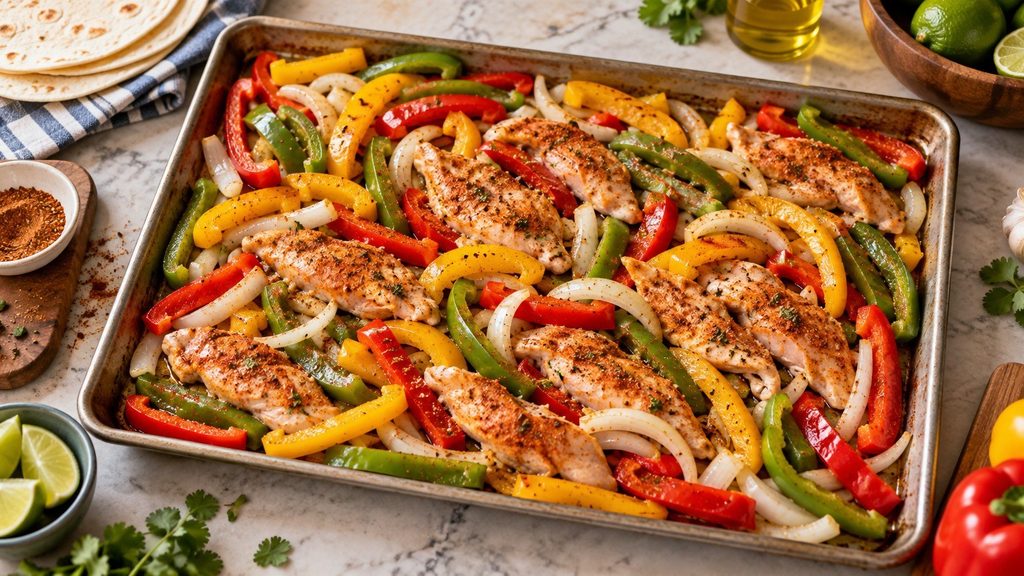
Most disappointing fajitas fail for physical reasons rather than missing ingredients. Too much food creates steam, while uneven pieces finish at different times.
The most frequent problems are straightforward:
- Crowding a small baking sheet.
- Cutting chicken into dramatically different sizes.
- Using too much liquid marinade.
- Starting with a cool oven.
- Slicing peppers too thinly.
- Cooking exclusively by time instead of temperature.
- Adding lime juice before roasting.
- Leaving cooked chicken in the oven while waiting for vegetables.
When vegetables need another few minutes, remove finished chicken first. Return only the peppers and onions to the oven. This small intervention prevents dry meat without sacrificing browned vegetables.
For extra char, spread the ingredients more widely rather than automatically extending cooking time. Surface exposure matters more than simply leaving everything under heat longer.
The one pan chicken fajitas method works because every ingredient receives similar treatment while still retaining its own texture. Chicken should remain juicy, peppers should soften without collapsing, and onion edges should caramelize.
FAQ About Chicken Fajita Sheet Pan Dinner
What temperature is best for sheet pan chicken fajitas?
425°F works well for thin chicken strips, peppers, and onions. It supplies enough heat for browning without requiring an unusually long cooking time.
How long do chicken fajitas take in the oven?
Most batches need about 18–25 minutes at 425°F. Strip thickness and oven performance affect timing. Chicken should reach 165°F internally.
Can frozen chicken be used?
Thawing first gives better control over slicing and cooking. Frozen solid chicken cannot be cut into uniform fajita strips safely or conveniently.
Can chicken fajitas be prepared ahead?
Yes. Slice vegetables and mix the dry seasoning ahead. Keep raw chicken refrigerated separately until cooking. Cooked portions can also be refrigerated for 3–4 days.
Why are sheet pan fajitas watery?
The usual cause is overcrowding. Chicken, onions, and peppers release moisture while heating. Too little exposed pan surface prevents that liquid from evaporating quickly.
Can chicken thighs replace chicken breast?
Yes. Boneless thighs work particularly well because they tolerate high heat and slight timing variations. Trim them into similarly sized strips before roasting.
Earlier we wrote about How to Make a Taco Bowl at Home With Safe Taco Meat and Meal-Prep Storage