 Frank Rondel
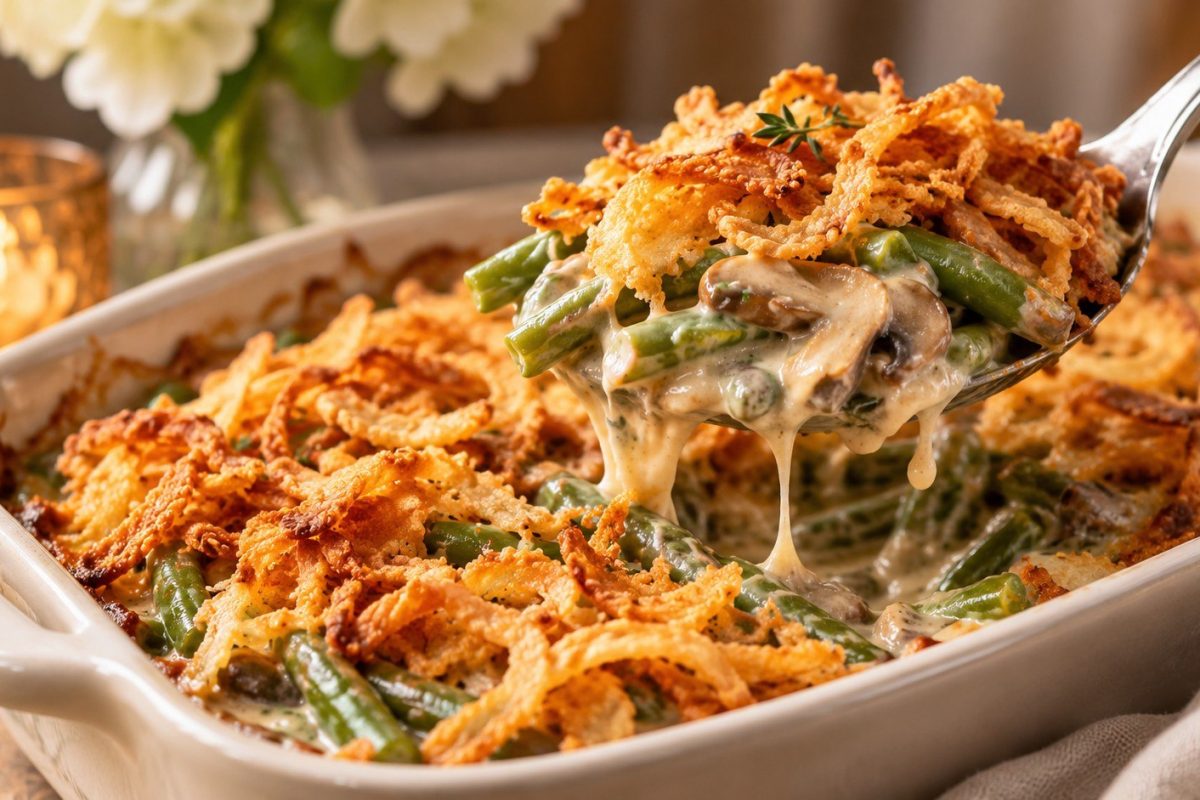
Green Bean Casserole is a classic American side dish made with tender green beans, creamy mushroom sauce, and crispy onions. This comforting recipe requires just 10 minutes of preparation and approximately 30 minutes in the oven. It serves 6 people and works particularly well for Thanksgiving, Christmas, or an ordinary family dinner, as customreceipt.com notes.
The secret lies in balancing 3 textures: vegetables that hold their shape, a smooth sauce, and a golden topping. Too much moisture leaves the casserole watery, while early addition of fried onions makes them soggy. A few simple techniques can prevent both problems.
What Is Green Bean Casserole and Why Is It So Popular?
Green bean casserole has occupied a familiar place on American holiday tables since 1955. That year, the Campbell’s test kitchen developed the recipe using everyday pantry ingredients.
Its appeal was practical. Families needed an affordable side dish that required little preparation and could feed several people. Condensed mushroom soup provided a ready-made sauce, while fried onions supplied flavor and crunch.
According to Campbell’s original green bean casserole recipe, the traditional version requires only 5 main ingredients.
Today, home cooks prepare numerous variations. Some replace canned soup with homemade mushroom sauce, while others add cheese, garlic, or fresh herbs. The defining combination, however, remains recognizable.
A successful casserole should taste creamy without becoming heavy. Each spoonful needs tender vegetables, savory mushroom flavor, and a distinct onion crunch.
Green Bean Casserole Ingredients for 6 Servings
The following measurements produce approximately 6 side-dish portions. Use a 1½-quart baking dish, roughly equivalent to a 1.4-liter casserole.
This version follows the traditional ingredient proportions, with optional seasonings for additional flavor.
| Ingredient | Quantity | Purpose |
|---|---|---|
| Green beans, cooked and drained | 4 cups | Main vegetable |
| Condensed cream of mushroom soup | 1 can, 10.5 oz (298 g) | Creamy sauce |
| Milk | ½ cup (120 ml) | Adjusts consistency |
| Soy sauce | 1 tsp | Adds savory depth |
| Crispy fried onions | 1⅓ cups | Crunchy topping and filling |
| Black pepper | ¼ tsp | Mild seasoning |
| Garlic powder, optional | ¼ tsp | Additional aroma |
| Grated Parmesan, optional | 2 tbsp | Richer finish |
Fresh, frozen, and canned green beans can all produce satisfactory results. Their preparation differs because each contains a different amount of moisture.
Whole milk creates a slightly richer sauce, while 2% milk keeps the texture lighter. Avoid adding excessive milk before baking because the beans release additional moisture during heating.
Condensed mushroom soup already contains salt. Taste the mixture before adding more seasoning, particularly when using regular soy sauce.
For a vegetarian version, check the ingredient labels on the soup, sauce, and fried onions. Some prepared products contain animal-derived ingredients.
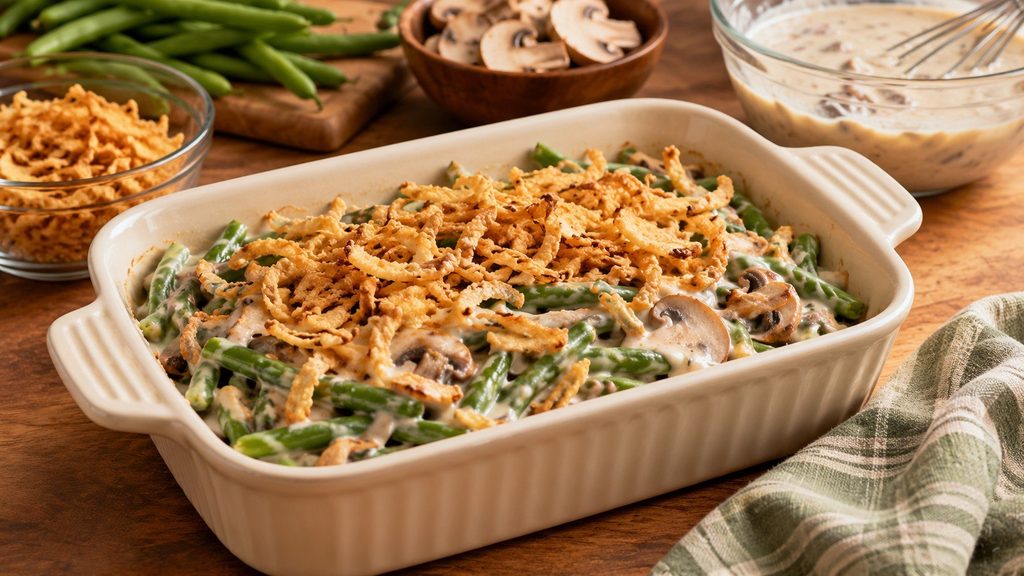
How to Make Green Bean Casserole Step by Step
The basic method is straightforward, but the order of preparation matters. Prepare the green beans first and keep the onions divided into 2 portions.
Step-by-Step Cooking Instructions
- Preheat the oven. Set the temperature to 350°F (175°C). Position the rack in the center.
- Prepare the beans. Drain cooked vegetables thoroughly. Pat them dry if excess water remains.
- Mix the sauce. Combine mushroom soup, milk, soy sauce, black pepper, and optional garlic powder.
- Add the vegetables. Fold 4 cups of green beans into the creamy mixture without crushing them.
- Incorporate the onions. Stir ⅔ cup of crispy fried onions into the filling.
- Transfer to the dish. Spread the mixture evenly in a 1½-quart baking dish.
- Bake for 25 minutes. Leave the casserole uncovered until the sauce becomes hot and bubbles around the edges.
- Finish with the topping. Stir the filling gently and sprinkle the remaining ⅔ cup of fried onions over it.
- Bake for another 5 minutes. Remove the dish when the topping becomes golden.
- Rest before serving. Allow approximately 5 minutes for the sauce to settle.
The complete process generally takes 40 minutes, including preparation. Fresh beans may require additional time for trimming and blanching.
An uncovered dish encourages excess surface moisture to evaporate. Covering the casserole throughout baking can trap steam and soften the topping.
Watch the onions during the final minutes. Their color can change quickly, especially in ovens with strong upper heating elements.
The filling should appear cohesive rather than watery. A brief resting period improves its consistency and makes serving easier.
The most useful cooking rule is simple: remove excess moisture before baking and add the final onion topping near the end.
This is a practical cooking recommendation, not an attributed expert quotation.
Fresh vs. Frozen vs. Canned Green Beans: Which Works Best?
The choice of vegetables influences the finished casserole more than many cooks expect. Fresh beans remain relatively firm, while canned beans produce the softest filling.
Each option has advantages depending on preparation time, availability, and personal preference.
| Type | Amount for 6 servings | Preparation | Result |
|---|---|---|---|
| Fresh | About 1½ lb (680 g) | Trim, blanch 2–4 minutes, cool, drain | Firmest texture |
| Frozen | 16–20 oz (454–567 g) | Thaw, prepare as directed, drain | Convenient, tender |
| Canned | 2 cans, 14.5 oz each | Drain thoroughly | Soft, traditional texture |
Fresh beans work particularly well when the casserole is intended as a prominent vegetable side dish. Their firmer texture contrasts nicely with the mushroom sauce.
Frozen beans offer convenience without requiring canned vegetables. However, ice crystals and thawing can introduce considerable moisture.
Canned beans are the quickest choice because they arrive precooked. Their softer consistency is familiar to many Americans who grew up eating this dish.
Campbell’s recommends blanching fresh green beans briefly before incorporating them into the casserole. The method helps preserve color and prevents excessive softening.
For consistent results, avoid mixing very firm raw beans with fully cooked ingredients. They may remain unpleasantly tough after the short baking period.
How to Make Green Bean Casserole Without Mushroom Soup
Homemade mushroom sauce provides an alternative for cooks who prefer controlling the ingredients. It also allows adjustments to salt, dairy, and mushroom intensity.
For 6 servings, prepare a thick sauce using the following ingredients:
- 8 oz (225 g) fresh mushrooms, finely chopped
- 2 tbsp unsalted butter
- 2 tbsp all-purpose flour
- ¾ cup (180 ml) vegetable broth
- ½ cup (120 ml) whole milk
- 1 small garlic clove, minced
- ¼ tsp black pepper
- Salt to taste
Melt the butter in a skillet over medium heat. Add mushrooms and cook for approximately 6–8 minutes, allowing their released moisture to evaporate.
Stir in the garlic and cook briefly. Add the flour, mixing continuously for approximately 1 minute.
Gradually pour in the vegetable broth and milk while whisking. Simmer until the sauce thickens enough to coat a spoon.
The finished sauce should resemble thick cream rather than soup. Thin sauce can become watery when mixed with vegetables.
Combine it with 4 cups of prepared green beans and ⅔ cup fried onions. Bake using the same 350°F method, checking that the filling is thoroughly heated.
Homemade mushroom sauce produces a deeper, more pronounced mushroom flavor. It also gives cooks greater control over seasoning and consistency.
How to Keep Green Bean Casserole From Getting Watery
Excess moisture is among the most common reasons homemade green bean casserole disappoints. The problem usually begins before the dish enters the oven.
Frozen vegetables release liquid during thawing. Canned beans retain packing liquid, while fresh beans can carry water after blanching.
Several adjustments make a noticeable difference:
- Drain canned vegetables in a colander before mixing.
- Pat thawed green beans dry with paper towels.
- Let blanched beans drain completely after cooling.
- Avoid adding extra milk unless the sauce is unusually thick.
- Bake uncovered to allow surface moisture to escape.
- Keep most of the crispy topping separate until the final baking stage.
If the filling appears thin before baking, check whether the beans were drained thoroughly. Removing excess liquid is usually preferable to adding more thickener.
A wider baking dish may encourage faster evaporation, although it can also shorten the required cooking time.
For a particularly watery mixture, extend the uncovered baking period in 5-minute increments. Add the final onions only when the sauce has thickened.
Avoid relying entirely on the topping to absorb moisture. Fried onions become soft when submerged in too much liquid.
A well-prepared casserole should remain creamy after resting, with sauce clinging lightly to the beans.
Green Bean Casserole Variations Worth Trying
The traditional recipe is adaptable without requiring major changes to the cooking process. Small additions can introduce new flavors while retaining the dish’s familiar character.
Cheese, Bacon, Garlic, and Lighter Options
- Cheesy green bean casserole: Add ½ cup shredded cheddar to the mushroom mixture.
- Bacon green bean casserole: Include 3–4 cooked, crumbled bacon strips.
- Garlic mushroom casserole: Sauté 2 minced garlic cloves with fresh mushrooms.
- Parmesan variation: Sprinkle 2 tbsp Parmesan over the onions before the final baking stage.
- Lighter casserole: Choose reduced-sodium mushroom soup and use 2% milk.
- Extra-crunchy version: Add ¼ cup toasted sliced almonds with the final onion topping.
Cheddar adds richness and creates a thicker, more substantial filling. However, excessive cheese can overpower the flavor of the vegetables.
Bacon introduces smoky and salty notes, making additional salt less necessary. For a vegetarian alternative, sautéed mushrooms can provide similar savory depth.
Garlic works particularly well with a homemade sauce. Cooking it briefly removes some harshness without overwhelming the dish.
Toasted almonds provide crunch without relying entirely on fried onions. They are particularly suitable when serving the casserole alongside roasted poultry.
The best variation depends on the surrounding menu. Richer additions work better when other side dishes remain relatively light.
Can You Make Green Bean Casserole Ahead of Time?
Preparing the casserole in advance can simplify holiday cooking. Thanksgiving menus often require several dishes to share limited oven space.
Campbell’s recommends assembling its traditional casserole up to 1 day before baking. The prepared mixture should remain covered in the refrigerator.
For convenient planning, follow this schedule:
| Preparation stage | Recommended timing | Practical advice |
|---|---|---|
| Trim fresh beans | 1 day ahead | Refrigerate covered |
| Prepare mushroom sauce | 1 day ahead | Cool and refrigerate |
| Assemble casserole | Up to 24 hours ahead | Cover and refrigerate |
| Bake casserole | Before serving | Heat until bubbling |
| Add final onions | Last 5 minutes | Preserve crispness |
| Refrigerate leftovers | Within 2 hours | Use shallow containers |
| Eat refrigerated leftovers | Within 3–4 days | Reheat thoroughly |
Cold casseroles may require additional baking time, especially when stored in deep ceramic dishes. Check the center rather than relying exclusively on the clock.
Keep the final onion topping separate until baking. Refrigerated onions absorb moisture and lose their distinctive crunch.
According to the USDA’s leftover food safety guidance, perishable leftovers should be refrigerated within 2 hours. The recommended refrigerator temperature is 40°F (4°C) or below.
Reheat leftovers to an internal temperature of 165°F (74°C). A food thermometer provides a more reliable indication than appearance alone.
For better texture, add a small portion of fresh fried onions during the final minutes of reheating.
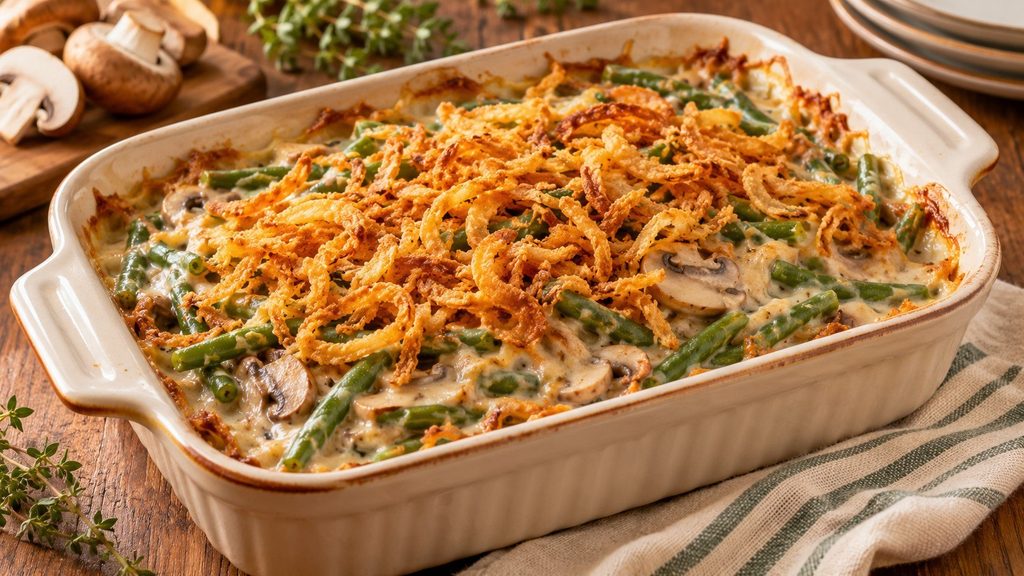
What to Serve With Green Bean Casserole
Green bean casserole works best alongside foods that contrast with its creamy texture. Roasted meats, potatoes, and slightly acidic side dishes create a balanced plate.
For Thanksgiving, roasted turkey remains the most familiar pairing. Mashed potatoes, cranberry sauce, and traditional stuffing complete the holiday combination.
The casserole also suits smaller family dinners featuring roast chicken, baked ham, or grilled vegetables.
A simple green salad with lemon vinaigrette can offset the richness of the mushroom sauce. Roasted carrots or Brussels sprouts provide additional texture.
For dessert, a warm Dutch apple pie with cinnamon and buttery crumble complements an autumn menu. Another option is no-bake pumpkin cheesecake lasagna, which can be prepared before dinner.
These desserts offer different ways to finish a seasonal meal without adding unnecessary work during the final cooking stage.
FAQ: Common Questions About Green Bean Casserole
How long do you cook green bean casserole at 350°F?
Bake the prepared casserole for approximately 25 minutes, until hot and bubbling. Add the remaining fried onions and continue baking for another 5 minutes. A refrigerated casserole may require additional time.
Can I use frozen green beans without thawing them?
Thawing and draining are recommended for this recipe. Frozen beans can release excess liquid during baking, producing a watery sauce. Follow the package instructions when preparing the vegetables.
What can replace cream of mushroom soup?
Homemade mushroom sauce is a suitable replacement. Cream of celery soup also works, although the flavor changes. A thick mixture of sautéed mushrooms, butter, flour, milk, and broth provides greater ingredient control.
How do you make green bean casserole crispy on top?
Reserve most of the fried onions until the final 5 minutes of baking. Keep the dish uncovered and serve soon after cooking. Add fresh onions when reheating leftovers.
Can green bean casserole be frozen?
Yes. Campbell’s recommends freezing the baked casserole without the onion topping for up to 2 months. Thaw overnight in the refrigerator before reheating. Freshly prepared casserole generally offers better texture.
How long does leftover green bean casserole last?
Properly refrigerated leftovers generally remain safe for 3–4 days under USDA guidance. Store them promptly in shallow, covered containers. Reheat to 165°F (74°C) before serving.
Can green bean casserole be made without milk?
Yes. Unsweetened, unflavored plant-based milk can replace dairy milk, although the sauce may taste different. Vegetable broth can also thin condensed soup, but it produces a less creamy filling.
Why is my green bean casserole too thick?
The sauce may contain too little liquid or may have evaporated during extended baking. Stir in 1–2 tbsp milk before reheating. Add additional liquid gradually to avoid making the filling watery.
The Key to a Better Homemade Green Bean Casserole
Green bean casserole succeeds through careful preparation rather than complicated ingredients. Thorough drainage, balanced sauce consistency, and correctly timed onion topping make the greatest difference.
For the classic version, use 4 cups cooked green beans, 1 can condensed mushroom soup, and 1⅓ cups fried onions. Bake at 350°F for approximately 30 minutes, adding the final topping near the end.
Start with the traditional recipe, then experiment with fresh mushrooms, cheddar, or garlic to suit your family’s preferences.
Earlier we wrote about How to Cook Thanksgiving Turkey: The 325°F Method for Juicy Meat and Golden Skin