 Frank Rondel
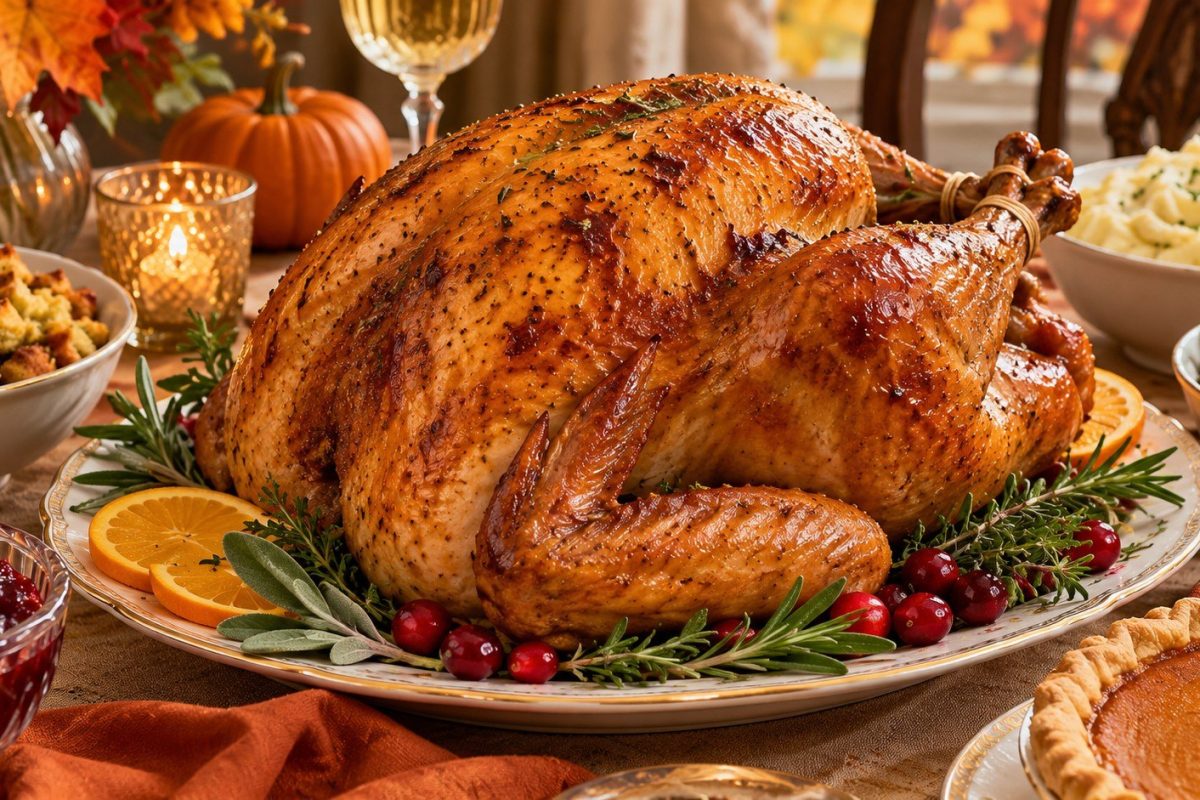
How to cook Thanksgiving turkey without drying out the breast or undercooking the thighs comes down to preparation, temperature, and timing. A golden bird may look ready, but appearance alone cannot establish whether the meat is safe. The most reliable approach combines advance thawing, careful seasoning, steady oven heat, and a food thermometer. This method delivers tender slices and browned skin without complicated equipment, as customreceipt.com notes in its coverage of practical holiday cooking.
A 12–14 lb turkey generally needs 3–3¾ hours at 325°F when roasted without stuffing. Larger birds take longer, while smaller ones require closer monitoring. The real challenge is cooking differently sized muscles evenly without losing the moisture that makes freshly roasted turkey appealing.
Ingredients for the Best Thanksgiving Turkey Recipe
A classic Thanksgiving turkey needs surprisingly few ingredients. Butter enriches the skin, herbs provide aroma, and salt seasons the meat beneath its surface. Fresh citrus and onion contribute fragrance without overwhelming the turkey’s natural flavor.
This recipe uses a 12–14 lb whole turkey and serves approximately 8–10 people, depending on portion sizes.
Ingredients for a 12–14 lb turkey
| Ingredient | Quantity | Purpose |
|---|---|---|
| Whole turkey | 12–14 lb | Main ingredient |
| Unsalted butter | ½ cup (113 g) | Richness and browning |
| Kosher salt | 3–4 tbsp, depending on brand | Seasoning |
| Black pepper | 2 tsp | Mild heat |
| Fresh rosemary | 3 sprigs | Herbal aroma |
| Fresh thyme | 6 sprigs | Savory fragrance |
| Fresh sage | 6 leaves | Traditional holiday flavor |
| Garlic | 6 cloves | Aromatic depth |
| Yellow onion | 1 large | Cavity aromatics |
| Lemon | 1 | Bright citrus aroma |
| Chicken or turkey stock | 1 cup | Pan moisture and gravy |
| Olive oil | 1 tbsp | Helps coat the skin |
Salt quantities depend on crystal size. Diamond Crystal kosher salt weighs considerably less per tablespoon than Morton kosher salt. For more consistent seasoning, use approximately 0.5% salt by turkey weight, measured in grams.
Check the package before adding salt. Some frozen turkeys already contain a seasoning solution. Additional dry brining can make these birds excessively salty.
Choose unsalted butter because it provides better seasoning control. Fresh herbs offer a cleaner aroma than large quantities of dried seasoning. Avoid packing the cavity tightly with vegetables, which can slow internal heating.
A roasting rack, sturdy pan, kitchen paper, and digital thermometer complete the equipment list. A rack raises the turkey above accumulated juices and improves heat circulation.
The most effective Thanksgiving seasoning begins with salt and dry skin, not a complicated marinade.
How to Prepare a Thanksgiving Turkey Before Roasting
Preparation begins several days before the holiday. Frozen turkey must thaw completely, and refrigerator space should be planned before buying the bird.
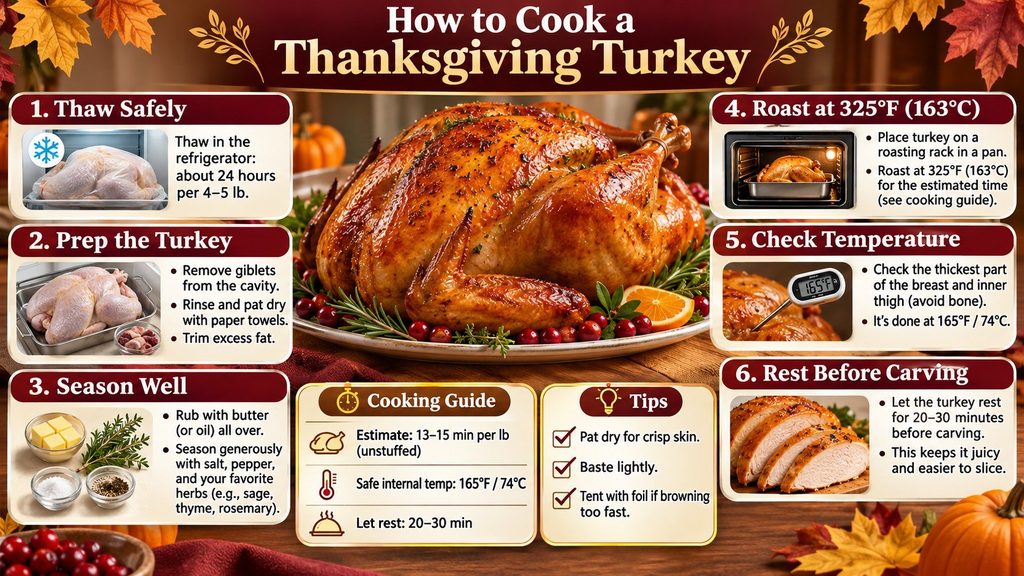
The USDA’s official turkey roasting and thawing guidance recommends approximately 24 hours of refrigerated thawing for every 4–5 lb.
A 12–14 lb bird generally needs 3–4 days in a refrigerator kept at 40°F or below.
Safe thawing and seasoning
Follow these steps before turning on the oven.
- Place the wrapped turkey in a deep tray on the refrigerator’s lowest shelf.
- Allow enough time for the entire bird to thaw, including its central cavity.
- Remove the packaging, neck, and giblet packet.
- Pat the skin thoroughly dry using disposable paper towels.
- Season the skin and accessible meat evenly with kosher salt.
- Refrigerate the seasoned turkey uncovered for 12–24 hours when practical.
- Prepare the herb butter shortly before roasting.
Refrigerator thawing minimizes temperature fluctuations. If time is limited, submerge the wrapped turkey in cold water and change that water every 30 minutes. Allow approximately 30 minutes per pound, then cook the turkey immediately.
Never thaw raw turkey on the kitchen counter. The exterior can enter an unsafe temperature range before the center has thawed.
Do not wash the turkey under running water. The USDA Food Safety and Inspection Service explains that rinsing poultry spreads contaminated droplets onto surrounding surfaces.
Patting the skin dry improves browning without creating unnecessary splashes.
“Washing poultry before cooking it is not recommended.”
USDA Food Safety and Inspection Service, official consumer guidance on handling raw poultry.
For cooks familiar with smaller birds, the roasted whole chicken guide explains related techniques for drying skin and checking temperature. The same principles apply to turkey, although its size requires longer roasting.
How to Cook Thanksgiving Turkey Step by Step
The easy Thanksgiving turkey recipe uses an oven temperature of 325°F. This moderate heat encourages steady cooking without excessively darkening the exterior before the center finishes.
A fully thawed bird produces more predictable results than a partially frozen turkey. Position the oven rack low enough to accommodate the roasting pan without touching the heating elements.
Step 1. Prepare the herb butter
Combine softened butter with black pepper and finely chopped rosemary, sage, and thyme. Add 2 minced garlic cloves, then mix until evenly distributed.
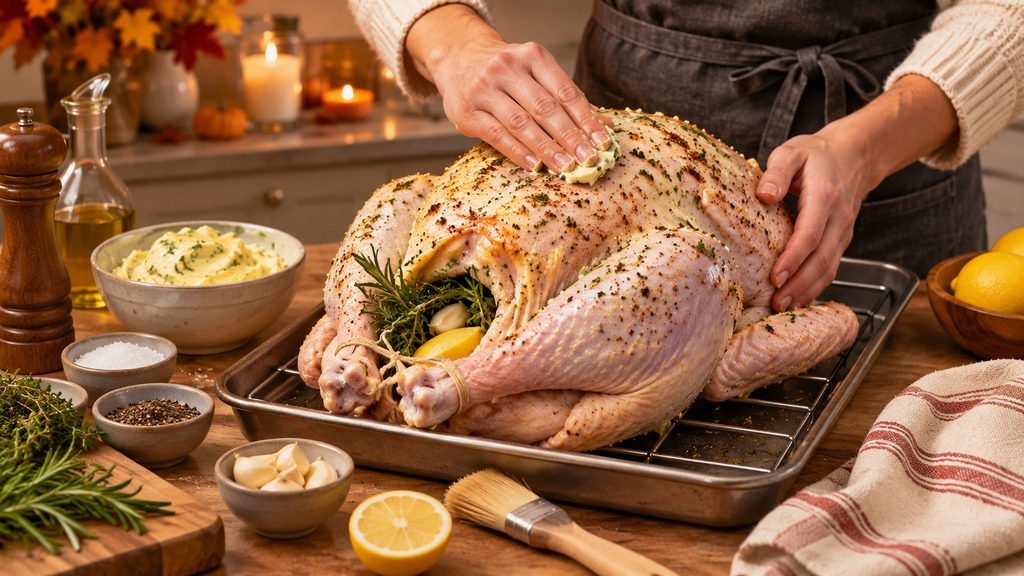
Gently loosen the breast skin with clean fingers. Spread some herb butter beneath the skin and distribute the remainder across the exterior.
This technique places flavorful fat directly against the breast meat. It also helps create a lightly browned surface during roasting.
Step 2. Fill the cavity with aromatics
Quarter the onion and lemon. Place them loosely inside the cavity with the remaining garlic and herb sprigs.
Do not confuse loose aromatics with bread stuffing. Dense stuffing creates an additional food safety challenge because its center must also reach 165°F.
Tuck the wing tips beneath the bird. Tie the drumsticks loosely if desired, avoiding an excessively tight arrangement.
Step 3. Arrange the roasting pan
Position the turkey breast-side up on a roasting rack. Pour 1 cup of stock into the pan beneath the rack.
The liquid reduces the risk of drippings scorching early. Keep the turkey above the liquid rather than partially submerged.
Place the pan in the preheated oven. Leave enough clearance above the bird for hot air to circulate freely.
Step 4. Roast and monitor browning
Roast at 325°F, following the approximate cooking times for the bird’s weight.
Avoid opening the oven repeatedly. Each opening releases heat and can make the total cooking period less predictable.
If the breast skin becomes dark before the meat finishes, cover that area loosely with aluminum foil.
For juicy roast turkey, thermometer readings matter more than the color of the skin or the oven timer.
Step 5. Check the internal temperature
Insert an instant-read thermometer into the thickest breast area without touching bone. Repeat the measurement in the innermost thigh and wing regions.
Every required location must reach at least 165°F (74°C). If any measurement remains below that temperature, continue roasting and check again.
“Always use a food thermometer.”
FoodSafety.gov, federal food safety guidance accompanying its meat and poultry roasting charts.
A thermometer also prevents unnecessary extra cooking. This matters because lean breast meat becomes noticeably drier when heated far beyond the safe target.
Step 6. Rest and carve
Transfer the cooked turkey to a clean carving board. Rest it for approximately 20–30 minutes before cutting.
Remove the drumsticks and thighs first. Separate the breast meat from the breastbone, then cut across the grain into even slices.
Save the pan juices for gravy. Spoon a little warm gravy over sliced meat immediately before serving, keeping crispy skin exposed.
Thanksgiving Turkey Cooking Time by Weight
One of the most common holiday questions concerns how long to cook a turkey. Weight provides a useful starting point, but oven performance and the bird’s shape influence actual cooking time.
The following estimates apply to fully thawed, unstuffed turkeys roasted at 325°F.
| Turkey weight | Approximate roasting time | Minimum internal temperature |
|---|---|---|
| 8–12 lb | 2¾–3 hours | 165°F |
| 12–14 lb | 3–3¾ hours | 165°F |
| 14–18 lb | 3¾–4¼ hours | 165°F |
| 18–20 lb | 4¼–4½ hours | 165°F |
| 20–24 lb | 4½–5 hours | 165°F |
These ranges come from FoodSafety.gov’s official poultry roasting recommendations. They provide planning estimates rather than guaranteed completion times.
Start checking the meat before the upper end of its expected range. A thermometer should guide the final cooking period.
An oven running 15°F cooler than its display can noticeably extend roasting. Pan depth and airflow also influence heat transfer.
Stuffed turkeys generally require additional time. The stuffing center must reach 165°F, independently of the surrounding meat.
Roasting stuffing separately is usually more convenient. It simplifies temperature monitoring and leaves more room for aromatic vegetables.
For a 6 p.m. dinner, a 12–14 lb turkey might enter the oven around 1:30 p.m. This allows roasting, resting, carving, and a reasonable scheduling buffer.
How to Keep Thanksgiving Turkey Juicy With Crispy Skin
The biggest cooking mistake is treating breast meat and dark meat as identical. Breasts contain less fat and can become dry during prolonged cooking. Thighs contain more connective tissue and often benefit from additional cooking.
The best temperature to cook turkey depends on the roasting method, but 325°F is a dependable baseline.
Several practical adjustments improve texture without complicating the recipe:
- Dry the skin before roasting so surface moisture does not delay browning.
- Apply butter beneath the breast skin instead of concentrating everything on top.
- Avoid tightly packing the cavity with stuffing or vegetables.
- Use foil only when exposed skin begins browning too quickly.
- Measure temperature in several locations rather than relying on 1 reading.
- Rest the finished turkey before slicing.
- Serve carved meat promptly to preserve moisture and temperature.
Basting is optional rather than essential. Frequent basting moistens the surface temporarily but also interrupts oven heating.
For an evenly browned bird, uninterrupted roasting is often more useful than repeated brushing with pan juices.
Dry brine or wet brine?
A dry brine uses salt directly on the turkey. A wet brine submerges it in a refrigerated saltwater solution.
Dry brining requires less refrigerator space and helps remove surface moisture. Wet brining can add moisture but demands a sufficiently large food-safe container.
Both methods require careful salt measurement and proper refrigeration.
For a first Thanksgiving dinner, dry brining is usually the simpler choice because it reduces preparation equipment.
Common Turkey Mistakes and How to Fix Them
Even carefully prepared turkey can develop problems during roasting. Most are related to uneven heat, excess moisture, or incorrect temperature measurements.
What to do when the breast browns too quickly
Cover the darkened breast loosely with foil while allowing the legs to continue roasting.
Do not automatically increase oven heat. Higher temperatures can worsen exterior browning before the inside finishes.
Why turkey skin stays soft
Wet skin creates steam, which interferes with crisp browning. Patting the bird dry before roasting reduces this problem.
Avoid excessive pan liquid and repeated basting. A roasting rack also keeps the underside from sitting in moisture.
Why the turkey tastes dry
Overcooking is a common cause. Insufficient resting and excessively thin carving can make dryness more noticeable.
Use a thermometer and slice only when ready to serve. Warm gravy can improve the texture of meat that has already lost moisture.
How to prepare the rest of Thanksgiving dinner
Oven scheduling becomes easier when desserts are prepared early. A Dutch apple pie with cinnamon and butter crumble can be baked before the turkey enters the oven.
Another option is no-bake pumpkin cheesecake lasagna. It chills in the refrigerator, leaving the oven available for the main course.
Prepare cranberry sauce, cold desserts, and vegetable ingredients in advance. During the turkey’s resting period, finish gravy and reheat suitable side dishes.
Frequently Asked Questions About Thanksgiving Turkey
How long does it take to cook a 12 lb Thanksgiving turkey?
A fully thawed, unstuffed 12 lb turkey typically needs approximately 3–3¾ hours at 325°F. The safe minimum internal temperature is 165°F in the required measurement locations.
Should Thanksgiving turkey be covered while roasting?
A turkey can roast uncovered for better browning. Add loose foil over the breast if its skin becomes too dark before the meat finishes.
Is it better to cook turkey at 325°F or 350°F?
Both temperatures can work for roasting. The USDA recommends roasting poultry at 325°F or higher, with 165°F as the minimum internal temperature.
How do you keep turkey moist overnight?
Keep raw, seasoned turkey refrigerated rather than leaving it at room temperature. For cooked leftovers, refrigerate within 2 hours and store in shallow containers.
Can Thanksgiving turkey be prepared the day before?
The turkey can be thawed, dried, and seasoned in advance under refrigeration. Cooking it on Thanksgiving Day generally provides the best freshly roasted texture.
How long can cooked Thanksgiving turkey stay in the refrigerator?
Cooked turkey generally keeps for 3–4 days at 40°F or below. Reheat leftovers to 165°F, or freeze them for longer storage.
Earlier we wrote about How to Make Dutch Apple Pie: Easy Recipe With Cinnamon Apples and Crispy Butter Crumble