 Frank Rondel
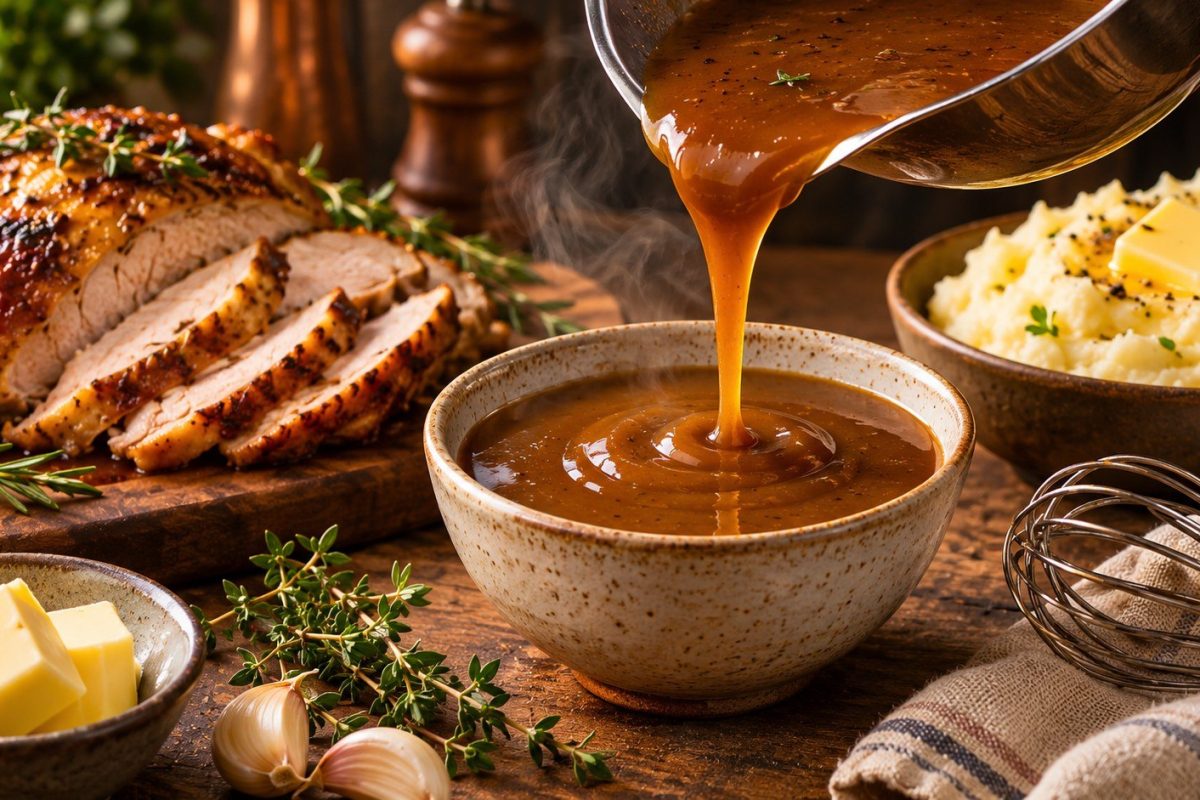
Perfect gravy begins with 3 simple ingredients: flavorful stock, fat, and flour. Getting their proportions right makes the difference between a silky sauce and a disappointing, lumpy mixture. Whether you’re preparing Thanksgiving turkey or a Sunday roast, this guide explains how to achieve consistent results, as reported by customreceipt.com.
A good gravy should coat the back of a spoon without becoming heavy or sticky. It needs enough body to cling to mashed potatoes, yet remain fluid enough to pour. The secret lies in cooking the flour properly, adding stock gradually, and controlling the final seasoning.
You can make excellent homemade gravy with roasted meat drippings or ordinary store-bought stock. The process takes approximately 15–20 minutes, and most mistakes are surprisingly easy to correct.
What Makes Perfect Gravy Taste So Good?
The best gravy develops its flavor through a combination of browned meat juices, concentrated stock, and carefully cooked flour.
When meat roasts, proteins and natural sugars create flavorful browned deposits on the roasting pan. These deposits, commonly called fond, provide a rich foundation for the sauce. Adding stock and scraping the pan releases those savory flavors.
Fat contributes richness, while flour provides structure. Together, they create a roux, the traditional thickening base used in many sauces.
The final ingredient is balance. Too much salt overwhelms the roasted flavors, while excessive flour produces a pasty texture.
A practical approach involves using the pan juices from a perfectly roasted Thanksgiving turkey. These juices create depth that plain broth rarely achieves alone.
However, excellent gravy does not require a whole roasted bird. Butter, quality stock, and several pantry seasonings can produce a convincing alternative.
The most successful gravy tastes like a concentrated version of the meal it accompanies. Its purpose is to enhance roasted meat and vegetables, not bury their natural flavors.
Ingredients for the Best Homemade Gravy
This classic homemade gravy recipe produces approximately 2 cups, enough for 6–8 moderate servings.
Preparation takes approximately 5 minutes, followed by 10–15 minutes of cooking.
| Ingredient | Quantity | Purpose |
|---|---|---|
| Unsalted butter or separated roasting fat | 4 tablespoons | Creates richness and the roux base |
| All-purpose flour | 4 tablespoons | Thickens the gravy |
| Chicken, turkey, or beef stock | 2 cups | Provides the main flavor |
| Roasting juices, if available | 2–4 tablespoons | Adds concentrated savory flavor |
| Worcestershire sauce | ½ teaspoon | Adds optional depth |
| Freshly ground black pepper | ¼ teaspoon | Provides gentle warmth |
| Fresh thyme | 1 teaspoon | Adds herbal aroma |
| Salt | To taste | Balances the finished sauce |
Choose low-sodium stock whenever possible. This gives you greater control over the seasoning, especially when roasting juices are already salty.
The recommended flour quantity produces a moderately thick sauce. For thinner gravy, begin with 3 tablespoons of flour instead.
Unsalted butter is particularly useful because different stocks contain varying amounts of sodium. You can also combine butter with reserved poultry fat for greater flavor.
If using roasting juices, include their liquid portion as part of the overall stock measurement. This prevents the sauce from becoming unexpectedly thin.
Avoid adding salt until the final minutes. Simmering concentrates flavors, making a properly seasoned sauce taste saltier as moisture evaporates.
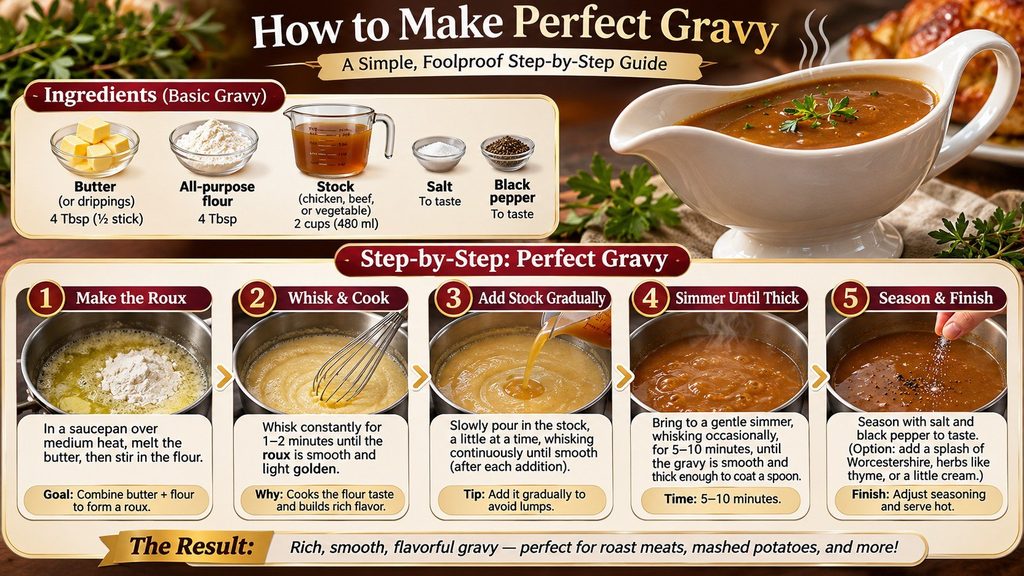
How to Make Perfect Gravy Step by Step
Learning how to make gravy from scratch is largely about timing and temperature.
A medium saucepan, sturdy whisk, and measuring cup are sufficient. A fine-mesh strainer is helpful but optional.
Follow these instructions for a smooth, reliable result:
- Prepare the liquid. Warm 2 cups of stock in a separate saucepan until steaming.
- Melt the fat. Place 4 tablespoons of butter or roasting fat in a saucepan over medium heat.
- Add the flour. Whisk in 4 tablespoons of all-purpose flour until completely combined.
- Cook the roux. Stir continuously for 2–4 minutes until lightly golden and fragrant.
- Introduce the stock. Add approximately ¼ cup of warm stock while whisking vigorously.
- Continue gradually. Add the remaining liquid in several portions, whisking until smooth.
- Simmer gently. Cook for 5–8 minutes, stirring regularly, until the gravy thickens.
- Finish the seasoning. Add pepper, thyme, optional Worcestershire sauce, and salt to taste.
- Check the texture. Adjust with additional stock if the mixture becomes too thick.
- Serve immediately. Transfer the finished gravy to a warm serving jug.
The mixture may become extremely thick after the first addition of stock. This is normal, so continue whisking until the texture loosens.
Avoid pouring all the liquid into the roux at once. Gradual additions make small flour clumps easier to eliminate.
Keep the heat moderate throughout the process. Excessive heat can scorch the flour before the liquid is fully incorporated.
The sauce should reach a gentle simmer before you judge its thickness. Flour needs sufficient heat to develop its thickening effect.
If you prefer an especially refined finish, pass the completed gravy through a fine-mesh strainer. This removes any remaining lumps and herb fragments.
How to Make Gravy From Turkey Drippings
Turkey drippings contain browned juices, rendered fat, and concentrated roasting flavors. They provide an excellent foundation for traditional Thanksgiving gravy.
Start by removing the roasted turkey from its pan. Let the meat rest while you prepare the sauce.
Carefully pour the pan juices into a heatproof measuring jug or fat separator. Allow the fat to separate from the darker cooking juices.
Reserve approximately 4 tablespoons of fat for the roux. Keep the flavorful liquid underneath for the gravy.
Place the roasting pan over suitable burners, if the pan is stovetop-safe. Add a little stock and scrape the browned deposits from the bottom.
Transfer this liquid into your saucepan with the remaining stock.
For a complete holiday menu, pair turkey gravy with classic homemade stuffing. The bread absorbs the sauce while maintaining its buttery, herbal character.
Don’t confuse roasting juices with pure rendered fat. Their different compositions affect how flour behaves during cooking.
Using watery juices directly to prepare a roux can create stubborn lumps.
For the cleanest result, separate the fat first, cook it with flour, and introduce the liquid afterward.
How to Make Gravy Without Meat Drippings
A flavorful gravy without drippings can be prepared using butter, stock, onions, and simple seasonings.
This approach works particularly well when serving chicken breasts, mashed potatoes, or vegetarian dishes.
Begin by melting butter over medium heat. Add 2 tablespoons of finely chopped onion and cook until soft.
Stir in the flour and prepare the roux normally. Then introduce warm stock gradually.
For additional depth, consider these ingredients:
- Caramelized onions: Add natural sweetness and a darker, richer flavor.
- Mushrooms: Create an earthy taste suitable for vegetarian meals.
- Soy sauce: Contributes saltiness and savory complexity in small amounts.
- Fresh rosemary: Complements beef, lamb, and roasted potatoes.
- Garlic: Adds fragrance when gently cooked without burning.
- White miso: Provides concentrated umami for meat-free gravy.
These additions should complement the stock rather than dominate it. Start with small quantities and taste before adding more.
For vegetarian gravy, use vegetable stock and replace meat drippings with butter or olive oil. Check Worcestershire sauce labels because traditional versions often contain anchovies.
Mushrooms work especially well when browned before the stock is introduced. Their moisture should evaporate sufficiently to develop deeper flavors.
If using soy sauce or miso, reduce the initial salt quantity. Both ingredients can make the finished sauce noticeably saltier.
How Thick Should Gravy Be?
Consistency is one of the clearest indicators of successful gravy preparation.
A properly thickened sauce should flow from a spoon in a smooth, continuous stream. It should not resemble water or a dense paste.
The ideal thickness depends partly on how the sauce will be served.
| Gravy style | Flour per 2 cups of stock | Recommended use |
|---|---|---|
| Light gravy | 2 tablespoons | Roasted vegetables |
| Medium gravy | 3 tablespoons | Chicken and turkey |
| Traditional thick gravy | 4 tablespoons | Mashed potatoes and stuffing |
| Extra-thick gravy | 5 tablespoons | Biscuits and hearty dishes |
| Cornstarch-based gravy | 1–2 tablespoons cornstarch | Gluten-free preparation |
These quantities are starting points rather than universal measurements. Actual thickness varies with simmering time, starch type, and stock concentration.
When replacing flour with cornstarch, use a different technique. Mix the cornstarch with cold water before adding it to simmering liquid.
Do not substitute the same volume blindly. Cornstarch usually has greater thickening power than ordinary wheat flour.
Remember that gravy becomes thicker as it cools. A sauce that appears perfect while boiling may feel excessively heavy after several minutes.
For buffet service, keep a little warm stock available. Stir in small amounts whenever the gravy needs loosening.
Why Does Homemade Gravy Turn Lumpy?
Lumps form when flour particles hydrate unevenly and stick together.
This often happens when cooks add flour directly to hot stock. The outer surface thickens immediately, trapping dry flour inside.
Another common mistake involves adding too much liquid before the roux has formed a smooth mixture.
Fortunately, most lumpy sauces can be rescued.
How to Fix Lumpy Gravy
For small lumps, continue whisking over gentle heat. Some flour clusters will gradually break apart.
Larger lumps require a fine-mesh strainer. Pour the gravy through the strainer into a clean saucepan, pressing gently with a spoon.
An immersion blender can also smooth the mixture. Keep the blender submerged to reduce splashing from hot liquid.
The cooking specialists at Serious Eats recommend correcting gravy according to its specific problem. Their guidance covers lumps, excess fat, weak flavor, and incorrect thickness.
Prevention remains easier than repair. Always combine flour thoroughly with fat before introducing substantial amounts of stock.
Common Gravy Problems and How to Fix Them
Even carefully measured recipes can produce unexpected results. Differences in stock, evaporation, and heat explain many common problems.
| Problem | Likely cause | Practical solution |
|---|---|---|
| Gravy is too thin | Insufficient thickener | Simmer longer or add a prepared slurry |
| Gravy is too thick | Too much flour or evaporation | Whisk in warm stock gradually |
| Gravy tastes bland | Weak stock or limited seasoning | Add reduced stock or suitable savory seasonings |
| Gravy is too salty | Concentrated or heavily seasoned liquid | Dilute with unsalted stock |
| Gravy tastes floury | Roux was undercooked | Simmer longer and reassess |
| Gravy looks greasy | Excess fat | Skim the surface or use a fat separator |
| Gravy has dark specks | Burned flour or pan deposits | Strain; restart if the sauce tastes scorched |
A thin sauce often needs additional simmering rather than immediate thickening. Allow some moisture to evaporate before introducing more flour or starch.
For overly salty gravy, prepare a small amount of unsalted sauce and combine the batches. Adding water alone may weaken the texture and overall flavor.
Avoid relying on raw potatoes to absorb excess salt. This popular kitchen trick does not reliably solve the underlying seasoning problem.
Burned gravy presents a more difficult challenge. If the flour has developed a distinctly bitter flavor, starting again is usually preferable.
The easiest protection against mistakes is frequent tasting. Adjust seasoning gradually instead of attempting major corrections immediately before serving.
How to Give Gravy a Richer, Restaurant-Style Flavor
A memorable sauce needs more than thickness. Its aroma, depth, and finish deserve equal attention.
Professional kitchens often rely on concentrated stocks and carefully browned ingredients. Home cooks can use the same principles without complicated equipment.
Start with good-quality stock. If its flavor seems weak, reduce it gently before preparing the gravy.
Fresh herbs can provide complexity without making the sauce excessively salty. Thyme suits poultry, while rosemary complements beef and lamb.
A small amount of Worcestershire sauce can deepen meat-based gravy. Mushroom powder offers an alternative for plant-based preparations.
Finish with 1 teaspoon of cold butter, whisked into the hot sauce just before serving. This can give the gravy a smoother appearance and richer mouthfeel.
The difference between acceptable gravy and exceptional gravy often emerges during the final 2 minutes. Taste for salt, check the thickness, and consider whether the sauce needs acidity or additional savory depth.
A few drops of lemon juice or mild vinegar can brighten an overly heavy sauce. Use restraint because gravy should remain savory rather than noticeably sour.
What to Serve With Homemade Gravy
Gravy works best with foods that can absorb its flavor without losing their texture.
Roasted meats remain the traditional choice, but the possibilities extend much further.
Consider these combinations:
- Roast turkey with sage stuffing and mashed potatoes.
- Roast chicken with carrots and buttered green beans.
- Beef roast with Yorkshire pudding and potatoes.
- Southern biscuits with thick, peppery gravy.
- Vegetarian mushroom loaf with onion gravy.
- Mashed potatoes topped with chicken or beef gravy.
For a traditional Thanksgiving plate, green bean casserole with crispy onions offers another familiar side dish.
The sauce should be served hot enough to remain fluid. Cold serving dishes can cool small portions surprisingly quickly.
Warm the gravy boat with hot water before filling it. Empty and dry the container thoroughly before adding the sauce.
When serving a large gathering, consider preparing slightly more gravy than expected. Guests often use extra portions for potatoes and stuffing.
Avoid pouring gravy over every dish before serving. Offering it separately allows everyone to control the quantity.
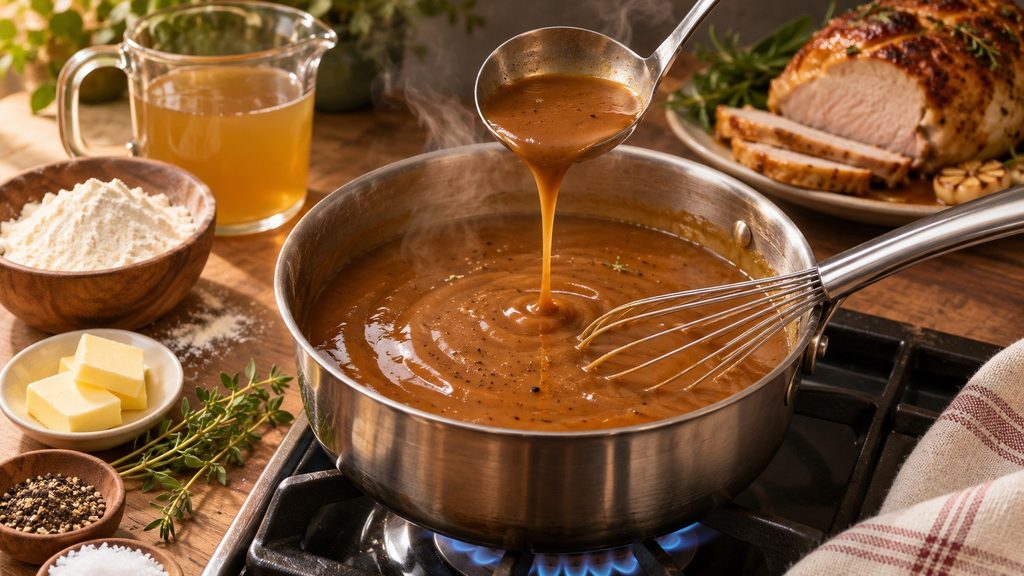
Can You Make Gravy Ahead of Time?
Preparing gravy in advance can simplify holiday cooking considerably.
Make the sauce using stock and butter, then refrigerate it promptly. Fresh roasting juices can be incorporated when the meat is ready.
Cool the cooked gravy quickly in shallow containers. Do not leave it standing at room temperature for an extended period.
The USDA’s food safety guidance recommends keeping refrigerated gravy for no longer than 3–4 days. For longer storage, it identifies a freezer period of 4–6 months.
When reheating gravy, the US Food and Drug Administration provides this instruction:
Bring sauces, soups and gravy to a boil when reheating.
— US Food and Drug Administration (FDA), Safe Food Handling, guidance on reheating cooked foods. Official source.
Whisk the sauce during reheating to restore its smooth texture. Add a little stock if refrigeration has made it noticeably thicker.
Previously frozen gravy may appear separated after thawing. Gentle heating and continuous whisking often help restore its consistency.
Do not leave perishable gravy at room temperature for more than 2 hours. In temperatures above 90°F, refrigerate it within 1 hour.
For the best flavor, reheat only the quantity needed for serving. This also reduces repeated handling of the remaining sauce.
FAQ: Perfect Gravy Recipe
What is the secret to perfect homemade gravy?
The key is a properly cooked roux, flavorful stock, and gradual liquid addition. Consistent whisking prevents lumps, while moderate simmering develops the desired texture.
How do you make gravy with flour and butter?
Melt 4 tablespoons of butter and whisk in 4 tablespoons of flour. Cook until lightly golden, then gradually add 2 cups of warm stock. Simmer until thickened and season to taste.
Can you make gravy without flour?
Yes. Use cornstarch, arrowroot, or another suitable thickener. Mix cornstarch with cold water before adding it to hot stock. Simmer until the mixture reaches your preferred consistency.
What is the best stock for gravy?
Chicken stock works well for poultry, while beef stock complements red meat. Turkey stock is especially suitable for Thanksgiving gravy. Vegetable stock provides a useful meat-free alternative.
How do you thicken gravy quickly?
Simmer it uncovered to reduce excess liquid. Alternatively, add a small cornstarch slurry while whisking. Allow the sauce to simmer briefly before assessing the final thickness.
Why does gravy taste like raw flour?
The roux probably did not cook long enough, or the finished sauce needs more simmering. Cook flour thoroughly before adding stock, then allow the gravy to develop its flavor.
How much gravy should you make per person?
Plan approximately ¼–⅓ cup per person for a typical meal. For 8 guests, preparing 2–3 cups provides a practical starting quantity.
Can homemade gravy be frozen?
Yes. Refrigerate promptly, then transfer portions into freezer-safe containers. The USDA recommends using frozen gravy within 4–6 months. Reheat thoroughly before serving.
The Final Test for Perfect Gravy
Successful gravy depends on a reliable technique rather than expensive ingredients. A smooth roux, good stock, controlled simmering, and careful seasoning provide the foundation.
Start with the classic butter-and-flour method before experimenting with herbs, mushrooms, or roasting juices. Once you understand the consistency, adapting the flavor becomes straightforward.
For your next roast dinner, prepare the gravy while the meat rests. Taste it carefully, adjust the thickness, and serve it hot.
Earlier we wrote about How to Make Green Bean Casserole: A 40-Minute Recipe With Creamy Sauce and Crispy Onions