 Frank Rondel
A brighter smile remains one of the most requested cosmetic improvements in oral care. Interest in how to whiten teeth naturally continues to grow because many people want alternatives to peroxide-heavy bleaching systems, expensive dental procedures, and whitening strips that often trigger sensitivity. Natural whitening approaches usually focus on surface stains, plaque control, and habits that protect enamel. They rarely create dramatic results overnight, but they may gradually improve discoloration caused by coffee, tea, smoking, or diet. Deep whitening usually requires professional treatment instead of home remedies, аs noted by customreceipt.com.
Not every home remedy is safe. Acids and abrasive powders can damage enamel if used too often.
The same caution applies to other health routines, whether it is daily meditation practice or better sleep habits. Consistency works better than intensity. Gentle long-term habits usually produce safer results than aggressive whitening trends.
People searching for how to whiten teeth naturally should understand the limit of home whitening. Natural methods mainly affect external stains. Deep discoloration linked to genetics, medications, aging, or dental trauma usually requires professional care.
What Causes Teeth Staining?
Teeth become discolored through daily exposure to pigments, acids, aging, and enamel wear. The source of the stain determines whether home whitening is likely to work.
Dentists usually divide tooth discoloration into extrinsic and intrinsic stains. Extrinsic stains affect the enamel surface and respond better to cleaning. Intrinsic stains develop inside the tooth and are harder to change without professional bleaching. Surface stains are far easier to improve at home than deep internal discoloration.
| Type of Stain | Common Causes | Can Be Removed at Home? |
|---|---|---|
| Extrinsic | Coffee, tea, red wine, smoking, soda | Usually yes |
| Intrinsic | Aging, medications, trauma, genetics | Limited improvement |
| Surface stains | Pigments attached to enamel | Often removable |
| Deep stains | Changes beneath enamel | Rarely removable naturally |
Extrinsic stains form when pigments from dark foods and drinks attach to microscopic pores in enamel. Coffee, black tea, cola, soy sauce, tobacco, and red wine are among the strongest contributors. These stains usually respond best to brushing, whitening toothpaste, and mild abrasive treatments.
Intrinsic stains sit deeper beneath the enamel layer.
Aging naturally makes enamel thinner, which exposes more yellow dentin underneath. Some antibiotics, excessive fluoride exposure, and dental trauma can also permanently alter tooth color. Surface stains respond best to natural teeth whitening methods because they remain closer to the enamel surface. Deep stains often require professional bleaching or cosmetic procedures.
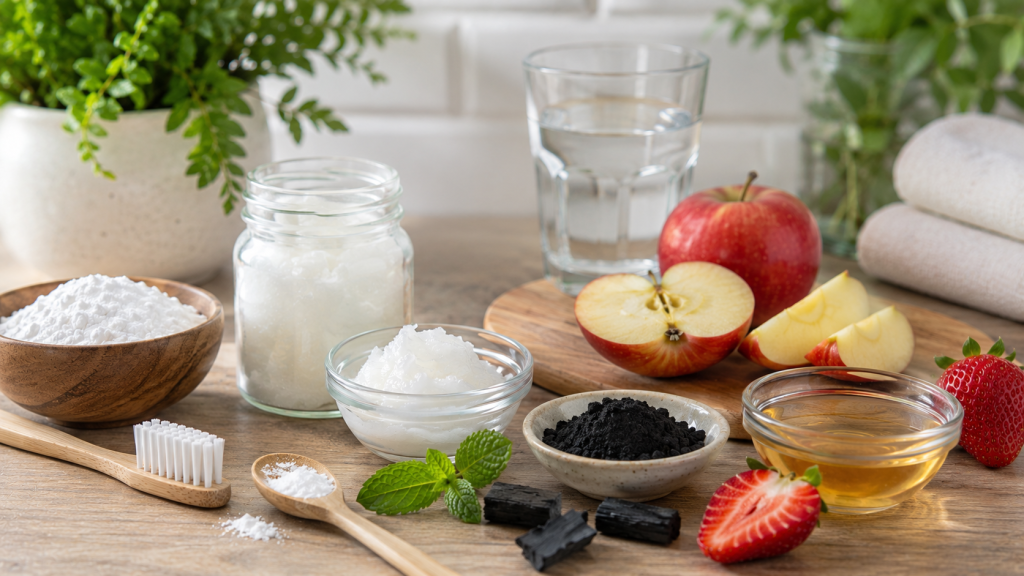
6 Natural Teeth Whitening Methods
Most home remedies work slowly. They target plaque, external pigments, or mild yellowing rather than changing the internal tooth shade.
1. Baking Soda and Hydrogen Peroxide Paste
Baking soda teeth whitening remains one of the most common home remedies. Baking soda works as a mild abrasive that polishes away external stains. Hydrogen peroxide may add mild bleaching action.
A simple paste includes:
- One teaspoon of baking soda
- Several drops of hydrogen peroxide
- Enough liquid to form a soft paste
Use the paste gently for about one minute, then rinse thoroughly. Limit use to two or three times weekly.
This method can help with coffee and tea stains, especially for people who regularly drink beverages like homemade iced coffee. Hard scrubbing can wear enamel, so pressure matters more than frequency. Baking soda-based whitening products are also common in commercial toothpaste because they polish the enamel surface without the harsh abrasion level of some charcoal products. Excessive use may increase sensitivity over time.
Evidence level: moderate.
2. Oil Pulling With Coconut Oil
Oil pulling comes from Ayurvedic practice. It involves swishing oil in the mouth for 15–20 minutes, then spitting it out.
Typical steps include:
- Use one tablespoon of coconut oil
- Swish gently for 15–20 minutes
- Avoid swallowing the oil
- Spit into a trash bin
- Rinse and brush afterward
Oil pulling does not bleach teeth directly. It may reduce plaque and bacteria that make teeth look dull. Some people notice fresher breath and smoother-feeling teeth after several weeks of consistent use. The whitening effect usually comes from reduced plaque buildup rather than true bleaching.
The method is relatively gentle when used correctly. It should not replace brushing, flossing, fluoride toothpaste, or dental cleanings.
Evidence level: limited but supportive for oral hygiene.
3. Apple Cider Vinegar Rinse
Apple cider vinegar appears in many teeth whitening remedies because acetic acid may loosen surface stains. The same acidity can weaken enamel.
A safer dilution is:
- One part apple cider vinegar
- Two or three parts water
Use it briefly once or twice weekly, then rinse with plain water.
Frequent use raises the risk of sensitivity and enamel erosion. Apple cider vinegar also appears in household guides such as fruit fly removal methods, but teeth are not kitchen surfaces. Acid exposure must stay short and diluted. Leaving acidic mixtures on enamel for extended periods may eventually make teeth appear more yellow because thinning enamel exposes darker dentin underneath.
Evidence level: limited, with clear enamel risks.
4. Activated Charcoal
Activated charcoal became popular because it may absorb pigments and surface debris. Some users notice short-term brightness after occasional use.
Potential advantages include:
- May remove external stains
- Easy to buy
- Inexpensive
- Simple to apply
Potential drawbacks include:
- Weak scientific evidence
- Abrasive texture
- Enamel wear risk
- Gum irritation
- Lack of fluoride in many products
Charcoal is controversial because rough enamel can collect more stains over time. Daily use is not a safe long-term whitening plan.
Many dentists recommend caution because activated charcoal products vary widely in abrasiveness. Some powders are significantly rougher than standard toothpaste. Whitening results also tend to be temporary because charcoal mainly targets external pigments instead of changing the tooth structure itself.
Evidence level: controversial.
5. Crunchy Fruits and Vegetables
Crunchy foods can brighten smile naturally by increasing saliva and lightly scrubbing the tooth surface during chewing.
Useful examples include:
- Apples
- Celery
- Carrots
- Cucumbers
- Pears
These foods do not bleach enamel. They help reduce residue, dilute acids, and support cleaner-looking teeth between brushings.
The same practical logic applies to saving money on groceries. Simple repeated choices usually matter more than one expensive fix. Saliva also plays an important protective role because it washes away food particles and neutralizes acids that contribute to staining and enamel erosion.
Evidence level: mild supportive effect.
6. Strawberry and Baking Soda Paste
Strawberries contain malic acid, which may loosen light surface discoloration. Baking soda adds mild polishing.
Basic method:
- Mash one ripe strawberry
- Add a small amount of baking soda
- Apply gently for one or two minutes
- Rinse thoroughly
- Brush lightly afterward
The effect is usually temporary.
Fruit acid can soften enamel, so this method should stay occasional. Many online whitening claims exaggerate the effectiveness of strawberries. The treatment may slightly improve surface brightness for a short period, but it does not significantly change deep tooth color.
Overuse creates more risk than benefit because acidic fruit exposure can weaken enamel over time.
Evidence level: limited.
Natural whitening methods work best when combined with consistent brushing, flossing, hydration, and reduced exposure to staining foods. Most people achieve better long-term results through daily maintenance instead of aggressive whitening attempts.
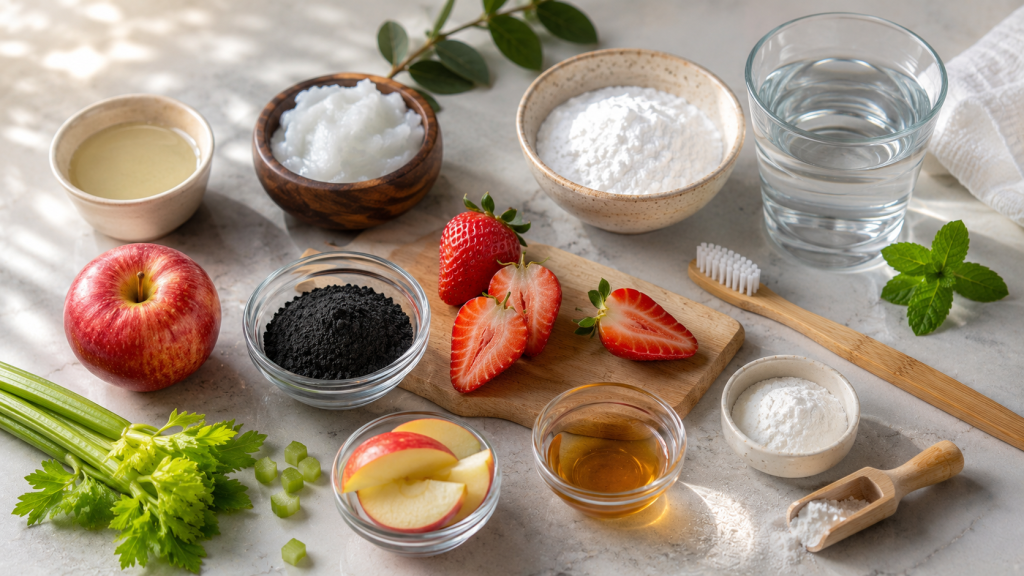
Foods That Stain and Foods That Help
Diet affects tooth color every day. Pigmented foods attach to enamel gradually, especially when plaque or rough enamel is already present.
People trying to whiten teeth at home often focus on whitening products while keeping the habits that caused stains.
| Staining Foods and Drinks | Foods That May Help Whitening |
|---|---|
| Coffee | Apples |
| Black tea | Strawberries |
| Red wine | Cheese |
| Soy sauce | Celery |
| Curry | Water |
| Cola and dark soda | Cucumbers |
| Blueberries | Pears |
Coffee and tea contain tannins that bind strongly to enamel and create yellow or brown discoloration over time. Red wine combines dark pigments with acidity, making stains more likely to penetrate rough enamel surfaces.
Curry, soy sauce, and dark berries also contain concentrated pigments that can contribute to discoloration after repeated exposure. Whitening-supportive foods usually help mechanically instead of chemically. Apples, celery, cucumbers, and pears stimulate saliva production while gently cleaning the tooth surface during chewing. Cheese may support enamel strength because calcium and phosphates help maintain mineral balance.
Water remains one of the simplest and most effective stain-control tools.
Drinking water after coffee, wine, or acidic meals reduces the amount of pigment left on enamel and helps wash away food particles before stains settle. Long-term whitening success usually depends more on daily eating habits than on occasional whitening treatments.
Methods to Avoid
Some viral whitening hacks damage enamel faster than they brighten teeth. Short-term shine is not worth long-term sensitivity.
Lemon Juice on Teeth
Lemon juice is too acidic for direct tooth whitening. It can remove surface debris, but it also erodes enamel.
Possible side effects include:
- Tooth sensitivity
- Enamel erosion
- Higher cavity risk
- Rough tooth texture
- Darker-looking teeth over time
Once enamel wears away, it does not grow back naturally.
This makes repeated lemon treatments especially risky. Teeth may initially appear brighter after acid exposure because the surface becomes temporarily cleaner, but the long-term effect is often increased yellowing from enamel loss.
Excessive Baking Soda Use
Moderate baking soda teeth whitening may help with surface stains. Daily scrubbing can thin enamel and irritate gums. Even mild abrasives become harmful when combined with aggressive brushing pressure.
People using hard-bristle toothbrushes face even greater enamel wear risk.
Daily Charcoal Toothpaste
Some charcoal toothpastes are too abrasive for everyday use. Many also lack fluoride, which helps protect against cavities. Frequent charcoal use may roughen enamel surfaces and eventually attract more stains.
This creates the opposite effect of the intended whitening result.
DIY Bleaching Mixtures
Homemade peroxide recipes can burn gums or trigger strong sensitivity. Unregulated bleaching is especially risky for people with fillings, crowns, cavities, or gum disease.
Natural does not automatically mean safe. Abrasion and acidity remain the biggest risks in home whitening.
People with ongoing sensitivity, gum inflammation, or mouth-breathing problems should also consider related oral-health factors, including sleep and airway issues covered in guides on how to stop snoring.
Professional Whitening vs Natural Methods
Natural remedies and professional whitening solve different problems. Home methods mostly reduce surface staining. Professional whitening can lighten deeper discoloration.
| Natural Methods | Professional Whitening |
|---|---|
| Gradual improvement | Faster visible change |
| Lower cost | Higher cost |
| Mostly surface stain removal | Deeper whitening ability |
| Lower sensitivity risk when used properly | Temporary sensitivity possible |
| Easy home maintenance | Dentist supervision |
Professional whitening treatments use stronger bleaching agents that penetrate enamel more effectively. Dentists can also customize treatment strength and duration based on sensitivity levels, existing dental work, and the cause of discoloration. Natural whitening methods remain useful for maintenance after professional bleaching.
People who improve oral hygiene and reduce staining habits often preserve whitening results much longer.
Professional whitening may be worth considering for:
- Deep yellow or gray discoloration
- Medication-related staining
- Uneven tooth color
- Long-term smoking stains
- Poor results from home methods
- Important cosmetic events
Dentists can also identify whether discoloration comes from stains, enamel thinning, decay, or internal tooth damage. That distinction matters because some cosmetic problems cannot be solved with home whitening remedies alone.
FAQ
How long does natural teeth whitening take?
Most natural methods need several weeks before visible improvement appears. Surface stains may fade gradually, while deep stains usually change very little.
Is baking soda safe for enamel?
Baking soda can be safe when used gently two or three times weekly. Aggressive brushing increases enamel wear risk.
Does coconut oil whiten teeth?
Oil pulling does not bleach enamel. It may reduce plaque and bacteria, which can make teeth appear cleaner.
Can yellow teeth become white naturally?
Mild yellowing from foods, drinks, smoking, or plaque may improve. Deep discoloration usually requires professional whitening.
What is the safest way to whiten teeth at home?
The safest approach combines fluoride toothpaste, flossing, water after staining drinks, reduced pigment exposure, and occasional gentle whitening.
Is activated charcoal safe?
Occasional use may remove some surface stains, but daily use can be too abrasive. Evidence remains limited.
People searching for how to whiten teeth naturally usually get the best results from steady habits, not aggressive tricks. Mild abrasives, stain-control foods, hydration, and consistent brushing can improve surface discoloration over time. Natural methods work best for maintenance and mild stains. Deep discoloration from aging, medication, trauma, or genetics often needs professional care. Protecting enamel should always come before chasing faster whitening results because damaged enamel cannot recover naturally.
Earlier we wrote about How to Make Tom Yum at Home: Authentic Thai Soup Recipe With Fresh Ingredients