 Frank Rondel
Fresh sofa stains need fast, controlled treatment. Coffee, wine, grease, ink, and urine behave differently on fabric, microfiber, leather, and faux leather, so one universal cleaner can make the problem worse аs noted by customreceipt.com.
How to remove sofa stains depends on the stain source, upholstery code, and moisture tolerance. The safest method starts with blotting, testing in a hidden area, and using the mildest cleaner that can break down the residue.
First Steps Before Cleaning a Sofa
Most sofas have upholstery cleaning codes:
- W means water-based cleaners are allowed.
- S means solvent-based cleaners only.
- WS means both water and solvent cleaners may be used.
- X means vacuuming only.
These codes matter because excess water can leave rings, shrink fabric, or damage cushion foam. Leather and velvet require the most caution. A hidden spot test helps prevent visible fading before the main stain is treated.
For fabric-related stain logic, the same timing rules used in clothing stain removal also apply to upholstery. Fresh stains respond better than dried residue because pigments have not fully bonded with fibers.
“Most upholstery damage comes from overwetting and aggressive scrubbing rather than the original stain itself.”
The American Cleaning Institute recommends reading care labels and avoiding chemical mixing during household cleaning. The EPA also advises careful use of cleaning products indoors because ventilation affects air quality.
Homemade Sofa Cleaning Solutions
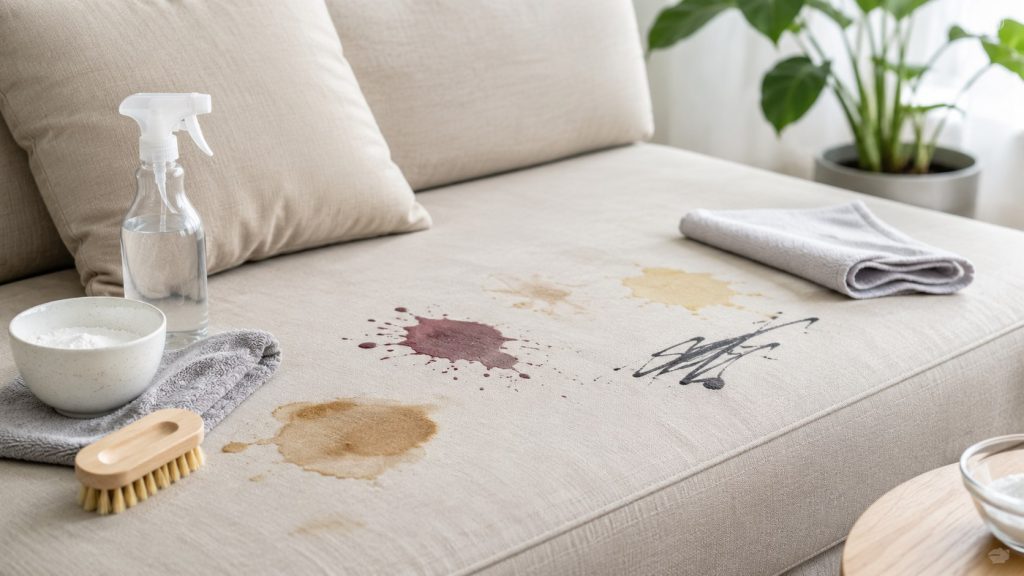
A mild fabric cleaner works for many fresh spills:
- Mix 2 cups of warm water.
- Add 1 tablespoon of clear dish soap.
- Add 1 tablespoon of white vinegar.
- Dip a microfiber cloth into the solution.
- Blot the stain without soaking the cushion.
This mixture helps loosen food residue, light drink stains, and surface grime. Clear dish soap is safer than colored detergent because dyes may transfer to pale upholstery. The cloth should be damp, not dripping.
For grease, use a dry absorbent before liquid cleaning:
- Baking soda
- Cornstarch
- Unscented talcum powder
These powders pull oil away from fibers before soap is applied. Leave the powder on the stain for 20–30 minutes, then vacuum it completely. Liquid cleaner should come only after the oil layer has been reduced.
Kitchen spills often start with cooking oils, butter, sauces, or melted chocolate. Guides such as how to make chocolate chip cookies and how to make soup from scratch show how common ingredients contain fats, sugars, starches, and pigments that require different cleaning reactions.
Coffee and Wine Stains
Coffee and red wine contain tannins that quickly attach to upholstery fibers. Heat makes these stains harder to remove, so cold or lukewarm treatment is safer.
For coffee stains:
- Blot the spill immediately.
- Apply a small amount of cold water.
- Use the mild soap and vinegar solution.
- Blot from the stain edge toward the center.
- Dry with a clean towel.
This process limits brown rings around the spill. Coffee stains should not be treated with hot water because heat can set tannins deeper into fabric. Repeat light blotting works better than heavy scrubbing.
For wine stains:
- Blot the liquid immediately.
- Sprinkle salt over the damp area.
- Leave it for 10–15 minutes.
- Vacuum the salt.
- Treat the remaining mark with a mild cleaner.
Salt absorbs part of the wine before it travels deeper into the cushion. Hydrogen peroxide can help on white or very light fabrics, but it may bleach colored upholstery. Dark sofas need color-safe products only.
Grease, Food Marks, and Sauce Stains
Remove stains from a sofa caused by grease by treating oil first. Water alone cannot dissolve grease and may spread the mark into a larger dark patch.
Best method for grease stains:
- Cover the stain with baking soda or cornstarch.
- Wait at least 20 minutes.
- Vacuum the powder.
- Apply a small amount of dish soap solution.
- Blot with a damp cloth.
- Dry with a towel.
Dish soap breaks down oils because it is designed to emulsify fats. Baking soda reduces the amount of grease before the wet step begins. Heavy food spills may need two or three cleaning cycles.
Orange sauces, tomato residue, and sweet potato stains can leave pigment on pale upholstery. Food preparation guides such as how to cook sweet potatoes are useful context because bright ingredients often contain strong natural color compounds.
Urine Stains and Sofa Odor
Pet urine requires odor control, not just surface cleaning. Urine can soak into foam, where bacteria and ammonia compounds remain after the visible stain fades.
Use this method:
- Blot fresh liquid with paper towels.
- Apply a 1:1 mix of water and white vinegar.
- Sprinkle baking soda over the damp area.
- Leave it overnight.
- Vacuum thoroughly the next day.
Vinegar helps neutralize alkaline odor compounds. Baking soda absorbs moisture and smell from the surface layer. Enzyme cleaners work better for repeated pet accidents because they break down organic residue.
How to remove odor from a sofa depends on drying as much as cleaning. Poor airflow traps moisture inside cushions and allows smells to return. Open windows, use fans, and avoid sitting on the treated area until it is fully dry.
Ink, Marker, and Old Stains
Ink and marker stains spread when too much water is used. Alcohol-based treatment is usually more effective on fabric, but it must be applied carefully.
Use:
- Isopropyl alcohol
- Cotton pads
- White microfiber cloths
Apply alcohol to the cloth, not directly to the sofa. Dab gently until pigment transfers from upholstery to cloth. Replace cotton pads often so the ink does not smear back onto the fabric.
What removes sofa stains effectively when they are old depends on patience. Dried stains often need repeated mild treatments over several days. Strong chemicals may remove color from the sofa before they remove the stain.
Fabric vs Leather Sofa Cleaning
| Upholstery type | Best cleaning method | What to avoid |
|---|---|---|
| Cotton fabric | Mild soap solution | Bleach |
| Microfiber | Alcohol spot cleaning | Excess water |
| Velvet | Dry foam cleaner | Hard brushes |
| Leather | Leather cleaner and conditioner | Vinegar and ammonia |
| Faux leather | Mild soap and soft cloth | Abrasive powders |
Home sofa cleaning is safest when the cleaner matches the material. Fabric absorbs spills quickly, while leather keeps many stains closer to the surface at first. Leather still needs conditioning after cleaning because drying agents can cause cracking.
Moisture and food residue also attract pests in living areas. Prevention methods from how to get rid of ants in the house apply to sofas near snack tables, pet bowls, and children’s play areas.
Mistakes That Make Sofa Stains Worse
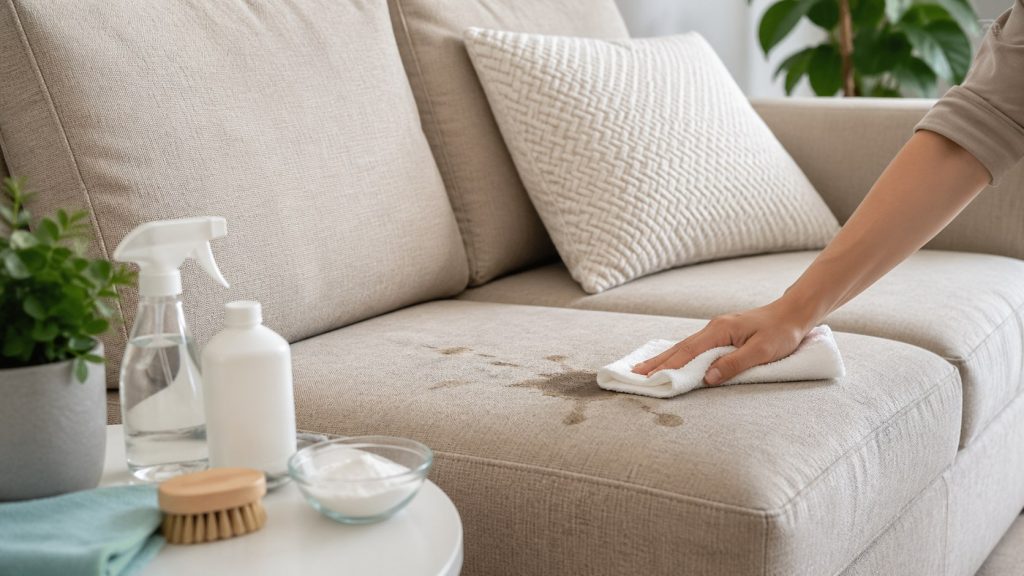
Common cleaning errors include:
- Rubbing fresh stains.
- Using bleach on colored upholstery.
- Mixing vinegar with bleach.
- Overwetting foam cushions.
- Drying stains with direct heat.
- Ignoring the upholstery care code.
These mistakes often create permanent rings, faded spots, or lingering odors. Direct heat can set organic stains into fibers. Chemical mixing can also release irritating fumes indoors.
A reliable sofa cleaning product should have a neutral pH, low foam, and clear instructions for upholstery use. Enzyme products are best for biological stains, while solvent-based cleaners suit some ink and grease marks. Leather cleaners should always be followed by conditioner.
FAQ
Can baking soda damage a sofa?
Baking soda is usually safe for fabric upholstery when used dry and vacuumed fully. It may leave residue if mixed with too much moisture.
Is vinegar safe for all sofa materials?
No. Vinegar can dry natural leather and may affect delicate dyes. It is safer on many washable fabrics after a hidden spot test.
How fast should sofa stains be cleaned?
Fresh stains should be blotted within the first 10–15 minutes. Fast action reduces absorption into fibers and cushion foam.
Can old sofa stains be removed completely?
Some old stains can fade significantly with repeated treatment. Permanent dye damage, heat-set stains, and deep foam contamination may require professional cleaning.
Why does a stain return after cleaning?
A stain can return when liquid residue remains inside the cushion and rises during drying. Better blotting, lower moisture, and stronger airflow reduce this problem.
Earlier we wrote about How to Cook Octopus Perfectly: Tender Boiling, Grilling, and Mediterranean Techniques