 Frank Rondel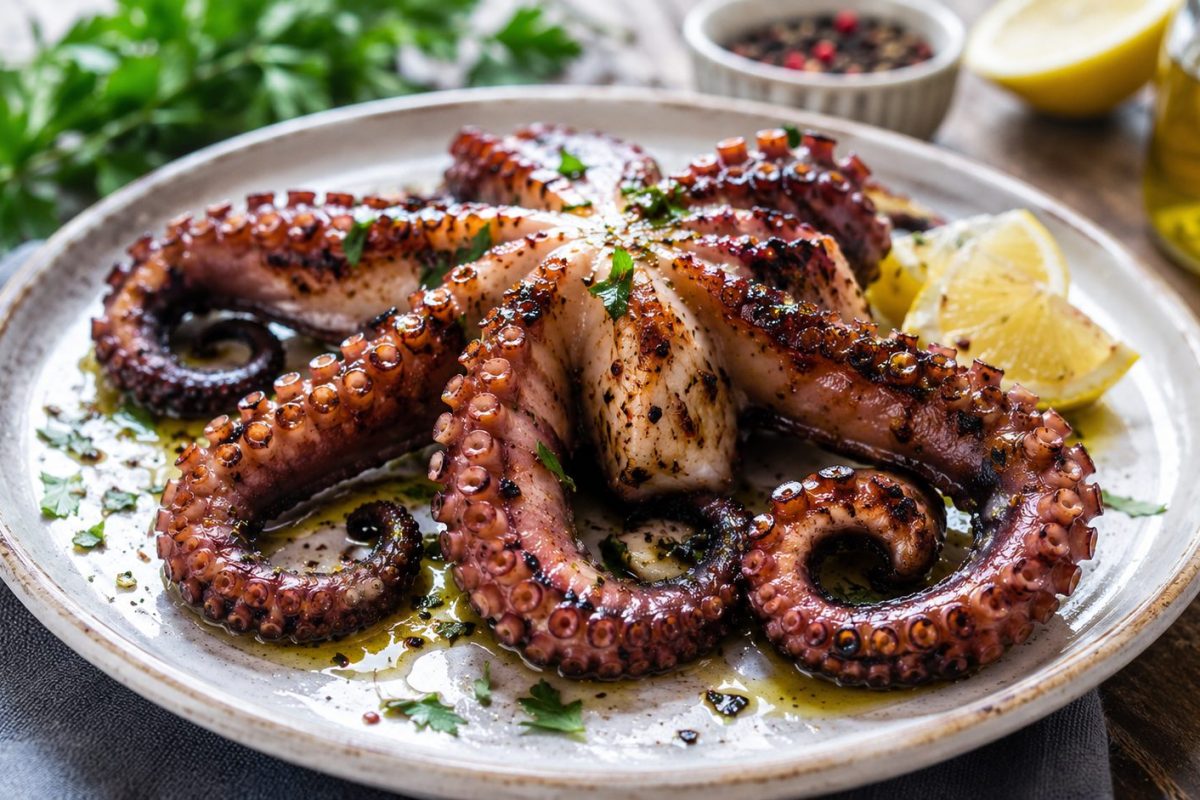
How to cook octopus depends on one rule: tenderness comes before flavoring. Seasoning can improve a good octopus, but it cannot save a tough one, аs noted by customreceipt.com.
Octopus becomes rubbery when heat tightens its muscle fibers before collagen has time to soften. The best results come from gentle simmering, patient resting, and a short high-heat finish if grilling is planned.
The method is not complicated. Greek, Spanish, Italian, and Japanese kitchens all use different flavors, but the core technique stays similar: soften first, finish second.
Choosing Octopus: Fresh vs Frozen
Many home cooks assume fresh octopus is automatically better. In practice, frozen octopus often cooks more reliably because freezing weakens dense muscle fibers before the octopus enters the pot.
| Factor | Fresh octopus | Frozen octopus |
|---|---|---|
| Texture | Firmer and less predictable | Usually more tender |
| Prep work | Often needs cleaning | Often sold cleaned |
| Flavor | Cleaner ocean taste | Slightly milder |
| Best use | Thin slicing, specialty dishes | Boiling, grilling, braising |
| Beginner-friendly | Medium | High |
For most kitchens, frozen vs fresh octopus is a question of control. Frozen octopus gives more consistent tenderness, especially for boiling and grilling.
Choose octopus with a clean ocean smell, moist skin, and intact tentacles. Avoid packages with heavy freezer burn or excessive ice crystals. For food safety, thaw seafood in the refrigerator rather than on the counter, following FDA seafood safety guidance.
A two- to four-pound octopus is easier to manage at home than a very large one. Smaller specimens cook more evenly, and the thickest part of each tentacle reaches tenderness without overcooking the thinner ends.
Home cooks planning a full seafood meal can pair this guide with the CustomReceipt article on how to make soup from scratch because both rely on gentle simmering, aromatics, and careful final seasoning.
Cleaning and Preparing Octopus
Many fishmongers sell cleaned octopus, but it still needs inspection. Rinse it under cold water and check the head cavity before cooking.
Remove these parts if they are still attached:
- Beak between the tentacles
- Eyes and surrounding tissue
- Internal organs inside the head
- Excess membrane if it feels tough or loose
After cleaning, pat the octopus dry if grilling will follow later. Moisture prevents browning and can make grilled tentacles steam instead of char.
The skin does not need to come off. In Mediterranean cooking, the purple skin adds color and flavor. Some Japanese preparations remove sections for a cleaner sliced presentation, but that is not necessary for a home-style octopus recipe.
Why Octopus Turns Tough
Octopus contains dense muscle and connective tissue. When exposed to strong heat too quickly, the fibers contract and squeeze out moisture.
The difficult part is the middle stage of cooking. Octopus may look done after 15 minutes, but the texture is often at its worst then.
| Cooking stage | Typical texture |
|---|---|
| Very briefly cooked | Soft but slippery |
| 10–25 minutes | Tough and rubbery |
| 45–90 minutes | Tender and springy |
| Overcooked too long | Mushy and dry-edged |
This table explains why many first attempts fail. The octopus is removed from the pot during the rubbery stage, before collagen has transformed into gelatin.
A good octopus should resist slightly at first bite, then give way cleanly. If it snaps like rubber, it stopped cooking too early.
Temperature matters as much as time. A gentle simmer softens octopus better than a rolling boil. The same principle appears in broth-based dishes such as authentic Tom Yum soup, where delicate seafood and aromatics need controlled heat rather than aggressive boiling.
How to Boil Octopus for Tender Results
The best tender octopus recipe usually begins with simmering. Even if the final dish is grilled, chilled, sliced, or dressed with olive oil, the boiling stage creates the texture.
Use a large pot and enough water to cover the octopus fully. Add onion, bay leaves, peppercorns, garlic, celery, or a splash of wine. Keep the seasoning restrained because octopus has natural salinity.
Step-by-Step Method
- Thaw the octopus fully in the refrigerator.
- Rinse and clean it if necessary.
- Bring water with aromatics to a light simmer.
- Dip the tentacles into the water three times to curl them.
- Submerge the octopus completely.
- Keep the liquid at 185–205°F.
- Simmer for 45–90 minutes depending on size.
- Test the thickest tentacle with a knife.
- Rest the octopus in its cooking liquid for 15–20 minutes.
The dipping step is partly visual, but it also helps the tentacles set into a neat curl. The resting step is more important for texture. It lets the heat settle and prevents the meat from tightening after removal.
For how to boil octopus, the knife test is more useful than the clock. The blade should enter the thickest part with mild resistance, similar to testing a boiled potato that is tender but not falling apart.
Approximate Cooking Times
Small octopus may finish in 40–50 minutes. Medium octopus often needs 60–75 minutes. Large octopus can require 90 minutes or more.
Salt is best added near the end or after cooking. Heavy early salting can tighten proteins and make texture less forgiving.
Grilled Octopus After Boiling
Raw octopus should not go directly onto a hot grill. The outside will char before the inside becomes tender.
Proper grilled octopus uses two stages: simmering for tenderness, grilling for flavor.
After boiling and resting, remove the octopus from the liquid and dry it thoroughly. Cut large tentacles apart so each piece touches the grill evenly.
Use this finishing method:
- Brush with olive oil
- Grill over high heat at 450–500°F
- Cook 2–4 minutes per side
- Remove as soon as edges char
- Finish with lemon, herbs, and flaky salt
The goal is not to cook the octopus again. The goal is to create crisp edges, smoky aroma, and contrast against the tender interior.
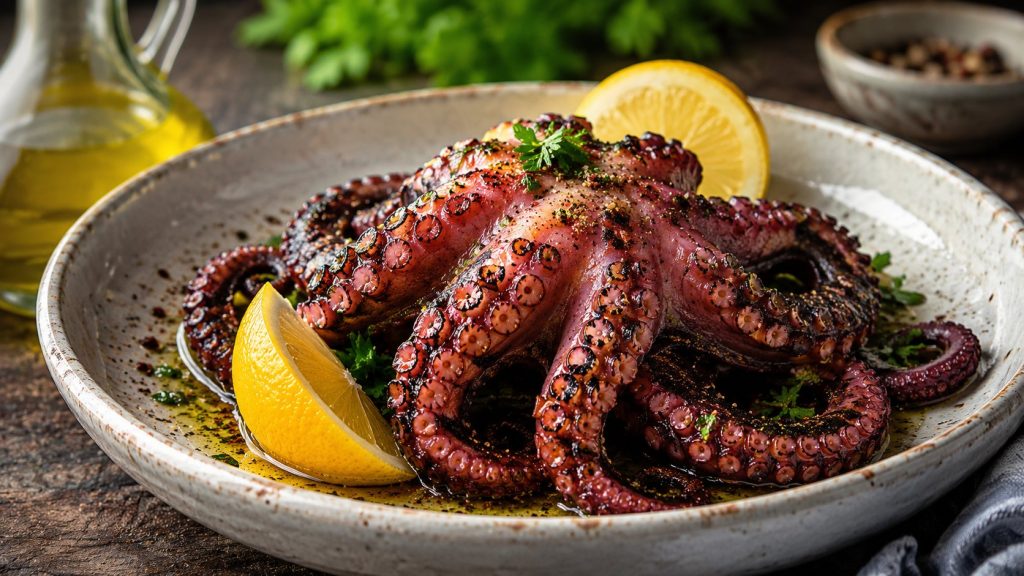
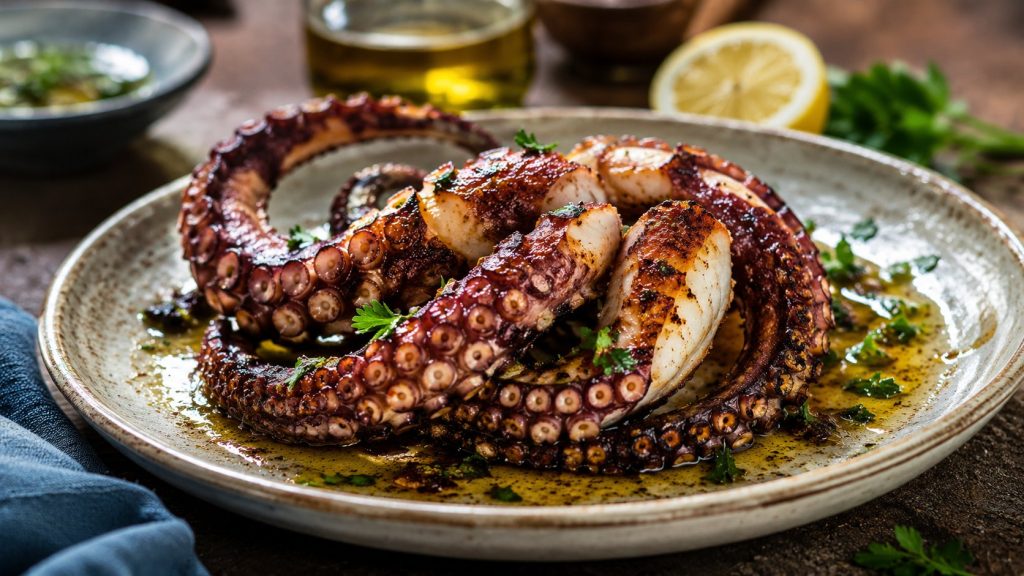
A good grilled tentacle should have charred suction cups, a glossy olive-oil surface, and a clean slice when cut. If it shrinks heavily or dries at the ends, it stayed on the grill too long.
For side dishes, roasted vegetables work especially well. The CustomReceipt guide to how to cook sweet potatoes gives useful timing for caramelized sides that can balance smoky octopus.
Mediterranean Octopus Styles
Mediterranean octopus is usually simple. The cooking is precise, while the finishing ingredients stay direct: olive oil, lemon, vinegar, herbs, potatoes, garlic, and paprika.
Greek-style octopus often uses oregano, red wine vinegar, lemon, and charcoal grilling. Spanish pulpo a la gallega serves sliced octopus over potatoes with smoked paprika and olive oil. Italian coastal versions may include parsley, garlic, chili, tomato, or white wine.
The Mediterranean Diet Foundation identifies seafood, olive oil, vegetables, and legumes as central parts of Mediterranean food culture. Octopus fits naturally into that pattern because it is usually served with vegetables, potatoes, beans, herbs, and olive oil rather than heavy sauces.
Dressing the Octopus
A simple dressing can do more than a complicated marinade. Mix olive oil, lemon juice, minced garlic, parsley, black pepper, and a small amount of vinegar.
Do not soak cooked octopus in strong acid for too long. Lemon and vinegar brighten the flavor, but prolonged exposure can make the surface feel tight.
For a lighter plate, use ideas from homemade salad dressing recipes. A sharp vinaigrette with herbs can turn chilled octopus into a clean appetizer or lunch dish.
Common Mistakes and Fixes
Most octopus problems come from heat control and timing. The ingredient is not fragile, but it is unforgiving when rushed.
Common mistakes include:
- Boiling aggressively instead of simmering
- Removing the octopus during the tough middle stage
- Skipping the resting period
- Grilling for too long after boiling
- Adding too much acid before cooking
- Cutting immediately while very hot
Each mistake changes moisture retention. Octopus needs slow heat first and brief intensity later.
If the octopus is still chewy, return it to a gentle simmer and check every 10 minutes. If it is tender but bland, season after slicing with olive oil, salt, lemon, and herbs. If it tastes watery, dry it better before grilling or searing.
These octopus cooking tips also apply to other seafood: strong heat should be brief, and seasoning should support texture rather than cover mistakes.
Serving Ideas and Side Dishes
Properly cooked octopus has a mild ocean flavor, slight sweetness, and a texture between scallop and lobster. It should feel tender but not soft like overcooked fish.
Good pairings include:
- Roasted potatoes with smoked paprika
- White bean puree with garlic
- Charred peppers and zucchini
- Fennel and citrus salad
- Grilled bread with olive oil
- Fresh pasta with parsley and chili
The side dish should add contrast. Crispy potatoes, creamy beans, bitter greens, or bright citrus help octopus feel complete on the plate.
Fresh pasta also works well when octopus is sliced into smaller pieces and tossed with olive oil, garlic, chili, and parsley. For that style, the CustomReceipt guide to how to make pasta from scratch is a natural companion because fresh pasta needs the same attention to texture and timing.
For wine, choose dry whites with acidity. Albariño, Assyrtiko, Vermentino, and Sauvignon Blanc all work well. Light reds with low tannins can pair with grilled versions, especially when paprika or tomato appears in the dish.
Storage and Reheating
Cooked octopus stores well if cooled properly. Place it in an airtight container and refrigerate for up to three days.
FoodSafety.gov recommends keeping cooked seafood refrigerated at safe temperatures and avoiding long exposure in the danger zone between cooking and storage. The official FoodSafety.gov cold storage chart provides general storage guidance for seafood and cooked foods.
To reheat octopus, use low heat. Warm slices gently in olive oil or a small amount of cooking liquid. Avoid strong microwave heat because it can toughen the surface quickly.
Cold octopus can be excellent. Slice it thinly and dress it with olive oil, lemon, herbs, and a small amount of garlic. Let it sit for 10 minutes before serving so the surface absorbs seasoning.
FAQ
How long does octopus take to cook?
Most medium octopus cooks in 60–75 minutes at a gentle simmer. Small octopus may finish in 45 minutes, while large octopus can need 90 minutes or more.
Is frozen octopus good?
Yes. Frozen octopus is often easier to cook because freezing helps break down muscle fibers and improves tenderness.
Should octopus be boiled before grilling?
Yes. Boiling or simmering creates tenderness. Grilling afterward adds char, smoke, and crisp edges.
Why is my octopus rubbery?
It was likely cooked too briefly or boiled too aggressively. Return it to a gentle simmer until the thickest tentacle becomes tender.
Can octopus be overcooked?
Yes. Very long cooking can make octopus mushy. The ideal texture is tender with slight spring.
Should octopus be marinated before cooking?
A light marinade after cooking works better. Strong acidic marinades before cooking can tighten the surface.
What is the best simple seasoning for octopus?
Olive oil, lemon juice, parsley, garlic, black pepper, and flaky salt are enough for most preparations.
Perfect octopus depends on sequence: thaw properly, simmer gently, rest in the liquid, then finish quickly if grilling. Once that structure is reliable, Greek, Spanish, Italian, and Japanese flavor directions become easy to adapt.
Earlier we wrote about How to Cook Steamed Chicken Meatballs for Gastritis Without Heavy Ingredients