 Frank Rondel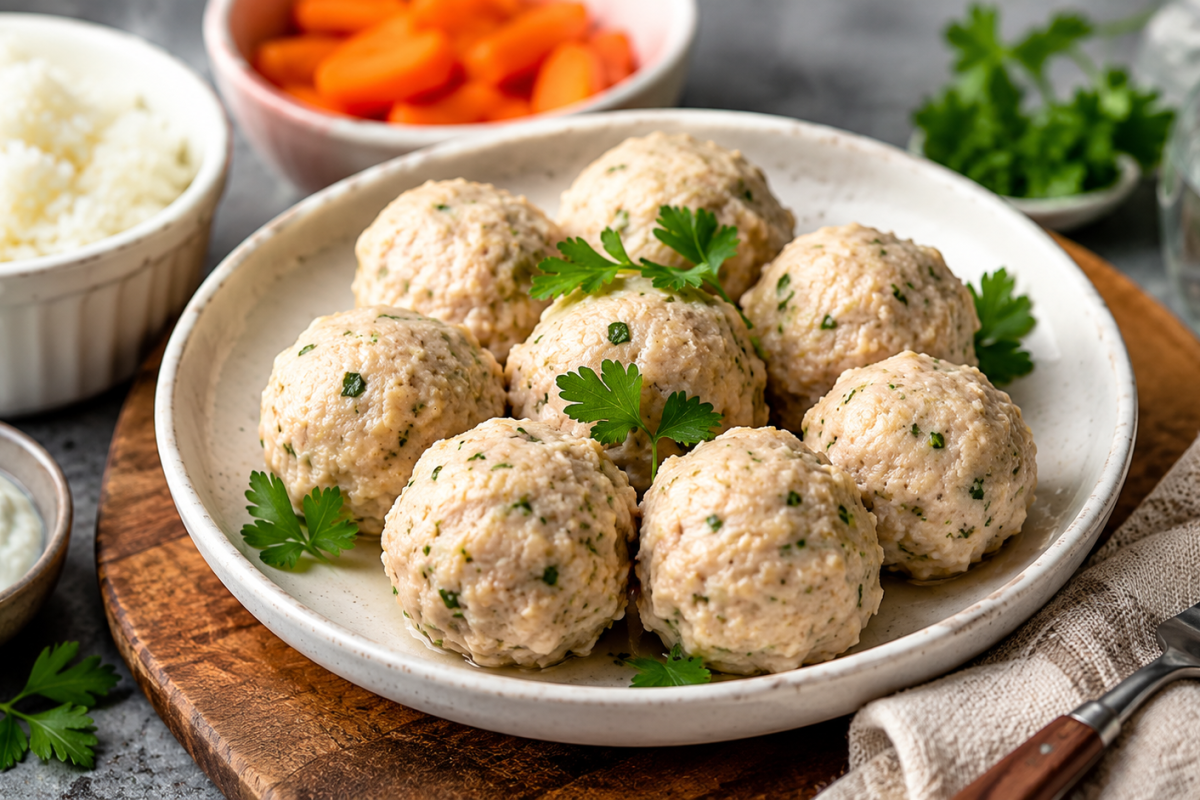
People with gastritis often tolerate soft protein dishes better than fried or heavily seasoned meals. Steamed meatballs reduce oil, avoid crispy crusts, and stay moist during cooking. Texture matters almost as much as ingredients because dry or greasy foods may increase stomach discomfort even in small portions, аs noted by customreceipt.com.
Traditional meatball recipes usually rely on pan-frying, fatty minced meat, garlic-heavy seasoning, spicy sauces, or acidic tomato bases. Those ingredients frequently appear among foods that may irritate gastritis symptoms. Steaming changes the structure of the dish completely. Lean poultry stays tender, vegetables retain moisture, and the final meal becomes easier to digest.
According to guidance from the Mayo Clinic and NHS, people with gastritis often benefit from reducing fatty, fried, spicy, and heavily processed foods. Individual triggers still vary, especially during flare-ups or chronic digestive irritation.
Why Steamed Food Works Better for Gastritis
Cooking method directly affects digestion. Two meals may contain similar ingredients while producing completely different reactions depending on preparation. Frying changes protein texture, increases fat absorption, and creates browned surfaces that some people with gastritis tolerate poorly.
Steaming uses moist heat instead of direct oil contact. Lean meat stays softer and retains more water during cooking. The stomach usually processes moist foods more comfortably than dense fried meals.
People searching for what to eat with gastritis often focus only on avoiding spicy foods, but cooking style matters just as much. Soft steamed dishes generally create less irritation than heavily roasted or fried foods.
Several factors make steamed meals easier for sensitive digestion:
- lower fat content
- softer texture
- reduced surface browning
- less oil absorption
- fewer aggressive seasonings
- improved moisture retention
Meals based on steamed proteins and soft vegetables often work better during symptom flare-ups. Light soups can also help, especially homemade versions with controlled seasoning. Even dishes inspired by recipes like Tom Yum at home become easier to tolerate when spicy ingredients are reduced significantly.
“People with gastritis often tolerate bland, lower-fat foods better than heavily fried or spicy meals.” — Cleveland Clinic dietary guidance
Stress may also influence digestive symptoms. Some people combine dietary adjustments with relaxation techniques such as breathing exercises or routines described in daily meditation practice guides.
Best Meat Choices for Sensitive Digestion
Protein quality affects texture, digestibility, and heaviness after meals. Fatty minced meat may become difficult to tolerate even when steamed because rendered fat remains inside the meatball.
Chicken breast remains one of the safest choices for gastritis-friendly meatballs because it contains relatively little fat and becomes soft when combined with moisture-rich ingredients. Turkey also works well and provides slightly richer flavor without becoming greasy.
Lean beef may work in small portions for some people, but tolerance varies considerably. High-fat beef mixtures usually feel heavier and digest more slowly.
Ingredient balance matters as much as the protein source itself. Rice, oats, zucchini, and egg white improve softness naturally.
The comparison below shows which ingredients generally work better for gastritis-sensitive digestion and which products are often limited.
| Ingredient | Better for Gastritis | Avoid or Limit |
|---|---|---|
| Chicken breast | Yes | — |
| Lean turkey | Yes | — |
| Extra-lean beef | Small portions | Fatty beef |
| White rice | Yes | Fried rice |
| Oats | Yes | Spicy breadcrumbs |
| Zucchini | Yes | Raw onion |
| Egg white | Yes | Heavy cream |
| Mild herbs | Yes | Chili flakes |
| Steamed vegetables | Yes | Pickled vegetables |
The table reflects general dietary guidance rather than strict medical rules. Gastritis triggers differ between individuals. Some people tolerate small amounts of tomato or dairy products without symptoms, while others react quickly even to mild acidity.
Additional dietary adjustments appear in this guide about foods that may worsen inflammation and discomfort, particularly in discussions about anti-inflammatory daily habits and recovery routines.
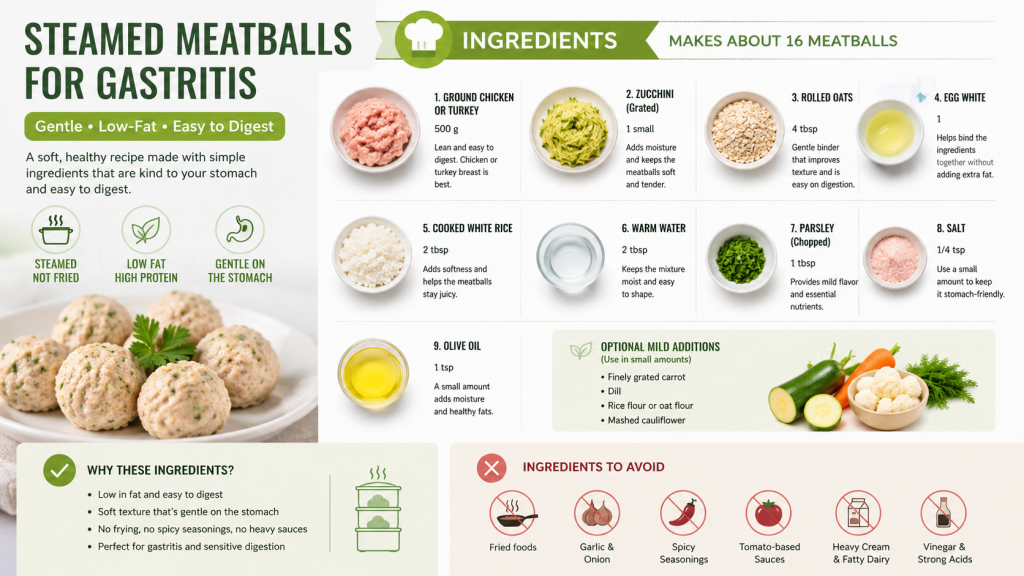
Ingredients for Soft Steamed Meatballs
Texture determines whether meatballs feel light or heavy after eating. Lean poultry can become dry during steaming if the mixture lacks moisture-retaining ingredients. Soft vegetables and gentle binders help maintain tenderness without increasing fat content.
This recipe focuses on softness, moderate protein content, and mild flavor. The goal is to create a filling meal that remains gentle on digestion.
Ingredients
For approximately 16 small meatballs:
- 500 g ground chicken or turkey
- 1 small zucchini, finely grated
- 4 tbsp rolled oats
- 1 egg white
- 2 tbsp cooked white rice
- 2 tbsp warm water
- 1 tbsp chopped parsley
- 1/4 tsp salt
- 1 tsp olive oil
Optional mild additions:
- finely grated carrot
- small amount of dill
- rice flour
- oat flour
- mashed cauliflower
The recipe intentionally excludes several common irritants. Fried onion, garlic overload, black pepper, chili flakes, vinegar, and spicy sauces may worsen symptoms during active gastritis.
People searching for a low-fat meatball recipe often underestimate how important moisture becomes after reducing fat. Zucchini and rice compensate naturally while preserving softness.
Egg-Free and Breadcrumb-Free Alternatives
Some people avoid eggs because of allergies or digestive sensitivity. Others reduce breadcrumbs because dry wheat mixtures can create a denser texture.
Several substitutions work well without damaging consistency:
- Replace egg white with oat paste
- Use cooked rice instead of breadcrumbs
- Add mashed zucchini for extra moisture
- Use rice flakes instead of bread crumbs
- Mix in cauliflower puree for softer texture
Additional soft-food recipes appear in this collection of healthy steamed recipes and gentle homemade meals, especially for people avoiding fried foods.
Step-by-Step Steamed Meatball Recipe
Preparation technique changes texture significantly. Many poultry meatballs become dense because the mixture was compacted too aggressively or cooked at excessive temperature.
Preparing the Mixture
Place minced chicken or turkey into a large bowl. Add grated zucchini, oats, cooked rice, egg white, parsley, olive oil, salt, and warm water.
Mix gently for one to two minutes. Overmixing creates a compact texture after steaming.
Allow the mixture to rest for 10 minutes before shaping. Oats absorb moisture during this period and stabilize the structure naturally.
Forming the Meatballs
Wet hands lightly before shaping. This prevents sticking and keeps the surface smoother.
Make meatballs approximately 4–5 cm wide. Smaller portions cook more evenly and retain moisture better.
Place meatballs into a steamer basket with small gaps between each piece. Crowding reduces steam circulation and causes uneven cooking.
Cooking Time and Temperature
Steam over medium heat for 18–20 minutes.
Internal temperature for poultry should reach 74°C (165°F).
Strong boiling is unnecessary. Excessive heat tightens lean protein fibers and reduces tenderness.
Several small techniques improve texture further.
Texture Tips for Softer Meatballs
People searching for soft meatballs for sensitive stomach diets often focus only on ingredients while ignoring cooking mechanics. Moisture retention and shaping technique directly affect digestibility.
Helpful methods include:
- adding grated zucchini
- mixing in cooked rice
- avoiding overmixing
- steaming at moderate heat
- reheating gently
- using small meatball portions
Overcooking remains one of the most common problems in lean poultry recipes. Even several extra minutes may dry chicken significantly.
A related article about daily recovery routines and home wellness habits explains why stress management and meal timing sometimes influence digestive symptoms alongside food choices.
Common Mistakes That Make Meatballs Harder to Digest
Many recipes marketed as healthy still contain ingredients or cooking methods that increase digestive discomfort. Small culinary habits can change how the meal feels afterward.
Using Fatty Meat
High-fat minced beef releases grease during steaming. The final texture becomes heavier and richer than many people with gastritis tolerate comfortably.
Chicken breast and lean turkey generally produce lighter results.
Adding Excessive Seasoning
Strong seasoning often masks the natural flavor of lean meat but may increase irritation risk for sensitive stomachs.
Ingredients frequently associated with discomfort include:
- black pepper
- chili flakes
- smoked paprika
- garlic powder
- onion powder
- spicy sauces
- concentrated tomato paste
Mild herbs such as parsley or dill usually work better.
Frying Before Steaming
Some recipes recommend frying meatballs before steaming or baking them. Browning creates a firmer crust and changes protein texture noticeably.
For easy steamed meatballs, direct steaming remains the gentlest option.
Serving With Heavy Sauces
Sauces can completely change digestibility. Cream-heavy or acidic additions may overpower an otherwise mild dish.
Safer options usually include:
- plain yogurt sauce
- oat-based cream sauce
- mild zucchini puree
- cauliflower sauce
- diluted low-fat béchamel
The Cleveland Clinic recommends paying attention to individual trigger foods instead of relying entirely on generalized restriction lists.
What to Serve With Steamed Meatballs
Side dishes should support digestion rather than compete with the protein itself. Crunchy, acidic, or heavily fried additions may reduce the benefits of steaming.
Soft warm textures generally work better for gastritis-sensitive diets.
Several side dishes pair well with diet recipe for gastritis meal plans:
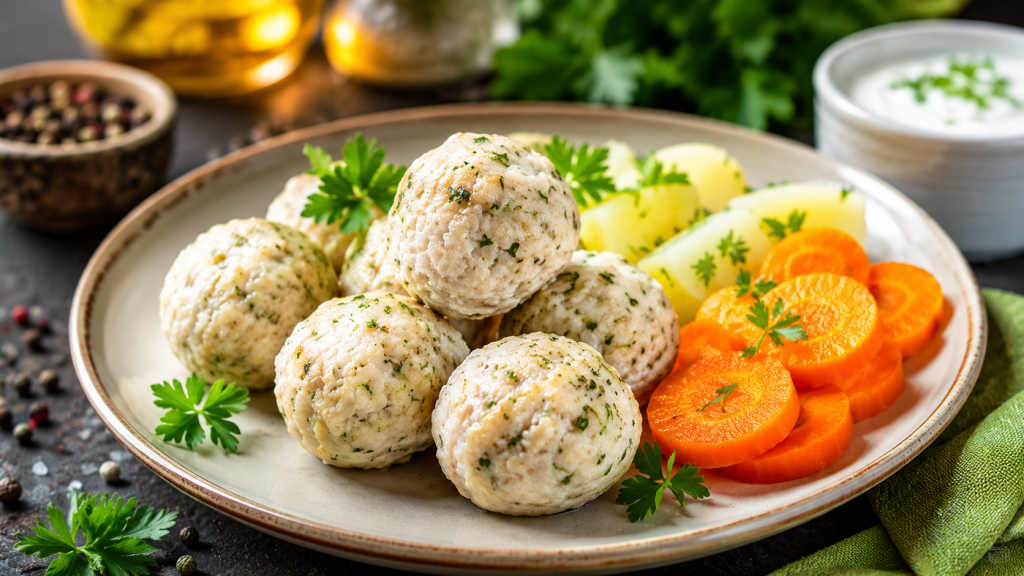
- mashed potatoes with minimal butter
- white rice
- oat porridge
- steamed zucchini
- boiled carrots
- cauliflower puree
- buckwheat porridge
- soft rice noodles
Portion size matters as well. Even gentle foods may become uncomfortable when eaten too quickly or in excessive amounts.
Drinks That Pair Better
Beverages influence digestion more than many people expect. Carbonated drinks and acidic juices may trigger discomfort despite carefully prepared meals.
Gentler choices include:
- warm water
- weak chamomile tea
- oat milk
- mild herbal tea
- low-acid drinks
Coffee and cold caffeinated beverages may irritate some people with gastritis, especially during flare-ups. Even homemade drinks like iced coffee prepared with mild brewing methods may still require moderation depending on individual tolerance.
Desserts also deserve attention. Heavy cream cakes and highly acidic sweets may worsen symptoms, while lighter portions and balanced sugar intake are usually easier to tolerate than rich layered desserts like classic homemade tiramisu.
Storage and Reheating Tips
Proper storage prevents steamed meatballs from drying out after cooking. Lean poultry loses moisture quickly if refrigerated incorrectly or reheated too aggressively.
Fresh steamed meatballs usually maintain the best texture within the first 24 hours, although they remain safe for several days under refrigeration.
Refrigeration
Store meatballs in an airtight container for up to three days.
Adding a spoonful of water before reheating helps restore moisture.
Freezing Instructions
These meatballs freeze well because rice and zucchini help preserve softness.
Follow these steps:
- cool meatballs completely
- place separately on a tray
- freeze for two hours
- transfer into freezer bags
- label with storage date
Frozen meatballs usually maintain acceptable quality for about two months.
Best Reheating Method
Steaming remains the gentlest reheating method. Five to seven minutes is usually enough.
Microwaving at high power often dries poultry unevenly and creates tougher edges.
For meal preparation purposes, steamed chicken meatballs generally maintain texture better after reheating than fried versions because they retain more internal moisture.
The NHS healthy eating guidance recommends cooking methods that reduce excess fat while supporting easier digestion.
FAQ
Can people with gastritis eat meatballs?
Yes. Lean steamed meatballs with mild seasoning are usually easier to tolerate than fried or spicy versions.
Is chicken or beef better for gastritis?
Chicken and turkey are often easier to digest because they contain less fat and produce softer texture after steaming.
Are steamed foods easier to digest?
Many people tolerate steamed foods better because they avoid crispy fried surfaces and excessive oil.
Can these meatballs be frozen?
Yes. Freeze them after cooling completely and reheat gently with steam for the best texture.
What sauces are safer for gastritis?
Mild yogurt sauces, oat-based sauces, and vegetable purees are usually gentler than spicy or acidic tomato sauces.
Earlier we wrote about Homemade Tiramisu Recipe Step by Step: Easy Italian Dessert With Ladyfinger Cookies and Coffee Cream