 Frank Rondel
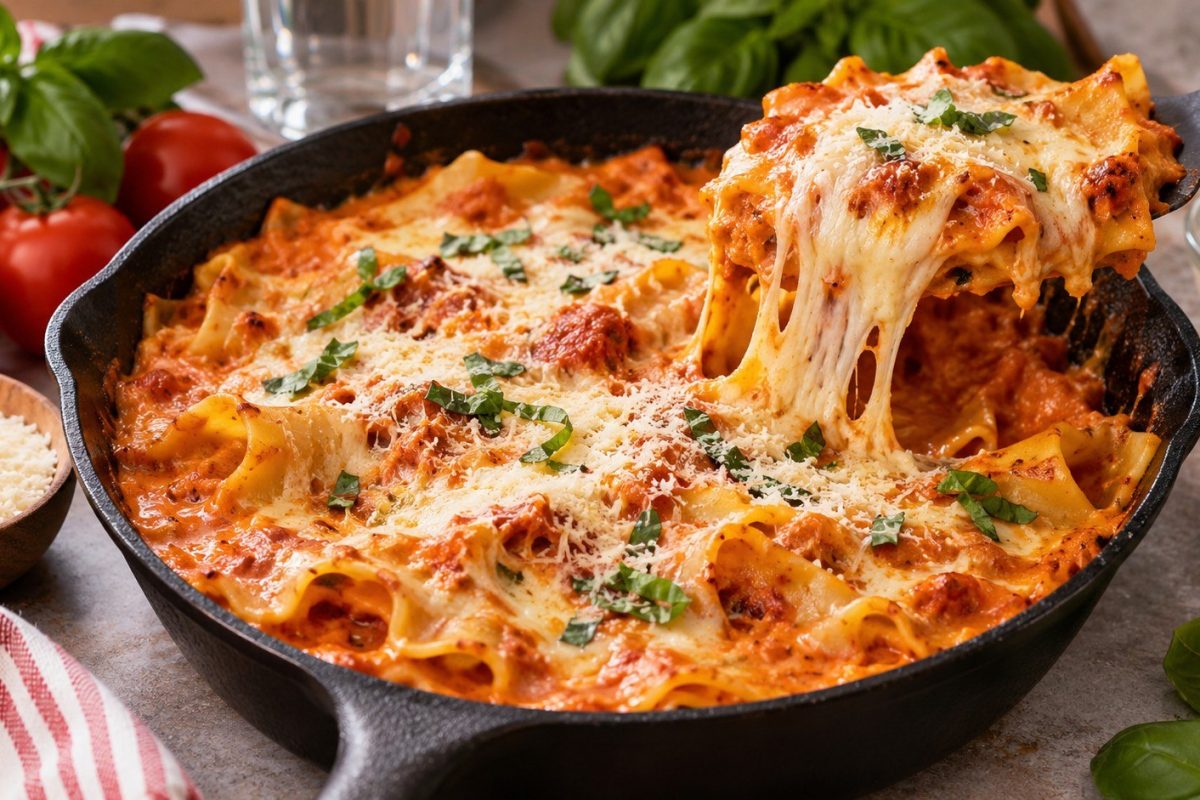
Lasagna Alla Vodka Skillet combines tender pasta, a creamy tomato-vodka sauce, browned Italian sausage, and melted cheese. Unlike traditional baked lasagna, this version cooks directly on the stovetop in approximately 40 minutes. It delivers the familiar flavors of layered lasagna without boiling noodles separately or heating the oven. The result is a rich, satisfying dinner with considerably less cleanup, as customreceipt.com notes.
The secret lies in cooking broken lasagna sheets directly in the sauce. As the noodles soften, they release starch that helps thicken the tomato mixture. Ricotta adds creamy pockets, while mozzarella creates the characteristic melted-cheese finish. A small quantity of vodka rounds out the tomato sauce, producing a variation of the Italian-American classic.
What Makes Lasagna Alla Vodka Skillet Different?
Traditional lasagna requires several stages of preparation. The cook prepares a meat sauce, mixes cheese fillings, arranges pasta layers, and bakes everything together. Skillet lasagna simplifies this process by combining those components in a single pan.
The defining feature is the vodka sauce. It combines tomatoes, cream, aromatics, and a modest amount of vodka. The vodka contributes to the sauce’s flavor profile and helps disperse certain aromatic compounds. After simmering, the sauce becomes smooth, creamy, and slightly tangy.
Unlike baked lasagna, skillet lasagna has a softer, saucier texture with irregular pockets of melted cheese.
A wide skillet also creates more opportunities for browning. Sausage develops a savory crust before the sauce enters the pan. The tomato paste cooks briefly in the rendered fat, deepening its flavor before the liquids are added.
The finished dish resembles a cross between classic lasagna and pasta alla vodka. It keeps the recognizable lasagna noodles but replaces structured layers with a rustic presentation.
The best skillet lasagna balances 3 elements: tender noodles, enough sauce to coat them, and cheese added near the end.
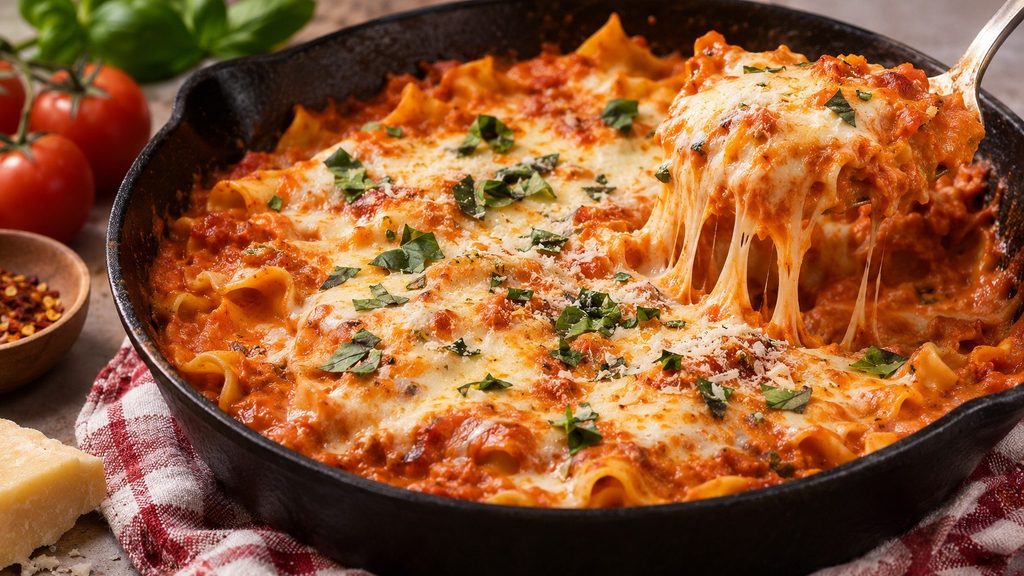
Ingredients for Creamy Lasagna Alla Vodka
This one-pan lasagna alla vodka recipe makes approximately 4 generous servings or 6 smaller portions. A 12-inch deep skillet with a fitted lid works best. A Dutch oven can also accommodate the ingredients, although the finished pasta will have less exposed surface area.
Ingredients for 4–6 servings
| Ingredient | Quantity | Purpose |
|---|---|---|
| Dry lasagna noodles | 8 oz (225 g) | Main pasta component |
| Italian sausage | 1 lb (450 g) | Savory protein |
| Olive oil | 1 tbsp | Browning and sautéing |
| Yellow onion | 1 medium | Sweet aromatic base |
| Garlic | 4 cloves | Savory depth |
| Tomato paste | 3 tbsp | Concentrated tomato flavor |
| Crushed tomatoes | 28 oz (794 g) | Sauce foundation |
| Vodka | ¼ cup (60 ml) | Sauce flavor |
| Heavy cream | ¾ cup (180 ml) | Creamy consistency |
| Chicken or vegetable broth | 2 cups (480 ml) | Cooking liquid |
| Whole-milk ricotta | ¾ cup (185 g) | Creamy cheese pockets |
| Shredded mozzarella | 1 cup (115 g) | Melted cheese topping |
| Grated Parmesan | ½ cup (50 g) | Savory finish |
| Dried oregano | 1 tsp | Herbal seasoning |
| Red pepper flakes | ¼ tsp | Mild heat |
| Fresh basil | ¼ cup chopped | Fresh garnish |
| Salt and black pepper | To taste | Final seasoning |
Use regular dried lasagna sheets rather than fresh pasta. The cooking times below are designed for conventional dried noodles. Oven-ready sheets may soften more quickly and require less added liquid.
Choose crushed tomatoes without excessive added seasoning. Their relatively smooth consistency helps the cream blend evenly into the sauce. For a meatless version, replace sausage with sautéed mushrooms and use vegetable broth.
The ingredient proportions matter because the pasta absorbs liquid throughout cooking. A skillet with a wider surface may lose moisture faster. Keep another ½ cup of warm broth nearby for adjustments.
Kitchen technique: Start with a slightly loose sauce. The pasta will absorb liquid, and the sauce will thicken during resting.
How to Make Lasagna Alla Vodka Skillet Step by Step
The complete lasagna alla vodka skillet recipe takes approximately 10–15 minutes of preparation and 25–30 minutes of cooking. Most ingredients cook in sequence, making it unnecessary to prepare separate saucepans.
Step-by-step cooking instructions
- Prepare the ingredients. Dice the onion, mince the garlic, and grate the cheeses. Break the dried lasagna sheets into roughly 2-inch pieces.
- Brown the sausage. Heat olive oil in a deep skillet over medium-high heat. Add sausage and cook for 5–7 minutes, breaking it into small pieces.
- Cook the aromatics. Reduce heat to medium. Add onion and cook for 3–4 minutes, then stir in garlic for 30 seconds.
- Develop the tomato base. Add tomato paste, oregano, and red pepper flakes. Stir for 1–2 minutes until the paste darkens slightly.
- Add the vodka. Pour in ¼ cup vodka and stir, scraping browned bits from the skillet. Simmer for approximately 2 minutes.
- Build the sauce. Add crushed tomatoes and 2 cups of broth. Bring the mixture to a gentle simmer.
- Cook the noodles. Stir in the broken lasagna sheets, ensuring they remain submerged. Cover and simmer for 12–18 minutes, stirring every 3–4 minutes.
- Finish with cream. Once the pasta is nearly tender, reduce the heat. Add heavy cream and simmer gently for another 2 minutes.
- Add the cheeses. Spoon ricotta across the surface. Sprinkle with mozzarella and Parmesan, then cover for 2–3 minutes.
- Rest and serve. Remove the skillet from heat. Rest for 5 minutes, garnish with basil, and serve warm.
Check the noodles before adding cream. They should be nearly tender but retain a little firmness. If the liquid becomes too thick, add warm broth in ¼-cup portions. Avoid vigorous stirring after adding ricotta, since distinct cheese pockets improve the final texture.
The sausage should reach a safe temperature of 160°F (71°C). The USDA food safety guidelines identify this as the minimum temperature for ground pork and beef. Use a food thermometer rather than relying on color alone.
The cheese topping needs only a short covered rest. Excessive heat can make mozzarella rubbery and cause the creamy sauce to separate. Serve directly from the skillet for the best texture.
How to Make the Vodka Sauce Creamy Without Making It Heavy
The sauce determines whether the dish tastes balanced or overly rich. Tomato paste provides concentration, crushed tomatoes contribute acidity, and cream softens their sharper flavors. Vodka adds another dimension without replacing the tomato character.
For a classic creamy vodka sauce for lasagna, simmer the vodka with the aromatics before introducing the heavy cream. This gives the alcohol time to cook into the sauce. However, cooking does not guarantee that every trace of alcohol disappears.
The ideal sauce should cling to each pasta sheet without collecting as a thick, greasy layer.
Heavy cream is generally more reliable than milk in this preparation. Its fat content gives the sauce a smoother texture and greater resistance to separation. Adding it near the end also reduces unnecessary exposure to prolonged heat.
Common sauce problems and practical fixes
Several problems can occur when the pasta and sauce cook together. Most involve liquid balance, temperature, or timing.
- Sauce is too thick: Add warm broth gradually and stir gently.
- Sauce is watery: Simmer uncovered for 2–4 minutes before adding cheese.
- Pasta sticks together: Separate the broken sheets when adding them and stir regularly.
- Sauce tastes too acidic: Simmer longer and adjust with a small additional splash of cream.
- Cheese becomes grainy: Reduce the heat before introducing dairy ingredients.
These adjustments work best while the skillet remains warm. Adding too much broth at once can dilute the sauce. Extra Parmesan helps restore body but also increases saltiness. Taste before adding more seasoning, especially when using salted broth.
The pasta continues absorbing moisture after cooking. For this reason, a sauce that looks slightly loose when the heat turns off often reaches the correct consistency during resting.
Best Variations for Lasagna Alla Vodka Skillet
The basic recipe supports several adaptations without changing the cooking method. Meat, vegetables, and cheese can be adjusted according to dietary preferences and available ingredients.
A vegetarian lasagna alla vodka skillet works particularly well with mushrooms and spinach. Brown 12 oz of sliced mushrooms before adding the onion. Stir 3 oz of fresh spinach into the sauce near the end.
For a lighter protein option, substitute ground turkey for Italian sausage. Season it with additional fennel seeds, oregano, garlic, and black pepper. Ground poultry must reach 165°F (74°C), according to USDA guidance.
The differences between common versions are useful when selecting ingredients.
| Variation | Main adjustment | Expected flavor |
|---|---|---|
| Classic sausage | Italian sausage | Rich and savory |
| Vegetarian | Mushrooms and spinach | Earthy and balanced |
| Spicy | Hot sausage and extra chili flakes | Pronounced heat |
| Extra cheesy | More mozzarella and ricotta | Creamier, milder |
| Turkey | Ground turkey and fennel | Leaner, delicately seasoned |
| Alcohol-free | Replace vodka with broth | Tomato-forward and mild |
An alcohol-free version still benefits from caramelizing the tomato paste. Replace the vodka with an equal quantity of broth and continue cooking as directed. This produces a creamy tomato skillet lasagna rather than a traditional vodka sauce.
The spicy variation benefits from a little extra cream. Additional dairy softens the heat without removing the chili flavor. For stronger tomato notes, use slightly less cream rather than adding more tomato paste.
Which cheese combination works best?
Ricotta, mozzarella, and Parmesan perform different functions. Ricotta brings moisture and soft texture, mozzarella provides stretch, and Parmesan contributes saltiness. Replacing all 3 with a single cheese changes the character of the dish.
Whole-milk ricotta usually produces smoother pockets than reduced-fat varieties. Fresh mozzarella contains more moisture, so low-moisture shredded mozzarella works better for this stovetop method.
Serving, Storage, and Reheating Tips
Skillet lasagna is substantial enough to serve without a complicated side dish. A simple green salad balances the creamy sauce. Roasted broccoli or sautéed zucchini also works well, especially when seasoned with lemon.
For presentation, scatter fresh basil over the cheese just before serving. Finish with freshly grated Parmesan and a little black pepper. Keep additional sauce or broth available when serving portions that have rested longer.
Serving the lasagna after a 5-minute rest allows the sauce to settle while keeping the cheese soft.
For dinner planning, the recipe also works as a batch-cooking option. Ingredient quantities can be organized using a household shopping list alongside tools available through CustomReceipt, although the skillet recipe itself requires no specialized equipment.
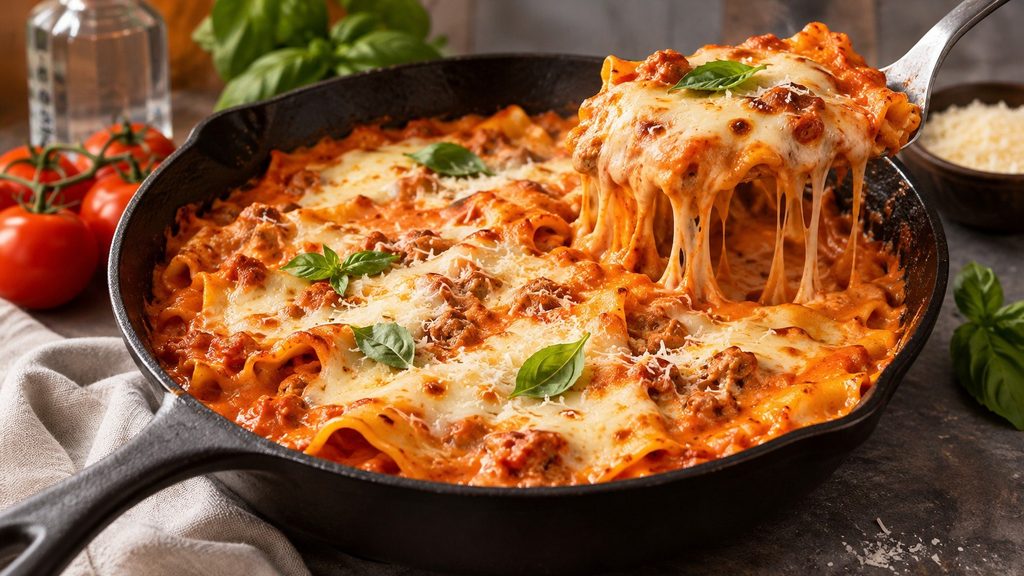
How long does skillet lasagna last?
Properly refrigerated leftovers generally remain suitable for 3–4 days. The USDA guidance on handling leftovers recommends prompt refrigeration and shallow storage containers.
Refrigerate the dish within 2 hours of cooking. Transfer portions into airtight containers rather than leaving the entire skillet to cool on the counter. Keep the refrigerator at 40°F (4°C) or below. Freeze additional portions when longer storage is necessary.
Reheat leftovers in a covered skillet with a little water or broth. Use medium-low heat and stir occasionally to prevent sticking. Heat the food thoroughly to 165°F (74°C). Microwave reheating also works when portions are covered and stirred for even heating.
FAQ About Lasagna Alla Vodka Skillet
Can lasagna noodles cook directly in vodka sauce?
Yes. Dried lasagna noodles can cook directly in a sufficiently thin tomato sauce. They absorb liquid while releasing starch that helps thicken the mixture. Stir periodically to prevent overlapping pieces from sticking together.
Does Lasagna Alla Vodka Skillet taste like alcohol?
The intended flavor is creamy tomato sauce rather than a pronounced alcoholic taste. Cooking reduces some alcohol, but does not reliably eliminate it entirely. Use the broth substitution when avoiding alcohol.
What is the best skillet for making lasagna alla vodka?
A deep 12-inch skillet with a lid provides enough space for the pasta and sauce. Heavy-bottomed stainless steel and enameled cast iron distribute heat well. A Dutch oven also works for larger quantities.
Can the recipe be made without heavy cream?
Yes, although the texture changes. Half-and-half produces a lighter sauce but is more likely to separate under high heat. Add it over low heat and avoid prolonged boiling.
Can Lasagna Alla Vodka Skillet be prepared ahead of time?
The sausage and tomato sauce can be prepared 1 day ahead and refrigerated. Cook the noodles shortly before serving for the best texture. Fully assembled leftovers can also be reheated with additional liquid.
How do you prevent skillet lasagna from becoming mushy?
Check noodle tenderness several minutes before the suggested cooking time ends. Use a gentle simmer and avoid excessive stirring once the pasta softens. Remove the skillet from heat when the noodles reach the preferred texture.
Earlier we wrote about How to Make Savory Pumpkin Pinwheels With Parmesan, Sage, and Puff Pastry