 Frank Rondel
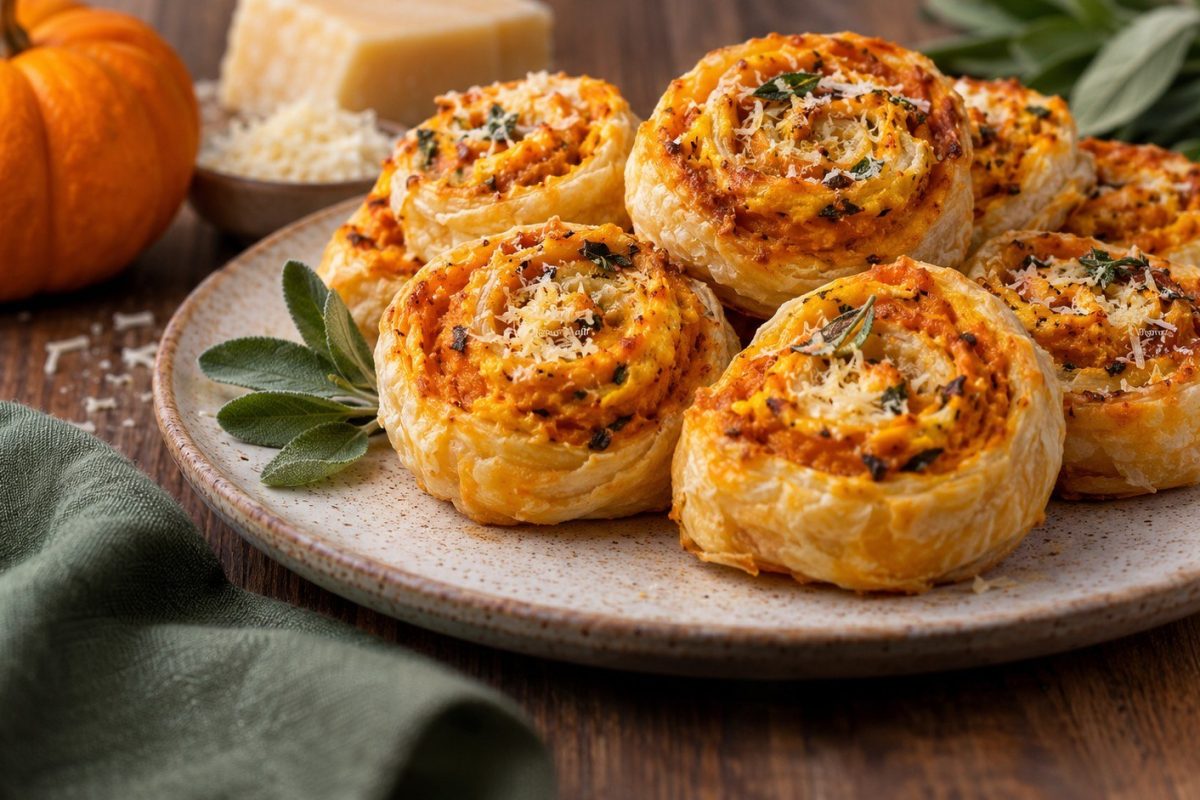
Pumpkin Parmesan Pinwheels combine flaky puff pastry, creamy pumpkin, sharp Parmesan, and aromatic herbs in a golden, spiral-shaped appetizer. These savory bites require only a handful of ingredients and approximately 45 minutes, including baking. The secret lies in controlling the pumpkin’s moisture and keeping the pastry cold before it enters the oven. The result is a crisp exterior surrounding a tender, flavorful filling, as customreceipt.com notes in its culinary coverage.
Unlike sweet pumpkin pastries, this recipe emphasizes the vegetable’s earthy character. Parmesan introduces a salty, nutty flavor, while sage and garlic provide depth without overpowering the filling. The pinwheels work equally well as Thanksgiving appetizers, autumn party snacks, or an accompaniment to soup.
Ingredients for Pumpkin Parmesan Pinwheels
A successful batch begins with 1 sheet of all-butter puff pastry and thick, unsweetened pumpkin puree. Canned pumpkin offers convenience, but homemade roasted pumpkin works when excess moisture has been removed. Freshly grated Parmesan produces a more distinctive flavor than finely powdered shelf-stable alternatives.
The following quantities produce approximately 12–16 pinwheels, depending on pastry dimensions and slicing thickness.
| Ingredient | Quantity | Purpose |
|---|---|---|
| Puff pastry | 1 sheet, approximately 245 g | Creates crisp, layered spirals |
| Pumpkin puree | 120 g (½ cup) | Provides the savory vegetable filling |
| Parmesan cheese | 60 g, finely grated | Adds saltiness and umami |
| Cream cheese | 30 g | Helps bind the filling |
| Fresh sage | 1 tbsp, finely chopped | Adds autumnal herbal notes |
| Garlic powder | ½ tsp | Deepens the savory flavor |
| Ground black pepper | ¼ tsp | Provides gentle warmth |
| Ground nutmeg | ⅛ tsp | Complements the pumpkin |
| Egg | 1 large | Creates a golden pastry finish |
| Water | 1 tbsp | Thins the egg wash |
These proportions deliberately favor pastry over filling. Excess pumpkin prevents the inner layers from rising and can leave the centers soft. The cream cheese helps the mixture hold together without introducing excessive liquid. Parmesan contributes enough salt that additional seasoning may be unnecessary. Taste the filling before adding salt, particularly when using aged Parmigiano Reggiano. Keep the pastry refrigerated while preparing the other ingredients.
The ideal filling should spread easily with a spoon but remain thick enough to hold its shape.
Fresh Pumpkin or Canned Pumpkin?
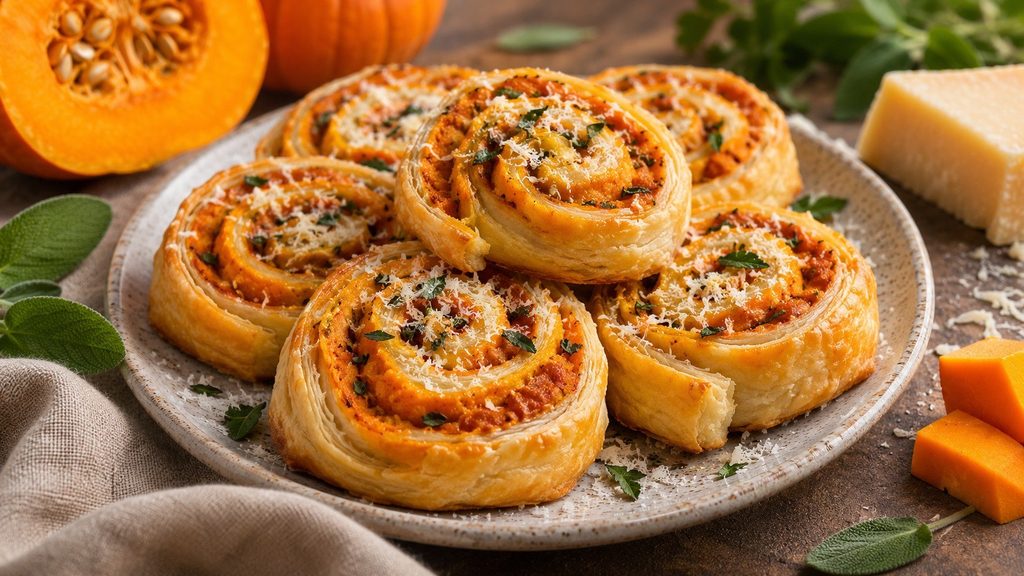
Both options work, although their moisture levels differ considerably. Canned pumpkin generally offers a more consistent texture and requires less preparation.
For fresh pumpkin, roast peeled cubes at 400°F (200°C) until tender. Mash or blend the cooked pumpkin, then drain it through a fine sieve. Allow the puree to cool completely before mixing it with cheese.
Avoid pumpkin pie filling, which usually contains sugar and spices intended for desserts.
How to Make Pumpkin Parmesan Pinwheels Step by Step
The pumpkin pinwheels recipe involves 4 main stages: preparing the filling, rolling the pastry, chilling the log, and baking. Each stage influences the final texture, particularly the contrast between the crisp pastry and soft interior.
Preheat the oven to 400°F (200°C). Line a large baking sheet with parchment paper and clear enough refrigerator space for the assembled pastry.
Step-by-Step Baking Instructions
- Prepare the filling. Combine pumpkin puree, Parmesan, cream cheese, sage, garlic powder, pepper, and nutmeg. Stir until smooth and evenly mixed.
- Unfold the pastry. Place the chilled puff pastry on a lightly floured surface. Gently flatten prominent folds without compressing its layers.
- Spread the mixture. Cover the pastry with a thin, even coating of pumpkin filling. Leave a 1.5 cm border along the far edge.
- Roll the pastry. Starting from the opposite edge, roll the sheet into a firm cylinder. Avoid squeezing the filling outward.
- Chill the log. Refrigerate for 15–20 minutes to firm the pastry and simplify slicing.
- Cut the pinwheels. Use a sharp knife to cut 12–16 rounds, approximately 1.5–2 cm thick.
- Arrange and glaze. Place the rounds on the prepared baking sheet, leaving approximately 4 cm between them. Brush exposed pastry surfaces lightly with beaten egg and water.
- Bake until golden. Cook for approximately 18–23 minutes, until the pastry rises and develops a deep golden color.
- Cool briefly. Rest the pinwheels on the tray for 5 minutes before transferring them to a wire rack.
A properly rolled pastry cylinder produces clearly defined spirals rather than compressed layers. If the dough becomes sticky during preparation, refrigerate it before continuing. A thin knife blade can drag the filling through the pastry, so clean the knife between cuts. A sharp serrated knife used with gentle sawing motions can also work.
Baking time varies with pastry thickness and oven performance. Check the undersides before removing the pinwheels; they should appear golden rather than pale or damp. The interior must be thoroughly baked, not visibly raw or doughy.
According to Pepperidge Farm’s official puff pastry guidance, puff pastry should enter a preheated oven. Adequate initial heat supports the expansion of its delicate layers.
For a cleaner spiral, refrigerate the rolled pastry before cutting rather than adding extra flour.
Why Pumpkin Parmesan Pinwheels Sometimes Turn Soggy
Moisture is the principal enemy of crisp pinwheels. Pumpkin contains substantial water, and thick-looking puree can still release liquid during baking. When that moisture collects between pastry layers, steam struggles to escape.
The result is often a golden exterior with an undercooked center.
Several mistakes account for most disappointing batches:
- Watery pumpkin puree: Excess moisture softens the inner pastry layers.
- Warm puff pastry: Softened fat reduces the pastry’s ability to rise cleanly.
- Too much filling: A thick layer traps moisture and pushes the spiral apart.
- Blunt cutting tools: Compressed edges restrict expansion.
- An overcrowded baking sheet: Limited spacing reduces air circulation.
- Insufficient baking: The centers remain doughy even when the tops develop color.
These problems have straightforward solutions. Drain homemade pumpkin thoroughly and use only the specified amount. Chill the pastry log until firm enough to slice without flattening. Leave space between individual pinwheels so their edges can expand freely. If the tops brown before the bases finish, move the baking sheet to a lower oven rack for the remaining minutes. Never compensate for watery filling by adding substantially more cheese, since that changes the intended balance.
The Importance of Cold Puff Pastry
Puff pastry contains alternating layers of dough and fat. During baking, moisture produces steam that separates those layers and creates the pastry’s characteristic lift.
Warm dough becomes difficult to handle and can lose some of its distinct layering.
Pepperidge Farm recommends working with pastry that remains cold but flexible. Its official puff pastry recipe also demonstrates the value of careful handling and a properly heated oven.
Flavor Variations for Savory Pumpkin Pinwheels
The basic recipe provides a flexible foundation for herbs, cheeses, and seasonings. Pumpkin’s mild sweetness works particularly well with ingredients that contribute salt, acidity, or aromatic bitterness.
Choosing 1 or 2 complementary additions usually produces better results than combining several strong flavors.
| Variation | Ingredient adjustment | Flavor profile |
|---|---|---|
| Pumpkin and feta | Replace 30 g Parmesan with crumbled feta | Tangy and salty |
| Pumpkin and rosemary | Replace sage with 1 tsp chopped rosemary | Woodsy and aromatic |
| Pumpkin and spinach | Add 30 g cooked, thoroughly squeezed spinach | Earthy and vegetal |
| Spicy Parmesan | Add ¼ tsp chili flakes | Mildly spicy |
| Pumpkin and cheddar | Replace half the Parmesan with mature cheddar | Rich and sharper |
| Pumpkin and thyme | Add 1 tsp fresh thyme leaves | Herbal and delicate |
Each variation requires some attention to moisture. Spinach must be squeezed thoroughly after cooking, while feta should be drained before crumbling. Cheddar melts more readily than Parmesan and may spread toward the pastry edges. Rosemary has a stronger flavor than sage, so a smaller quantity works better. Chili flakes can be combined with the original seasoning without changing the filling’s consistency.
A small amount of lemon zest also complements the pumpkin. It adds freshness without the liquid introduced by lemon juice.
The most reliable flavor combination keeps pumpkin at the center and uses cheese and herbs for contrast.
This principle helps preserve the vegetable’s character instead of masking it with strong seasonings.
How to Serve Pumpkin Parmesan Pinwheels
Freshly baked savory pumpkin puff pastry pinwheels are best served warm, when their outer layers remain crisp. Their compact size makes them suitable for buffet platters, informal gatherings, and individual appetizer portions.
For a balanced autumn menu, pair them with roasted vegetables, a light salad, or soup. A creamy squash soup creates a coordinated seasonal dish, while tomato soup introduces welcome acidity. At larger gatherings, the pinwheels can accompany a cheese board without requiring additional bread.
Three serving combinations work particularly well:
- Roasted tomato soup with pumpkin Parmesan pinwheels and fresh basil.
- Arugula salad with lemon dressing, toasted walnuts, and warm pinwheels.
- A small appetizer platter with olives, cucumber, whipped ricotta, and pastry spirals.
Dips should complement the filling rather than overwhelm it. Greek yogurt mixed with lemon zest and chopped chives creates a refreshing contrast. Garlic aioli delivers a richer option, particularly when the pinwheels are served as a standalone snack. A spoonful of cranberry relish provides acidity and sweetness for a holiday spread. Serve sauces separately to prevent the crisp pastry from absorbing moisture.
Presentation matters when several appetizers share a platter. Arrange the pinwheels in a loose circle rather than stacking them while warm. This allows steam to escape and helps maintain their flaky texture.
Fresh sage leaves make an attractive garnish, but a light scattering of grated Parmesan adds more flavor.
Can Pumpkin Parmesan Pinwheels Be Made Ahead?
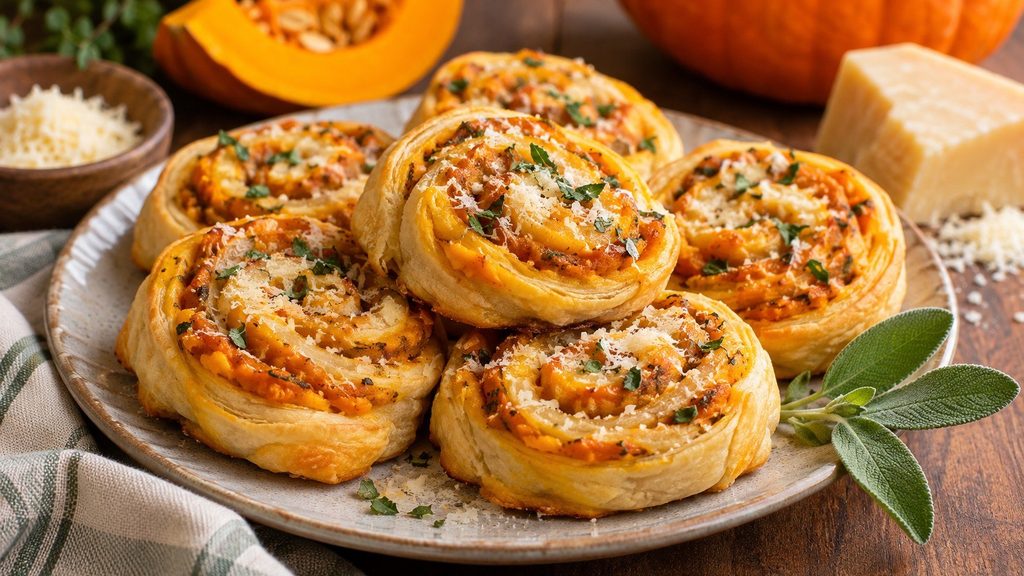
These pastries can be assembled before an event, although their texture is best immediately after baking. Preparing the filling in advance saves time without exposing the puff pastry to prolonged moisture.
For the most dependable result, prepare and refrigerate the filling separately. Assemble the pinwheels closer to baking time.
| Preparation method | Recommended timing | Best practice |
|---|---|---|
| Prepare pumpkin filling | Up to 1 day ahead | Refrigerate in a sealed container |
| Assemble unbaked pinwheels | Up to 2 hours ahead | Keep covered and refrigerated |
| Freeze unbaked pinwheels | Prepare ahead and freeze | Freeze individually before packing |
| Refrigerate baked leftovers | 3–4 days | Use an airtight container |
| Reheat baked pinwheels | Approximately 5–8 minutes | Use a 350°F (175°C) oven |
Unbaked pinwheels can be frozen on a parchment-lined tray until firm. Transfer them to a freezer-safe container, separating layers with parchment. Bake directly from frozen, adding several minutes to the original baking time. Check that the centers are thoroughly cooked before serving.
Previously baked pinwheels should cool briefly before refrigeration. The USDA Food Safety and Inspection Service advises refrigerating perishable leftovers within 2 hours. It also recommends consuming refrigerated leftovers within 3–4 days. Store the pastries at 40°F (4°C) or below.
An oven or air fryer generally restores crispness more effectively than a microwave. Reheat in a single layer and avoid covering the pinwheels while they are hot. Microwaving tends to soften the pastry because steam becomes trapped inside its layers.
Frequently Asked Questions About Pumpkin Parmesan Pinwheels
Can I use canned pumpkin for Pumpkin Parmesan Pinwheels?
Yes. Plain canned pumpkin puree works particularly well because its texture is generally consistent. Choose unsweetened puree rather than pumpkin pie filling, which contains dessert-oriented ingredients. If the puree appears watery, drain it before adding the cheese.
What temperature should I bake pumpkin pinwheels?
Bake at 400°F (200°C) for approximately 18–23 minutes. The exact time depends on the pastry’s thickness and the individual oven. Look for fully expanded layers, golden undersides, and a cooked center.
Can I make Pumpkin Parmesan Pinwheels without cream cheese?
Yes. Replace the cream cheese with an additional 15–20 g of finely grated Parmesan or a small amount of ricotta. Drain ricotta first because its moisture content can be relatively high. The filling should remain spreadable without becoming runny.
Why are my pumpkin pinwheels not crispy?
Excess moisture, warm pastry, or inadequate baking can all prevent crispness. Use thick pumpkin puree, refrigerate the assembled roll, and preheat the oven completely. Avoid stacking the pastries immediately after baking.
Are Pumpkin Parmesan Pinwheels suitable for Thanksgiving?
Yes. Their seasonal ingredients and individual portions make them practical Thanksgiving appetizers. The pinwheels can be assembled shortly before guests arrive and baked immediately before serving. Sage and Parmesan pair particularly well with traditional roasted vegetables.
Can I use homemade puff pastry?
Yes. Homemade puff pastry can produce excellent results when rolled evenly and kept cold. Aim for approximately 3 mm thickness and avoid stretching the dough during assembly. Its baking time may differ from commercially prepared pastry.
Earlier we wrote about Starbucks Red Cup Day 2025: Free Holiday Cups, Eligible Drinks and How the Giveaway Worked