 Frank Rondel
How to make a bagel with cream cheese sounds almost too simple for a recipe. Yet the difference between a dry breakfast and a deli-style bagel lies in temperature, texture, and proportion. A properly prepared bagel has a crisp cut surface, a chewy center, and an even layer of soft cheese, as noted by the customreceipt.com.
The basic version requires only 2 ingredients and about 10 minutes. However, small choices matter. A fresh bagel behaves differently from a packaged one. Cold block cream cheese tears the crumb, while an excessive layer hides the bread’s flavor.
This guide explains every stage, from choosing the bagel to building sweet and savory variations.
Bagel With Cream Cheese Ingredients
A classic serving needs few ingredients. Quality matters more than quantity, especially when the recipe contains no sauce or strong seasoning.
For 1 serving, prepare:
- 1 fresh bagel, weighing about 3.5–4.5 ounces;
- 2 tablespoons cream cheese;
- 1 small pinch of salt, if needed;
- freshly ground black pepper for a savory version;
- optional herbs, vegetables, fruit, smoked fish, or seeds.
Plain, sesame, poppy seed, onion, and everything bagels all work. A plain bagel gives the cream cheese more attention. An everything bagel provides garlic, onion, sesame, and poppy flavors without extra preparation.
After selecting the ingredients, inspect the bagel before cutting it. It should smell fresh and feel resilient rather than brittle. A packaged bagel may need stronger toasting because its surface contains more moisture. Very dense bakery bagels usually need only light heat.
Philadelphia is the familiar supermarket reference, but whipped and store-brand products also work. Full-fat cheese produces the richest texture. Reduced-fat varieties are usually softer and slightly sharper.
The Best Ingredient Proportions
The right balance depends on bagel size and the number of toppings. A thin layer suits a heavily topped sandwich. A plain breakfast bagel can support more cheese.
| Bagel size | Cream cheese | Toasting time | Best use |
|---|---|---|---|
| Mini, 2–2.5 ounces | 1 tablespoon | 2–3 minutes | Snack or children’s portion |
| Standard, 3.5–4.5 ounces | 2 tablespoons | 3–5 minutes | Everyday breakfast |
| Large bakery bagel, 5–6 ounces | 3 tablespoons | 4–6 minutes | Filling brunch |
| Thin bagel | 1–1.5 tablespoons | 2–3 minutes | Lighter breakfast |
| Bagel sandwich | 1.5–2 tablespoons | 3–4 minutes | Portable meal |
These amounts are practical starting points, not rigid rules. Dense bagels can absorb a generous spread without becoming soggy. Thin bagels need restraint because too much cheese overwhelms their crumb.
The cheese should reach close to the edge without spilling over it. Leave a narrow border when adding slippery ingredients, such as tomato or smoked salmon. This reduces dripping and keeps the sandwich stable.
For the cleanest flavor, use enough cream cheese to soften each bite without turning the bagel into a vehicle for cheese alone.
How to Make a Bagel With Cream Cheese Step by Step
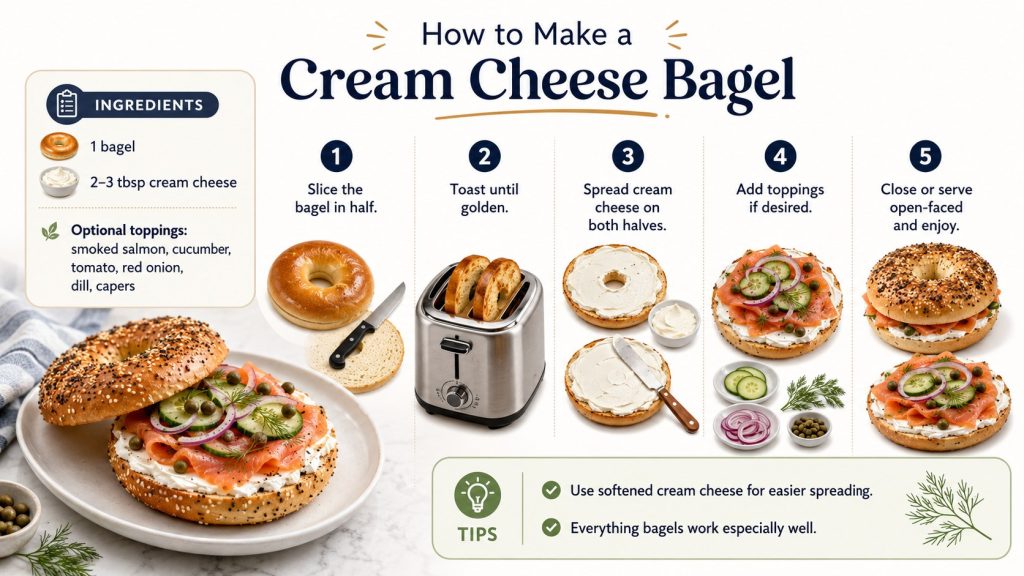
Use a serrated bread knife and a stable cutting board. Never hold the bagel upright in one hand while cutting toward your palm.
- Place the bagel flat on the board.
- Hold the top gently with your fingertips.
- Cut horizontally using short sawing movements.
- Preheat the toaster, oven, or skillet.
- Toast both halves until the cut sides become golden.
- Let them rest for 30–60 seconds.
- Spread cream cheese across the warm surfaces.
- Add seasoning or toppings.
- Serve open-faced or close the halves into a sandwich.
The short cooling period is useful. Cheese placed on a scorching bagel may melt into an oily layer. Cheese placed on a completely cold bagel can feel heavy and waxy.
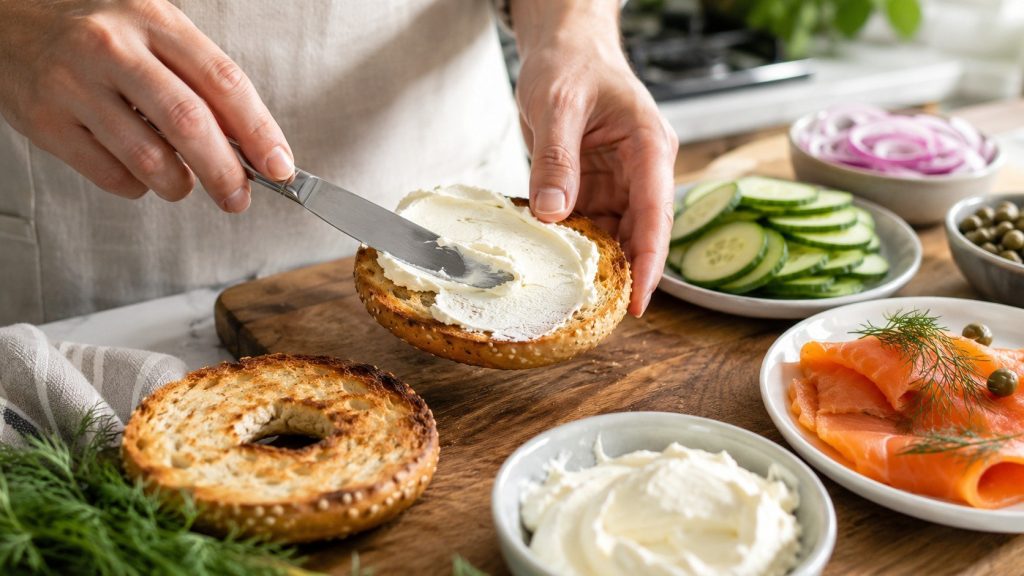
Spread from the center outward with a butter knife. Do not press hard. A light motion protects the airy crumb and creates an even coating.
The whole process takes about 10 minutes. Readers looking for other uncomplicated meals can also use this original homemade Sloppy Joe recipe or these easy hotel-room meal ideas.
Should You Toast the Bagel?
A fresh bakery bagel does not always need toasting. Its crust should already have some resistance, while the interior should remain chewy. Toasting becomes more useful after the bagel has spent a day in storage.
A toaster creates the driest, crispest surface. An oven warms the entire bagel more evenly. A skillet delivers stronger browning and allows you to control each half.
A fresh bagel should be judged before it is toasted. Heat can revive yesterday’s bread, but it cannot replace a well-made crumb.
For an oven method, heat the appliance to 375°F. Place the halves cut-side up and bake for 4–6 minutes. Use the middle rack to avoid burning the seeds.
For a skillet method, place the halves cut-side down in a dry pan. Cook over medium heat for 2–3 minutes. Check them often because onion and garlic toppings darken quickly.
After any method, wait briefly before applying cheese. The bagel should feel warm, not painfully hot.
How to Soften Cream Cheese Properly
Soft cream cheese spreads without crushing the bread. Remove the required portion from the refrigerator about 15–20 minutes before serving. Do not leave the entire package on the counter unnecessarily.
For a faster method, cut the cheese into small cubes and place them on a clean plate. The greater exposed surface helps it soften evenly. Avoid microwaving a sealed foil package.
You can also make a lighter schmear by whipping 4 ounces of cream cheese with 1 tablespoon of milk. Beat the mixture for about 1 minute. It will become airier and easier to spread.
Cream cheese is a perishable dairy product. The FDA advises keeping refrigerated foods at 40°F or below. Perishable food should return to refrigeration within 2 hours, or within 1 hour above 90°F.
Prepare only the amount you expect to use, then return the package to the refrigerator before eating.
Savory Bagel With Cream Cheese Variations
A basic bagel can become a complete breakfast with vegetables, fish, eggs, or herbs. Choose 2 or 3 additions rather than stacking every available ingredient.
Useful savory combinations include:
- cucumber, dill, black pepper, and lemon zest;
- smoked salmon, capers, tomato, and red onion;
- avocado, chili flakes, and lime juice;
- scrambled egg, chives, and cracked pepper;
- roasted bell pepper, arugula, and sesame seeds;
- sliced turkey, cucumber, and Dijon mustard;
- radish, scallions, and everything seasoning.
Pat wet vegetables dry before placing them on the cheese. Tomato and cucumber release water quickly, which can soften the toasted surface. Cream cheese acts as a moisture barrier, but it cannot stop a heavily salted tomato from leaking.
Slice red onion very thinly. Thick pieces dominate the flavor and make the sandwich harder to bite. Capers should be drained before use.
For a more substantial avocado breakfast, compare the technique with this healthy avocado toast recipe. Its seasoning principles also work with bagels.
Sweet Bagel With Cream Cheese Ideas
Cream cheese has enough acidity to balance fruit, honey, and preserves. Sweet versions work best with plain, cinnamon-raisin, blueberry, or whole-wheat bagels.
Try these combinations:
- strawberry slices and honey;
- blueberries and lemon zest;
- banana, cinnamon, and chopped walnuts;
- raspberry preserves and toasted almonds;
- apple slices, cinnamon, and maple syrup;
- peach slices and a small pinch of salt;
- fig jam and crushed pistachios.
Use jam sparingly. Spread the cream cheese first, then add a thin layer of preserves. This order keeps the jam from soaking directly into the bread.
Fresh fruit should be cut shortly before serving. Apples and bananas darken when exposed to air. A few drops of lemon juice slow that change and add useful acidity.
Honey should be drizzled in a thin line rather than poured. Too much makes the surface slippery and hides the cream cheese flavor. Chopped nuts add contrast and help the breakfast feel more substantial.
How to Make Flavored Cream Cheese
Homemade flavored cream cheese takes about 5 minutes. Start with softened cheese, then fold in finely chopped ingredients. Large pieces make spreading difficult.
For every 4 ounces of cream cheese, use one of these formulas:
| Style | Additions |
|---|---|
| Herb | 1 tablespoon chives, 1 tablespoon dill, black pepper |
| Vegetable | 2 tablespoons minced bell pepper, 1 tablespoon scallion |
| Smoked salmon | 1 ounce chopped salmon, lemon zest, dill |
| Spicy | 1 teaspoon chopped jalapeño, paprika, lime zest |
| Honey-cinnamon | 2 teaspoons honey, ¼ teaspoon cinnamon |
| Berry | 2 tablespoons mashed berries, 1 teaspoon honey |
Mix with a fork until the additions are evenly distributed. Taste before adding salt because smoked salmon, capers, and seasoning blends may already contain enough sodium.
Cover the mixture and refrigerate it promptly. Use separate utensils when preparing several flavors. This prevents sweet mixtures from picking up onion or fish aromas.
Strong ingredients develop further during refrigeration. Garlic, scallion, and smoked salmon spreads may taste sharper after several hours. Begin with modest quantities and adjust before serving.
Common Bagel Mistakes
The most frequent problem is not the recipe. It is poor control of heat, moisture, or quantity.
Watch for these mistakes:
- cutting the bagel while holding it in your hand;
- burning seeds before the center becomes warm;
- spreading refrigerator-cold cheese on delicate bread;
- adding wet vegetables without drying them;
- using too many toppings;
- allowing cream cheese to remain unrefrigerated;
- assembling a packed lunch while the bagel is still hot.
A hot bagel releases steam inside a closed sandwich. That steam condenses and turns the crust soft. Let both halves cool for 2–3 minutes before packing.
Another error is seasoning every layer. An everything bagel, smoked salmon, capers, and salted cream cheese can become excessively salty together. Taste individual ingredients first.
For transport, wrap the sandwich in parchment paper before placing it in a container. The paper keeps the layers stable while allowing some moisture to escape.
Calories and Nutrition
The nutritional value changes substantially with bagel size, cheese quantity, and toppings. Commercial examples show why one universal number is unreliable.
A plain bagel with regular cream cheese sold by McDonald’s Canada is listed at 370 calories per 136-gram serving. Tim Hortons UK lists a cream cheese bagel at 329 calories per 130-gram serving. These figures are product-specific rather than universal.
A large bakery bagel may contain more bread than 2 smaller grocery-store bagels. Adding 3 or 4 tablespoons of cream cheese also changes the total quickly.
For a more balanced meal, consider these adjustments:
- choose a smaller or whole-grain bagel;
- measure 1–2 tablespoons of cream cheese;
- add cucumber, tomato, radish, or greens;
- include egg, salmon, or turkey for more protein;
- serve fruit on the side instead of adding sugary syrup;
- check sodium when using cured fish or seasoning blends.
People managing blood glucose may prefer a smaller portion with fiber and protein. Individual needs vary, so product labels provide better guidance than visual estimates.
How to Store Bagels and Cream Cheese
Fresh bagels are best on the day they are baked. Store them in a tightly closed bag at room temperature for short-term use. Refrigeration often accelerates staling.
For longer storage, slice bagels before freezing. Place parchment between the halves and use a freezer-safe bag. Frozen halves can go directly into a toaster designed for frozen bread.
Keep cream cheese sealed and refrigerated. Use a clean knife each time. Crumbs and food residue can shorten its useful life and introduce contamination.
Never rely only on smell when assessing dairy products. Follow the package date and storage directions. Discard cheese with visible mold, unusual discoloration, a swollen package, or an abnormal odor.
The FDA recommends clean hands, clean surfaces, prompt chilling, and separation from raw meat or eggs during food preparation.
FAQ
How much cream cheese should go on one bagel?
Use about 2 tablespoons for a standard bagel. A mini bagel needs roughly 1 tablespoon. Large bakery bagels may need up to 3 tablespoons.
Can I make a bagel with cream cheese without a toaster?
Yes. Warm it in a 375°F oven for 4–6 minutes. You can also toast the cut sides in a dry skillet.
Should cream cheese be applied before toasting?
Apply it after toasting. Cream cheese placed in a toaster can melt, drip, and create a safety hazard.
What vegetables work best on a cream cheese bagel?
Cucumber, tomato, radish, red onion, arugula, bell pepper, and avocado work well. Dry watery vegetables before assembling the bagel.
Can I prepare the bagel the night before?
You can, but the texture will be softer. For better results, pack the toasted bagel and cream cheese separately, then assemble them before eating.
What is the best bagel for cream cheese?
Plain and everything bagels are the most versatile. Sesame works well with savory toppings, while cinnamon-raisin suits fruit and honey.
How do I stop a bagel sandwich from becoming soggy?
Cool the toasted bagel before assembly. Dry vegetables, spread cream cheese to the edges, and pack the sandwich in parchment paper.
Can cream cheese be left at room temperature?
The FDA advises refrigerating perishables within 2 hours. Reduce that period to 1 hour when temperatures exceed 90°F.
Earlier we wrote about How to Make Gumbo: A Thick Louisiana Soup With Chicken, Sausage or Seafood