 Frank Rondel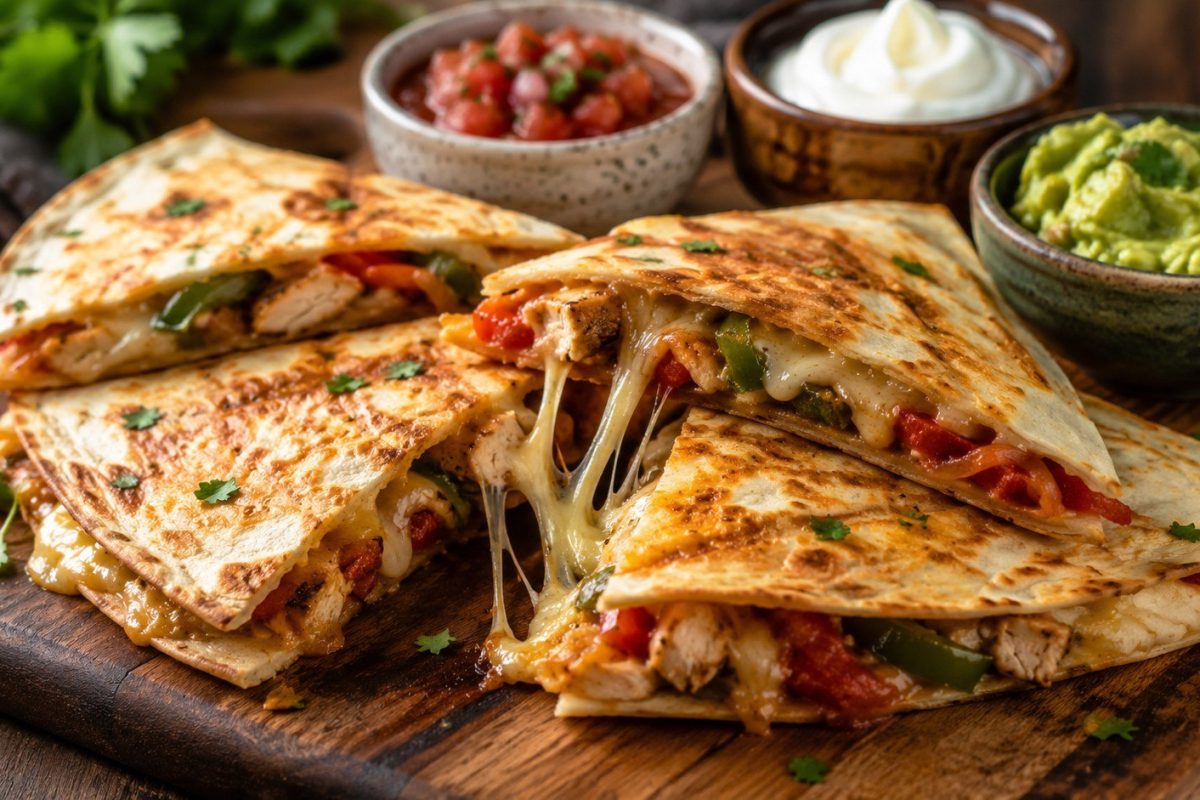
How to make a quesadilla begins with 3 elements: a flexible tortilla, cheese that melts evenly, and a filling without excess moisture. The dish cooks quickly, yet small mistakes can leave it greasy, torn, or soft instead of crisp, as the customreceipt.com editorial team notes.
A classic quesadilla can contain only tortilla and cheese. Chicken, beans, peppers, mushrooms, onions, or leftover roasted vegetables make it more substantial. The complete recipe below serves 4 people and takes about 20 minutes.
What Is a Quesadilla?
A quesadilla is a Mexican dish prepared by filling a tortilla and heating it until the cheese melts. Traditional versions often use corn tortillas, although flour tortillas are common in northern Mexico and the United States.
The tortilla may be folded into a half-moon or covered with another tortilla. The folded version is easier to turn in a skillet. It also keeps the filling under better control.
The name comes from “queso,” the Spanish word for cheese. However, regional customs differ. In Mexico City, diners may need to request cheese specifically because some local quesadillas contain other fillings without it.
The best quesadilla is not overloaded. It needs enough cheese to bind the filling, but enough empty space to close cleanly and crisp evenly.
Readers building a larger homemade meal can also use this crispy onion rings recipe. Its air-fryer and oven methods provide useful options when several dishes must be prepared together.
Ingredients for a Classic Cheese Quesadilla
This basic recipe makes 4 folded quesadillas. Use 8-inch flour tortillas for easy handling. Corn tortillas produce a more pronounced flavor but can crack when folded cold.
Prepare the following ingredients:
- 4 medium flour tortillas;
- 200 g Monterey Jack, Oaxaca, mozzarella, or mild cheddar;
- 1 tablespoon neutral oil or softened butter;
- ½ teaspoon smoked paprika;
- ¼ teaspoon ground cumin;
- ¼ teaspoon black pepper;
- 2 tablespoons chopped cilantro;
- salsa, sour cream, or guacamole for serving.
The cheese should be grated rather than sliced. Fine shreds melt before the tortilla becomes too dark. Oaxaca cheese gives a soft, stretchy center, while Monterey Jack melts smoothly and has a mild flavor. Cheddar adds more sharpness but can release additional fat. Mozzarella works well when mixed with a stronger cheese. Pre-shredded cheese may melt less evenly because its surface often contains anti-caking powder.
For a larger comfort-food menu, consider serving quesadillas after French onion soup with Gruyère. Both dishes depend on controlled heat and properly melted cheese.
Quesadilla Ingredient Ratios and Cooking Times
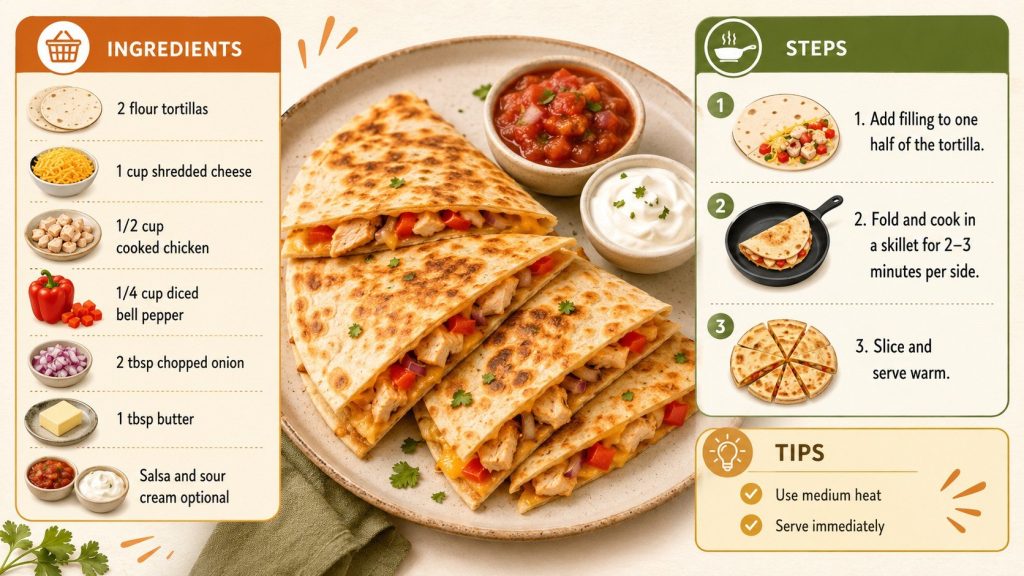
The proportions below help prevent overfilling. They can also be used when increasing the recipe for a larger group.
| Component | Amount per quesadilla | Preparation | Purpose |
|---|---|---|---|
| Tortilla | 1 medium | Warm briefly if stiff | Holds the filling |
| Grated cheese | 45–55 g | Spread evenly | Melts and binds |
| Cooked filling | 60–80 g | Drain and cool | Adds substance |
| Oil or butter | ½ teaspoon | Apply thinly | Supports browning |
| Cooking temperature | Medium-low | Preheat skillet | Prevents burning |
| First side | 2–3 minutes | Cook until golden | Melts the cheese |
| Second side | 1–2 minutes | Turn once | Finishes the crust |
| Resting time | 1 minute | Place on a board | Stabilizes the filling |
The total filling should remain below 130 g for an 8-inch tortilla. Larger amounts make the quesadilla difficult to fold. Heavy fillings also trap steam, which softens the tortilla. A thin, even layer cooks more predictably than a central mound. Medium-low heat gives the cheese time to melt before the outside burns. Resting for 1 minute reduces cheese leakage during cutting. These ratios can be adjusted slightly for larger tortillas.
How to Make a Quesadilla Step by Step
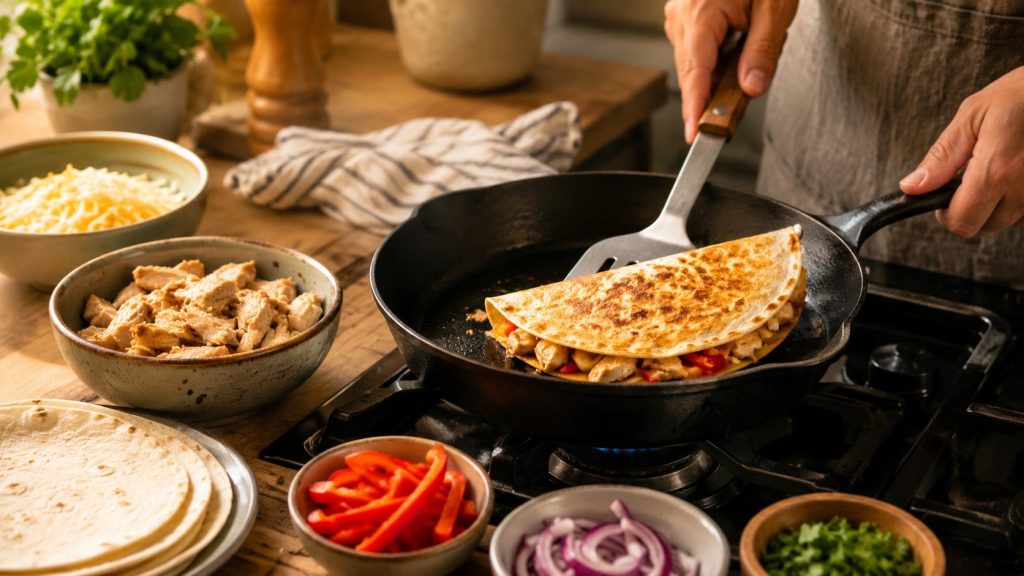
Use a heavy skillet with a flat surface. Cast iron produces strong browning, while a nonstick pan makes turning easier. A lid is useful when the cheese needs additional melting time.
Follow this order:
- Grate the cheese and prepare every filling before heating the pan.
- Place a skillet over medium-low heat for 2 minutes.
- Brush 1 side of the tortilla with a very thin layer of oil.
- Put the tortilla in the pan with the oiled side facing down.
- Spread cheese across the entire tortilla.
- Add the filling over 1 half, leaving a 2 cm border.
- Cook for 1–2 minutes until the cheese begins melting.
- Fold the empty half over the filling.
- Press gently with a spatula.
- Cook for another minute, then turn carefully.
- Brown the second side for 1–2 minutes.
- Rest for 1 minute before cutting into wedges.
Do not raise the heat to accelerate cooking. High heat can burn the tortilla while leaving firm cheese inside. The surface should become golden rather than dark brown. Pressing too hard forces cheese and filling from the edges. Turn the quesadilla only once when possible. Repeated flipping increases the chance of tearing. Use a broad spatula that supports most of the folded tortilla.
How to Prepare a Chicken Quesadilla
For a chicken quesadilla recipe, use cooked chicken rather than placing raw meat inside the tortilla. Raw chicken requires more cooking time than the tortilla can tolerate.
For 4 quesadillas, prepare:
- 300 g cooked chicken breast or thigh;
- ½ red bell pepper, thinly sliced;
- ½ small onion, sliced;
- 1 teaspoon neutral oil;
- ½ teaspoon ground cumin;
- ½ teaspoon smoked paprika;
- ¼ teaspoon garlic powder;
- 1 tablespoon lime juice;
- 200 g grated cheese;
- 4 flour tortillas.
Cook the onion and pepper for 4–5 minutes. Add chopped chicken, spices, and lime juice. Heat everything for another 2 minutes, then remove the pan from the stove.
Allow the filling to cool briefly before assembling the quesadillas. Very hot ingredients release steam beneath the tortilla. Steam prevents crisp browning and can make the center wet. Chop the chicken into small pieces so each wedge cuts cleanly. Large strips pull the filling from the tortilla during eating. Taste the mixture before adding it because melted cheese contributes additional salt.
The U.S. Department of Agriculture states: “Cook all poultry to an internal temperature of 165°F.” This equals 74°C and should be measured with a food thermometer. The guidance applies when preparing fresh chicken specifically for the recipe. (USDA Food Safety and Inspection Service, safe temperature guidance for poultry.)
Best Fillings for Homemade Quesadillas
A useful filling should be flavorful, cooked, and relatively dry. Ingredients containing large amounts of water should be sautéed or drained first.
Good combinations include:
- chicken, bell pepper, onion, and Monterey Jack;
- black beans, corn, jalapeño, and cheddar;
- mushrooms, spinach, garlic, and mozzarella;
- pulled pork, pickled onion, and Oaxaca cheese;
- scrambled egg, bacon, and mild cheddar;
- roasted sweet potato, black beans, and pepper Jack;
- shrimp, scallions, lime zest, and Monterey Jack;
- zucchini, corn, cilantro, and Oaxaca cheese.
Each combination needs contrast. Rich cheese benefits from acidity, herbs, or mild heat. Pickled onions and salsa cut through fatty fillings. Cilantro and lime add freshness without increasing moisture significantly. Beans should be drained and lightly mashed so they remain inside the tortilla. Mushrooms need thorough cooking because they release considerable water. Spinach should be squeezed after wilting. Avoid combining several wet ingredients in one quesadilla.
Leftovers often make better quesadilla fillings than raw ingredients. Roasted chicken, sautéed vegetables, and cooked beans need only reheating while the tortilla becomes crisp.
A substantial side, such as this homemade meatloaf with vegetables, can also provide cooked leftovers for later meals. Thinly chopped meatloaf works with cheddar, jalapeño, and tomato salsa.
How to Make a Crispy Quesadilla Without Burning It
A crispy quesadilla depends on limited fat and moderate heat. Too much oil fries the tortilla unevenly and can make it heavy. Too little heat leaves the surface pale while the filling warms slowly.
Apply about ½ teaspoon of oil to the outside of each tortilla. Spread it into a thin film with a brush. Butter creates a richer taste but browns faster because its milk solids can burn.
Keep the pan at medium-low or medium heat. Test it with a small piece of tortilla. It should sizzle gently rather than darken immediately.
The quesadilla is ready to turn when:
- the bottom has several golden patches;
- the tortilla feels firm beneath the spatula;
- the cheese near the edge has melted;
- the folded section holds together;
- no liquid is escaping from the filling.
These signs should be considered together. A golden surface alone does not confirm that the center is hot. If the tortilla browns before the cheese melts, reduce the heat and cover the skillet for 30 seconds. The trapped heat will soften the cheese without exposing the bottom to prolonged direct heat. Remove the lid quickly because condensation can soften the crust. A dry skillet can also produce crisp results when the tortilla already contains enough fat. Serve immediately because every quesadilla softens as steam collects inside.
Corn Tortillas or Flour Tortillas?
Both choices work, but they produce different results.
| Characteristic | Flour tortilla | Corn tortilla |
|---|---|---|
| Texture | Soft and flexible | Firmer and more rustic |
| Flavor | Mild | Pronounced corn flavor |
| Folding | Easy | May crack when cold |
| Browning | Even and gradual | Faster at the edges |
| Best cheese | Cheddar or Monterey Jack | Oaxaca or Chihuahua |
| Best filling | Chicken, beef, vegetables | Mushrooms, squash, beans |
| Typical size | Medium or large | Usually smaller |
Flour tortillas suit beginners because they remain flexible during turning. They also hold heavier fillings without tearing. Corn tortillas create a more traditional flavor but should be warmed before folding. Place them in a dry skillet for several seconds on each side. Small corn tortillas may require less filling than the main recipe. Two corn tortillas can also be used instead of folding 1. That method needs careful turning because the top tortilla may slide.
Common Quesadilla Mistakes
The recipe appears simple, which makes overconfidence the main problem. Most disappointing results come from excess filling, wet ingredients, or uncontrolled heat.
Avoid these mistakes:
- using cold, thick slices of cheese;
- adding raw vegetables directly to the tortilla;
- spreading salsa inside before cooking;
- filling the tortilla to its outer edge;
- cooking over very high heat;
- pouring too much oil into the skillet;
- turning before the cheese begins melting;
- cutting immediately after removing it from the pan;
- covering finished quesadillas for too long.
Salsa belongs beside the quesadilla rather than inside it. Its liquid can soak the tortilla before browning begins. Tomatoes should be seeded and drained when used as a filling. Very cold ingredients also slow the melting process. Let cooked fillings lose their refrigerator chill before assembly. However, do not leave meat at room temperature for extended periods. A wire rack keeps multiple cooked quesadillas crisper than a flat plate. If necessary, hold them in a 200°F, or 95°C, oven for several minutes.
What to Serve With Quesadillas
The richest quesadillas need a cool, acidic, or crunchy accompaniment. A large plate of heavy toppings can obscure the tortilla’s flavor.
Useful serving options include:
- tomato salsa or pico de gallo;
- guacamole with lime;
- sour cream or plain Greek yogurt;
- shredded cabbage with lime juice;
- black bean and corn salad;
- pickled jalapeños;
- chopped cilantro and scallions;
- lime wedges;
- roasted tomato salsa;
- cucumber and avocado salad.
Serve sauces in separate bowls to protect the crust. Guacamole adds richness, while salsa supplies acidity. Greek yogurt is lighter and sharper than sour cream. Pickled jalapeños provide heat without adding excessive moisture. Shredded cabbage gives the meal a fresh, crisp element. Lime should be squeezed over each wedge immediately before eating. Salt the finished quesadilla lightly only after tasting it with the chosen sauce.
How to Store and Reheat Quesadillas
Cool leftover quesadillas before placing them in a sealed container. Separate layers with parchment paper. Refrigerate them promptly and use them within 3–4 days.
A skillet gives the best reheating result. Warm each side over medium-low heat for 2–3 minutes. Do not add more oil unless the tortilla appears unusually dry.
An air fryer also works well. Reheat at 350°F, or 175°C, for 3–5 minutes. Check early because thin tortillas can darken quickly.
Microwave reheating is faster but produces a softer result. Use 20-second intervals and transfer the warmed quesadilla to a dry skillet for 1 minute. This restores part of the lost crispness.
FAQ About Making Quesadillas
What cheese is best for quesadillas?
Oaxaca, Chihuahua, Monterey Jack, mozzarella, and mild cheddar melt reliably. Mixing Monterey Jack with cheddar provides both smooth texture and stronger flavor.
Should a quesadilla be cooked with oil or butter?
Either works. Neutral oil tolerates heat better, while butter adds flavor but browns faster. Use only a thin coating.
How long does a quesadilla take to cook?
A folded quesadilla normally needs 3–5 minutes. The exact time depends on skillet temperature, tortilla thickness, and filling temperature.
Can quesadillas be made without cheese?
Yes, although cheese normally binds the filling. Mashed beans, avocado, or thick sweet potato purée can provide structure in dairy-free versions.
Why does my quesadilla become soggy?
The filling may contain too much liquid. Wet salsa, uncooked mushrooms, tomatoes, or hot steaming ingredients commonly soften the tortilla.
Can quesadillas be prepared in advance?
The fillings can be prepared 1–2 days ahead. Assemble and cook the tortillas shortly before serving for the best texture.
Can I bake quesadillas in the oven?
Yes. Bake them at 425°F, or 220°C, for about 8–12 minutes. Turn once and brush the surfaces lightly with oil.
How do I keep several quesadillas warm?
Place them on a wire rack in a 200°F, or 95°C, oven. Avoid stacking or covering them tightly because trapped steam softens the crust.
Can frozen chicken be used?
Cook and thaw it completely before assembling the quesadilla. Do not place frozen or raw chicken inside a tortilla for quick skillet cooking.
What is the easiest quesadilla filling?
Use grated cheese, drained black beans, and chopped scallions. The ingredients require little preparation and remain stable during cooking.
Earlier we wrote about How to Make Meatloaf With Vegetables, Spices and a Tangy Glaze