 Frank Rondel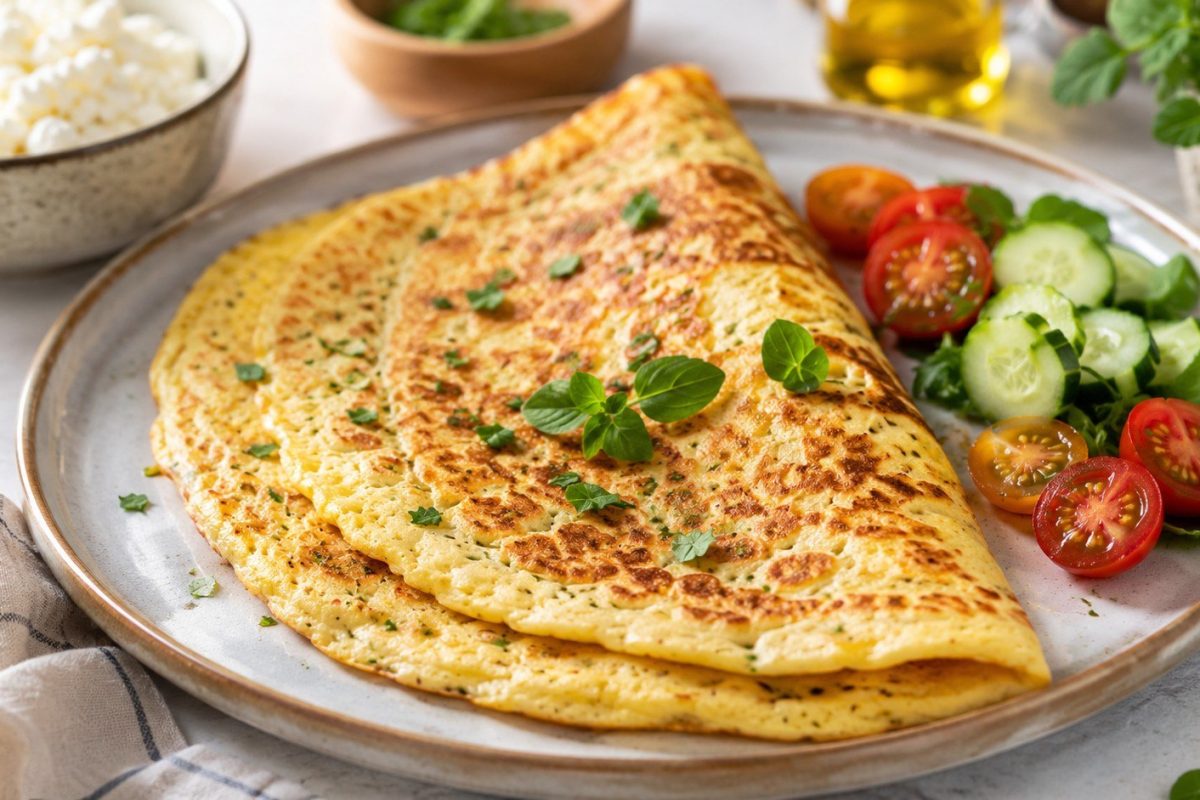
Cottage cheese flatbread turns cottage cheese and eggs into a flexible sheet that can replace bread, tortillas, or sandwich wraps. It needs no yeast, flour, kneading, or rising time, as the customreceipt.com editorial team notes.
The idea looks almost too simple. Blend cottage cheese with eggs, season the mixture, spread it thin, and bake until browned. Yet the result depends heavily on moisture, thickness, temperature, and cooling time. Those details separate a firm cottage cheese flatbread from a soft egg casserole.
The recipe also fits a larger food trend built around familiar ingredients used in unexpected formats. Cottage cheese has already moved beyond breakfast bowls into dishes such as this high-protein cottage cheese and beef bowl.
What cottage cheese flatbread actually is
Unlike wheat flatbread, this version develops no gluten network. Eggs provide structure as their proteins set under heat. Cottage cheese contributes milk proteins, moisture, fat, and a mild dairy flavor.
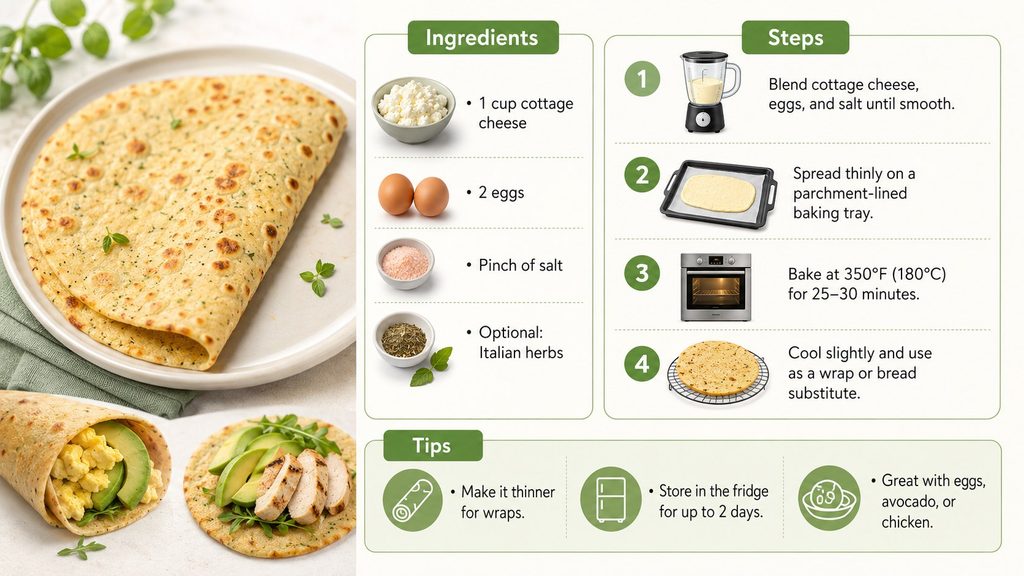
The basic formula usually contains only 2 main ingredients:
- 1 cup cottage cheese;
- 2 large eggs;
- optional garlic powder;
- optional dried herbs;
- black pepper or chili flakes;
- a small amount of salt, if needed.
The ingredient list is short, but proportions matter. Too much cheese makes the center wet and fragile. Too many eggs produce something closer to a thin omelet. Full-fat or reduced-fat cottage cheese usually gives better texture than fat-free versions. Large and small curds both work because blending removes most structural differences. Added salt should remain modest because cottage cheese can already contain substantial sodium.
The best flatbread is thin enough to bend but dry enough to release cleanly from parchment.
Cottage cheese also appears naturally in savory combinations with beef, vegetables, herbs, and sauces. A similar contrast between creamy dairy and seasoned meat drives this Turkish pasta with garlic yogurt and ground beef.
How to make cottage cheese flatbread
A reliable 2-ingredient cottage cheese flatbread begins with a completely smooth batter. Visible curds create uneven pockets of moisture during baking. A blender or food processor solves that problem within seconds.
Use parchment rather than pouring the mixture directly onto an unlined tray. The cooked proteins adhere strongly to bare metal. A quarter-sheet pan works well for one large flatbread.
- Heat the oven to 350°F, or about 175°C.
- Blend 1 cup cottage cheese with 2 eggs until smooth.
- Add herbs, garlic, pepper, or another dry seasoning.
- Spread the batter roughly 1/4 inch thick on parchment.
- Bake for about 30 to 40 minutes.
- Remove it when the surface browns and the center looks dry.
- Cool for at least 10 minutes before peeling away the parchment.
Baking time changes with the size of the pan and moisture content of the cheese. A thicker layer may need several extra minutes. The edges usually brown before the center becomes firm. Removing the sheet too early often creates a damp underside. Cooling matters because the protein structure firms further as steam escapes.
Another practical lesson comes from recipes such as chicken gyro smash tacos. Thin bases perform better when moisture from fillings stays controlled.
Why the texture sometimes goes wrong
The most common cottage cheese flatbread failure is not flavor. It is water. Cottage cheese brands differ noticeably in their liquid content, so identical recipes can produce different results.
A smooth, moderately thick cottage cheese works best. If liquid visibly pools inside the container, some can be drained before measuring.
| Problem | Likely cause | Practical fix |
|---|---|---|
| Wet center | Layer is too thick | Spread batter over a larger area |
| Eggy texture | Too many eggs | Keep the cheese-to-egg ratio consistent |
| Tears when lifted | Removed while hot | Cool for at least 10 minutes |
| Sticks badly | Poor liner | Use quality parchment |
| Dark edges, pale center | Uneven thickness | Spread batter uniformly |
| Rubbery result | Excess baking | Remove once the center has set |
The color should be golden rather than deeply brown across the entire surface. A little edge crispness helps the sheet hold fillings. Excessive browning can make it brittle when folded. Moist fillings should be added immediately before eating. Sauces can soften the base quickly during storage.
Cooling is not merely a waiting period; it changes a fragile baked sheet into a much stronger wrap.
Is it really a high-protein bread replacement?
The answer depends on what “replacement” means. A high-protein flatbread can perform the physical job of bread, but its nutritional profile is very different.
Cottage cheese and eggs are protein-rich foods. Exact values depend on serving size, egg size, and the dairy product chosen. USDA FoodData Central maintains nutrient records for cottage cheese and other foods.
Unlike conventional bread, this recipe contains little carbohydrate when no flour is added. It also lacks the grain-derived fiber found in many whole-grain breads. That difference matters when comparing complete meals rather than single ingredients.
USDA MyPlate classifies cottage cheese within the dairy group. Its official dairy guidance lists 2 cups of cottage cheese as equivalent to 1 cup from that food group.
A typical recipe based on cottage cheese and eggs offers several practical characteristics:
- substantial protein from dairy and eggs;
- minimal flour-derived carbohydrate;
- no yeast or fermentation;
- naturally flourless preparation;
- flexible use for sandwiches, wraps, and pizza-style bases.
Those qualities do not automatically make every serving nutritionally superior to bread. Whole-grain bread contributes fiber and carbohydrates that this recipe largely lacks. Cottage cheese may also contain significant sodium, depending on the brand. Toppings can alter the final meal more than the flatbread itself. Turkey, vegetables, and hummus create a different nutritional profile from bacon and cheese. Reading the dairy label remains more useful than relying on the recipe’s viral reputation.
For people specifically seeking a low-carb bread alternative, however, the difference is substantial. The absence of flour removes most starch from the basic recipe.
Food safety matters because the batter contains raw eggs
The flatbread should not remain soft and liquid in the center. Eggs require thorough cooking, even when mixed with cottage cheese.
The U.S. Food and Drug Administration explains that apparently clean eggs can still contain Salmonella. Its egg safety guidance recommends refrigeration and thorough cooking.
“Cook foods containing eggs thoroughly.”
FDA, consumer egg-safety guidance concerning prevention of Salmonella infection.
FoodSafety.gov provides a more specific benchmark for cooked egg dishes. Its federal minimum temperature guidance lists 160°F, or 71°C, for egg dishes.
“Cook until yolk and white are firm.”
FoodSafety.gov, federal safe-cooking guidance for raw eggs.
A thin flatbread commonly exceeds that internal temperature before proper browning develops. Visual texture still provides useful cooking information. The center should appear set rather than glossy. Refrigerate leftovers promptly after cooling. Reheat only the portion needed for the next meal.
How to use a cottage cheese wrap without making it soggy
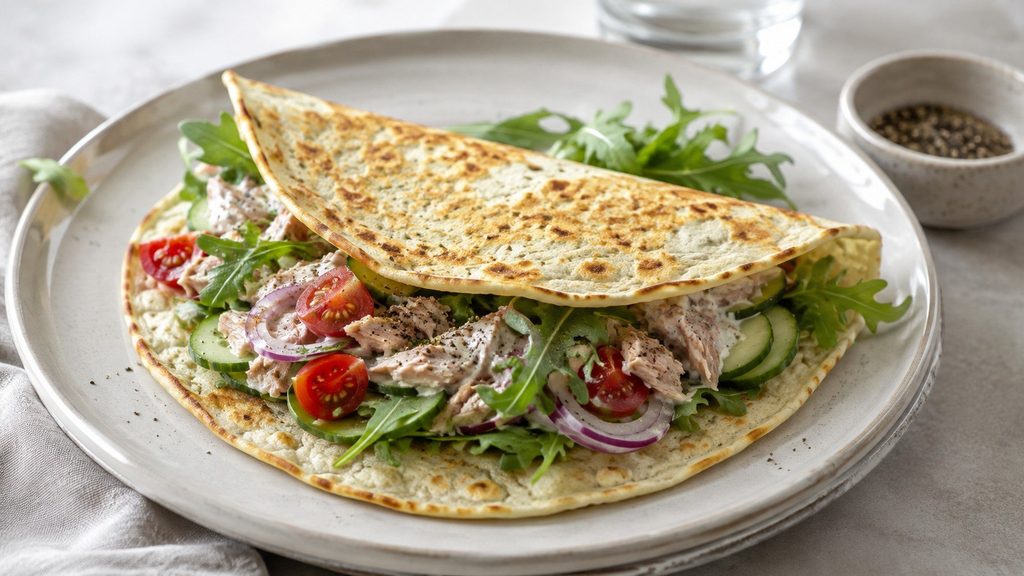
A finished cottage cheese wrap behaves differently from a tortilla. It tolerates dry ingredients well but absorbs liquid sauces relatively quickly.
Good fillings include:
- sliced turkey with lettuce and mustard;
- grilled chicken with cucumber and herbs;
- smoked salmon with greens;
- roasted peppers with hummus;
- scrambled eggs with spinach;
- avocado with tomato and chili flakes.
Sauces should be spread thinly. Watery tomatoes can be drained before assembly. Hot meat should cool briefly before entering a tightly rolled wrap. Leafy greens can create a useful barrier between sauce and flatbread. Meal-prep wraps keep their texture better when fillings remain separate until serving.
For pizza-style use, bake the base completely before adding toppings. Then return it to the oven only long enough to heat the topping and melt cheese.
Cottage cheese flatbread variations worth trying
The neutral base accepts strong seasoning without becoming complicated. Dry ingredients work better than ingredients containing extra liquid.
Garlic powder and Italian herbs create a pizza-friendly version. Smoked paprika and cumin suit chicken or beef fillings. Dried dill works with salmon, cucumber, and yogurt-based sauces. Everything-bagel seasoning adds texture, although it can increase sodium considerably.
A small amount of grated Parmesan can strengthen the baked surface. Chili flakes produce heat without adding moisture. Fresh herbs can work, but they should be chopped finely and dried after washing.
Sweet versions are possible, although they behave differently. Cinnamon can be blended into the batter, while fruit is better added after baking. Fresh berries should not be blended into the base because their juice weakens the structure.
The simplest version remains the easiest benchmark. Once its texture works reliably, seasonings can change without altering the core technique.
FAQ
What is cottage cheese flatbread made from?
The basic recipe uses cottage cheese and eggs. Garlic powder, herbs, pepper, and other dry seasonings are optional.
How long should cottage cheese flatbread bake?
At 350°F, many versions require about 30 to 40 minutes. Thickness and moisture can change the required time.
Why does cottage cheese flatbread turn out soggy?
The usual causes are excess moisture, a thick batter layer, or insufficient baking. Cooling too briefly can also make it fragile.
Can cottage cheese flatbread be stored in the refrigerator?
Yes. Cool it first, refrigerate it in a sealed container, and keep wet fillings separate until serving.
Is cottage cheese flatbread gluten-free?
A recipe containing only cottage cheese, eggs, and gluten-free seasonings contains no wheat flour. Individual packaged ingredients should still be checked when gluten avoidance is medically necessary.
Can it replace regular bread every day?
It can replace bread structurally in many meals. Its nutrient profile differs because it provides more protein but much less grain-derived carbohydrate and fiber.
Earlier we wrote about How to Make Chicken Gyro Smash Tacos With Cucumber, Onion and Crispy Tortillas