 Frank Rondel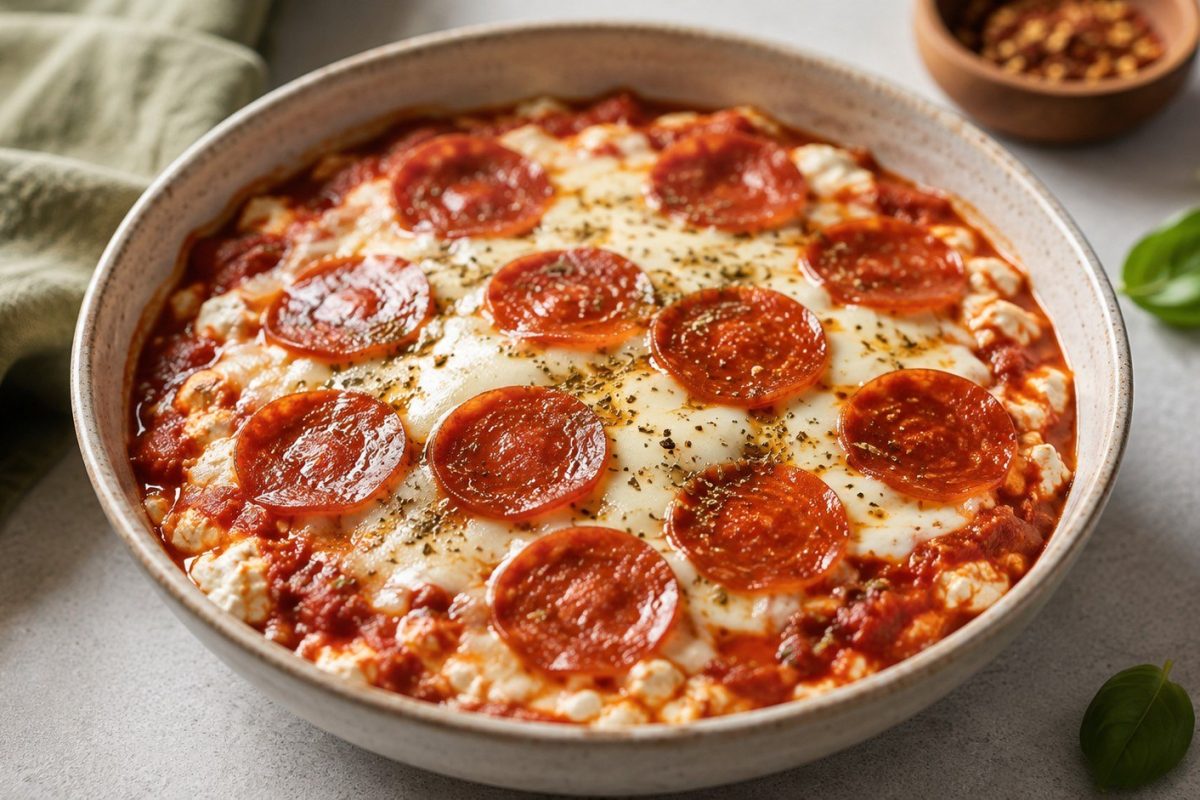
Cottage Cheese Pizza Bowl turns cottage cheese, tomato sauce, mozzarella, and pepperoni into a hot crustless meal with pizza flavor. It needs one oven-safe bowl, about 5 minutes of preparation, and roughly 12–15 minutes of baking. The crucial detail is moisture control, because wet cottage cheese or excessive sauce can create soup instead of a creamy pizza base, as the customreceipt.com editorial team notes.
The recipe sits between baked ricotta, pizza dip, and a crustless personal pizza. Cottage cheese supplies a mild dairy base, mozzarella creates the stretchy top, while pepperoni contributes salt and rendered fat. Tomato sauce provides acidity but should remain a supporting ingredient. A small ramekin also gives better results than a broad baking dish because the dairy layer stays thick.
Cottage Cheese Pizza Bowl ingredients and proportions
A good cottage cheese pizza bowl recipe depends more on proportions than on a long ingredient list. Cottage cheese contains considerable moisture, so pouring half a jar of marinara over it defeats the purpose. Low-moisture mozzarella is particularly useful because it melts without releasing as much liquid as very fresh mozzarella.
For 1 substantial serving, prepare:
- 1 cup cottage cheese, preferably 2% or 4% milkfat;
- 3 tbsp thick tomato or pizza sauce;
- 1/3 cup shredded low-moisture mozzarella;
- 10–12 small pepperoni slices;
- 1/2 tsp dried oregano or Italian seasoning;
- 1/4 tsp garlic powder;
- black pepper to taste;
- 1 tbsp grated Parmesan, optional;
- red pepper flakes or fresh basil, optional.
Choose an oven-safe ramekin holding about 12–16 oz. A smaller container keeps the mixture deep enough to stay creamy underneath. Large-curd cottage cheese gives a more pronounced texture, while small-curd cheese blends more easily with sauce. Anyone who dislikes curds can process the cottage cheese for 20–30 seconds before assembling the bowl. The result becomes closer to whipped ricotta.
A similar balance between hot ingredients and cottage cheese appears in this high-protein sweet potato and ground beef bowl. Another useful example of managing moisture is the site’s chicken gyro smash taco recipe.
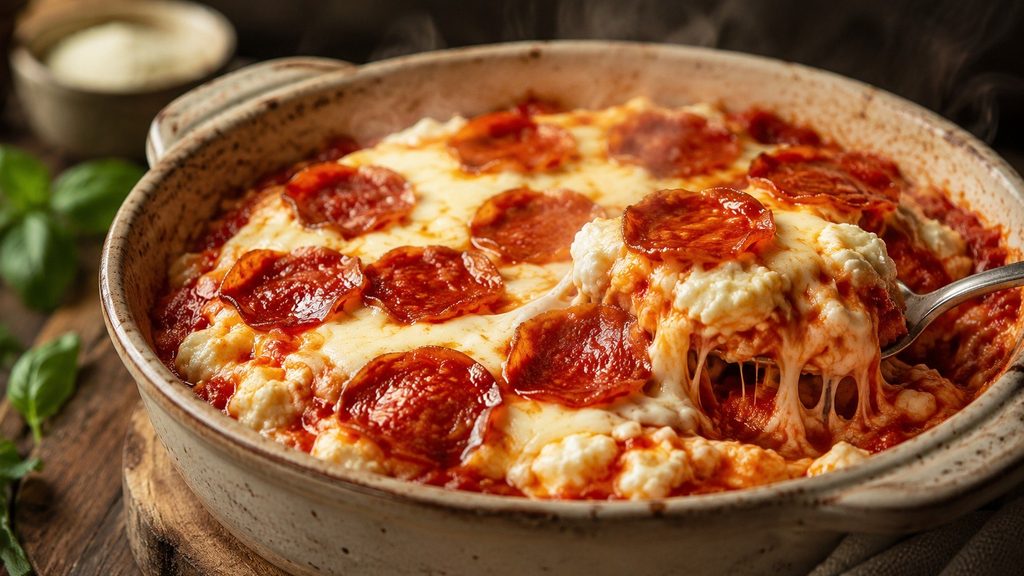
The best pizza bowl is creamy in the center, browned around the edges, and visibly bubbling rather than swimming in released whey.
How to make Cottage Cheese Pizza Bowl step by step
Heat the oven to 400°F, or about 200°C. Place the ramekin on a small sheet pan before filling it. This catches any cheese or sauce that bubbles over the rim.
Follow this order:
- Spoon the cottage cheese into the ramekin.
- Stir in 2 tbsp tomato sauce, oregano, garlic powder, and black pepper.
- Spread the mixture into an even layer.
- Spoon the remaining sauce lightly across the surface.
- Add shredded mozzarella without compressing it.
- Arrange pepperoni across the cheese.
- Bake for 12–15 minutes.
- Broil for 1–2 minutes if deeper browning is wanted.
- Rest the bowl for 3–5 minutes before eating.
The resting period is not decorative. Hot cottage cheese becomes looser as its water separates under heat. Several minutes outside the oven allow the dairy proteins and melted cheese to settle into a thicker consistency. Pepperoni should sit mostly on top, where its edges can curl and brown. If it is buried inside the cottage cheese, much of its rendered fat remains trapped in the base.
For another example where heat and texture determine the final result, this garlic mashed potatoes guide explains why ingredient temperature matters in dairy-heavy dishes. The principle is different, but moisture control remains central.
Oven, microwave and air fryer methods compared
The bowl can be cooked with several appliances, although the final texture changes. The oven provides the most even result. An air fryer browns the cheese faster, while a microwave prioritizes speed.
| Method | Temperature | Typical time | Final texture |
|---|---|---|---|
| Oven | 400°F / 200°C | 12–15 min | Creamy center, evenly melted top |
| Air fryer | 350–375°F | 8–12 min | Darker, faster cheese browning |
| Microwave | High | 2–3 min | Soft cheese, little browning |
| Oven + broiler | 400°F, then broil | 13–17 min | Deepest browned top |
Microwave preparation works for lunch, but it does not reproduce the browned mozzarella associated with pizza. Covering the bowl is also unnecessary because trapped steam can increase surface moisture. In an air fryer, a heavy ceramic ramekin is more stable than a light disposable container. Appliance performance varies, so visual texture matters more than an exact minute count. The cheese should be fully melted, and the sauce should bubble around the edge.
Pepperoni sold as ready-to-eat does not need cooking for the same reason raw sausage does. Packaging still matters because different products have different storage requirements. USDA FSIS explains that some dry sausages are shelf-stable, while products carrying refrigeration instructions must be stored accordingly.
“Using a food thermometer is the only reliable way to ensure that foods have been cooked to a safe minimum internal temperature.”
USDA Food Safety and Inspection Service, food thermometer guidance. The statement primarily concerns foods requiring safe cooking temperatures, rather than already ready-to-eat pepperoni. USDA FSIS provides the complete guidance.
How to prevent a watery pizza bowl
Excess liquid is the most common failure in a high-protein pizza bowl. Cottage cheese naturally contains whey, tomato sauce adds water, and vegetables can release even more as they cook. The solution is not simply baking the bowl longer, because excessive heat can make the dairy grainy.
Several adjustments work better:
- choose thick pizza sauce instead of thin marinara;
- drain visibly watery cottage cheese before measuring;
- use low-moisture shredded mozzarella;
- avoid large amounts of raw mushrooms or fresh tomatoes;
- pre-cook watery vegetables when adding more than a few pieces;
- leave the bowl uncovered while baking.
Blending cottage cheese changes its texture but does not remove moisture. If the container contains obvious pools of whey, drain that liquid first. Pre-shredded mozzarella generally melts differently because anti-caking ingredients may be present, yet its lower moisture can be useful here. Fresh mozzarella needs more caution. Pat it thoroughly dry and use less than the quantity specified for low-moisture cheese.
Three tablespoons of tomato sauce are enough to make the bowl taste like pizza without turning the dairy base into tomato soup.
Nutrition and what the ingredients actually contribute
Cottage cheese makes this recipe different from an ordinary bowl of melted mozzarella. USDA FoodData Central lists both full-fat and low-fat cottage cheese in its food composition database, alongside low-moisture part-skim mozzarella. Exact calories, protein, fat, and sodium vary significantly between brands. USDA FoodData Central is the appropriate reference for comparing generic food composition.
The nutritional character of a low carb pizza bowl also depends on toppings. Removing dough reduces the major flour-based carbohydrate source, but tomato sauce still contains carbohydrates. Pepperoni and cheese can make sodium substantial, especially in a large serving.
| Ingredient | Main function | Practical nutrition point |
|---|---|---|
| Cottage cheese | Creamy base | Provides dairy protein |
| Tomato sauce | Acidity and pizza flavor | Amount affects carbohydrates and sodium |
| Mozzarella | Melt and browning | Adds protein, fat and calcium |
| Pepperoni | Savory topping | Can contribute considerable sodium and fat |
| Herbs | Aroma | Add flavor without meaningful calories |
USDA MyPlate counts 2 cups of cottage cheese as 1 cup-equivalent from the dairy group. It counts 1/3 cup shredded hard cheese, including mozzarella, as another dairy cup-equivalent. These measurements describe food-group equivalents rather than serving requirements for this recipe. MyPlate dairy guidance provides the age-based recommendations.
That distinction matters when recipes online are described simply as “healthy.” This bowl can supply substantial protein and calcium, but pepperoni, cheese, and commercial sauce may also push sodium upward. Reducing pepperoni or choosing lower-sodium cottage cheese changes the profile without changing the cooking method. Adding bell pepper, spinach, or cooked mushrooms increases volume and variety.
Pizza bowl variations that still work
The basic formula can support many toppings, but every addition should have a purpose. A successful variation preserves the thick cottage-cheese base and avoids covering it with excessive sauce.
Useful options include:
- sautéed mushrooms and spinach;
- diced bell pepper and olives;
- cooked Italian sausage;
- turkey pepperoni;
- chopped jalapeño and red pepper flakes;
- Parmesan and fresh basil;
- cooked ground turkey with oregano;
- roasted zucchini that has been drained well.
Vegetables should be added in restrained quantities. Raw zucchini, mushrooms, and tomatoes can release enough water to weaken the texture. Roasting or sautéing them first concentrates their flavor and removes part of that moisture. Olives and cured meats need less preparation, although their saltiness can accumulate quickly. Parmesan adds sharper flavor, so only 1 tbsp may be needed.
The pepperoni cottage cheese pizza bowl also works without pepperoni. A vegetarian version with peppers, mushrooms, olives, and basil keeps the same cooking technique. For stronger pizza flavor, add fennel seed or a pinch of crushed chili rather than another layer of sauce.
Storage and reheating
A freshly baked bowl gives the best texture, but leftovers can be refrigerated. USDA FSIS recommends refrigerating perishable leftovers within 2 hours and keeping cold food at 40°F or below.
“Within 2 hours of cooking food … leftovers must be refrigerated.”
USDA Food Safety and Inspection Service, leftover food-safety guidance. USDA FSIS also recommends reheating leftovers to 165°F.
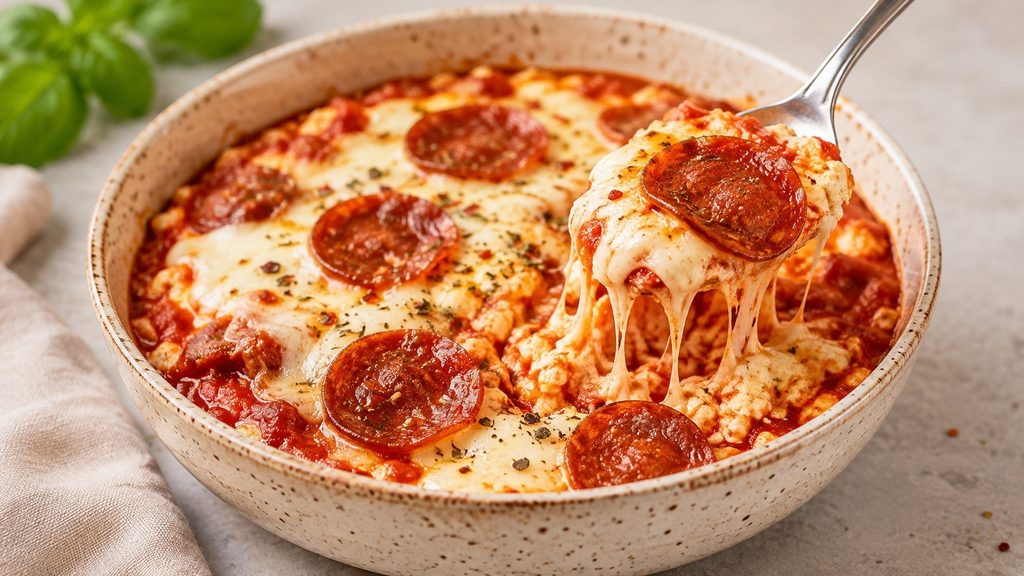
Store the bowl covered once it has cooled enough for refrigeration. Reheating in an oven or air fryer gives mozzarella a better texture than microwaving. A microwave remains practical when speed matters, but the cheese will soften rather than re-crisp. Do not repeatedly heat and cool the same portion. Preparing individual ramekins avoids that problem.
For meal prep, assembling the dairy base and toppings separately gives better results than baking several bowls days in advance.
FAQ about Cottage Cheese Pizza Bowl
Can cottage cheese actually be used for pizza?
Yes. Cottage cheese works as a creamy base rather than a replacement for pizza dough. Baking softens the curds and combines them with sauce and mozzarella.
Should cottage cheese be blended first?
Blending is optional. It creates a smoother, ricotta-like base and can help people who dislike the curd texture. Draining excess whey still matters.
How long should a Cottage Cheese Pizza Bowl bake?
At 400°F, a single ramekin usually needs about 12–15 minutes. An additional 1–2 minutes under the broiler can brown the mozzarella.
Can a pizza bowl be made in the microwave?
Yes. Microwave it for roughly 2–3 minutes, checking that it is heated throughout. The result stays softer because the microwave does not brown mozzarella effectively.
Is Cottage Cheese Pizza Bowl keto?
It can fit some lower-carbohydrate eating patterns, but “keto” depends on total daily intake and ingredient labels. Tomato sauce contains carbohydrates, so portions matter.
Why did my Cottage Cheese Pizza Bowl turn watery?
The likely causes are thin tomato sauce, undrained cottage cheese, fresh mozzarella, or watery vegetables. Using thicker sauce and low-moisture toppings usually improves consistency.
Earlier we wrote about Cottage Cheese Flatbread Recipe: How to Make the 2-Ingredient High-Protein Bread