 Frank Rondel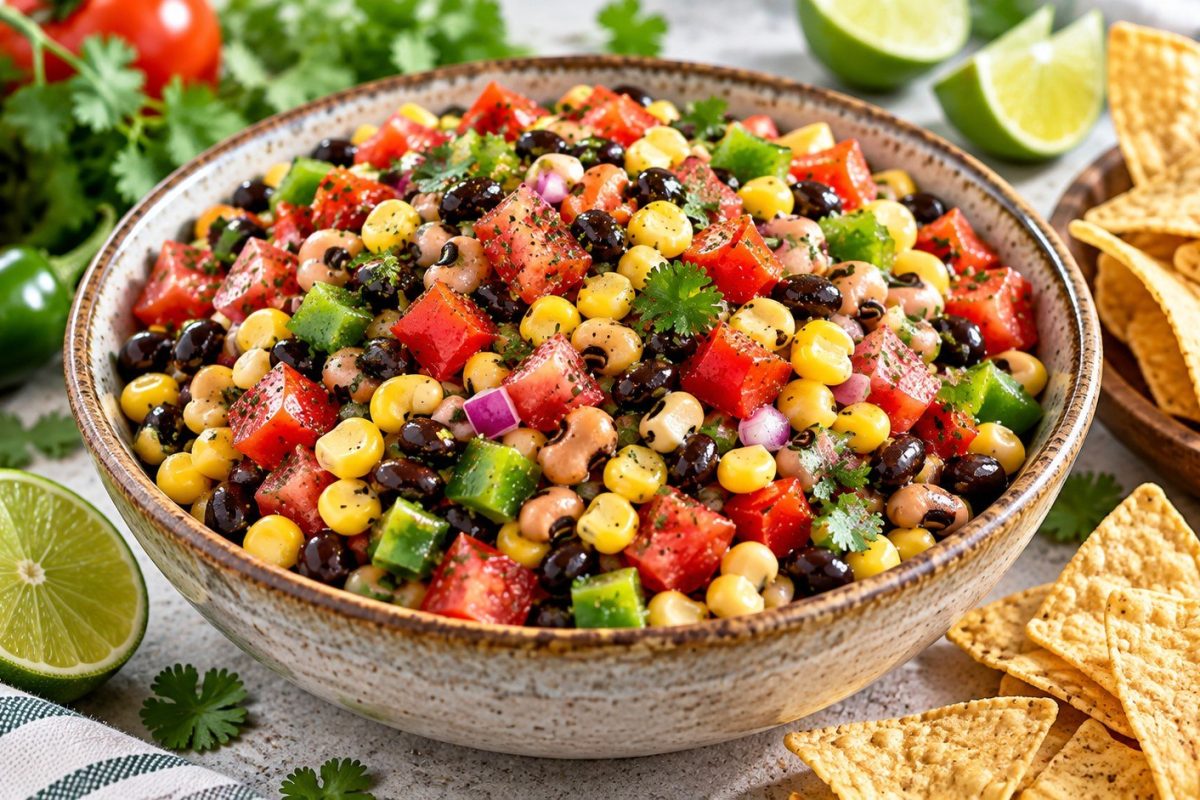
Cowboy Caviar is a cold bean-and-vegetable salad built around black beans, corn, tomatoes, crisp peppers, and a sharp lime dressing. It needs no cooking when canned beans and corn are used, takes about 20 minutes to assemble, and works equally well as a dip, side dish, taco topping, or light lunch, as noted by the customreceipt.com editorial team.
The dish is forgiving, but not careless. Watery tomatoes can dilute the dressing, poorly drained beans make everything starchy, and too much lime can overpower the vegetables. A good Cowboy Caviar recipe depends on controlled moisture, small even cuts, and enough resting time for the beans to absorb the vinaigrette.
The practical goal is simple: every spoonful should contain beans, corn, vegetables, acidity, and crunch rather than a puddle of dressing.
What Cowboy Caviar Actually Is
Cowboy Caviar is also widely known as Texas caviar. Its roots reach back to chef Helen Corbitt, who became associated with a black-eyed pea salad dressed with oil, vinegar, garlic, and onion. The Texas State Historical Association records Texas caviar among Corbitt’s signature dishes.
Modern versions have expanded considerably. Black beans, corn, tomatoes, bell peppers, jalapeño, cilantro, avocado, and lime are now common additions. That makes today’s Texas Caviar recipe brighter and more substantial than the early black-eyed pea preparation.
The name is deliberately playful. There is no fish roe involved. The beans provide the small, glossy pieces that inspired the comparison with caviar.
“Texas caviar” became one of Helen Corbitt’s signature dishes, combining black-eyed peas with a seasoned oil-and-vinegar dressing.
Source: Texas State Historical Association, biographical entry on chef Helen Lucy Corbitt and her work in Texas.
Unlike a conventional salsa, Cowboy Caviar contains enough beans to function as a side dish. Unlike a standard bean salad, it is usually chopped finely enough to scoop with tortilla chips.
Ingredients and the Ratios That Work
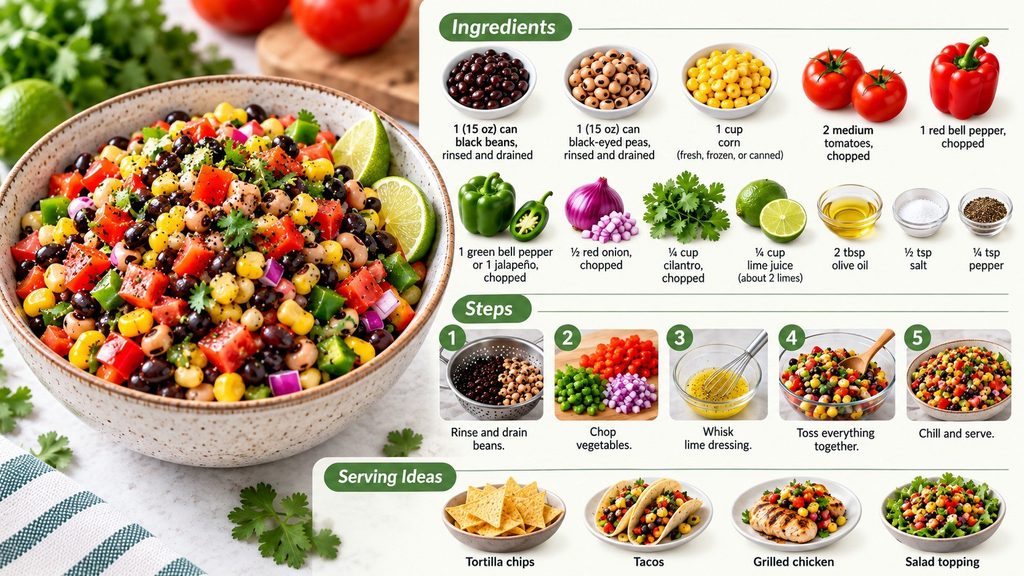
The quantities below produce about 6 generous side servings or enough dip for a small gathering. The ratio keeps the beans prominent without allowing them to bury the fresh vegetables.
| Ingredient | Amount | What it adds |
|---|---|---|
| Black beans | 1 can, 15 oz | Body and earthy flavor |
| Black-eyed peas | 1 can, 15 oz | Traditional Texas caviar base |
| Corn | 1 1/2 cups | Sweetness and crisp texture |
| Roma tomatoes | 2 medium | Fresh acidity with less excess juice |
| Red bell pepper | 1 medium | Crunch and sweetness |
| Jalapeño | 1 small | Controlled heat |
| Red onion | 1/3 cup | Sharp aromatic flavor |
| Cilantro | 1/3 cup | Fresh herbal note |
| Lime juice | 3 tbsp | Main acidity |
| Olive oil | 3 tbsp | Carries spices and softens acidity |
| Ground cumin | 1/2 tsp | Warm, earthy depth |
| Garlic | 1 small clove | Savory background |
| Salt | 1/2 tsp, then adjust | Seasoning |
| Black pepper | 1/4 tsp | Mild heat |
Black beans and black-eyed peas should be rinsed and drained thoroughly. Leave them in a colander for several minutes after rinsing. Residual liquid is one of the main reasons homemade Cowboy Caviar turns watery.
Roma tomatoes are useful because they contain relatively dense flesh. Cherry tomatoes also work, although they should be quartered. Large slicing tomatoes can be used after removing some seeds and loose pulp.
Corn can be canned, thawed from frozen, or cut from cooked ears. Canned corn needs the same careful draining as the beans. Frozen kernels should be completely thawed and patted dry before mixing.
This ingredient profile also overlaps naturally with a homemade taco bowl, where beans, corn, tomatoes, and lime serve a similar purpose. The difference is temperature and texture: Cowboy Caviar is designed to stay cold and crisp.
How to Make Cowboy Caviar Step by Step
Good how to make Cowboy Caviar instructions start with preparation rather than mixing everything immediately. Cut the pepper, tomato, onion, and jalapeño into pieces close to the size of corn kernels. Consistent cutting makes the finished dip easier to scoop and prevents large onion pieces from dominating.
Follow this order:
- Drain and rinse the black beans and black-eyed peas.
- Drain or thaw the corn completely.
- Dice the tomatoes, bell pepper, onion, and jalapeño.
- Chop the cilantro and mince the garlic.
- Whisk lime juice, olive oil, cumin, salt, and pepper separately.
- Combine beans, corn, and vegetables in a large bowl.
- Pour over the dressing and fold gently.
- Refrigerate for 30 to 60 minutes before serving.
Mixing the dressing separately matters. Salt dissolves more evenly in the acidic liquid, while oil becomes distributed across the beans instead of collecting on a few ingredients. A large bowl also reduces crushing during mixing.
Taste the salad again after chilling. Beans absorb seasoning, so a mixture that seemed sufficiently sharp at first can taste flatter after 30 minutes. Add lime in 1-teaspoon increments rather than pouring in another large splash.
The same principle of keeping wet and crisp ingredients controlled appears in a Burger Bowl with fresh vegetables. Moisture management is often the difference between meal-prep food that stays structured and food that becomes soggy.
For the cleanest flavor, chill the finished mixture before making the final salt and lime adjustment.
The Lime Dressing Needs Balance, Not Sugar
A basic lime dressing for Cowboy Caviar needs acid, fat, salt, and spice. Fresh lime supplies both fragrance and acidity. Olive oil rounds off the sharp edges and helps cumin and pepper coat the vegetables.
A reliable starting ratio is 1 part lime juice to 1 part olive oil. Some recipes use considerably more oil, while others add vinegar or sugar. Neither is essential.
For a sharper version, replace 1 tablespoon of lime juice with red wine vinegar. For a softer dressing, increase olive oil by 1 tablespoon. A pinch of chili powder works well when the jalapeño is mild.
Useful variations include:
- add 1/2 teaspoon smoked paprika for a roasted note;
- add minced serrano instead of jalapeño for stronger heat;
- add 1 teaspoon honey when the limes taste unusually harsh;
- use scallions instead of red onion for a milder finish;
- add diced avocado immediately before serving;
- add extra black-eyed peas for a more traditional profile.
Avocado changes the storage behavior of the recipe. Its flesh softens quickly and loses its clean green appearance after cutting. Add it to the portion being served rather than the entire batch when leftovers are expected.
Cowboy Caviar can also replace salsa inside tacos or accompany grilled meat. It works particularly well beside foods with richer sauces because lime and raw vegetables provide contrast. Similar logic applies to a Big Mac salad bowl, where acidic vegetables offset beef and creamy dressing.
How to Keep the Texture Crisp
The easiest Cowboy Caviar mistake is treating it like a soup of chopped vegetables. Every ingredient containing excess water weakens the dressing.
Beans should feel dry on the surface before they enter the bowl. Tomatoes should be firm, not overripe. If a tomato releases large amounts of liquid while cutting, remove some loose seeds and juice.
There are several other common problems:
- cutting onion much larger than the other ingredients;
- adding avocado hours before serving;
- using frozen corn while it is still icy;
- pouring dressing over warm ingredients;
- crushing beans through aggressive stirring;
- adding tortilla chips directly to the stored salad.
After this preparation, give the mixture time to rest. About 30 minutes is enough for a noticeable change, while 1 hour creates a more integrated flavor. Longer chilling is possible, but tomatoes gradually soften.
Use tortilla chips only at serving time. Their salt and crunch are part of the appeal, but they deteriorate rapidly after contact with dressing. For a fork-and-bowl lunch, Cowboy Caviar can instead be spooned over lettuce, rice, or quinoa.
“Wash all produce thoroughly under running water before preparing and/or eating.”
Source: U.S. Food and Drug Administration, Selecting and Serving Produce Safely.
The FDA does not recommend washing fruits and vegetables with soap or household detergent. Tomatoes, peppers, limes, jalapeños, and cilantro should be rinsed under running water before preparation.
Storage and Make-Ahead Rules
A Cowboy Caviar dip is well suited to advance preparation because beans tolerate vinaigrette better than delicate lettuce. The tomato and pepper texture, however, is best during the first days.
Store the mixture in a covered container at 40°F or below. A practical refrigerated window is 3 to 4 days, consistent with general USDA leftovers guidance. Quality may decline sooner when avocado has already been mixed in.
“Use most cooked leftovers within 3 to 4 days.”
Source: USDA Food Safety and Inspection Service, official leftovers and refrigeration guidance.
For parties, do not leave the bowl on the table indefinitely. USDA guidance sets a general 2-hour limit for perishable food at room temperature. That drops to 1 hour when temperatures exceed 90°F.
A smaller serving bowl solves the problem. Keep the remaining Cowboy Caviar refrigerated and refill the serving portion when necessary. This approach also prevents repeated contact with warm air and used serving utensils.
Freezing is technically possible for some ingredients, but the result is usually disappointing. Tomatoes and peppers lose much of their crisp structure after thawing. Preparing a fresh batch is more effective than freezing the finished salad.
What to Serve With Cowboy Caviar
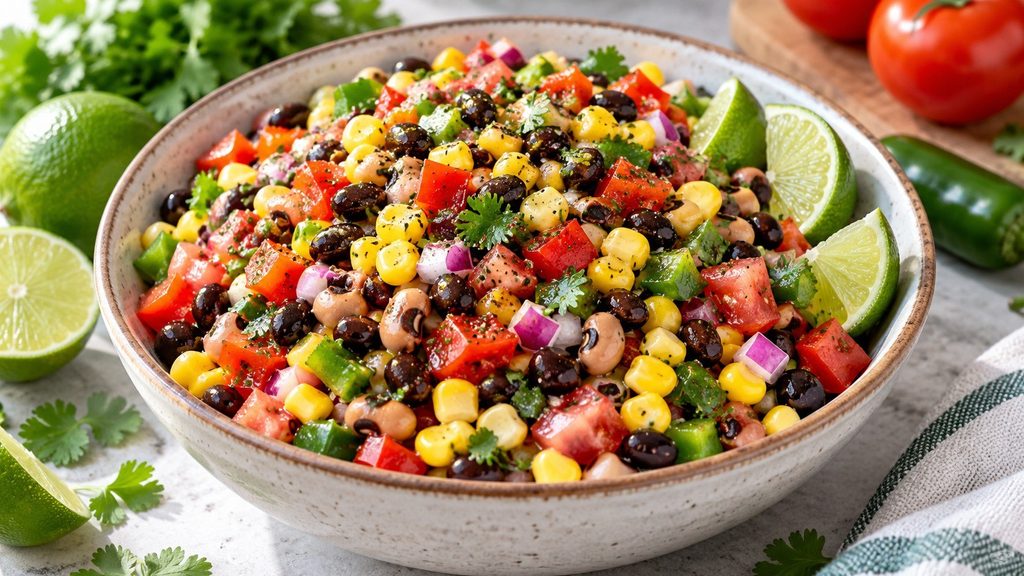
Tortilla chips remain the obvious pairing, but the mixture is versatile enough for full meals. Its beans provide substance, while lime and vegetables keep rich foods from becoming monotonous.
Good serving options include:
- tortilla chips for a party dip;
- grilled chicken or steak as a fresh side;
- tacos and burritos as a topping;
- baked potatoes as a savory filling;
- scrambled eggs for breakfast;
- lettuce for a quick bean salad;
- rice or quinoa for a meatless bowl.
After choosing the base, adjust the seasoning to match it. Salted tortilla chips need less salt in the Cowboy Caviar. Plain rice can handle a stronger dressing. Grilled meat benefits from extra lime and cilantro.
For a substantial lunch, use about 1 to 1 1/2 cups over greens or grains. For a party, smaller portions make sense because chips add volume. If the dish will sit beside several appetizers, the standard recipe can serve more than 6 people.
Cheese is optional rather than necessary. Crumbled cotija or feta adds salt, but it also moves the flavor away from the clean bean-and-lime profile. Sour cream can be served separately rather than mixed through the bowl.
FAQ About Cowboy Caviar
- What is Cowboy Caviar made of?
Cowboy Caviar usually combines black beans or black-eyed peas with corn, tomatoes, peppers, onion, herbs, and vinaigrette. Modern recipes often use lime juice and avocado.
- Is Cowboy Caviar the same as Texas caviar?
The names are commonly used for closely related dishes. Texas caviar traditionally centers on black-eyed peas, while many Cowboy Caviar versions add black beans and corn.
- Can Cowboy Caviar be made the night before?
Yes. Prepare the bean and vegetable mixture with dressing, cover it, and refrigerate it. Add avocado shortly before serving for better texture and color.
- How long does Cowboy Caviar last in the refrigerator?
A practical food-safety window is 3 to 4 days when refrigerated promptly at 40°F or below. Texture is usually best earlier.
- Can canned corn be used?
Yes. Drain canned corn thoroughly before adding it. Frozen corn also works after thawing and drying.
- How can Cowboy Caviar be made less spicy?
Remove the jalapeño seeds and white membranes, use only half the pepper, or replace it with additional bell pepper. The lime dressing does not need extra heat.
Earlier we wrote about How Long to Bake Sheet Pan Chicken Fajitas for Juicy Chicken and Browned Peppers