 Frank Rondel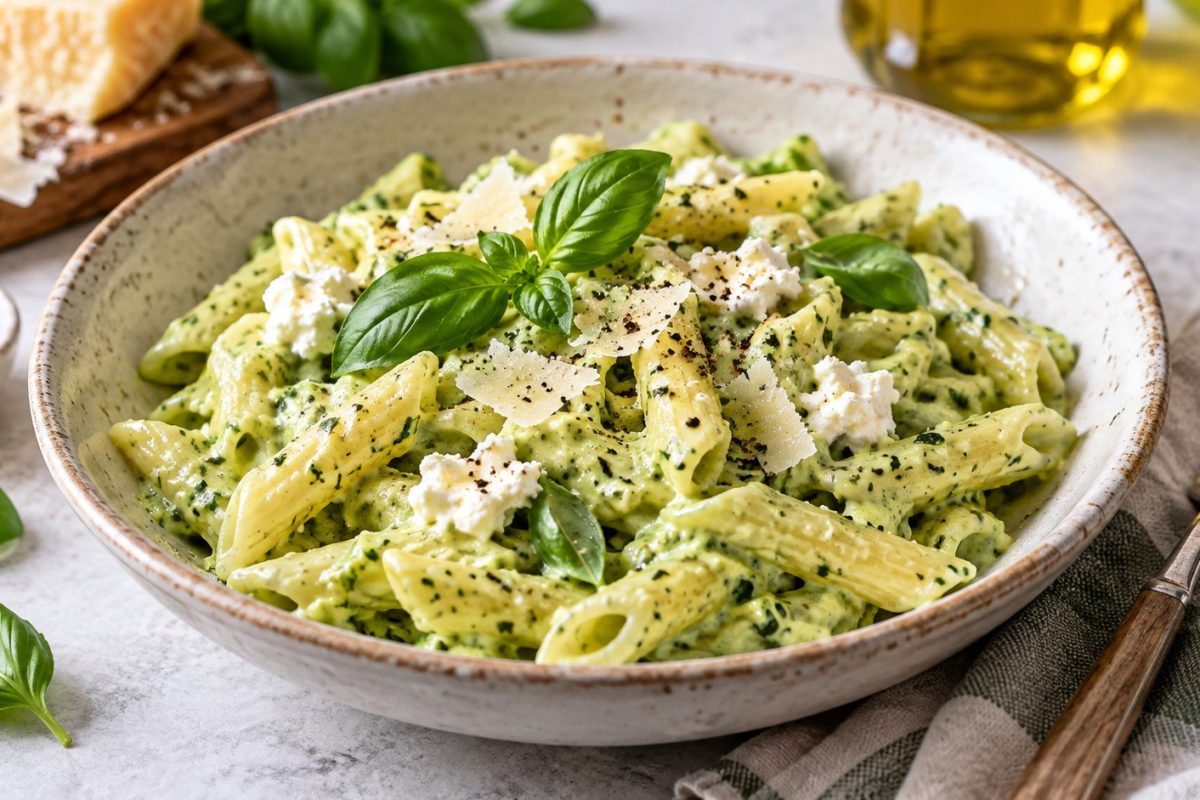
Creamy Cottage Cheese Basil Pasta turns an ordinary tub of cottage cheese into a smooth, savory sauce with fresh basil, garlic, Parmesan, and pasta water. The method takes about 20 minutes and avoids the heavy cream used in many traditional white sauces. Blending matters more than complicated technique: the curds disappear, while the cheese creates body and adds dairy protein. It is a practical weeknight dinner rather than a “diet pasta” pretending to be something else, as noted by the customreceipt.com.
The recipe works because cottage cheese has enough moisture to loosen into a sauce and enough protein to give that sauce structure. Basil keeps the dairy flavor from becoming flat. Parmesan brings salt and umami, while a little starchy pasta water binds everything together.
The crucial detail is temperature. Cottage cheese sauce prefers gentle heat; boiling it aggressively can turn a silky dinner into a grainy one.
Why cottage cheese works in pasta sauce
Cottage cheese looks like an unlikely pasta-sauce base before it enters a blender. Its visible curds suggest texture rather than creaminess. Once blended, however, those curds break into a thick dairy mixture that behaves much more like ricotta cream.
USDA-linked nutrient data shows that cottage cheese can provide roughly 10–12 grams of protein per 100 grams, depending on fat level and formulation. Exact values vary between brands, so the package label remains the best reference for a specific product. Detailed ingredient data can also be checked through USDA FoodData Central.
This makes high-protein cottage cheese pasta useful for people who want a more substantial sauce without adding protein powder. Pasta itself contributes additional protein, and Parmesan adds a smaller amount.
Cottage cheese also appears in other blended preparations. A similar technique is used in these spinach egg bites with cottage cheese, where blending creates a softer, more uniform dairy base.
“Leftovers can be kept in the refrigerator for 3 to 4 days.”
USDA Food Safety and Inspection Service, Leftovers and Food Safety, guidance for cooked leftovers.
Ingredients for creamy cottage cheese basil pasta
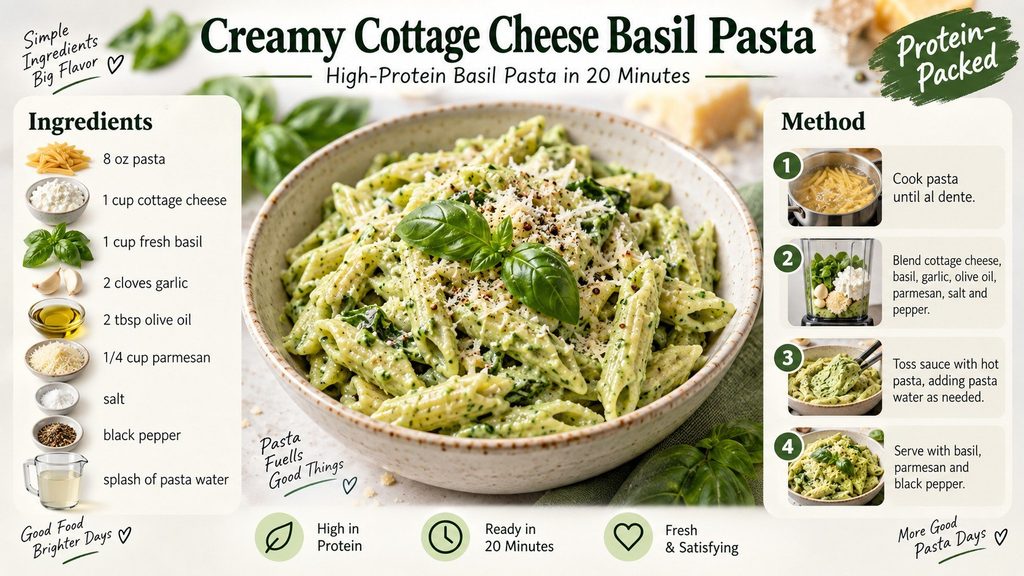
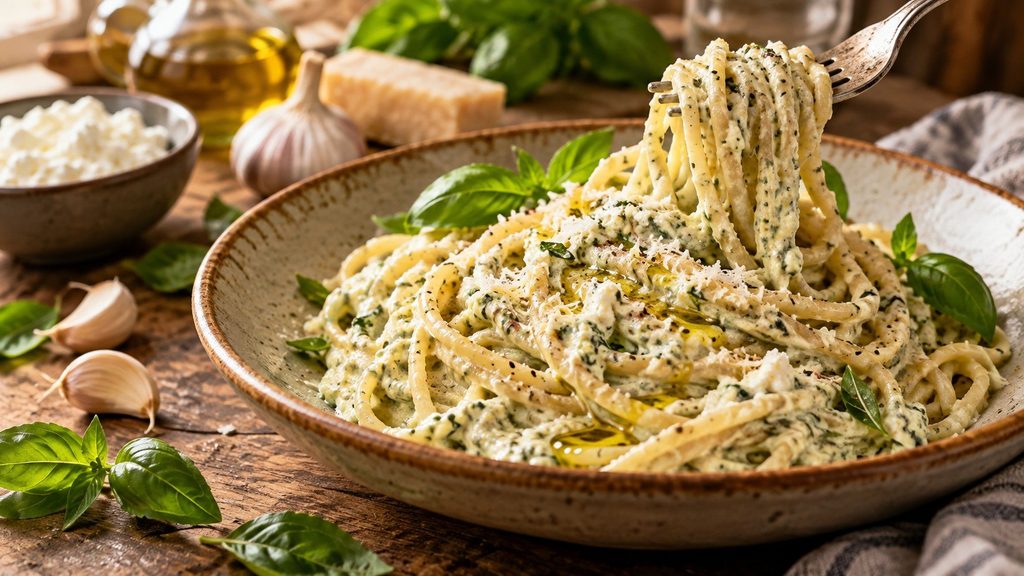
The quantities below make about 2 generous portions. Short pasta works particularly well because ridges and hollow centers hold the sauce, although spaghetti or linguine can also be used.
- 8 oz / 225 g pasta;
- 1 cup / about 225 g cottage cheese;
- 1 packed cup fresh basil leaves;
- 1/3 cup finely grated Parmesan;
- 1 small garlic clove;
- 1 tablespoon extra-virgin olive oil;
- 1 teaspoon fresh lemon juice;
- 1/4 teaspoon freshly ground black pepper;
- salt, as needed;
- 1/3 to 1/2 cup reserved pasta water.
Full-fat or 2% cottage cheese usually gives the richest texture. A lower-fat version also works, although the final sauce can taste slightly sharper and less rounded. Large-curd and small-curd varieties are both suitable because the blender removes the visible texture. Parmesan should be grated finely so it melts quickly without requiring high heat. Fresh basil is preferable here because dried basil cannot provide the same herbaceous body.
The garlic deserves restraint. A single raw clove is enough for 2 portions because blending intensifies its presence throughout the sauce. Roasted garlic produces a sweeter and softer version.
For another one-pot dinner with a different protein base, the site also has a chicken and white bean stew recipe.
How to make cottage cheese pasta sauce
The sauce can be prepared while the pasta cooks. That timing is useful because freshly collected pasta water is hot and contains starch released during boiling.
- Bring a large pot of salted water to a boil.
- Cook the pasta until just al dente according to its package directions.
- Reserve at least 1/2 cup of pasta water before draining.
- Add cottage cheese, basil, Parmesan, garlic, olive oil, lemon juice, and pepper to a blender.
- Pour in about 1/4 cup of hot pasta water.
- Blend for 45–60 seconds, until completely smooth.
- Return the drained pasta to the warm pot and remove it from direct high heat.
- Pour in the sauce and toss continuously.
- Add more pasta water, 1 tablespoon at a time, until the sauce turns glossy.
- Taste before adding extra salt, since cottage cheese and Parmesan already contain sodium.
The final tossing stage should take only 1–2 minutes. The pot retains enough heat to warm the sauce without subjecting the dairy mixture to an aggressive boil. If the pasta looks dry, more reserved water is usually a better solution than extra oil.
A wide skillet can replace the pot for the final stage. Keep the burner on its lowest setting and remove the pan entirely if the sauce starts bubbling.
The finished cottage cheese pasta sauce should cling to the noodles rather than collect as liquid at the bottom. Properly emulsified sauce looks glossy and moves with the pasta.
Pasta water is not merely hot water. Its suspended starch helps the cheese mixture coat noodles more evenly and reduces the need for additional fat.
What changes the texture and flavor
Small substitutions produce noticeable results because this recipe contains relatively few ingredients. The reference below shows which adjustments are useful and which ones require extra care.
| Change | What happens | Best adjustment |
|---|---|---|
| Full-fat cottage cheese | Richer, smoother sauce | Use slightly less olive oil |
| Low-fat cottage cheese | Lighter, tangier finish | Add 1 teaspoon olive oil |
| More Parmesan | Saltier, thicker sauce | Increase pasta water |
| Extra basil | Stronger herbal flavor | Add gradually before blending |
| Spinach added to basil | Milder herb profile | Use young spinach leaves |
| Lemon zest | Brighter aroma | Add after blending |
| Chili flakes | Mild heat | Sprinkle at serving |
These variations are easier to control when added one at a time. Too much Parmesan can make the sauce dense before it even reaches the pasta. Excess lemon juice can dominate mild cottage cheese, while zest gives fragrance without much additional acidity.
Spinach is useful when the basil supply is limited. A roughly equal mixture creates a greener sauce with a softer basil character. Arugula produces a more peppery result and should be used more cautiously.
Roasted cherry tomatoes also work well because their acidity contrasts with the creamy base. Add them after tossing rather than blending them into the sauce.
More everyday cooking ideas can be found in the Food section at CustomReceipt, including quick dinners and make-ahead recipes.
Why the sauce sometimes becomes grainy
The most common problem with creamy cottage cheese pasta is excessive heat. Blending makes cottage cheese smooth, but it does not transform its proteins into heavy cream. Strong boiling can tighten those proteins and damage the texture.
Several other problems are easy to identify:
- sauce too thick: add warm pasta water gradually;
- sauce too thin: toss it longer with hot pasta;
- visible curds: blend for another 30 seconds;
- overpowering garlic: use roasted garlic next time;
- bland flavor: add Parmesan, pepper, lemon zest, or salt;
- dull basil color: blend only shortly before serving.
A thick sauce usually does not need more cottage cheese. It needs enough liquid to move around the pasta. Conversely, pouring in all the reserved water at once can make the sauce difficult to recover.
Basil can also darken when exposed to heat and air. That cosmetic change does not automatically mean the sauce failed. Adding the basil during blending and serving the dish promptly preserves a fresher appearance.
Do not expect this sauce to taste exactly like Alfredo. It has a lighter dairy tang and a more herbal profile.
How much protein does the dish contain
The precise figure depends on the pasta, cottage cheese, Parmesan, and portion size. Cottage cheese itself varies substantially between brands and fat percentages.
A 1% cottage cheese entry based on USDA data contains about 12.4 grams of protein per 100 grams. Creamed cottage cheese is listed at about 11.1 grams per 100 grams.
With roughly 225 grams of cottage cheese in this recipe, the cheese alone may contribute around 25 grams of protein to the full batch. Pasta and Parmesan increase the total. The exact result should therefore be calculated from the labels of the products actually used rather than treated as a universal number.
That distinction matters with any high-protein pasta recipe. A chickpea pasta, conventional durum pasta, and protein-enriched pasta can produce very different totals even when the sauce stays unchanged.
For a larger meal, grilled chicken, shrimp, white beans, peas, or roasted vegetables can be added without changing the basic blending method.
Storage, reheating, and meal prep
Cottage cheese basil pasta is best immediately after preparation, when the sauce is at its smoothest. Leftovers can still be stored successfully if they are cooled and refrigerated promptly.
The USDA advises keeping most cooked leftovers in the refrigerator for 3–4 days. It also recommends reheating leftovers to 165°F.
“Keep the refrigerator temperature at or below 40° F (4° C).”
U.S. Food and Drug Administration, food-storage guidance for refrigerated foods.
Store the pasta in a sealed container rather than leaving it in the cooking pot. Refrigeration causes the noodles to absorb additional moisture, so the sauce will appear thicker the next day.
Add 1–2 tablespoons of water before reheating. Warm the pasta gently in a covered skillet or in short microwave intervals. Stir between intervals to redistribute the sauce.
Fresh basil added after reheating restores aroma more effectively than trying to correct the dish with extra oil.
FAQ about Creamy Cottage Cheese Basil Pasta
Can cottage cheese replace heavy cream in pasta?
Yes, when a lighter blended dairy sauce is appropriate. It will not duplicate heavy cream exactly. Cottage cheese produces more tang and needs gentle heat.
Do I need a blender?
A countertop blender gives the smoothest result. A high-powered immersion blender can also work if the container is narrow enough.
Which pasta shape works best?
Rigatoni, penne, fusilli, shells, and cavatappi hold thick sauce especially well. Long pasta also works when enough pasta water is added.
Can the basil be replaced?
Yes. Spinach, parsley, arugula, or a mixture of herbs can replace part of the basil. The flavor will change substantially.
Can I make cottage cheese basil pasta without Parmesan?
Yes, although the sauce will lose some saltiness and umami. Nutritional yeast or another hard cheese can change the flavor, but neither is an exact replacement.
Why should the sauce not boil?
Excessive heat can tighten dairy proteins and create a grainier texture. Gentle residual heat usually warms the blended sauce sufficiently.
Earlier we wrote about How to Cook Gumbo Properly: Roux Timing, Safe Chicken Temperature and 6 Common Mistakes