 Frank Rondel
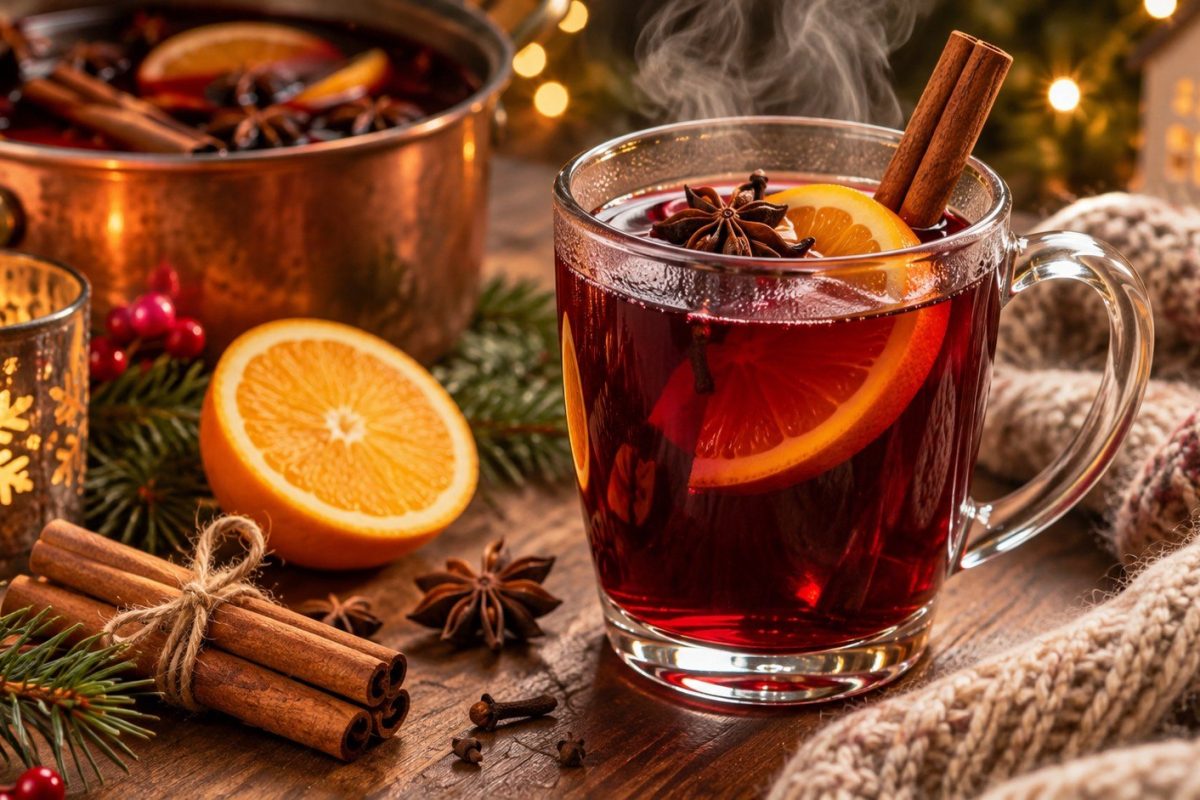
How to make mulled wine at home is surprisingly simple, but the heating method determines whether the drink tastes balanced. A good recipe combines fruity red wine, fresh orange, cinnamon, cloves, and carefully measured sweetness. The result should be aromatic and warming, without bitter spices or an overpowering alcoholic taste. The difference often comes down to temperature, ingredient proportions, and patience, as customreceipt.com notes.
What Is Mulled Wine and Why Does the Recipe Matter?
Mulled wine is a traditional European winter drink made by gently heating wine with spices, citrus, and sweeteners. It appears at Christmas markets, holiday dinners, and gatherings throughout the colder months. In Germany, the drink is known as Glühwein, while Nordic countries have their own variations, including glögg.
The basic idea is straightforward. Warm wine carries the aromas of cinnamon, cloves, and orange peel. Sugar or honey softens the acidity, while the fruit adds freshness. However, the ingredients need careful handling to avoid a bitter or excessively sweet result.
The most common mistake is allowing the wine to boil. Excessive heat changes the drink’s aroma and gradually reduces its alcohol content. It can also make an inexpensive red wine taste harsher than expected.
For holiday entertaining, mulled wine offers a convenient alternative to cocktails prepared individually. Guests who prefer refreshing drinks might enjoy this Cranberry Hugo Spritz recipe.
The secret to good mulled wine is not an expensive bottle. It is the balance between fruit, spice, sweetness, and gentle heat.
Mulled Wine Ingredients: What You Need for 4–6 Servings
A classic mulled wine recipe requires relatively few ingredients. Most are available in ordinary supermarkets, particularly during November and December.
The following quantities produce approximately 4–6 modest servings, depending on glass size. Preparation takes about 10 minutes, followed by 15–20 minutes of gentle heating and infusion.
| Ingredient | Quantity | Purpose |
|---|---|---|
| Dry red wine | 750 ml | Provides the base and fruit flavors |
| Orange | 1 medium | Adds citrus aroma and natural sweetness |
| Cinnamon sticks | 2 | Creates a warm, woody aroma |
| Whole cloves | 4–5 | Adds concentrated spice |
| Star anise | 1 | Introduces a subtle licorice note |
| Brown sugar | 2–3 tbsp | Balances acidity |
| Fresh ginger | 2–3 thin slices | Adds gentle warmth |
| Lemon peel | 2 thin strips | Brightens the aroma |
| Brandy, optional | 30–50 ml | Adds richness and strength |
| Water or apple juice, optional | 50–100 ml | Softens an intense wine |
These quantities provide a starting point rather than a rigid formula. A particularly fruity wine may need less sugar, while an acidic bottle benefits from additional sweetness. The orange should be washed before slicing, especially when using its peel. Remove excessive white pith because it can introduce bitterness. Whole spices are preferable to powdered alternatives because they are easier to remove. They also produce a clearer drink without sediment floating in the glass. Brandy is optional and should be added near the end.
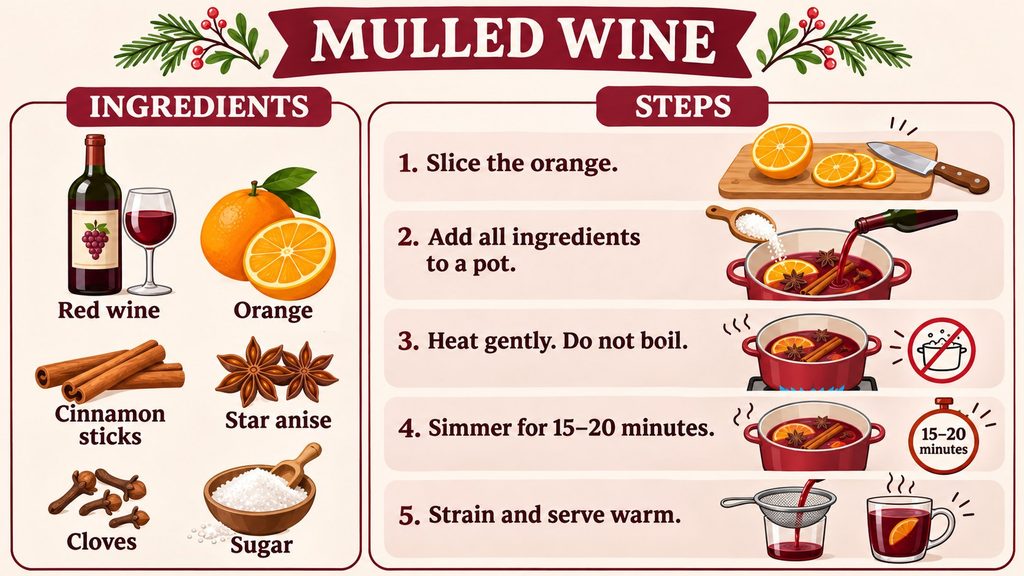
How to Make Mulled Wine Step by Step
The easiest preparation method uses a heavy-bottomed saucepan and gentle stovetop heat. There is no need for specialist equipment, although a kitchen thermometer makes temperature control easier.
Follow these instructions for a reliable homemade mulled wine with balanced spice and citrus flavors.
- Prepare the orange. Wash it thoroughly, cut half into thin slices, and squeeze the remaining half.
- Combine the ingredients. Pour the wine into a saucepan and add orange juice, orange slices, cinnamon, cloves, star anise, and ginger.
- Add the sweetener. Stir in 2 tablespoons of brown sugar until dissolved.
- Heat gently. Warm the mixture over low heat, aiming for approximately 60–70°C (140–158°F).
- Infuse the flavors. Maintain gentle heat for 15–20 minutes without allowing the liquid to boil.
- Adjust the taste. Add more sugar if necessary and remove spices that have become overpowering.
- Finish the drink. Stir in optional brandy after removing the saucepan from the heat.
- Strain and serve. Remove the spices and pour the wine into heatproof mugs or sturdy glasses.
The finished drink should smell strongly of orange and cinnamon without resembling concentrated spice syrup. Taste a small spoonful before serving, allowing it to cool first. If the flavor seems sharp, stir in another teaspoon of sugar. When the spices become too dominant, remove them and add a little more wine. Avoid adding large quantities of water because dilution weakens the fruit character. Serve the wine warm rather than excessively hot, particularly when using glassware.
Best Red Wine for Mulled Wine: Merlot, Shiraz or Cabernet Sauvignon?
Choosing the best wine for mulled wine does not mean buying the most expensive bottle. Heating and spices reduce the importance of delicate aromas found in premium wines. A medium-bodied, fruit-forward red generally provides better value and balance.
Merlot is particularly suitable for beginners. Its relatively soft tannins and plum-like flavors work well with orange and cinnamon. Shiraz or Syrah offers a richer profile, often with naturally peppery notes.
Cabernet Sauvignon can also work, although strongly tannic examples may taste harsher after heating. Tempranillo is another practical choice, especially when the wine has not undergone heavy oak aging.
According to Great British Chefs, fruity, unoaked red wines are well suited to this preparation method. Its recommendations include Merlot, Syrah, and Montepulciano.
Avoid heavily oaked bottles, unusually sweet dessert wines, and wines with obvious flavor defects. A moderately priced everyday red is usually sufficient.
What Temperature Should Mulled Wine Be Heated To?
Temperature control is the single most important technical detail in this recipe. Wine contains volatile aromatic compounds that change as the liquid warms. Heating helps release spice fragrances, but excessive heat can make the drink less pleasant.
For home preparation, a practical target is approximately 60–70°C (140–158°F). This is a useful cooking guideline, not a mandatory culinary standard. The ideal serving temperature also depends on personal preference.
Look for steam rising from the saucepan without sustained bubbling. If the wine begins boiling, immediately reduce the heat.
The Good Food mulled wine recipe recommends low heat, an infusion period, and reheating without boiling. Its preparation method also demonstrates that prolonged cooking is unnecessary.
For gatherings, transfer the finished drink into a slow cooker with a suitable warm setting. Check the actual liquid temperature because different appliances operate differently.
Warm mulled wine should invite slow sipping. If the glass is too hot to hold comfortably, allow the drink to cool before serving.
How to Make Mulled Wine Taste Better Without Adding Too Much Sugar
Sweetness should support the wine rather than conceal it. Recipes that use excessive sugar can produce a sticky drink, especially when sweet wine or fruit juice is involved.
Start with 2 tablespoons of brown sugar per 750 ml bottle. Taste the mixture after the spices have infused, then make small adjustments.
Honey provides a different sweetness profile, with floral notes that complement citrus. Maple syrup introduces a richer flavor but can compete with delicate spices.
Several additional ingredients can change the character of the finished drink:
- Fresh orange juice: Adds fruit sweetness and softens sharp flavors.
- Apple juice: Creates a gentler, more approachable drink.
- Cardamom: Adds a fragrant, slightly floral spice note.
- Vanilla: Provides a rounded aroma without additional acidity.
- Fresh cranberries: Introduce tartness and a festive appearance.
- Brandy: Adds depth but also increases the drink’s alcoholic strength.
Experiment with 1 adjustment at a time. Adding several unfamiliar ingredients simultaneously makes it difficult to identify what improves the result. Cranberries work particularly well with fruity Merlot, although they may require additional sweetening. Cardamom should be used sparingly because its aroma becomes pronounced during infusion. Vanilla is more effective as a small piece of pod than as heavily sweetened flavoring. Brandy is best added after the saucepan leaves the heat. This preserves greater control over the final flavor and strength.
Common Mulled Wine Mistakes and How to Fix Them
A disappointing batch is not necessarily ruined. Most problems can be corrected before serving, provided the wine has not been overheated for an extended period.
The following comparison identifies common issues and practical adjustments.
| Problem | Likely cause | Practical solution |
|---|---|---|
| Bitter flavor | Excessive cloves or citrus pith | Remove spices and add fresh wine |
| Too sweet | Excess sugar or sweet wine | Add dry red wine gradually |
| Weak aroma | Insufficient infusion | Warm gently for another 5 minutes |
| Harsh taste | Strong tannins or excessive heat | Add a little orange juice |
| Cloudy appearance | Ground spices | Strain through a fine sieve |
| Overpowering anise | Too much star anise | Remove immediately and dilute |
| Watery flavor | Excessive juice or water | Add undiluted wine |
Taste correction works best before guests arrive. A small adjustment often has a greater effect than replacing the entire mixture. Begin with the strongest problem and correct it gradually. For example, additional sugar rarely solves excessive clove bitterness. Removing the cloves and diluting the infusion is more effective. If the wine tastes unusually flat, fresh orange zest can restore some aroma. Always recheck the balance after each addition.
Can You Make Mulled Wine in a Slow Cooker?
A slow cooker is useful when preparing drinks for larger gatherings. It can maintain a relatively consistent temperature without requiring continuous attention at the stove.
Combine the wine, citrus, sugar, and spices in the slow cooker. Use a low setting and allow approximately 1–2 hours for the ingredients to warm and infuse. Cooking times vary considerably between appliances.
Check the temperature periodically and avoid sustained bubbling. Once the drink reaches the desired flavor, remove the spices and switch to a suitable warming setting.
For a larger gathering, double the recipe using 1.5 liters of wine. Begin with approximately 1.5 times the original spice quantities rather than automatically doubling every spice.
The longer infusion time can make cloves and star anise unexpectedly strong. Removing them after the initial heating period prevents the flavor from becoming too concentrated.
White Mulled Wine and Non-Alcoholic Alternatives
Traditional mulled wine is usually red, but white wine produces a lighter variation. Dry Riesling, Pinot Grigio, or another crisp white wine can work well with orange, apple, and gentle spices.
For white mulled wine, reduce the cloves and consider using vanilla or cardamom. A small amount of honey can complement the fruit without overwhelming the wine.
An alcohol-free variation is equally straightforward:
- 500 ml unsweetened apple juice
- 250 ml unsweetened red grape juice
- 1 orange, sliced
- 1 cinnamon stick
- 3 whole cloves
- 2 thin ginger slices
- Optional honey, added to taste
Combine the ingredients in a saucepan and warm gently for 15 minutes. Avoid vigorous boiling, which can produce a concentrated and overly sweet mixture. Remove the spices once the flavor becomes balanced. For a less sweet version, replace some grape juice with unsweetened cranberry juice. This variation works well for guests avoiding alcohol. Alcohol-free wine can also be used, but check its labeling when complete avoidance is necessary.
Heating ordinary wine does not reliably make it alcohol-free. Anyone who must avoid alcohol should use ingredients specifically suitable for that purpose.
What to Serve With Mulled Wine at Christmas
The warm spices and citrus flavors pair naturally with seasonal desserts. However, savory foods can also provide an appealing contrast.
Gingerbread, shortbread, roasted nuts, baked apples, and cinnamon pastries are familiar companions. Rich cheese dishes or small savory appetizers can prevent a holiday menu from becoming excessively sweet.
For an American holiday gathering, homemade desserts offer another pairing opportunity. This Dutch apple pie recipe with cinnamon crumble provides a particularly suitable seasonal option.
Serve mulled wine in sturdy, heatproof glasses with handles. Garnish individual portions with fresh orange peel or a small cinnamon stick. Avoid leaving old citrus slices inside the saucepan for several hours.
Fresh garnishes generally look better than fruit that has spent the entire cooking period in hot wine.
How Long Does Homemade Mulled Wine Last?
Mulled wine is most aromatic shortly after preparation. However, leftovers can be stored for a limited period when handled correctly.
Remove the fruit and spices before refrigeration. Transfer the remaining wine into a clean, covered container and refrigerate promptly after cooling.
For a conservative approach, consume leftovers within 24 hours. Good Food also recommends limiting storage when fruit has been added.
Reheat the drink gently over low heat without boiling. Avoid repeatedly warming and cooling the same batch, particularly after it has been served at a gathering.
Mulled wine should not remain at room temperature overnight. Discard any batch showing unusual odors, unexpected fermentation, or other signs of spoilage.
FAQ: How to Make Mulled Wine
Can you make mulled wine with cheap red wine?
Yes. An affordable, fruit-forward red wine is often more suitable than an expensive bottle. Avoid wines with unpleasant flavors because spices will not reliably hide defects.
How long should mulled wine simmer?
Allow approximately 15–20 minutes for gentle heating and infusion. The wine should remain below a sustained simmer or boil during the main heating stage.
Can you make mulled wine without cinnamon?
Yes. Try cardamom, orange peel, ginger, or a small amount of vanilla. The flavor will differ from traditional recipes but can remain balanced.
What is the best sugar for mulled wine?
Brown sugar adds mild caramel notes, while white sugar provides straightforward sweetness. Honey also works well. Start with a small quantity and adjust after tasting.
Does boiling mulled wine remove all the alcohol?
No. Heating reduces alcohol content, but it does not guarantee complete removal. The remaining amount depends on cooking temperature, duration, and preparation method.
Can mulled wine be prepared the day before?
Yes, although fresh preparation generally produces a brighter aroma. Store it covered in the refrigerator after removing the spices and fruit. Reheat gently before serving.
Is mulled wine better with orange or lemon?
Orange is usually the more approachable choice because it contributes sweetness and citrus aroma. Lemon adds sharper acidity and works best in smaller quantities.
Can you use white wine instead of red?
Yes. Dry white wine makes a lighter version, especially with apples, citrus, cardamom, and vanilla. Reduce strong spices to preserve its more delicate flavor.
The Key to Making Mulled Wine Successfully
A dependable mulled wine recipe relies on measured ingredients rather than complicated techniques. Choose a fruity wine, use whole spices, and adjust sweetness gradually. Keep the temperature moderate and remove aromatic ingredients before they become overpowering.
For the first batch, prepare 750 ml using the basic recipe. Record any adjustments to sugar, citrus, or spices. Those small changes make it easier to recreate the version that suits your guests.
The result is a practical winter drink that can be adapted for Christmas parties, family dinners, or quiet evenings at home.
Earlier we wrote about How to Make Homemade Cranberry Sauce in 15 Minutes: Easy Thanksgiving Recipe