 Frank Rondel
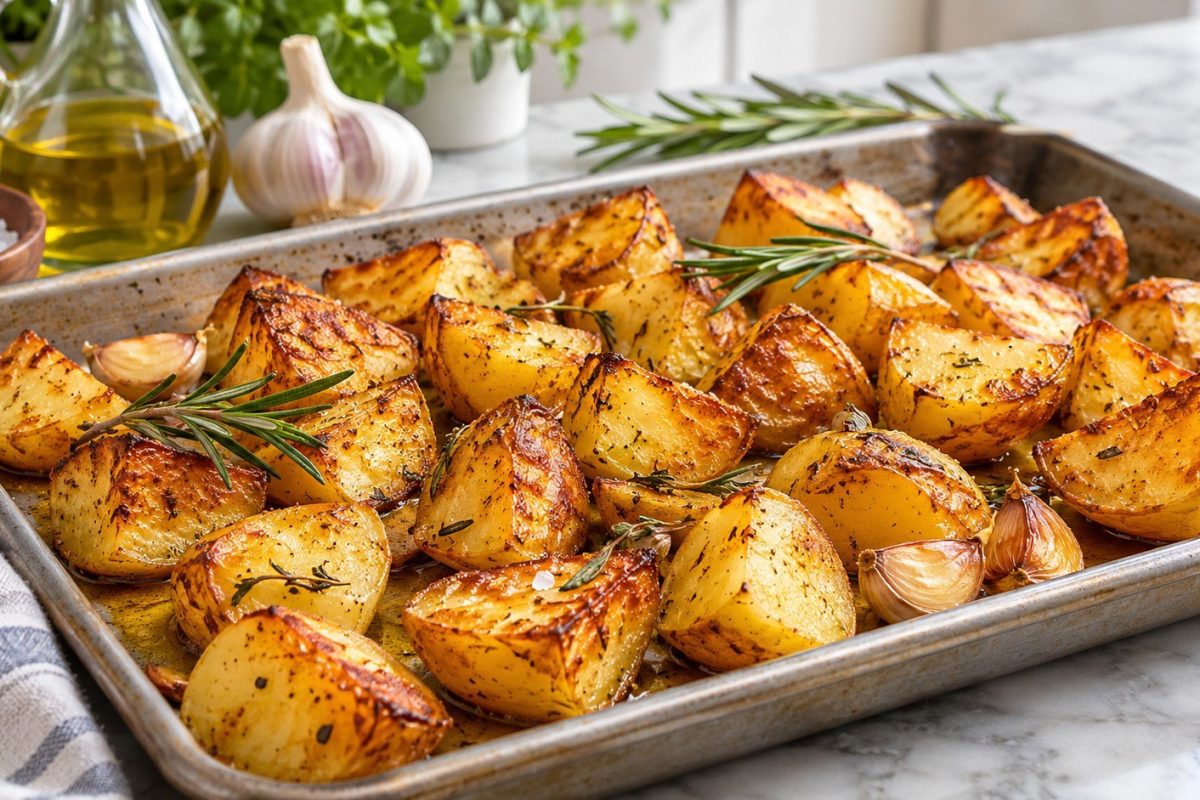
Roasted potatoes are among the easiest side dishes to prepare, yet achieving a perfect golden crust requires more than heat. The right potato variety, careful preparation, and proper oven temperature determine whether each bite is crispy or disappointingly soft. A few adjustments can transform ordinary potatoes into a restaurant-quality dish, as reported by customreceipt.com.
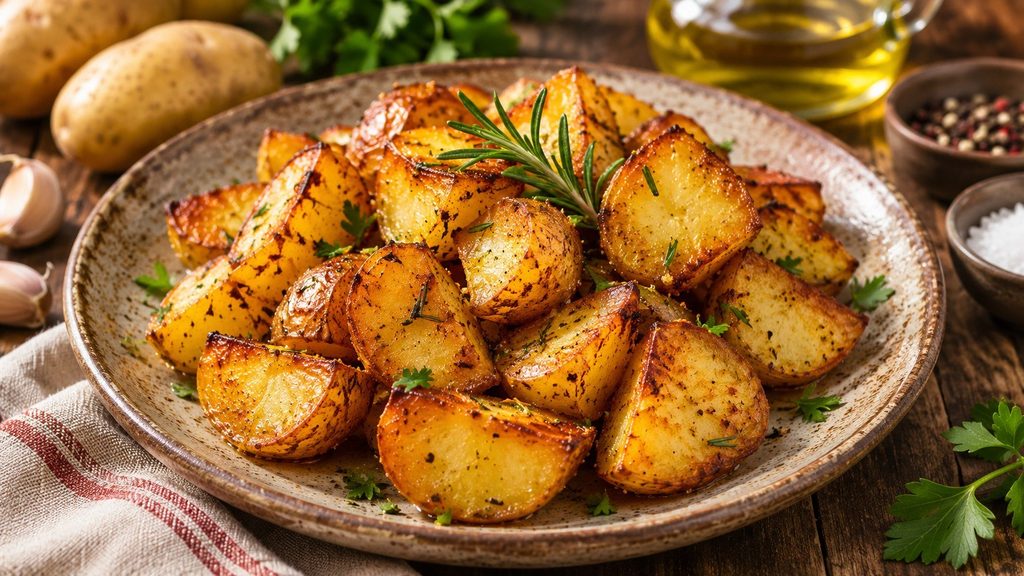
The ideal roasted potato has a crunchy, deeply browned exterior and a tender, fluffy center. Garlic, rosemary, olive oil, and salt provide plenty of flavor without complicated ingredients. The real challenge is controlling moisture and giving the potatoes enough space to brown.
This guide explains how to make roasted potatoes in the oven, including exact temperatures, cooking times, and practical techniques. It also covers common mistakes, seasoning combinations, and ways to prepare the dish ahead of time.
What Makes Roasted Potatoes Crispy on the Outside?
A properly roasted potato develops its characteristic texture through heat, surface moisture evaporation, and browning reactions.
Potatoes contain starch, which changes during cooking and contributes to their fluffy interiors. As their surfaces dry, high oven temperatures encourage browning and create the crust associated with well-roasted potatoes.
The cooking process becomes less effective when excess moisture remains trapped around the pieces. Overcrowding a baking sheet causes the potatoes to steam rather than roast.
Food writer J. Kenji López-Alt explains this principle through extensive cooking tests published by Serious Eats. His research demonstrates how parboiling, surface starch, and high heat influence the final texture.
Another important detail is the cooking fat. Olive oil provides a familiar Mediterranean flavor, while duck fat creates a richer, more savory result.
The best roasted potatoes are not simply cooked until tender. Their appeal comes from the contrast between a delicate interior and a deeply browned, crunchy surface.
Best Potatoes for Roasting: Russet, Yukon Gold, or Red?
Choosing the right variety affects flavor, browning, and texture.
Russet potatoes contain relatively high amounts of starch and produce especially fluffy centers. Yukon Gold potatoes have a creamier texture and naturally buttery flavor. Red potatoes generally hold their shape well but develop a less substantial crust.
For most home cooks, Yukon Gold offers an excellent balance between convenience and taste. Russets are particularly useful when maximum crispiness matters.
Here is how popular potato varieties compare.
| Potato variety | Texture after roasting | Browning | Best use |
|---|---|---|---|
| Russet | Fluffy interior, crisp exterior | Golden | Extra-crispy potatoes |
| Yukon Gold | Creamy center, crisp edges | Deep golden | Everyday roasting |
| Red potatoes | Firm, slightly waxy | Moderate to dark | Skin-on potato wedges |
| Fingerling | Dense, buttery | Golden | Small whole-roasted potatoes |
| Baby potatoes | Tender, moist | Golden | Quick preparation |
| Sweet potatoes | Soft, sweet interior | Browned edges | Sweet and savory variations |
Potato size matters almost as much as variety. Larger chunks retain more moisture inside while their exposed surfaces become crispy. Small pieces cook faster, but they can dry out before developing a satisfying crust. Consistent cutting helps every piece finish at approximately the same time. Avoid mixing very large wedges with tiny cubes on the same baking sheet.
Ingredients for Easy Oven Roasted Potatoes
This easy roasted potatoes recipe uses familiar ingredients and requires approximately 60 minutes, including preparation and cooking.
The quantities below provide 4 generous side-dish servings.
| Ingredient | Quantity | Purpose |
|---|---|---|
| Yukon Gold or Russet potatoes | 2 lb (900 g) | Main ingredient |
| Olive oil | 3 tablespoons | Browning and flavor |
| Kosher salt | 1 teaspoon, plus boiling water seasoning | Enhances flavor |
| Black pepper | ½ teaspoon | Mild warmth |
| Garlic powder | 1 teaspoon | Savory seasoning |
| Smoked paprika | ½ teaspoon | Color and smoky flavor |
| Dried rosemary | 1 teaspoon | Herbal aroma |
| Fresh parsley | 2 tablespoons | Fresh finishing flavor |
| Baking soda | ¼ teaspoon, optional | Helps create a rougher surface |
Use fresh potatoes with firm skins and no visible spoilage. Avoid green areas and sprouts, removing affected portions or discarding extensively green potatoes. Choose an oil suitable for high-temperature cooking and measure it before seasoning. Fresh garlic can replace garlic powder, although adding it near the end reduces burning. The baking soda is optional, but it can improve the crust when potatoes are parboiled.
How to Make Roasted Potatoes in the Oven Step by Step
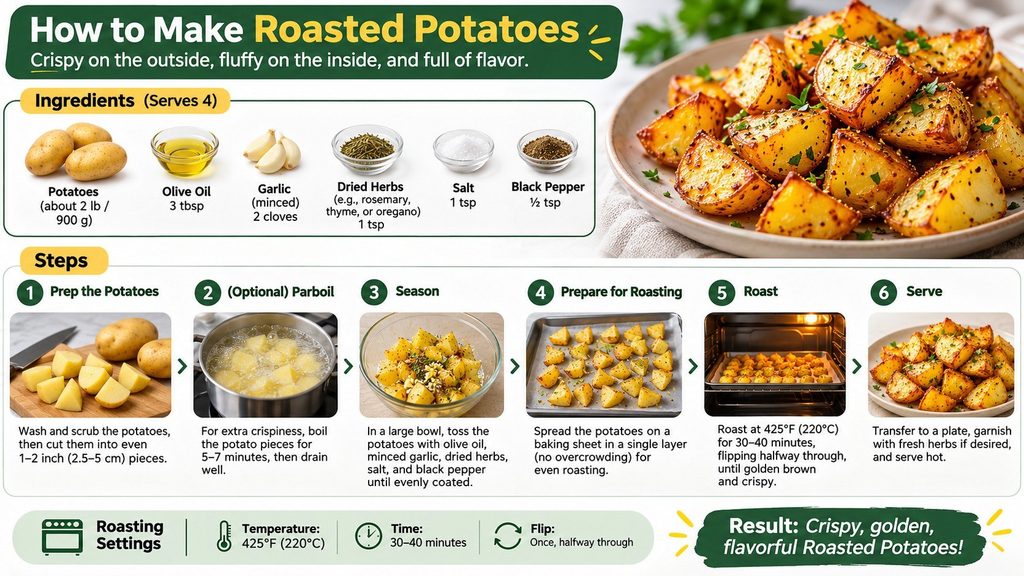
The most reliable method combines brief boiling with high-temperature roasting. Parboiling softens the outer potato layers, helping them develop a crisp surface in the oven.
You will need a large saucepan, colander, mixing bowl, and rimmed baking sheet.
Follow these instructions for crispy oven roasted potatoes:
- Preheat the oven. Set it to 425°F (220°C) for a conventional oven. Use approximately 400°F (200°C) with convection.
- Wash and cut the potatoes. Peel them if preferred. Cut into pieces approximately 1½–2 inches wide.
- Prepare the boiling water. Bring a large saucepan of salted water to a boil. Add ¼ teaspoon baking soda if desired.
- Parboil the potatoes. Cook for approximately 8–10 minutes, until the edges soften but the pieces retain their shape.
- Drain thoroughly. Leave the potatoes in the colander for 2 minutes to release excess steam.
- Roughen the surfaces. Return them to the saucepan and shake gently until their edges become slightly textured.
- Add oil and seasoning. Toss with olive oil, salt, pepper, garlic powder, paprika, and rosemary.
- Arrange on a baking sheet. Spread the potatoes into a single layer with visible space between pieces.
- Roast until golden. Cook for approximately 35–45 minutes, turning after the first 20 minutes.
- Finish and serve. Sprinkle with parsley, adjust the salt, and serve while hot.
The potatoes should develop a deep golden color rather than remain pale yellow. Check their texture with a fork before removing them from the oven. If the centers are tender but the crust looks weak, continue roasting for another 5 minutes. Avoid flipping the pieces repeatedly during the first stage because their surfaces need time to brown. Transfer finished potatoes to a serving dish immediately, preferably without covering them.
For a traditional holiday dinner, serve them alongside oven-roasted Thanksgiving turkey. The savory flavors complement roasted poultry particularly well.
What Temperature Is Best for Roasting Potatoes?
Oven temperature determines how quickly the surface loses moisture and begins to brown.
For most recipes, 425°F (220°C) offers a practical balance between crispiness and even cooking. Higher temperatures work particularly well for large, parboiled potato chunks.
Cooking at 350°F (175°C) produces tender potatoes but generally requires more time to develop a strong crust.
The following temperatures provide useful starting points.
| Oven temperature | Approximate roasting time | Expected result |
|---|---|---|
| 350°F (175°C) | 45–60 minutes | Tender, lighter crust |
| 375°F (190°C) | 40–50 minutes | Moderate browning |
| 400°F (205°C) | 35–45 minutes | Crisp edges |
| 425°F (220°C) | 35–45 minutes | Golden, crunchy exterior |
| 450°F (230°C) | 30–45 minutes | Deep browning with careful monitoring |
These estimates assume medium-sized pieces, with parboiling recommended for the higher-temperature methods. Actual cooking times depend on potato variety, oven performance, and piece size. Smaller cubes usually finish sooner than large wedges. Dark metal baking sheets can accelerate browning compared with lighter pans. Check the potatoes regularly during the final 10 minutes instead of relying exclusively on the timer.
Why Are My Roasted Potatoes Not Crispy?
Soft roasted potatoes usually indicate excess moisture, insufficient heat, or overcrowding.
Even good ingredients cannot compensate for a baking sheet packed too tightly. The potatoes release steam during cooking, and neighboring pieces can trap that moisture.
Several common mistakes explain disappointing results:
- Overcrowding: Potatoes touch each other and brown unevenly.
- Insufficient drying: Water remains on the surface after washing or boiling.
- Low oven temperature: Moisture evaporates slowly before sufficient browning occurs.
- Too little oil: The surfaces may become dry without developing an even crust.
- Excessive oil: Potatoes can become greasy rather than pleasantly crisp.
- Frequent stirring: Pieces lose prolonged contact with the hot baking sheet.
- Early garlic addition: Fresh minced garlic may burn before the potatoes finish.
The simplest improvement is using a larger baking sheet or splitting the batch between 2 pans. Allow the oven to preheat completely before adding the potatoes. After parboiling, give their surfaces enough time to release steam. Use sufficient oil to coat every piece lightly without leaving puddles on the pan. Finally, judge the finished potatoes by their color and texture rather than cooking time alone.
For an especially crunchy result, allow the potatoes to roast undisturbed during the first 20 minutes. Their undersides need direct contact with the hot pan to develop a substantial crust.
Garlic, Rosemary, and Parmesan: Best Seasonings for Roasted Potatoes
The classic combination of garlic, rosemary, and olive oil works because each ingredient contributes a different flavor.
Garlic adds savory depth, rosemary provides a distinctive herbal aroma, and olive oil carries the seasonings across the potato surfaces.
For garlic roasted potatoes, garlic powder is particularly convenient during high-temperature roasting. Fresh garlic offers stronger fragrance but benefits from being introduced later.
Other combinations create different results without changing the basic cooking method.
- Garlic and Parmesan: Add grated Parmesan during the final 5–8 minutes for a savory finish.
- Rosemary and thyme: Combine dried herbs before roasting for a traditional flavor.
- Smoked paprika and cumin: Use approximately ½ teaspoon of each for a warmer, earthier profile.
- Lemon and parsley: Add fresh lemon zest and parsley immediately after roasting.
- Chili and garlic: Combine chili flakes with garlic powder for a slightly spicy variation.
Start with modest seasoning quantities and adjust after tasting. Strong spices can overwhelm the natural flavor of Yukon Gold potatoes. Cheese should be added near the end because extended exposure to high heat can cause scorching. Fresh herbs retain more fragrance when introduced after roasting rather than during the entire cooking period. A small squeeze of lemon juice can brighten the finished dish, although excessive liquid may soften the crust.
Should You Boil Potatoes Before Roasting?
Parboiling is optional, but it delivers several advantages when extra crispiness is the goal.
Brief boiling begins softening the interior before the potatoes enter the oven. It also makes their outer layers easier to roughen, increasing the surface available for browning.
A small amount of baking soda raises the alkalinity of the water. Culinary tests by J. Kenji López-Alt show that this encourages greater breakdown of the potato exterior.
However, boiling for too long can cause the pieces to crumble. Stop when a knife enters with some resistance and the edges begin to soften.
For a faster weeknight method, skip boiling and cut the potatoes into smaller, even pieces. Dry them thoroughly, season with oil, and roast at 425°F (220°C) for approximately 30–40 minutes.
The direct-roasting method is simpler, although the crust may be less substantial.
What to Serve With Roasted Potatoes
Roasted potatoes are particularly versatile because their mild flavor works with meat, fish, and vegetarian dishes.
For a traditional American holiday meal, combine them with turkey, vegetables, and homemade gravy. Serve the sauce separately to preserve the crispy texture.
For a broader family dinner, consider the following combinations:
- Roast chicken with lemon and thyme.
- Grilled salmon with asparagus.
- Beef steak with sautéed mushrooms.
- Baked cod with green beans.
- Vegetarian lentil loaf with onion gravy.
- Fried eggs with roasted tomatoes for brunch.
The best accompanying dish depends on the seasonings used. Rosemary potatoes suit roasted meats, while lemon-seasoned potatoes complement fish particularly well. Spicy potatoes can balance milder vegetable dishes or creamy sauces. When preparing several side dishes, consider classic homemade stuffing for a traditional holiday menu. Serve roasted potatoes shortly after cooking because their crunchy surfaces gradually soften as they cool.
Can You Prepare Roasted Potatoes Ahead of Time?
Preparing potatoes in advance can simplify holiday cooking, particularly when several dishes require oven space.
For the best texture, wash and cut the potatoes earlier, then keep them submerged in cold water inside the refrigerator. Drain and dry them thoroughly before cooking.
Another option is parboiling the potatoes ahead of time. Cool them promptly, refrigerate in a covered container, and complete roasting before serving.
Cooked leftovers require appropriate storage. According to the USDA’s food safety guidance, refrigerated leftovers should generally be used within 3–4 days.
Store cooked potatoes in shallow, airtight containers at 40°F (4°C) or below. Refrigerate them within 2 hours of cooking.
For reheating, spread the potatoes on a baking sheet and warm them in a 400°F (205°C) oven. Heat until the center reaches 165°F (74°C), as recommended by the USDA.
An air fryer can also restore some surface crispiness. Avoid covering the potatoes tightly during reheating because trapped steam softens their crust.
FAQ: How to Make Perfect Roasted Potatoes
How long does it take to roast potatoes at 425°F?
Medium-sized potato pieces generally require 35–45 minutes at 425°F (220°C). Larger pieces or crowded baking sheets may require additional time.
Do you need to peel potatoes before roasting?
No. Potato skins provide additional texture and help pieces retain their shape. Wash and scrub the potatoes thoroughly before cutting.
Is olive oil or butter better for roasted potatoes?
Olive oil works well for roasting at high temperatures. Butter contributes flavor but contains milk solids that can burn. Add melted butter near the end if desired.
How do restaurants make roasted potatoes so crispy?
Common techniques include parboiling, thoroughly drying potatoes, roughening their surfaces, and roasting at high temperatures. Adequate spacing on the baking sheet is equally important.
Can you roast potatoes without boiling them first?
Yes. Cut them into even pieces, dry thoroughly, and coat lightly with oil. Roast at 425°F (220°C), checking after approximately 30 minutes.
Why do my roasted potatoes stick to the baking sheet?
Insufficient oil, delicate potato surfaces, and premature turning can contribute to sticking. Allow a browned crust to form before releasing the pieces with a thin spatula.
Should roasted potatoes be covered with foil?
No. Covering potatoes traps moisture and encourages steaming. Leave them uncovered throughout roasting for better browning.
What is the secret to crispy roasted potatoes?
The essential combination is a dry, textured surface, sufficient cooking fat, high oven heat, and space between pieces. Parboiling improves the result further.
A good batch of roasted potatoes does not require expensive equipment or unusual ingredients. Begin with Yukon Gold or Russet potatoes, follow the cooking temperatures carefully, and allow enough time for browning. Try the parboiled method for your next family dinner, then experiment with garlic, herbs, and Parmesan.
Earlier we wrote about How to Make Perfect Gravy in 20 Minutes: Smooth Texture, Rich Flavor and No Lumps