 Frank Rondel
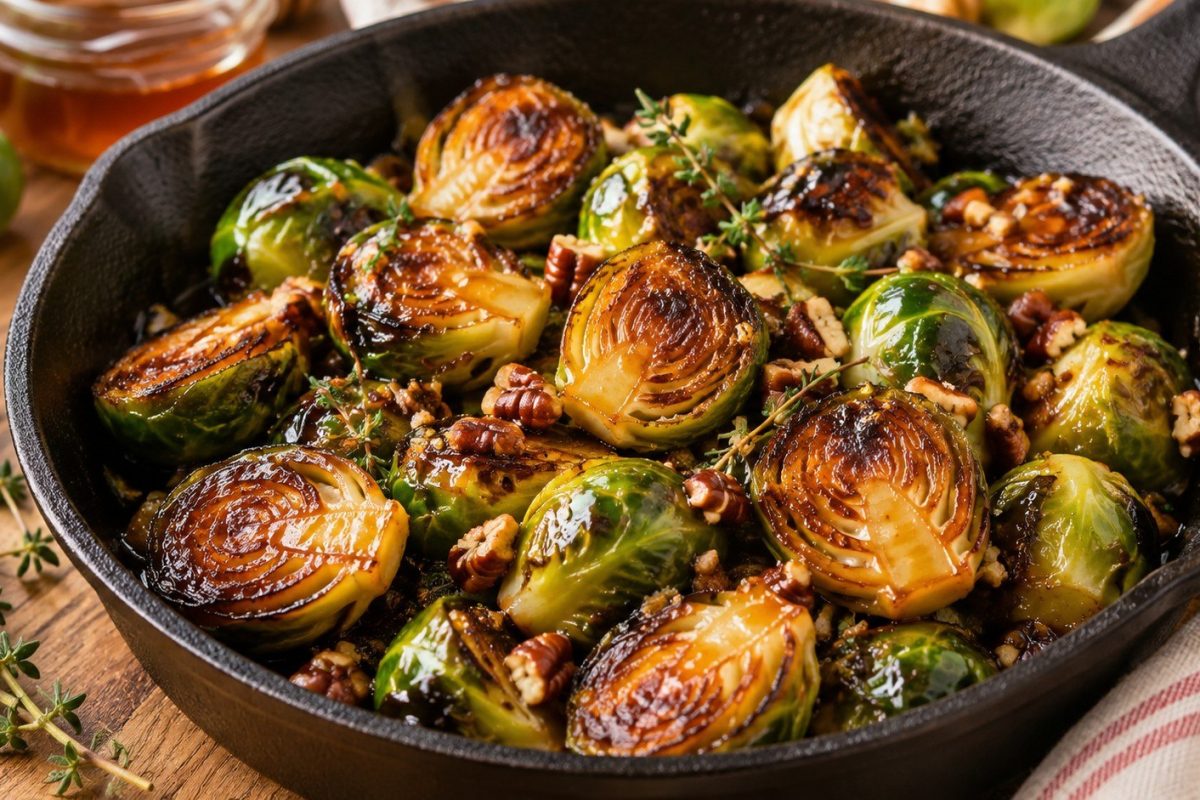
Caramelized Brussels sprouts can transform an often-overlooked vegetable into a side dish with crispy edges, tender centers, and remarkable flavor. The secret lies in high oven heat, careful preparation, and a glaze that enhances the sprouts’ natural sweetness. This recipe delivers restaurant-style results using ordinary ingredients, as customreceipt.com reports.
When roasted correctly, Brussels sprouts develop a nutty aroma and deep golden surfaces. Their familiar bitterness becomes less pronounced, while the browned outer leaves provide a satisfying crunch. Add balsamic vinegar and a touch of honey, and the result becomes considerably more interesting.
The entire process takes approximately 35 minutes, including preparation. It requires no specialized equipment, complicated sauces, or advanced cooking techniques.
What Makes Caramelized Brussels Sprouts Taste So Good?
Brussels sprouts belong to the same vegetable family as cabbage, broccoli, and kale. Their distinctive flavor comes partly from naturally occurring sulfur-containing compounds. These compounds contribute to the vegetable’s characteristic sharpness, especially when cooking methods emphasize its bitter notes.
Roasting changes the experience considerably. High temperatures encourage browning reactions on the exposed surfaces, producing more complex aromas and savory flavors. Natural sugars also contribute to the vegetable’s sweeter taste.
The Maillard reaction plays an important role. It occurs when amino acids and reducing sugars react under sufficient heat. This process helps create the roasted, nutty flavors associated with browned vegetables.
Caramelization also contributes under suitable conditions, although it is not responsible for every brown surface.
The best Brussels sprouts should have deeply browned edges without tasting burned. Their centers remain tender, while the outer leaves develop a delicate crunch.
A little acidity makes these flavors more pronounced. Balsamic vinegar adds tanginess, while honey brings a gentle sweetness that balances the vegetable’s earthy character.
Temperature matters just as much as seasoning. A moderately hot oven may soften the vegetables before their surfaces develop enough color.
Ingredients for the Best Caramelized Brussels Sprouts
This easy Brussels sprouts recipe serves 4 people as a side dish. Preparation takes approximately 10 minutes, followed by 20–25 minutes of roasting.
The ingredient list is deliberately simple. Each component contributes either texture, sweetness, acidity, or seasoning.
| Ingredient | Quantity | Purpose |
|---|---|---|
| Fresh Brussels sprouts | 1 lb (450 g) | Main ingredient |
| Olive oil | 2 tablespoons | Encourages even browning |
| Balsamic vinegar | 1 tablespoon | Adds acidity and depth |
| Honey | 1 tablespoon | Creates a sweet glaze |
| Garlic | 2 cloves | Provides savory aroma |
| Kosher salt | ½ teaspoon | Balances flavor |
| Black pepper | ¼ teaspoon | Adds gentle heat |
| Dijon mustard | 1 teaspoon | Gives the glaze complexity |
| Red pepper flakes | ¼ teaspoon, optional | Adds mild spiciness |
| Fresh lemon juice | 1 teaspoon, optional | Brightens the finished dish |
Choose firm sprouts with tightly packed leaves and a fresh green appearance. Smaller sprouts generally cook more quickly and require less trimming. Large specimens work equally well when their dimensions are adjusted.
Olive oil helps distribute heat across the vegetable surfaces. However, excessive oil can leave the sprouts greasy rather than pleasantly crisp. The suggested quantity should lightly coat the vegetables without pooling beneath them.
Honey can be replaced with maple syrup for a different flavor. Maple syrup brings a distinctive aroma and works particularly well with balsamic vinegar.
Fresh garlic delivers stronger aroma than garlic powder. However, finely minced garlic can burn during prolonged roasting. Adding it near the end gives better control over its flavor.
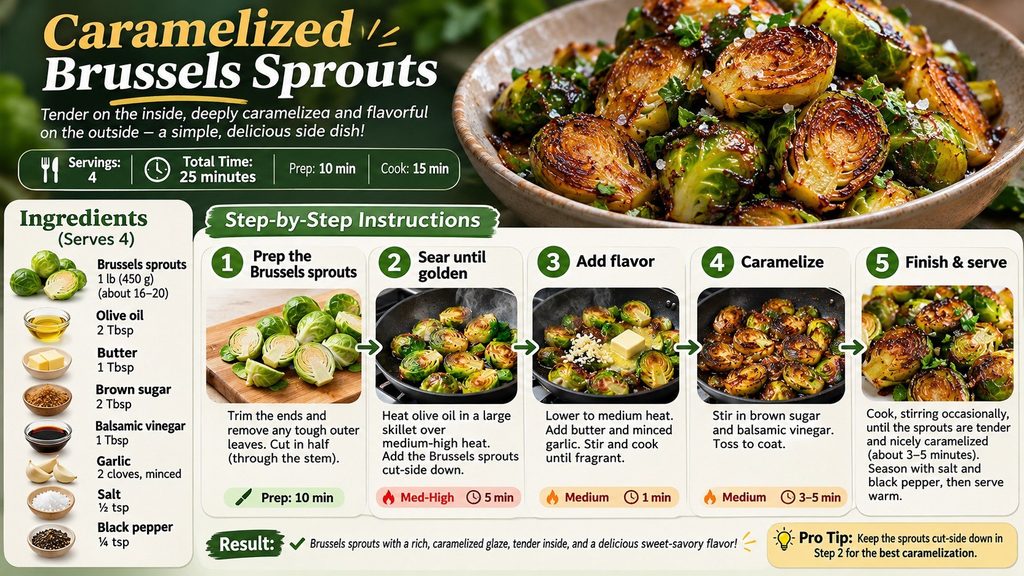
How to Make Caramelized Brussels Sprouts Step by Step
The most reliable method combines high-temperature roasting with a glaze added near the end. This allows the sprouts to brown before the sweet ingredients become excessively dark.
Follow these instructions for crispy roasted Brussels sprouts with tender centers.
- Preheat the oven. Set it to 425°F (220°C). Position a rack near the middle.
- Prepare the vegetables. Rinse 1 lb of Brussels sprouts, remove damaged leaves, and trim the tough stem ends.
- Cut evenly. Halve the sprouts lengthwise. Quarter unusually large specimens to ensure similar cooking times.
- Dry thoroughly. Pat the vegetables with a clean kitchen towel. Excess moisture prevents efficient browning.
- Season. Toss the sprouts with 2 tablespoons of olive oil, salt, and black pepper.
- Arrange carefully. Place them cut-side down on a large rimmed baking sheet, leaving space between individual pieces.
- Roast. Cook for 18–22 minutes, checking the underside for deep golden-brown color.
- Prepare the glaze. Mix balsamic vinegar, honey, Dijon mustard, and minced garlic in a small bowl.
- Finish roasting. Toss the sprouts with the glaze. Return them to the oven for approximately 3–5 minutes.
- Serve immediately. Add optional lemon juice and red pepper flakes before transferring everything to a serving dish.
The vegetables should release easily from the baking sheet once their cut surfaces have browned sufficiently. If they still cling firmly, allow another minute before lifting them carefully.
Avoid stirring repeatedly during the initial roasting period. Consistent contact with the metal produces better browning than frequent movement.
Watch the glaze closely during the final minutes. Honey contains sugars that can darken rapidly under high heat. Remove the sprouts when the coating becomes glossy and lightly caramelized.
For an especially crisp finish, transfer the vegetables directly to a serving plate. Leaving them piled inside a hot roasting pan can soften their outer leaves.
If you’re preparing a holiday meal, these sprouts complement homemade cranberry sauce. The sauce’s tartness provides contrast to the vegetables’ roasted sweetness.
Why Brussels Sprouts Sometimes Turn Soggy Instead of Crispy
A disappointing batch usually results from excess moisture, insufficient heat, or overcrowding. These problems are common even when the ingredients are perfectly fresh.
Understanding the causes makes subsequent batches considerably more predictable.
- Overcrowded baking sheet: Closely packed sprouts trap moisture and encourage steaming.
- Wet vegetables: Water must evaporate before effective surface browning develops.
- Low oven temperature: Gentle heat softens the centers without creating enough roasted flavor.
- Uneven sizes: Smaller pieces burn before larger ones finish cooking.
- Too much glaze: Excess liquid can coat the vegetables and soften their crispy edges.
- Frequent stirring: Constant movement reduces uninterrupted contact with the hot metal.
Use 2 baking sheets when preparing a larger quantity. Giving the vegetables enough room usually produces better results than increasing the cooking time.
A sturdy metal baking sheet is preferable to a deep casserole dish. Its broad surface supports evaporation and direct contact with the vegetables.
Pan material also affects browning. Testing published by Serious Eats found meaningful differences between roasting surfaces.
Dark, heavy pans can brown vegetables more aggressively. Consequently, sprouts may require earlier checking when using cast iron or dark-coated cookware.
Remember that deep brown edges are desirable, but widespread blackening may introduce unpleasant bitterness. Cooking time should follow the vegetables’ appearance rather than the clock alone.
How Long Should Brussels Sprouts Cook at Different Temperatures?
Cooking time depends on vegetable size, oven performance, and roasting temperature. The following ranges provide practical starting points for halved, fresh Brussels sprouts.
| Oven temperature | Approximate roasting time | Expected result |
|---|---|---|
| 375°F (190°C) | 30–40 minutes | Soft centers, lighter browning |
| 400°F (205°C) | 25–35 minutes | Tender texture, moderately crisp edges |
| 425°F (220°C) | 20–30 minutes | Deep browning, crisp outer leaves |
| 450°F (230°C) | 18–25 minutes | Faster browning, greater burning risk |
| 475°F (245°C) | 15–22 minutes | Intense roasting, requires close monitoring |
These ranges assume the vegetables are spread in a single layer. Crowded pans and unusually large pieces can require additional cooking time.
For this recipe, 425°F provides a useful balance between browning and control. The sweet glaze is added after most of the roasting has finished.
At 450°F, sugar-based coatings can burn quickly. Consider adding the glaze only during the final 2–3 minutes.
A finished sprout should yield easily when pierced with a fork. The cut surface should be golden or dark brown rather than pale green.
Timing is only a guide. Color, tenderness, and aroma provide better evidence of doneness than an exact minute count.
Balsamic, Honey and Parmesan: Flavor Variations Worth Trying
Once the basic cooking method becomes familiar, small changes can produce noticeably different dishes. The roasted vegetable provides a flexible foundation for both sweet and savory combinations.
These variations require little additional preparation:
- Balsamic and honey: Combine 1 tablespoon of each for a sweet-tangy finish.
- Maple and mustard: Replace honey with maple syrup and add 1 teaspoon of Dijon mustard.
- Garlic and Parmesan: Finish with 2 tablespoons of grated Parmesan after roasting.
- Hot honey: Add chili flakes and 1 tablespoon of honey for a sweet-spicy combination.
- Lemon and herbs: Use lemon zest, fresh parsley, and a little thyme.
- Pecans and cranberries: Sprinkle with toasted pecans and dried cranberries for a festive presentation.
Each variation changes the balance between sweetness, acidity, and savory flavor. Parmesan works particularly well when the sprouts already have deeply browned surfaces.
Nuts add crunch, but they should generally be incorporated near the end. Delicate toppings may burn during extended high-temperature roasting.
Dried cranberries bring sweetness and color without requiring another sauce. Their chewy texture contrasts with the crisp outer leaves.
For a stronger savory profile, reduce the honey slightly. Additional mustard or a few drops of lemon juice can provide balance without overwhelming the vegetables.
For an elegant holiday side dish, combine balsamic-glazed sprouts with toasted pecans and a small handful of dried cranberries. Add the toppings immediately before serving.
How to Make Caramelized Brussels Sprouts in a Skillet
An oven is convenient, but a heavy skillet offers another effective approach. This method is useful when the oven is occupied or you’re preparing smaller portions.
The skillet technique produces browned cut surfaces through direct contact with hot metal. Its main limitation is available cooking space.
Heat 1–2 tablespoons of olive oil in a large skillet over medium-high heat. Arrange ½ lb of halved sprouts cut-side down.
Allow them to cook undisturbed for approximately 5–7 minutes. Reduce the heat if their surfaces darken too quickly.
Turn the vegetables and cook for another 4–6 minutes. Add 1–2 tablespoons of water and cover briefly if their centers remain too firm.
Remove the lid and let any remaining moisture evaporate. Introduce a smaller quantity of balsamic glaze during the final minute.
Avoid adding honey at the beginning. Direct contact with a very hot skillet can scorch the sugar before the vegetables become tender.
For larger batches, prepare the sprouts in separate portions. A crowded skillet produces steam and makes browning less consistent.
What to Serve With Caramelized Brussels Sprouts
The combination of sweet, savory, and slightly acidic flavors makes this dish surprisingly versatile. It works alongside traditional holiday meals and simple weekday dinners.
Roasted turkey is a particularly good match. The vegetable’s crisp texture contrasts with the meat’s tenderness and rich pan juices.
For a complete Thanksgiving menu, serve the sprouts with classic homemade gravy. Keep the gravy separate to preserve the vegetables’ texture.
Other excellent combinations include roasted chicken, pork tenderloin, baked salmon, and mashed potatoes. A grain bowl with quinoa and chickpeas also benefits from the sprouts’ concentrated flavor.
For holiday entertaining, pair this vegetable with green bean casserole. The contrasting textures make the side dishes more interesting together.
Serve the Brussels sprouts immediately whenever possible. Their outer leaves are crispiest shortly after leaving the oven.
How to Store and Reheat Leftover Brussels Sprouts
Leftovers can be refrigerated and reheated, although their original crispness gradually diminishes. Proper storage helps preserve quality and reduces unnecessary food waste.
Allow the vegetables to cool briefly before transferring them to a shallow, covered container. Refrigerate promptly rather than leaving the dish at room temperature for extended periods.
The FDA’s guidance on fresh produce recommends keeping perishable produce in a refrigerator at 40°F (4°C) or below.
For cooked leftovers, follow general food-safety guidance and consume refrigerated portions within 3–4 days. Reheat thoroughly before serving.
An oven or air fryer restores crispness more effectively than a microwave. Spread the sprouts in a single layer and warm at approximately 375°F (190°C).
Reheating generally takes 5–10 minutes, depending on portion size and the appliance. Check frequently because the honey glaze can darken further.
Avoid repeatedly reheating the entire batch. Instead, warm only the quantity you intend to eat.
FAQ: Caramelized Brussels Sprouts
How do you caramelize Brussels sprouts without burning them?
Roast halved sprouts at 425°F with olive oil and adequate space between pieces. Add honey-based glaze near the end to prevent scorching.
Why are my Brussels sprouts bitter after roasting?
Bitterness can result from the vegetable’s natural compounds or excessive charring. Choose fresh sprouts, avoid burning, and balance flavors with acidity.
Should Brussels sprouts be boiled before roasting?
Boiling is unnecessary for most fresh sprouts. Direct roasting provides better surface browning and avoids introducing additional moisture.
Can you make caramelized Brussels sprouts without honey?
Yes. Maple syrup, a small amount of brown sugar, or balsamic reduction can provide sweetness. You can also omit added sweeteners entirely.
Are frozen Brussels sprouts suitable for this recipe?
Yes, although their higher moisture content can reduce crispness. Roast them without thawing, allow extra time, and glaze near the end.
Is it better to roast Brussels sprouts cut-side down?
Usually, yes. Direct contact between the flat surface and the hot baking sheet promotes more consistent browning.
Can caramelized Brussels sprouts be prepared ahead of time?
You can trim, halve, and refrigerate the vegetables ahead of time. For the best texture, roast them shortly before serving.
What is the secret to crispy Brussels sprouts?
Dry surfaces, high heat, enough cooking space, and minimal movement are the main factors. Add liquid glazes only after browning develops.
The Final Touch for Restaurant-Style Brussels Sprouts
Caramelized Brussels sprouts with balsamic glaze require more attention to heat and moisture than complicated ingredients. A properly heated oven, dry vegetables, and a spacious baking sheet make the biggest difference.
Start with the basic recipe, then adjust the glaze to your preference. Add Parmesan for savory depth, maple syrup for sweetness, or lemon for brightness.
For your next dinner, roast a batch at 425°F and finish it with a small amount of balsamic honey glaze. The result is a richly flavored vegetable dish that deserves a regular place on the menu.
Earlier we wrote about How to Make Classic Stuffing: Easy Thanksgiving Recipe With Buttery Bread and Herbs