 Frank Rondel
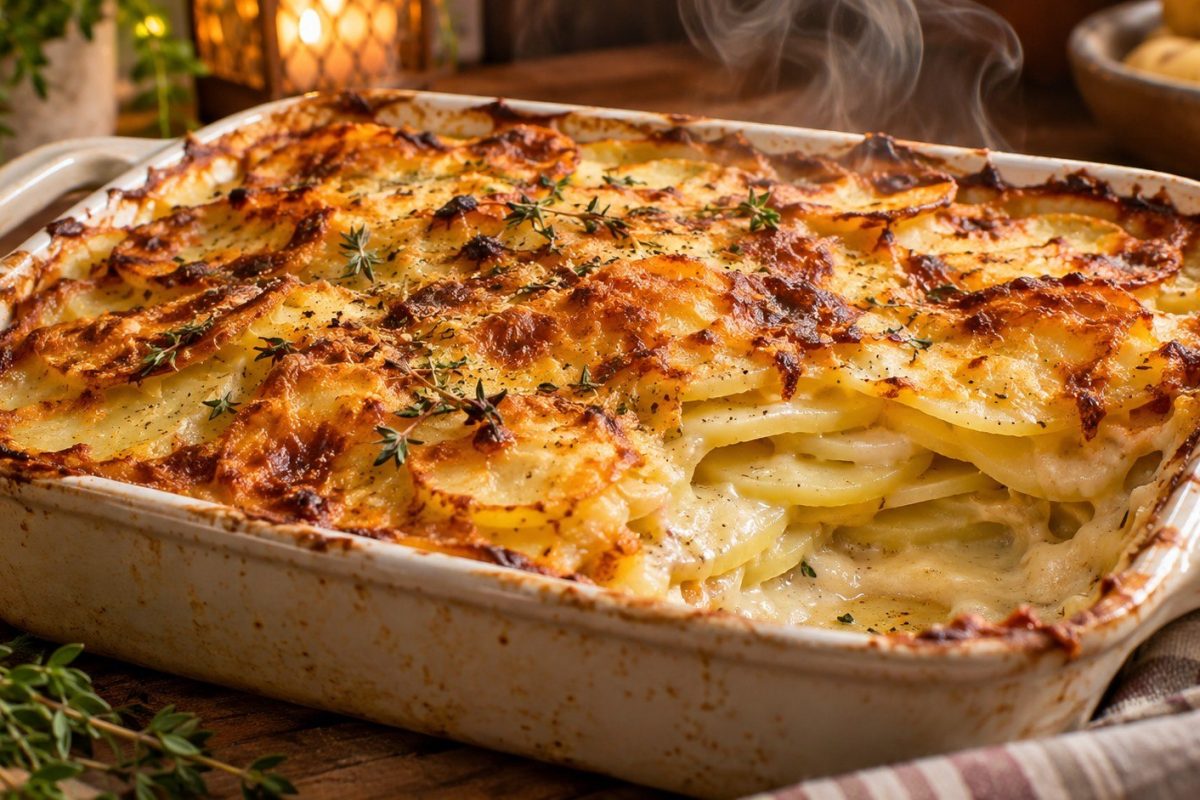
How to make scalloped potatoes with tender, evenly cooked layers and a rich cream sauce? The secret lies in thin slices, balanced seasoning, and controlled baking temperatures. This classic American side dish requires everyday ingredients but rewards careful preparation. A reliable recipe produces soft potatoes beneath a lightly browned, bubbling surface, as reported by customreceipt.com.
Scalloped potatoes remain a favorite for Thanksgiving, Christmas dinners, Easter celebrations, and weekend family meals. Their appeal comes from the contrast between buttery potatoes and a creamy sauce that thickens during baking. Unlike complicated casseroles, this dish requires little active cooking. Most of the work happens inside the oven.
However, small mistakes can change the result considerably. Thick slices may remain firm, while excessive liquid can create a watery casserole. Understanding the right proportions makes this familiar comfort food considerably easier to prepare.
What Are Scalloped Potatoes, and What Makes Them Different?
Scalloped potatoes are thinly sliced potatoes baked in milk, cream, or a seasoned white sauce. The slices overlap inside a baking dish, gradually absorbing the surrounding liquid as they soften.
Traditional versions generally emphasize cream rather than large quantities of cheese. Potatoes au gratin, by comparison, typically feature cheese and a more pronounced browned topping. American recipes sometimes combine both approaches, so the names are not always used consistently.
The best homemade scalloped potatoes should hold their shape when served. Their centers should feel tender, while the surrounding sauce remains rich without becoming greasy.
The aim is not to drown the potatoes in cream. It is to create a sauce that binds the individual layers together.
For a complete holiday dinner, scalloped potatoes work alongside classic homemade stuffing. Both dishes complement roasted poultry, although their textures provide a useful contrast.
Ingredients for Creamy Scalloped Potatoes
A dependable scalloped potatoes recipe starts with potatoes containing enough starch to help the sauce thicken naturally. Yukon Gold potatoes offer a buttery flavor and maintain their structure particularly well.
Russet potatoes are another excellent choice. Their higher starch content produces softer layers and a slightly thicker sauce.
This version makes approximately 6–8 side servings.
| Ingredient | Quantity | Purpose |
|---|---|---|
| Yukon Gold potatoes | 3 lb (1.36 kg) | Main ingredient |
| Heavy cream | 1½ cups (360 ml) | Creates richness |
| Whole milk | 1 cup (240 ml) | Balances the sauce |
| Unsalted butter | 3 tbsp (42 g) | Adds flavor |
| All-purpose flour | 2 tbsp (16 g) | Stabilizes the sauce |
| Garlic | 3 cloves | Provides aroma |
| Yellow onion | ½ medium | Adds sweetness |
| Kosher salt | 1½ tsp, or to taste | Enhances flavor |
| Black pepper | ½ tsp | Provides mild warmth |
| Fresh thyme | 1 tsp | Adds herbal notes |
| Ground nutmeg | ⅛ tsp | Optional aromatic seasoning |
| Gruyère cheese | ½ cup (55 g) | Optional topping |
The milk and cream ratio prevents the casserole from becoming unnecessarily heavy. Heavy cream alone produces richness, but the finished dish can feel excessively dense.
Flour helps the liquid maintain a cohesive texture during baking. This becomes particularly useful when potatoes release additional moisture.
Cheese remains optional. Leaving it out produces a more traditional cream-forward preparation. Adding Gruyère creates a deeper, nuttier flavor and a more pronounced golden topping.
Fresh thyme complements the potatoes without overwhelming their delicate taste.
How to Make Scalloped Potatoes Step by Step
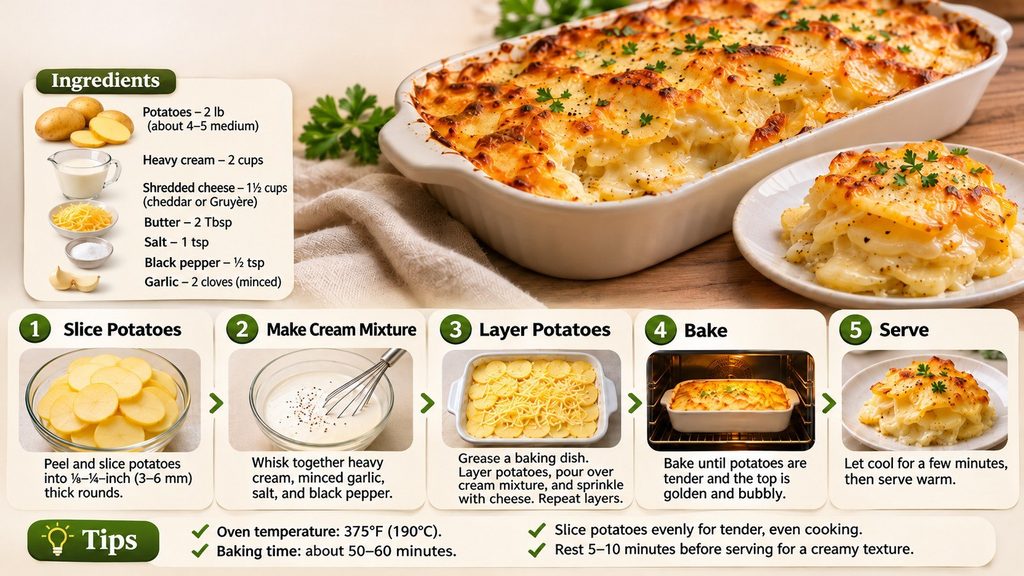
Making easy scalloped potatoes from scratch involves preparing the sauce, arranging the potatoes, and baking everything until tender.
Allow approximately 20–25 minutes for preparation and 70–85 minutes for baking. The final resting period requires another 10–15 minutes.
Step-by-Step Cooking Instructions
Before starting, prepare a 9 × 13-inch baking dish, a medium saucepan, and a sharp knife or mandoline.
- Preheat the oven. Set the temperature to 350°F (175°C). Lightly butter the baking dish.
- Prepare the potatoes. Wash, peel, and cut them into slices approximately ⅛ inch (3 mm) thick.
- Cook the aromatics. Melt butter over medium heat. Add finely chopped onion and cook for 3–4 minutes.
- Add the garlic. Stir in minced garlic and cook for another 30 seconds without allowing it to brown.
- Prepare the sauce. Add flour and stir for 1 minute. Gradually whisk in the milk and cream.
- Season the mixture. Add salt, black pepper, thyme, and optional nutmeg. Simmer gently for 3–5 minutes.
- Arrange the potatoes. Spread approximately ⅓ of the sliced potatoes across the baking dish.
- Build the layers. Spoon some sauce over the potatoes. Repeat until all potatoes and sauce are used.
- Cover and bake. Seal the dish with aluminum foil and bake for 50 minutes.
- Brown the surface. Remove the foil, add optional cheese, and bake for another 20–35 minutes.
- Check tenderness. Insert a thin knife into the center. It should pass through without resistance.
- Allow the dish to rest. Leave it undisturbed for 10–15 minutes before serving.
The sauce should be hot and slightly thickened before it reaches the potatoes. This helps the ingredients begin cooking together more evenly.
Avoid packing the potato slices too tightly. Small spaces between overlapping layers allow the sauce to circulate.
Actual baking times depend on the dish’s depth and the thickness of the slices. Deeper casseroles generally need longer cooking.
If the surface browns before the center softens, cover it loosely with foil. Continue baking until the potatoes are completely tender.
Resting allows the bubbling sauce to settle. Cutting immediately can cause excess liquid to spread across the serving plate.
Which Potatoes Are Best for Scalloped Potatoes?
Potato variety affects the final consistency more than many cooks expect. Some varieties remain firm, while others break down during prolonged baking.
Yukon Gold potatoes provide a balance between creamy texture and structural stability. Russets absorb liquid readily, creating a softer casserole.
Waxy red potatoes retain their shape but may produce firmer layers. They can work, although the final dish will feel different.
For a classic family-style casserole, Yukon Gold is an especially reliable starting point.
The potatoes should also be sliced uniformly. Uneven thickness creates a mixture of overcooked edges and undercooked centers.
How Long to Bake Scalloped Potatoes at 350°F or 375°F
Baking temperature influences both the interior texture and the surface color.
A moderate temperature encourages the potatoes to soften before the sauce reduces excessively. Higher temperatures promote browning but demand closer attention.
The following ranges are practical starting points for a casserole made with approximately 3 lb of potatoes.
| Oven temperature | Estimated baking time | Expected result |
|---|---|---|
| 325°F (163°C) | 90–110 minutes | Gentle cooking, softer surface |
| 350°F (175°C) | 70–85 minutes | Tender layers, controlled browning |
| 375°F (190°C) | 60–75 minutes | Faster cooking, deeper golden top |
| 400°F (204°C) | 50–65 minutes | Rapid browning, greater scorching risk |
These times assume thin slices and a moderately deep baking dish. Cold ingredients or a tightly packed casserole can extend cooking considerably.
A shallow ceramic dish may behave differently from a deeper glass casserole. Oven calibration also affects the result.
At 375°F, check the dish after approximately 45 minutes. If the exposed surface looks dry, loosely cover it before continuing.
At 350°F, keeping the casserole covered during the first baking stage usually produces more consistent tenderness.
Do not judge doneness by color alone. A golden crust can develop while the middle remains firm.
How to Prevent Watery or Undercooked Scalloped Potatoes
Watery scalloped potatoes are among the most common disappointments. The problem usually involves excess liquid, uneven slicing, or insufficient cooking time.
Potatoes release moisture during baking, which changes the consistency of the surrounding sauce. A properly prepared sauce must accommodate this additional liquid.
Several adjustments can substantially improve the finished casserole:
- Slice potatoes uniformly, ideally around ⅛ inch thick.
- Use whole milk instead of reduced-fat milk for greater richness.
- Include a modest amount of flour to stabilize the sauce.
- Avoid adding excessive liquid between potato layers.
- Keep raw potato slices out of water after cutting unless necessary.
- Bake until the center becomes fully tender.
- Rest the casserole before cutting individual portions.
Rinsing freshly sliced potatoes removes some surface starch. That starch can contribute to the sauce’s body, so rinsing is usually unnecessary.
A watery dish may simply need more oven time. If the potatoes are nearly tender, continue baking uncovered to encourage evaporation.
If the center remains firm, replace the foil and continue cooking. Increasing the temperature aggressively can burn the surface before the interior softens.
Avoid adding large amounts of flour to a finished watery casserole. Raw flour rarely distributes evenly through cooked potato layers.
A slightly loose sauce often thickens during the resting period. Give the casserole time before deciding that the recipe has failed.
Should You Add Cheese to Scalloped Potatoes?
The question of cheese divides traditionalists and modern home cooks.
Classic scalloped potatoes often rely on dairy, seasoning, and potato starch without a substantial cheese layer. Modern American versions frequently incorporate cheddar, Gruyère, or Parmesan.
Neither approach is inherently wrong. The choice depends on the desired flavor and texture.
A cheese-free preparation highlights the natural sweetness of the potatoes. It also works particularly well beside strongly flavored roasted meats.
For cheesy scalloped potatoes, Gruyère offers a nutty finish, while sharp cheddar produces a more familiar American casserole flavor.
Use approximately ½–1 cup of shredded cheese for the standard recipe. Add it between layers or across the exposed surface.
Excessive cheese can make the casserole heavy and greasy. Moderate quantities preserve the potato flavor.
For a balanced result, let the potatoes remain the central ingredient rather than turning the dish into melted cheese.
Common Scalloped Potato Mistakes and How to Fix Them
Even experienced home cooks sometimes struggle with dairy-based casseroles. Most problems arise from temperature, moisture, or ingredient proportions.
A few recognizable symptoms can help identify what went wrong:
- Firm potato centers: The slices are too thick, or the casserole needs longer cooking.
- Separated sauce: Excessive heat or insufficient stabilization may have caused the dairy to split.
- Dry upper layers: Too little liquid reached the exposed potatoes.
- Bland flavor: The potatoes and sauce received insufficient seasoning.
- Burned surface: The casserole baked uncovered for too long.
- Runny portions: The finished dish was served without resting.
The simplest solution for firm potatoes is additional covered baking. This traps steam and allows the interior to continue softening.
A separated sauce is harder to repair once baking is complete. Prevention requires gentle heating and avoiding prolonged, aggressive boiling.
Dry surfaces can be protected with foil. A small quantity of warm milk or cream may help if the casserole is clearly underhydrated.
Seasoning should be checked before pouring the sauce over the potatoes. Potatoes absorb a surprising amount of salt.
If the upper crust becomes dark, move the dish to a lower oven rack. Continue cooking gently until the interior reaches the correct texture.
What to Serve With Scalloped Potatoes
Scalloped potatoes complement roasted meats, vegetable dishes, and traditional holiday meals. Their creamy consistency provides contrast against crisp or deeply browned ingredients.
Roast turkey is a particularly suitable pairing. A rich potato casserole also works alongside baked ham, roasted chicken, and beef.
For Thanksgiving, add homemade cranberry sauce to introduce acidity and sweetness.
Fresh green vegetables provide another useful contrast. Roasted asparagus, steamed broccoli, and green beans help balance the meal.
A simple salad with a sharp vinaigrette can also prevent the plate from becoming excessively rich.
For vegetarian dinners, serve scalloped potatoes with roasted mushrooms, glazed carrots, or a hearty lentil loaf.
Can You Make Scalloped Potatoes Ahead of Time?
Scalloped potatoes can be prepared in advance, making them practical for holidays and large family gatherings.
For the most predictable result, bake the casserole completely before refrigerating. Allow it to cool briefly, then transfer it to the refrigerator within 2 hours.
Cover the dish securely to prevent drying. Refrigerated leftovers should generally be consumed within 3–4 days.
The USDA’s food safety guidance recommends shallow containers for faster cooling. It also advises refrigeration at 40°F (4°C) or below.
For reheating, cover the potatoes with foil and place them in a 325°F (163°C) oven. Heat until the center reaches 165°F (74°C), as recommended by the FDA’s food handling guidance.
Individual portions can be reheated in a microwave. Add a small splash of milk if the sauce has thickened excessively.
Freezing is possible, although thawed dairy sauces sometimes become grainy. Refrigeration is generally preferable when serving the dish within several days.
FAQ: Scalloped Potatoes Recipe and Cooking Tips
How do you make scalloped potatoes from scratch?
Slice potatoes thinly and arrange them in a buttered baking dish. Cover the layers with a seasoned milk-and-cream sauce. Bake at 350°F until tender and golden.
Do you need to boil potatoes before making scalloped potatoes?
No. Thinly sliced raw potatoes cook directly in the sauce. Briefly simmering them beforehand can shorten baking time, but it is optional.
Why are my scalloped potatoes still hard after baking?
The slices may be too thick, or the baking time may be insufficient. Cover the casserole and continue cooking until a knife passes easily through the center.
Can you make scalloped potatoes without heavy cream?
Yes. Whole milk and a butter-flour sauce provide a lighter alternative. The final texture may be less rich but can still be pleasantly creamy.
What is the best oven temperature for scalloped potatoes?
350°F (175°C) provides a reliable balance between tenderness and browning. The dish usually needs approximately 70–85 minutes, depending on thickness and depth.
Should scalloped potatoes be covered while baking?
Covering during the first stage encourages even cooking. Removing the foil later allows excess moisture to evaporate and the surface to brown.
Can scalloped potatoes be made without cheese?
Yes. Traditional versions frequently use cream, milk, butter, and seasoning without cheese. The potatoes provide enough starch to help create a rich sauce.
How do you thicken scalloped potatoes?
Use a lightly thickened white sauce, avoid excessive liquid, and bake until the potatoes soften completely. Resting for 10–15 minutes also improves consistency.
The Best Way to Get Creamy Scalloped Potatoes Every Time
Great scalloped potatoes depend on technique rather than expensive ingredients. Thin slices, a carefully seasoned sauce, and moderate oven heat produce the most dependable results.
For a first attempt, use Yukon Gold potatoes, bake at 350°F, and leave the dish covered initially. Finish uncovered until golden and tender.
Save this recipe for your next family dinner or holiday gathering. Small adjustments to seasoning and cheese can make it your own without compromising the classic texture.
Earlier we wrote about How to Make Roasted Potatoes at 425°F: The Secret to Crispy Golden Edges