 Frank Rondel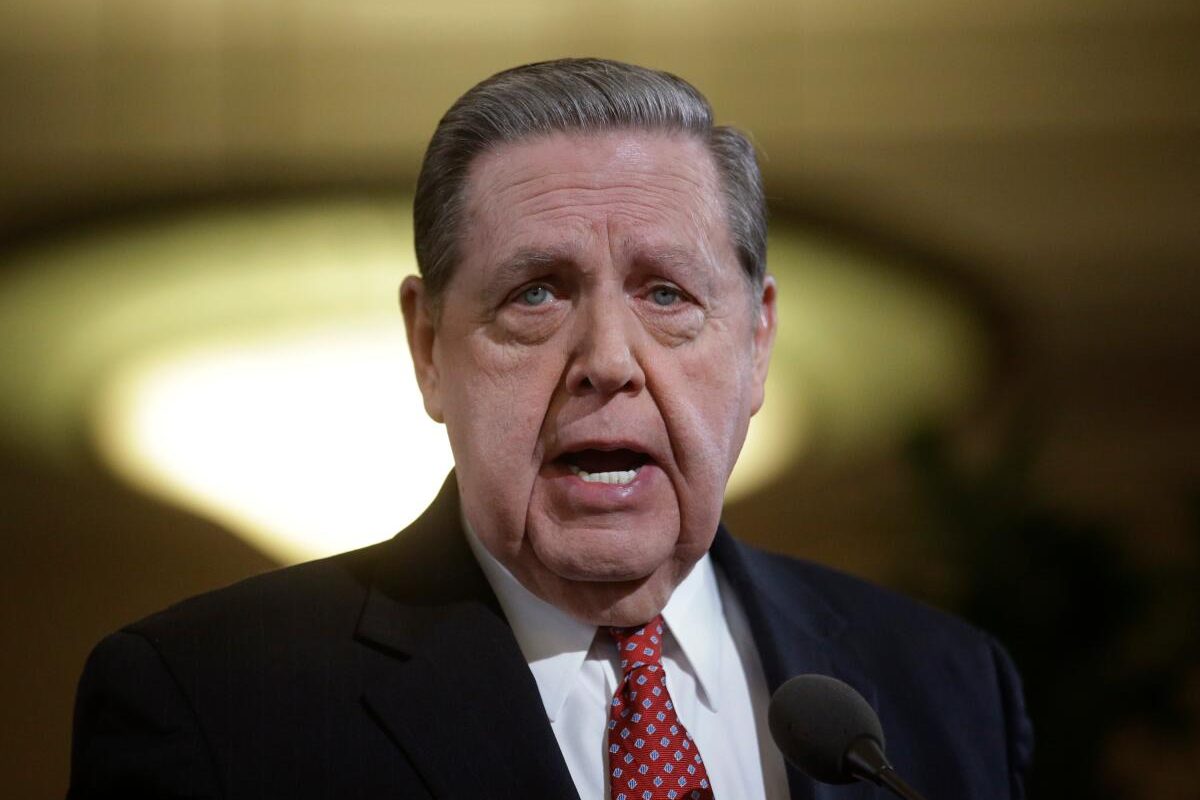
President Jeffrey R. Holland, President of the Quorum of the Twelve Apostles of The Church of Jesus Christ of Latter-day Saints, died on Saturday, December 27, at 3:15 a.m. MST at the age of 85 due to complications related to kidney disease,reports customreceipt.com.
Widely recognized for his eloquence and emotional depth, President Holland was known across continents for teaching and testifying of Jesus Christ. An educator by training, he influenced generations through general conference sermons, devotionals, missionary messages and public addresses, consistently affirming that the gospel of Jesus Christ is eternally true and a source of enduring hope. Wherever he traveled, he formed close friendships, offering compassion, encouragement and empathy that left a lasting impression.
In addition to nearly 30 years of service as a member of the Quorum of the Twelve Apostles, President Holland held numerous leadership roles within the Church. He served as a General Authority Seventy, became the ninth president of Brigham Young University, acted as commissioner of the Church Educational System and later served as dean of the BYU College of Religious Education.
President Holland and his wife, Patricia Terry Holland, who preceded him in death, marked their 60th wedding anniversary in June 2023. Together they raised three children and were grandparents to 13 grandchildren, as well as great-grandchildren.
After stepping back temporarily from Church responsibilities to address serious health challenges, President Holland spoke publicly in a media interview on June 24, 2023. He described living with neuropathy that restricted his mobility, a kidney condition requiring ongoing dialysis, and a severe case of COVID-19 that doctors did not expect him to survive. He attributed his recovery to prayer, saying that petitions offered by individuals across the world were heard by God. He emphasized that these prayers reflected the strength of a global Church community and demonstrated how divine help often comes through others.
Despite his frail health, President Holland expressed determination to continue his ministry, saying he remained committed to teaching and testifying and deeply grateful for the faith and prayers of Church members.
Jeffrey Roy Holland was born on December 3, 1940, in St. George, Utah, to Frank D. Holland and Alice Bentley Holland. He frequently described himself as a “southern Utah boy through and through,” linking his identity to the landscape, history and pioneer spirit of the region. He often spoke of the early settlers of southern Utah, whose lives were marked by hardship, resilience and uncompromising values of honesty and integrity.
President Holland credited those pioneer principles—and his father’s emphasis on hard work—for shaping his life. Though his father had only a seventh-grade education, Holland went on to lead a major university, often remarking that persistence and effort made such achievements possible.
He served a mission in England, an experience he later described as spiritually formative. Over time, England became what he called his “spiritual home,” a place that profoundly influenced his faith and testimony. It was also during his missionary service that he formed a lifelong friendship with Elder Quentin L. Cook. Both men later referred to their missions as “seminal” experiences that defined their lives.
President Holland married Patricia Terry in 1963 in the St. George Utah Temple. While Sister Holland had studied piano and voice in New York City, she set aside her professional aspirations to support their family and her husband’s calling. President Holland earned undergraduate and master’s degrees from Brigham Young University before completing additional graduate studies, including a doctorate in American studies at Yale University.
During his presidency at BYU, he held prominent national education leadership roles and was recognized for efforts to strengthen interfaith understanding, receiving the Torch of Liberty award from the Anti-Defamation League of B’nai B’rith. His tenure also coincided with BYU’s national football championship in 1984 and the establishment of the BYU Jerusalem Center, a project he supported despite significant political and logistical challenges.
Family life remained central to President Holland. He spoke openly about personal trials, including the loss of a child through late-term miscarriage, which he later said deepened his understanding of Christ’s love. He and Sister Holland emphasized unity, faith and devotion within their home, frequently referring to their children as their “most important people.”
Among Church leaders, President Holland was known for his deep loyalty and affection toward his colleagues. He often spoke of the unique brotherhood shared among members of the First Presidency and the Quorum of the Twelve Apostles. Fellow apostles recalled his ability to offer comfort, reassurance and spiritual strength, particularly during moments of transition or calling.
In his later years, President Holland continued to address global audiences, including young adults, urging them to act with faith, hope and charity in a troubled world. He repeatedly testified that the gospel of Jesus Christ provides the only unfailing answer to life’s challenges and the promise of eternal peace.
President Jeffrey R. Holland is remembered as a teacher, leader and apostle whose life reflected discipline, faith and compassion, and whose words reached millions across generations and nations.
Earlier we wrote that Russian Volunteer Corps leader Denis Kapustin killed in drone strike during combat.