 Frank Rondel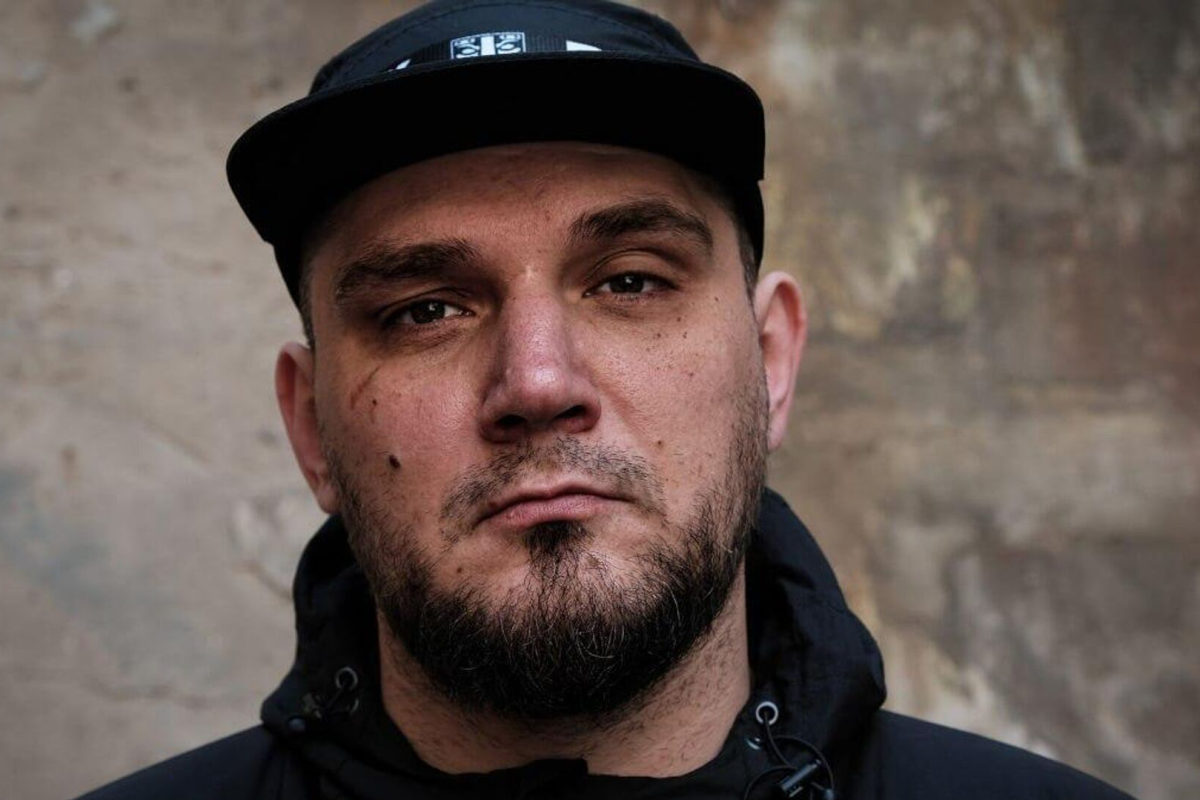
On December 27, the Russian Volunteer Corps (RDK), a unit made up of Russian citizens fighting on the side of Ukraine’s Armed Forces, announced the death of its commander Denis Kapustin, who was also known by the aliases Nikitin and White Rex, reports customreceipt.com. According to the unit, Kapustin was killed while carrying out a combat mission after being struck by a Russian drone.
Denis Kapustin was born in Moscow in 1984. In 2001, he moved with his family to Cologne. As reported by Der Spiegel, the family relocated to Germany as Jewish refugees, and within months Kapustin received permanent residency. While living in Germany, he became involved in mixed martial arts and football-related extremist subcultures. In later interviews, Kapustin described himself at the time as a street fighter and skinhead.
After returning to Russia, Kapustin joined the fan movement of CSKA Moscow. During this period, he organized mixed martial arts tournaments that attracted participants from far-right groups. Similar events were later held in other European countries. According to researchers, these tournaments included individuals associated with Germany’s National Democratic Party and Italy’s neo-fascist CasaPound movement. Far-right extremism researcher Robert Claus identified Kapustin as a central figure in Europe’s radical right-wing networks.
In 2008, Kapustin launched the clothing brand White Rex. The brand featured apparel containing coded Nazi symbols, including the “Black Sun” motif and the numeric references 14/88. The Ukrainian outlet Zaborona reported that Kapustin openly promoted ideas of white racial superiority. In 2016, he was among the organizers of a large-scale clash between Russian and British football fans in Marseille during the UEFA European Championship.
Kapustin relocated to Ukraine in 2017, where he continued organizing MMA competitions. He developed close ties with members of the Azov Regiment. Olena Semenyaka, secretary of Azov’s international department, stated that Kapustin assisted in building contacts with foreign far-right organizations and, in some instances, represented Azov at international forums. In 2019, Kapustin was banned from entering the European Union for a ten-year period. Der Spiegel also reported that Ukrainian police had detained him on suspicion of drug trafficking, though no official confirmation followed, and Zaborona noted that related information was classified.
Kapustin was in Kyiv when Russia launched its full-scale invasion of Ukraine. In 2022, he announced the formation of the Russian Volunteer Corps, a unit composed of ethnic Russians intended to fight against Russian forces on Ukraine’s side. The size of the RDK has never been publicly disclosed. Kapustin said the unit emerged amid the creation of national battalions by foreign volunteers, arguing that Russian citizens lacked a comparable structure.
In August 2022, Kapustin stated that the RDK cooperated with Ukraine’s Armed Forces but had not yet been formally recognized as an official military unit. He claimed that direct approval from Ukraine’s president was required to secure the corps’ participation in combat operations. In October of that year, the RDK released a manifesto declaring itself part of the Armed Forces of Ukraine. Kapustin also emphasized that the corps did not coordinate with another Russian unit fighting for Ukraine, the Freedom of Russia Legion, citing ideological differences.
The RDK gained international attention in March 2023 when its fighters crossed into Russia’s Bryansk region and entered the villages of Lyubechane and Sushany. For a limited period, the group controlled administrative buildings in those locations. Russian authorities reported that two civilians were killed during shelling. Similar incursions later occurred in the Belgorod region, becoming a recurring tactic used by both the RDK and the Freedom of Russia Legion. Kapustin said he attempted to arrange a meeting with Belgorod Governor Vyacheslav Gladkov to hand over captured Russian soldiers, but no direct talks took place.
Russian security agencies accused Kapustin of plotting an assassination attempt against businessman Konstantin Malofeev, whom Russian authorities describe as a financial backer of proxy operations in Donbas in 2014. In March 2023, Russia’s Interior Ministry placed Kapustin on a wanted list and arrested him in absentia. In November, a Russian court sentenced him in absentia to life imprisonment in a high-security penal colony. One month later, the Russian Volunteer Corps was officially designated a terrorist organization in Russia.
In late June 2023, Kapustin expressed support for the mutiny led by Wagner Group founder Yevgeny Prigozhin. Following Prigozhin’s death in a plane crash, Kapustin called on Wagner fighters to defect to Ukraine.
Throughout 2024 and 2025, the RDK and its commander appeared less frequently in the media as organizers of high-profile operations. In September 2024, Ukraine’s Main Intelligence Directorate listed the unit among participants in an operation to retake the aggregate plant in Vovchansk, Kharkiv region, from Russian forces. In November of the same year, Kapustin received a second life sentence in absentia from a Russian court.
In 2025, the corps expanded its political activities. On March 1, RDK members joined an anti-war rally organized by Russia’s opposition in Berlin. Ahead of the event, Kapustin warned that violence could be used against demonstrators carrying the Russian tricolor. On December 19, the RDK announced plans to join a Russian platform operating under the Parliamentary Assembly of the Council of Europe.
According to posts on the corps’ Telegram channel, Kapustin rarely appeared in public in the months before his death. His last recorded public appearance took place in October at a film screening about the operation to liberate the Vovchansk aggregate plant. During this period, the unit focused primarily on combat operations in some of the most contested frontline areas, including the Kupiansk and Pokrovsk sectors. Kapustin remained active on his personal Telegram channel, where, in the days leading up to his death, he discussed internal conflicts among pro-war activists in Russia and the killing of former Española Brigade commander Stanislav Orlov.
Earlier we wrote that italians celebrate first baby in Pagliara dei Marsi in nearly 30 years.