 Frank Rondel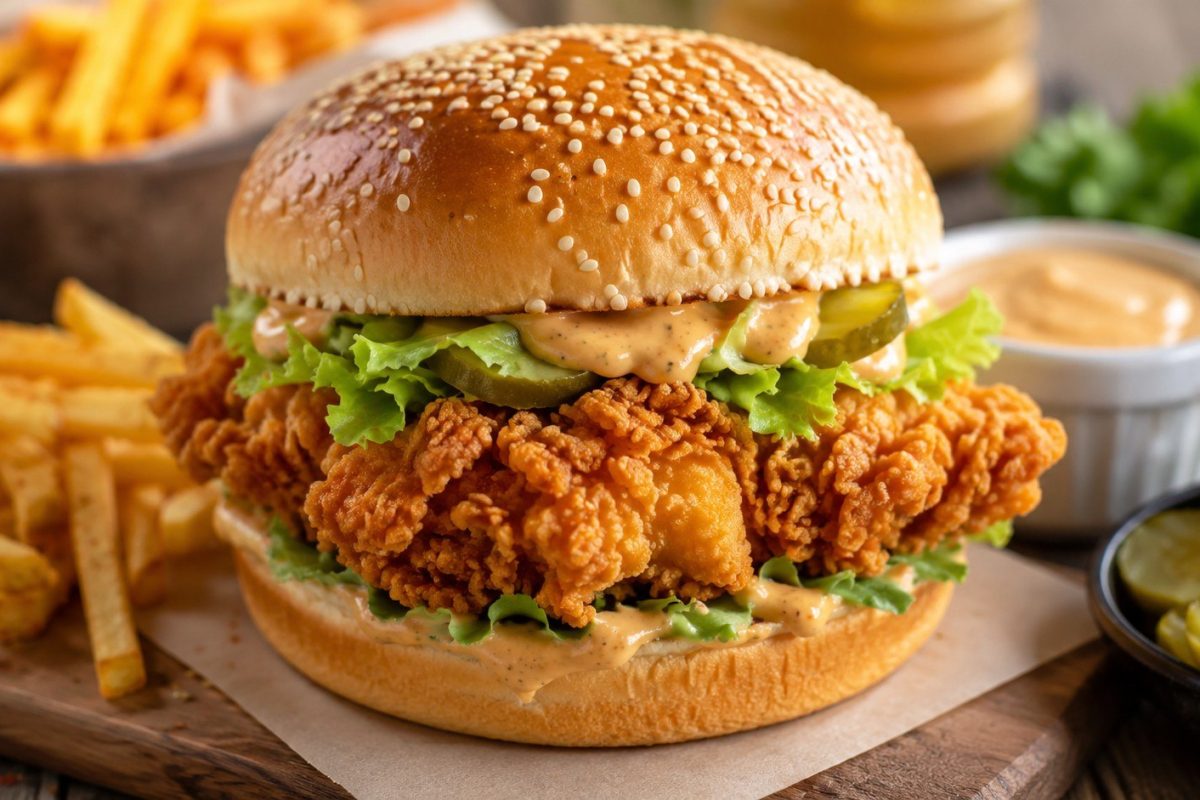
How to make a KFC-style burger begins with 3 elements: juicy chicken, a rough crunchy coating, and a soft toasted bun. The restaurant’s exact seasoning formula remains proprietary, but its sandwich structure is public: fried chicken breast, pickles, mayonnaise, and a brioche-style bun, as the customreceipt.com editorial team notes.
This homemade recipe does not claim to reproduce KFC’s protected Original Recipe. Instead, it uses accessible ingredients and a double-breading technique to create a similar combination of crispness, spice, acidity, and creamy sauce.
The decisive step is not adding more seasoning. It is controlling moisture, breading texture, frying temperature, and resting time.
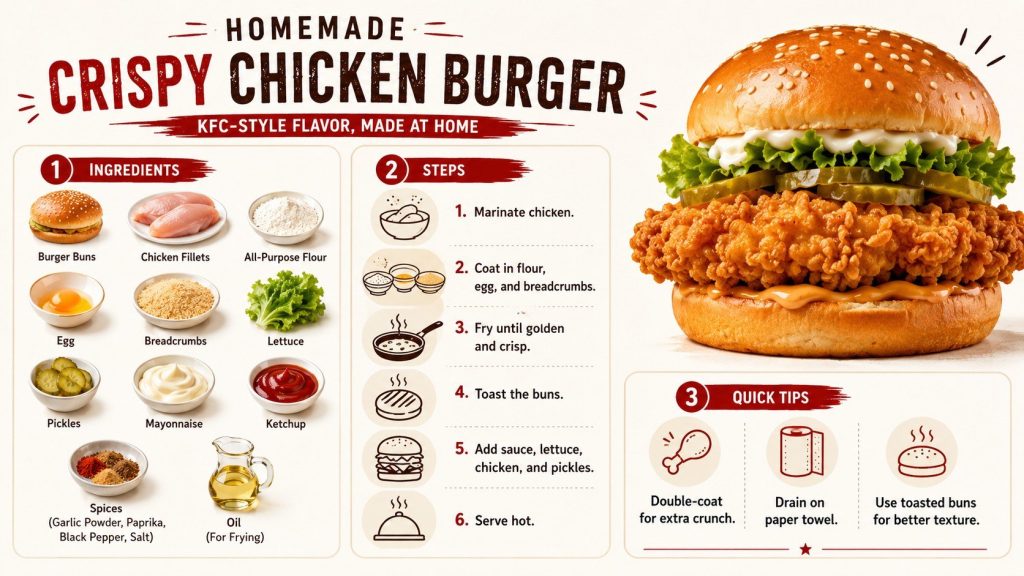
Ingredients for a KFC-Style Chicken Burger
Choose chicken breast fillets of similar thickness. Uneven pieces cook at different speeds, leaving thinner edges dry before the center reaches a safe temperature.
The following quantities make 4 substantial burgers.
| Ingredient | Quantity | Purpose |
|---|---|---|
| Chicken breast | 600–700 g | Main filling |
| Buttermilk | 300 ml | Tenderizes and moistens |
| Brioche-style buns | 4 | Soft, slightly sweet base |
| Plain flour | 220 g | Main breading |
| Cornstarch | 60 g | Adds brittle crunch |
| Eggs | 2 | Helps the coating adhere |
| Pickle slices | 12–16 | Acidity and texture |
| Mayonnaise | 100 g | Creamy sauce |
| Neutral frying oil | 1–1.5 l | Deep-frying |
| Salt | 2 tsp | Basic seasoning |
| Paprika | 2 tsp | Colour and mild sweetness |
| Garlic powder | 1 tsp | Savoury flavour |
| Onion powder | 1 tsp | Breading seasoning |
| Ground ginger | ½ tsp | Warm aromatic note |
| Black pepper | 1 tsp | Sharpness |
| White pepper | ½ tsp | Background heat |
| Cayenne pepper | ¼–½ tsp | Optional spiciness |
| Baking powder | 1 tsp | Lighter, craggy crust |
The flour-to-cornstarch ratio matters. Too much starch can produce a fragile shell that separates from the chicken. Flour gives structure, while cornstarch creates a drier and sharper crunch.
Baking powder introduces tiny air pockets during frying. Use only a small quantity. An excessive amount may leave a bitter or alkaline taste.
Salt appears in both the marinade and coating. Adjust the amount when using very salty pickles or seasoned mayonnaise. The finished sandwich should taste balanced rather than aggressively salted.
How to Prepare the Chicken
Place each chicken breast between 2 sheets of baking paper. Flatten the thickest section to approximately 1.5–2 cm using a rolling pin or meat mallet.
Cut very large breasts into burger-sized portions. Each piece should extend slightly beyond the bun because the meat contracts during cooking.
For the marinade, combine:
- 300 ml buttermilk;
- 1 tsp salt;
- 1 tsp paprika;
- ½ tsp garlic powder;
- ½ tsp black pepper;
- ¼ tsp cayenne pepper.
Submerge the chicken completely. Cover the container and refrigerate it for at least 2 hours. A marinating time of 6–8 hours produces a more evenly seasoned result.
Do not leave the chicken in an acidic marinade for several days. Prolonged exposure can soften the outer layer excessively. The surface may then become pasty rather than tender.
Remove the container from the refrigerator about 20 minutes before breading. The chicken should remain cool, but extremely cold meat can reduce the oil temperature sharply.
The official KFC at-home Zinger recipe also uses a seasoned marinade before breading. Its published method recommends refrigerating the chicken for 2 hours.
Making the Crispy KFC-Style Coating
Combine the flour, cornstarch, baking powder, remaining salt, paprika, garlic powder, onion powder, ginger, black pepper, white pepper, and cayenne.
Whisk 2 eggs in a separate bowl. Add 2 tablespoons of the buttermilk marinade and mix until smooth.
Before coating the chicken, drizzle 2–3 tablespoons of the egg mixture into the seasoned flour. Rub it through the flour with your fingertips. This creates small clumps that become crunchy ridges during frying.
Follow this breading sequence:
- Lift one chicken piece from the marinade.
- Let excess liquid drip away for several seconds.
- Press the chicken firmly into the seasoned flour.
- Dip it briefly into the egg mixture.
- Return it to the flour for a second coating.
- Press and squeeze the flour around the surface.
- Shake off only the loose excess.
The double-breading method produces a thicker shell than a single flour coating. It also resembles the flour-liquid-flour structure used in KFC’s published home Zinger instructions.
After breading, leave the chicken on a wire rack for 10 minutes. This short rest allows the damp coating to hydrate and attach more securely.
Do not place the pieces directly on top of each other. Pressure and trapped moisture will damage the rough surface before frying.
The coating should look irregular, almost untidy. A perfectly smooth surface usually produces a thin crust without the characteristic crunchy flakes.
How to Fry the Chicken Without Burning It
Pour the oil into a deep, heavy-bottomed pot. The vessel should be less than half full because the oil rises and bubbles when chicken enters it.
Heat the oil to 175°C. Use a kitchen thermometer rather than estimating by colour or sound.
KFC’s official home Zinger recipe specifies frying at 350°F, equivalent to approximately 177°C, for about 6 minutes. Actual cooking time depends on the thickness and starting temperature of the meat.
Use these practical temperature ranges:
| Oil temperature | Likely result | Required action |
|---|---|---|
| Below 160°C | Greasy, pale coating | Increase heat before adding more chicken |
| 170–180°C | Crisp, evenly browned crust | Maintain this range |
| Above 185°C | Dark crust with an undercooked center | Reduce heat immediately |
| 74°C inside chicken | Safe cooked center | Remove and rest |
Fry only 1 or 2 pieces at a time. Crowding the pot causes a sudden temperature drop and increases cooking time.
Most medium fillets need approximately 6–8 minutes. Turn each piece once if the oil does not cover it completely. Avoid constant movement because the fresh coating is delicate.
The chicken is ready when its thickest point reaches 74°C. Colour alone is unreliable, especially when paprika darkens the coating.
Transfer the fried pieces to a wire rack. Do not use a flat plate unless necessary. Steam collects beneath the chicken and softens the underside.
Rest the meat for 5 minutes before assembling the burgers. The temperature continues to equalize while the surface releases excess oil.
Sauce, Pickles, and Bun Preparation
A classic KFC chicken sandwich is presented with pickles and mayonnaise on a warm brioche-style bun. The spicy version replaces or supplements the regular mayonnaise with a hotter sauce.
For a simple burger sauce, mix:
- 100 g mayonnaise;
- 1 tsp pickle brine;
- ½ tsp mustard;
- ¼ tsp garlic powder;
- several drops of hot sauce, if desired.
Pickle brine loosens the mayonnaise and adds acidity. Add it gradually because a watery sauce can soak into the bun.
Toast the cut sides of each bun in a dry pan for 30–60 seconds. A lightly browned surface creates a barrier against moisture.
Use thick-cut dill pickles rather than sweet sandwich pickles when seeking a sharper fast-food flavour. Pat them dry before assembly.
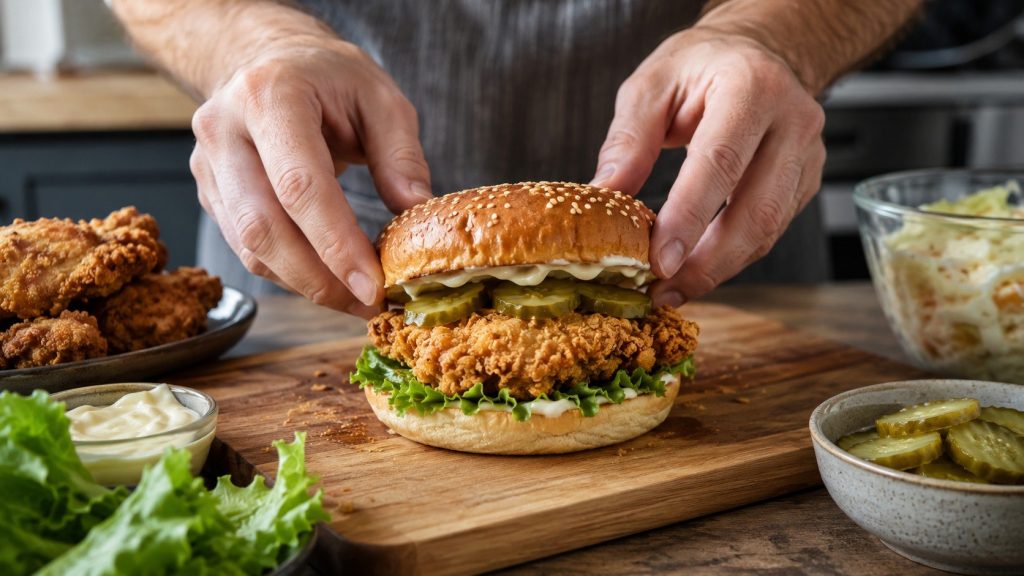
A useful assembly order is:
- bottom bun;
- thin layer of sauce;
- fried chicken fillet;
- 3 or 4 pickle slices;
- another small spoonful of sauce;
- top bun.
Serve the burger immediately. The coating remains at its best during the first 10–15 minutes after frying.
Classic, Spicy, and Cheese Variations
The base recipe can be changed without rebuilding the entire process. Keep the chicken method consistent and adjust the sauce, toppings, or seasoning.
| Version | Sauce | Additional topping | Flavour profile |
|---|---|---|---|
| Classic | Mayonnaise and pickle brine | Dill pickles | Creamy and tangy |
| Spicy | Mayonnaise and hot sauce | Jalapeño slices | Hot and acidic |
| Smoky | Mayonnaise and smoked paprika | Grilled onions | Sweet and smoky |
| Cheese | Mustard mayonnaise | Cheddar slice | Rich and savoury |
| Coleslaw | Light mayonnaise sauce | Cabbage slaw | Fresh and crunchy |
For the cheese version, place a thin cheddar slice on the chicken immediately after frying. Residual heat will soften it without making the crust soggy.
Coleslaw should be drained before serving. A wet cabbage mixture quickly destroys the lower coating.
For stronger heat, increase cayenne in the breading moderately. Adding excessive chilli powder can burn before the chicken cooks.
A smoky burger works best with restrained toppings. Too many sauces conceal the flavour of the seasoned coating.
Common Mistakes That Ruin a Homemade Chicken Burger
The most frequent problem is breading that falls off. This usually happens when the chicken is dripping wet, the flour is not pressed firmly, or the coated meat enters the oil immediately.
Other common errors include:
- using chicken pieces with very different thicknesses;
- frying several large fillets together;
- allowing the oil to fall below 160°C;
- placing cooked chicken on paper towels for too long;
- assembling the burger several minutes before serving;
- pouring excessive sauce directly onto the crust;
- judging doneness only by the coating’s colour.
Paper towels absorb surface oil, but they also trap steam beneath the chicken. A rack provides airflow and protects the crust.
Another mistake is repeatedly turning the fillet. One controlled turn is usually enough. Frequent handling breaks the coating and releases crumbs into the oil.
Do not reuse heavily contaminated oil without filtering it. Burned flour particles create bitterness and darken the next batch.
If the crust browns too quickly, lower the temperature to around 165–170°C. Continue cooking until the center reaches 74°C.
Oven and Air-Fryer Alternatives
Deep-frying gives the closest texture to a fast-food chicken sandwich. However, an oven or air fryer can reduce the amount of oil.
For an air fryer, spray the breaded fillets evenly with cooking oil. Cook them at 190°C for approximately 14–18 minutes, turning once. Check the internal temperature before serving.
For an oven, place the fillets on a wire rack above a baking tray. Spray both sides with oil and bake at 210°C for 20–25 minutes.
These methods produce a lighter crust. They do not create the same complete contact between hot oil and breading.
Cornstarch remains useful in both versions. However, every dry patch must receive a light oil coating. Otherwise, loose flour may remain visible after cooking.
Food Safety and Allergen Notes
Raw chicken can contaminate hands, utensils, cutting boards, and nearby surfaces. Wash equipment with hot soapy water after contact and avoid rinsing raw poultry in the sink.
The recipe contains several common allergens:
- wheat in flour and buns;
- eggs in the breading and mayonnaise;
- milk in buttermilk;
- possible mustard in the sauce;
- possible sesame on the buns.
KFC provides separate nutrition and allergen information for its menu because recipes and ingredients can vary by market. Homemade cooks should check every packaged ingredient separately.
Use gluten-free flour and certified gluten-free buns when required. Confirm that spices and sauces do not contain hidden wheat derivatives.
For an egg-free version, replace the egg wash with additional buttermilk. The coating may be slightly thinner but will still adhere when pressed firmly.
Store leftover cooked chicken within 2 hours. Refrigerate it in a sealed container and reheat until thoroughly hot.
FAQ
Can I make a KFC-style burger without buttermilk?
Yes. Mix 300 ml milk with 1 tablespoon of lemon juice and leave it for 10 minutes. Plain unsweetened yogurt diluted with water also works.
Why does the breading separate from the chicken?
The surface may be too wet, or the flour was not pressed firmly enough. Resting the coated chicken for 10 minutes improves adhesion.
Which oil is best for frying chicken burgers?
Use a neutral oil with a high smoke point. Canola, sunflower, peanut, and refined vegetable oils are suitable options.
How long should chicken breast fry?
A 1.5–2 cm fillet usually needs 6–8 minutes at approximately 175°C. Always confirm that the center reaches 74°C.
Can the chicken be prepared in advance?
The chicken can remain in the marinade overnight. Bread it shortly before frying because stored coating absorbs moisture and becomes heavy.
How can I make the burger spicier?
Add cayenne to the flour and hot sauce to the mayonnaise. Increasing heat through the sauce is safer than overloading the breading.
What bun is closest to the KFC version?
A soft brioche-style bun provides the closest balance of sweetness, tenderness, and structure. Toast only the cut surfaces.
How do I keep fried chicken crispy?
Drain it on a wire rack and assemble the burger immediately before serving. Avoid covering hot chicken because trapped steam softens the crust.
Is this the official KFC recipe?
No. It is a homemade KFC-style interpretation based on public sandwich descriptions and KFC’s published home-cooking methods. The proprietary seasoning formula is not reproduced.
What should be served with the burger?
Serve it with fries, potato wedges, coleslaw, corn, or a simple cucumber salad. Pick a side with acidity when the burger sauce is rich.
Earlier we wrote about How to Make Carrot Cake: A Moist, Spiced Recipe With Cream Cheese Frosting