 Frank Rondel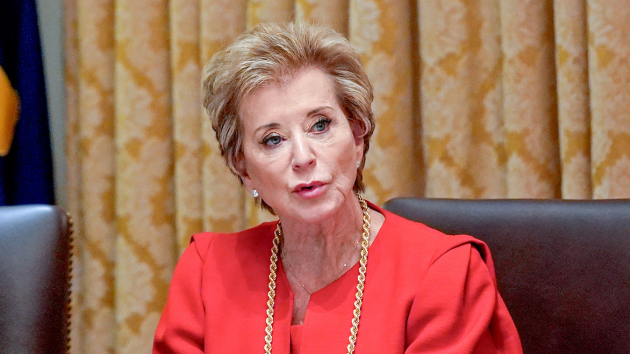
U.S. Secretary of Education Linda McMahon has authorized Iowa to receive a first-of-its-kind waiver allowing the state to use over $9 million in unrestricted federal education funds with greater flexibility, advancing the Trump administration’s effort to transfer more decision-making power from Washington to local authorities, reports Customreceipt. McMahon emphasized that the move is intended to reduce bureaucratic burdens while enabling state and local leaders to tailor educational programs directly to their students’ needs.
The waiver is designed to eliminate certain federal requirements, enabling Iowa to redirect funds straight to classrooms and reduce administrative and compliance costs over the next four years. McMahon highlighted that the state can now simplify all funding streams and invest in initiatives aimed at strengthening teacher pipelines, closing achievement gaps, and expanding postsecondary opportunities for students. Prior to approval, Iowa submitted a Unified Allocation Plan outlining how the funds would be used to enhance educator development, English language learning, and other academic priorities, according to state officials.
In addition to the $9 million in flexible funding, the Education Department also approved Iowa’s request for “Ed-Flex authority,” which allows the state to grant waivers to individual school districts without the need for separate federal approval. The announcement was made during McMahon’s “Returning Education to the States Tour,” a nationwide effort in her first year as Secretary to identify and scale effective educational practices at the state and local levels.
McMahon was joined at the announcement by Iowa Governor Kim Reynolds, Education Director McKenzie Snow, and a group of students at Broadway Elementary School in Denison. Reynolds noted that the state employs evidence-based practices in math and reading, including teaching the science of reading, and stated that reducing federal red tape enables Iowa to enhance education quality. She added that the waiver helps focus resources on initiatives that directly improve student achievement.
The move reflects McMahon’s broader strategy to reduce the federal government’s involvement in education, though most public school funding in the U.S. is already provided at state and local levels, averaging roughly 90 percent nationwide. The Education Department confirmed it is currently reviewing waiver requests from approximately six other states.
Critics, however, have expressed concern that giving states increased authority could harm students, particularly those from marginalized communities. Ranking Member Bobby Scott, D-Virginia and top Democrat on the House Education and Workforce Committee, criticized the waiver approval as potentially disregarding federal obligations to vulnerable students and urged the Department to reconsider similar approvals for other states. Scott stated that Congress must ensure that students, educators, and parents are not forced back into a system that limits educational opportunities.
Earlier we wrote that US Public Broadcasting Faces Closure as Corporation for Public Broadcasting Votes to Dissolve.